anatomy 3.4 - the cell interior (expected learning outcomes)
 Call Kai
 Learn
Learn Practice Test
 Spaced Repetition
 Match
Match Flashcards
 Knowt Play
1/28

There's no tags or description
Looks like no tags are added yet.
Name | Mastery | Learn | Test | Matching | Spaced | Call with Kai | Chat |
|---|
No analytics yet
Send a link to your students to track their progress
29 Terms
cytoskeleton
network of protein filaments and cylinders
what is the function of the cytoskeleton?
cell shape, supports structure, organizes cell contents, directs movement of materials within cell, contributes to movements of the cell as a whole
what is the cytoskeleton composed of?
microfilaments, intermediate fibers, microtubules
what are organelles
Internal structures of a cell, carry out specialized metabolic tasks
what is the nuclear envelope’s structure
double membrane around nucleus
what is the nuclear envelope function
regulate molecular traffic through envelope, holds 2 membrane layers together
nucleoplasm is the
material in nucleus
endoplasmic reticulum is
the system of channels enclosed by the membrane

what is the rough endoplasmic reticulum structure
parallel flattened sacs covered with ribosomes
what are the rough ER functions?
produces phospholipids and proteins of nearly all cell membranes synthesizes proteins that are packaged in other organelles

ribosomes structure
small granules of protein and RNA
ribosomes function
read coded genetic messages (RNA) and assemble amino acids into proteins specified by the code
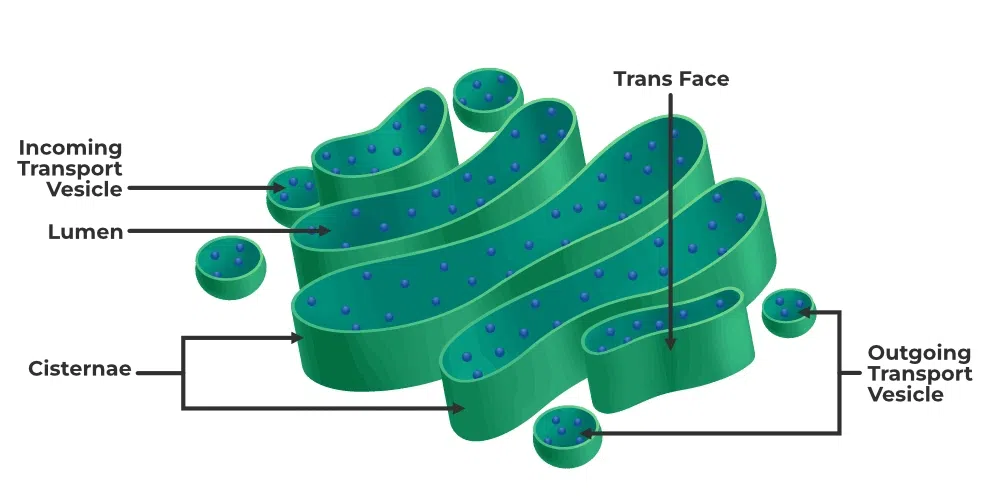
Golgi complex structure
system of cisterns that synthesizes carbohydrates and puts finishing touches on protein synthesis
Golgi complex function
receives new proteins from ER

lysosomes structure
package of enzymes bound by a membrane
lysosome functions
Intracellular hydrolytic digestion of proteins, nucleic acids, complex carbohydrates, phospholipids, and other substances
autophagy
digestion of cell’s surplus organelles
autolysis
“cell suicide”: digestion of surplus cell by itself
peroxisomes
resemble lysosomes but contain different enzymes and are produced by endoplasmic reticilum
peroxisomes function
break down toxic substances, metabolize fats, and handle dangerous chemical byproduct

Proteasomes
follow cylindrical organelle that disposes of surplus proteins
proteasome function
Contain enzymes that break down tagged, targeted proteins into short peptides and amino acids
mitochondria
organelles specialized for synthesizing ATP
mitochondria function
energy is extracted from organic molecules and transferred into ATP

centriole
a short cylindrical assembly of microtubules arranged in nine groups of three microtubules each
centriole function
help organize the cell's skeletal system and guide cell division
2 kinds of cell inclusions
stored cellular products and foreign bodies
stored cellular products
Glycogen granules, pigments, and fat droplets
foreign bodies
Viruses, intracellular bacteria, dust particles, and other debris phagocytized by a cell