microbioLAB #6: Environmental Factors Affecting Growth of Microorganisms
 Call Kai
 Learn
 Practice Test
 Spaced Repetition
 Match
 Flashcards
 Knowt Play
1/20

Earn XP
Description and Tags
Mt 2
21 Terms
The growth of microorganism is affected by the environmental factors such as:
- temperature
- pH
- osmotic pressure
- nature
- chemicals
By changing this factors (temp, pH, osmotic pressure, nature, chemicals) one can:
- maximize microbial growth
- inhibit or delay the growth of unwanted microorganisms
Each microbe requires a specific growth temperature—
which is determined by what
name examples
- range which is determined by the heat sensitivity of it’s particular -components such as ex. Enzymes, Membranes and Ribosomes
Every microbe has three key temperature points (known as cardinal temperatures) that dictate its survival. what r they?
Minimum-lowest temperature at which growth can occur
Maximum-Highest temperature at which growth can occur
Optimum-Temperature at which rate of cellular reproduction is most rapid
Is similar to temperature of normal habitat
Example: pathogenic Bacteria in human: optimum temperature is 35-37 degrees Celsius like that of human blood.
Depending on their preferred optimum temperatures, bacteria are grouped into five main types:
psychrophiles
phychrotrophs
mesophiles
thermophiles
hyperthermophiles
psychrophiles
Cold-lovers that grow well at 0°C and have an optimum of 15°C or lower.
Psychrotrophs
Facultative psychrophiles; grow at 0 -7 degrees Celsius
Mesophiles
Middle-temperature lovers Growth optima 25-45 degrees Celsuis. Majority of bacterial species are in
group 25-45 degrees Celsius
thermophiles
Heat-lovers tht grow at 90 degrees or above.
thermoduric:
bacteria that can survive boiling even though they cannot grow.
* Usually they are spore forming

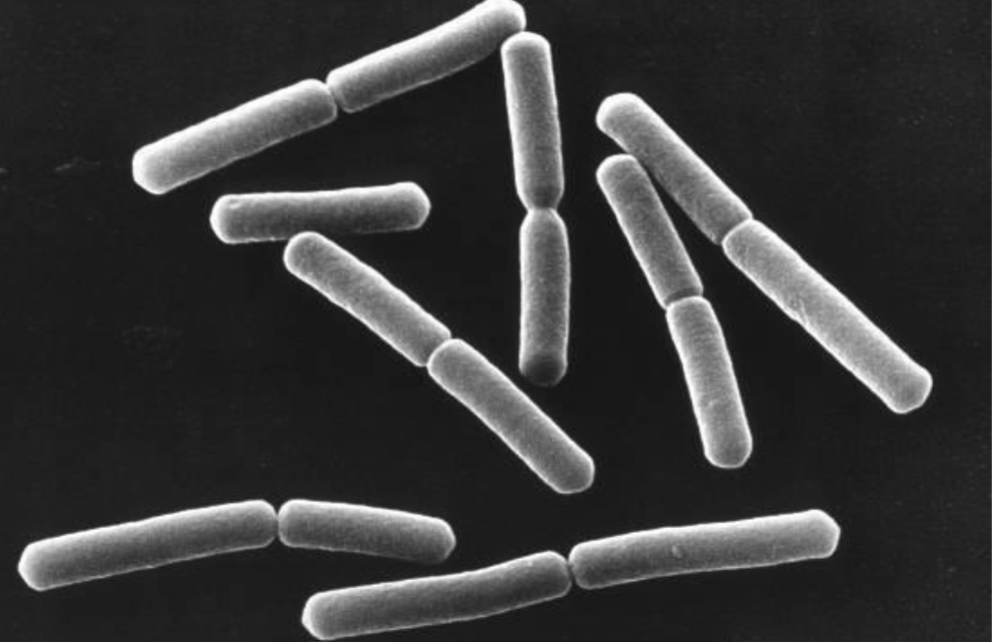
whts this an image of?
THERMODURIC: B. subtili
pH affects prokaryotic growth by affecting activity of ____. Especially those that are involved in ____
enzymes
biosynthesis (building cellular parts)

Environmental Factor pH:
which ranges do acidophiles, neutrophiles and alkaliphiles thrive in?
most bacteria r in what grp and produce what acids?
what do scientists do when growing them?
Acidophiles thrive under highly acidic conditions (usually at pH 2.0 or below
neutrophiles thrive in neutral pH environment 6.5 and 7.5
most bacteria r neutrophiles and produce metabolic acids
scientists, when they grow them, often add buffers (like peptones or phosphate salts) to growth media to soak up those/neutralize acids and keep the pH stable (produce pH equilibrium)
alkaliphiles thrive in basic or alkaline environments, (pH ~8.5-11) environments optimally around pH of 10
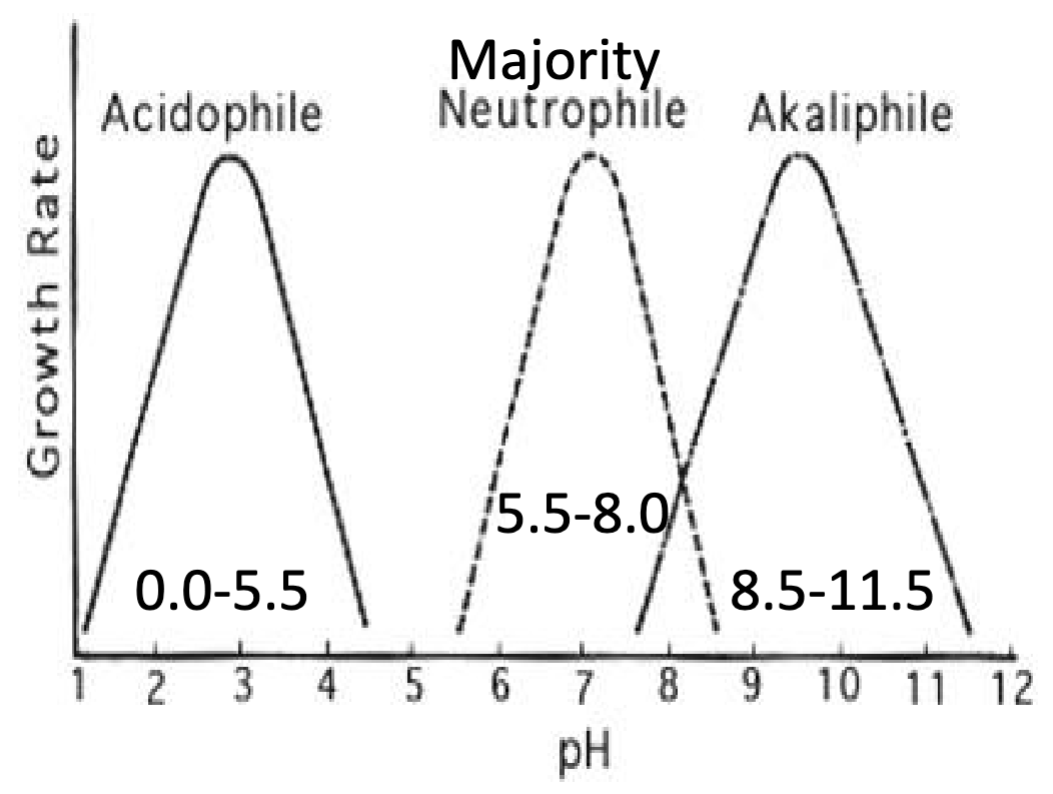
pH
Environmental Factor Osmotic pressure
what is diffusion?
____ is the diffusion of water
osmotic pressure is the force developed when?
Diffusion is movement the movement of small substances from a higher to lower concentration.
Osmosis is the diffusion of water
Osmotic pressure is the force developed when two solutions of different solute concentration are separated by a membrane that is permeable only to the solvent
Solvent: Liquid
Solute: Substance
isotonic soln
hypotonic soln
hypertonic soln
Isotonic solution: the concentration of the solute is the same inside and outside the bacterium
Hypotonic solution (low solute, high water content), water will enter the cell and cause it to burst.
Hypertonic solution (high solute, lower water content), water leaves and the plasma membrane shrinks away from the wall - plasmolysis

cells with cell wall.
wht kind of soln is this (iso,hypo,hypertonic)?
isotonic

cells with cell wall.
wht kind of soln is this (iso,hypo,hypertonic)?
hypotonic

cells with cell wall.
wht kind of soln is this (iso,hypo,hypertonic)?
hypertonic

distinguish graph
Based on tolerance to salt, we distinguish
non halophile: grows at less than 1% salt concentration
Halotolerant: grows at salt concentration from 0-10%
halophile: microbe that can tolerate high salt (NaCl) concentrations (halo means salt)
Moderate halophile: live at 4.7 to 20% salt
Extreme halophiles: tolerate 20 to 30% salt concentration