ch13 - viruses, viroids, prions
 Call Kai
 Learn
Learn Practice Test
 Spaced Repetition
 Match
Match Flashcards
 Knowt Play
1/19

There's no tags or description
Looks like no tags are added yet.
Name | Mastery | Learn | Test | Matching | Spaced | Call with Kai | Chat |
|---|
No analytics yet
Send a link to your students to track their progress
20 Terms
viruses, viroids, prions
non-living elements
called agents
not organisms, acellular, no metabolic processes
virion: complete, infectious virus particle
viroid: infectious RNA
prion: infectious protein

viruses: obligate intracellular parasites
needs to be inside a host cell in order to replicate so they can be transmitted to other hosts
uses host machinery to replicate
inactive outside of host
bacteriophage/or just phage: virus that infects bacteria


*general characteristics of viruses *pic
viral structures
nucleic acid surrounded by a protein coat (capsid)
DNA or RNA
envelope: lipid bilayer outside of capsid
naked virus
enveloped virus
spikes: proteins on the surface of envelope
adherence
causes immunological response by host
*induce our bodies to produce antibodies against them, theyre antigens
three shapes
icosahedral
triangular
helical
cylindrical
complex
nucleocapsid: dna/rna + capsid
tail
base plate
tail spikes, tail fibers
allow for the virus to attach to host cell
10-100x smaller than bacteria
smallest
~10nm
~10genes
largest
~800nm
can infect all life forms
host range: number of different hosts that a virus can infect
usually limited to a single species of organism for a single virus
ex. some viruses can only infect humans and not animals, some can only infect e. coli, some can only infect certain strains of e. coli
host range limited by:
absence of viral attachment (receptor) site on host cell surface
only the cells that have the receptors for the viruses → only affect those specific organs
restriction-modification system in host cell - virus must overcome to infect
restriction enzymes to cut up the dna of that virus
if you have a bacterial cell and the restriction enzymes cut and destroyed the dna, the virus can’t infect it so its a form of protection for the bacterial cell
methods used to study bacteriophages*
viruses multiply only inside suitable living cell
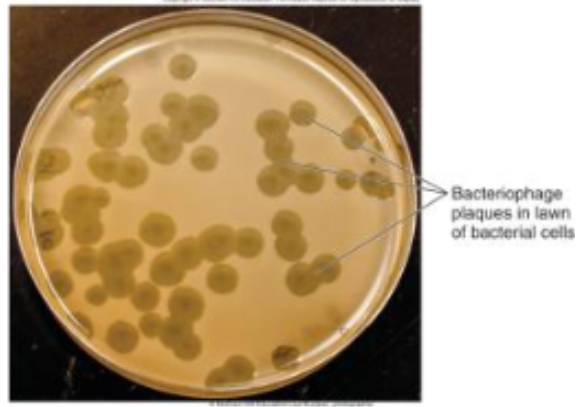
bacteria: plaque method
bacteriophages form plaques on a lawn of bacteria
number of phages determined by counting plaques (PFU)
will infect all the cells around it
as it infects all the surrounding cells and produces a lot of viruses it will kill the cells in the surrounding area
the clearing is full of viruses
animal viruses grown in:
living animals (mice, rabbits, pigs)
embryonated eggs
flu vaccine
cell culture or tissue culture
human cells
replication cycles overview
use the host machinery to reproduce after infection
lytic cycle
phages multiply inside a cell
phage lyses cell to release virions
?cell dies immediately
lysogenic state
phage integrates its genome into the host genome
when the dna gets into the host cell it is inserted into the chromosome of the host cell so it becomes a part of the chromosome of the host cell
phage released without killing the host cell
the virus doesnt want to do this bcuz the genome is in the host cell, if it kills the host cell its basically killing itself
the lytic cycle*
five step process
attachment
adsorption
phage attaches to specific receptors on the E. coli cell wall
penetration
genome entry
the only thing that goes into the cell is the nucleic acid
the tail contracts and phage DNA is injected into the bacterial cell, leaving the phage coat outside
synthesis
make all the different parts of the virus
nucleic replication: replicates viral genome
transcription/translation: synthesis of viral protein coat, spikes, etc.
some phage genes are quickly expressed
a phage-encoded enzyme degrades host DNA
phage DNA is replicated and other virion components are made
assembly (or maturation)
phage components are assembled into mature virions
release
burst size of T4 is ~200
*number of viruses that can be produced per cell
cells infcted with T4 → each will produce 200….
the bacterial cell lyses and many new infectious virions are released

the lysogenic cycle
replication of a temperate virus
can undergo lytic or lysogenic cycle
steps of lysogenic cycle
attachment
lysogen? phage attaches to bacterium
penetration
injected linear phage DNA circularizes and enters lytic or lysogenic cycle
incorporation of viral DNA into host chromosome
reverse transcriptase (RNA → DNA)
integrase: inserts viral DNA into host genome
HIV does this because it’s an RNA virus
virus is called a prophage (provirus in eukaryotic cells)
prophage is integrated into the bacterial chromosome
viral DNA is replicated when the host cell replicates
prophage can excise out and undergo lytic cycle
or it can go directly to lytic infection
after injected linear phage DNA circularizes and enters lytic cycle
replication of phage DNA and synthesis of phage-encoded proteins
cells lyse, releasing new phage

*effect of viral infection on host cells
host cell immune to superinfection (infection by same phage)
transduction can occur: horizontal transfer of bacterial genes
lysogenic (phage) conversion can occur
prophages confer new properties on cell → organism displays new trait (expression of phage genes)
*host cells exhibit new traits a result of being infected/containing the viral dna
unfortunately some the abilities are to cause disease
normally they wnt cause disease but when the viral gene enables the bacteria to produce those toxins, they do
clostridium botulinum: normally it wouldn’t be able to produce botulinum when the virus gives the gene to cause disease then it does
if they wee not infected by the virus they wouldnt be able to cause disease

continue: diagnosing viral infections
determined more by patient symptoms
diagnostic tests include
culturing the virus
detecting a virus by
molecular techniques (PCR)
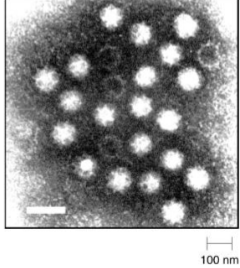
EM
injection into animal → antibodies to virus
animal viruses
classified based on route of transmission for disease-causing viruses
enteric viruses, zoonotic viruses, respiratory viruses, sxually transmitted viruses
animal viruses - enteric viruses
transmitted via fecal-oral route
cause gastroenteritis; some can cause systemic disease
norovirus, rotavirus
animal viruses - respiratory viruses
usually inhaled via infected respiratory droplets
generally, remain localized in respiratory tract
SARS-Cov-2, influenza
animal viruses - zoonotic viruses
transmitted from animal to human
rabies, HIV
animal viruses - sxually transmitted viruses
transmitted by sxual activities
can cause lesions on genitalia only or systemic infections
HIV, herpes, simplex virus

animal virus replication
five-step infection cycle
attachment
entry and uncoating: fusion or endocytosis
synthesis
assembly
release
budding
lysing cell

categories of animal virus infections
outcome of infection of eukaryotic cells depends on host defense
acute infection
persistent infection
some viruses exhibit both (HIV)
animal virus infections - acute infections
rapid onset, usually short in duration, more severe
large number of viruses produced
disease symptoms due to tissue damage (cell death)
host develop immunity (short or long-lasting)

animal virus infections - persistent infections
continue for years or a lifetime
viruses are always present in the host
may or may not have symptoms, still infectious
chronic infections
virus detected at all times
symptoms present or absent; may develop late
latent infections
viral genome (provirus) remains silent in the host cell
infection is followed by a symptomless period (no virus detected), can reactivate
cannot be eliminated
categories distinguished by detection of virus during the period of persistence

viruses and human tumors
some cancers
caused by oncogenic viruses
result from integration of viral genome onto host DNA
cells transformed - viral genes are expressed
uncontrolled growth results → tumors


other infectious agents - prions
proteinaceous infectious agents
reproduce by converting PrPc
both normal PrPc and abnormal PrPsc proteins are present
PrPsc interacts with PrPc
PrPc is converted into PrPsc
conversion continues an PrPsc accumulates
resistant to
proteases
UV light
standard autoclaving
transmitted by
ingestion, transplant, and surgical instruments
causes fatal neurodegenerative diseases
brain tissue develops sponge-like holes
transmissible spongiform encephalopathies (TSEs)
animal disease
scrapie in sheep
mad cow disease in cattle
human disease
Kuru
Fatal familial insomnia
Creutzfeldt-Jakob disease
Variant Creutzfeldt-Jakob disease
symptoms may not appear for years after infection, always fatal

other infectious agents - viroids
short piece of ssRNA
vary in size (246-375 nucleotides)
all identified viroids infect plants and cause plant disease
examples:
potato spindle tuber
chrysanthemum stunt
