Lab 3 - Skeletal Muscle - Major Muscles
 Call Kai
 Learn
Learn Practice Test
 Spaced Repetition
 Match
Match Flashcards
 Knowt Play
1/93

There's no tags or description
Looks like no tags are added yet.
Name | Mastery | Learn | Test | Matching | Spaced | Call with Kai | Chat |
|---|
No analytics yet
Send a link to your students to track their progress
94 Terms
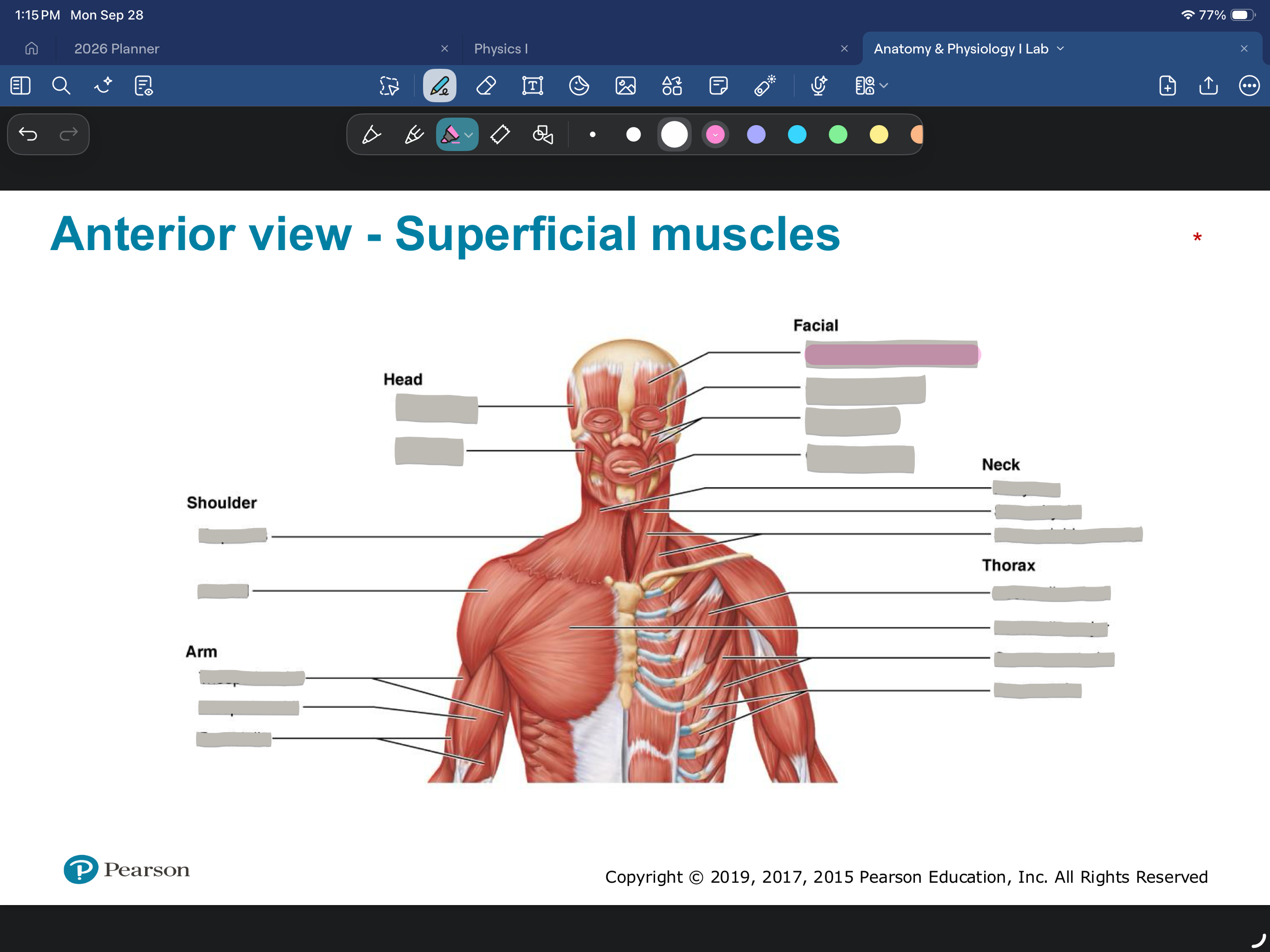
Epicranius

Orbicularis oculi
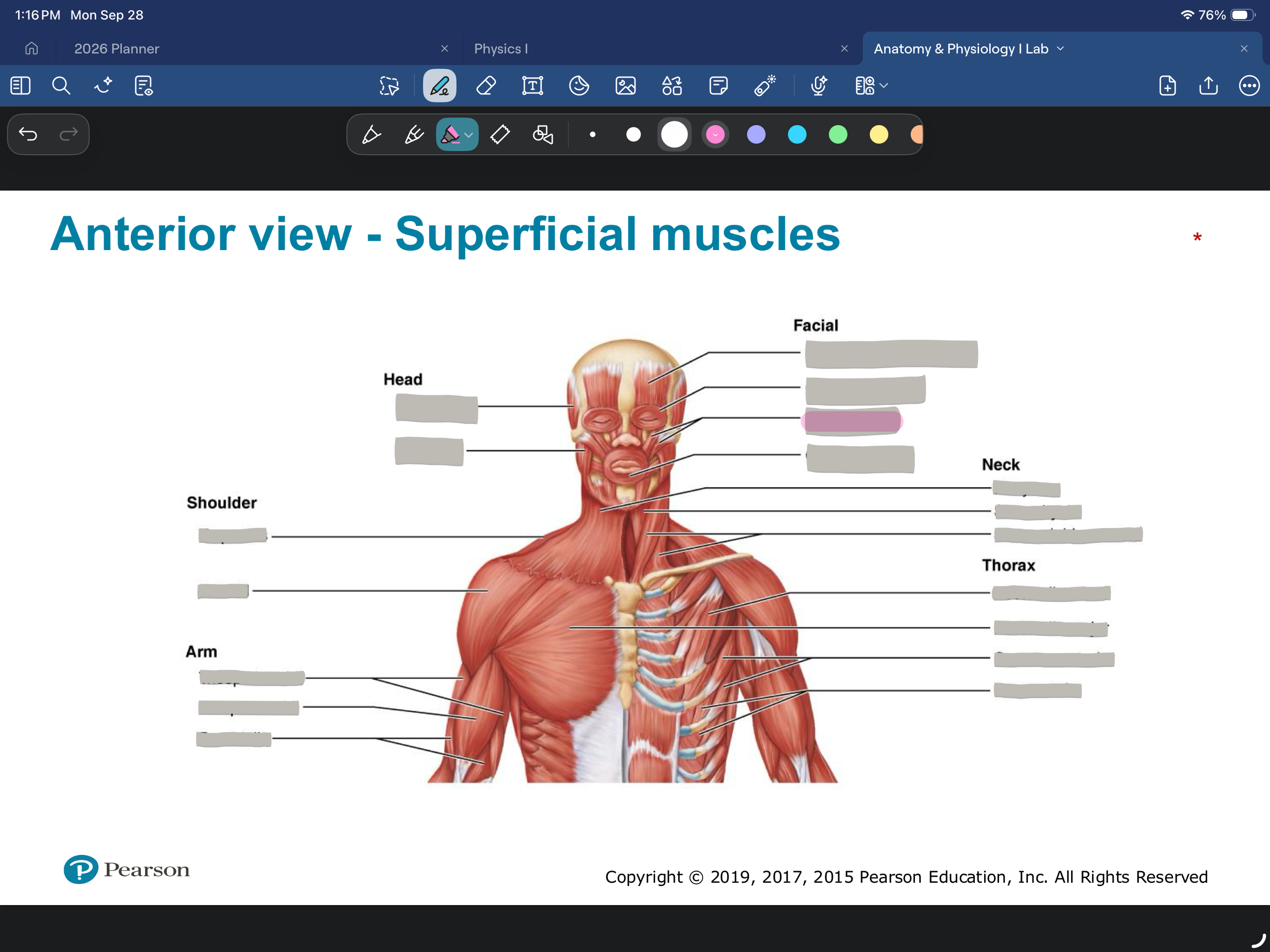
Zygomaticus

Orbicularis oris

Platysma
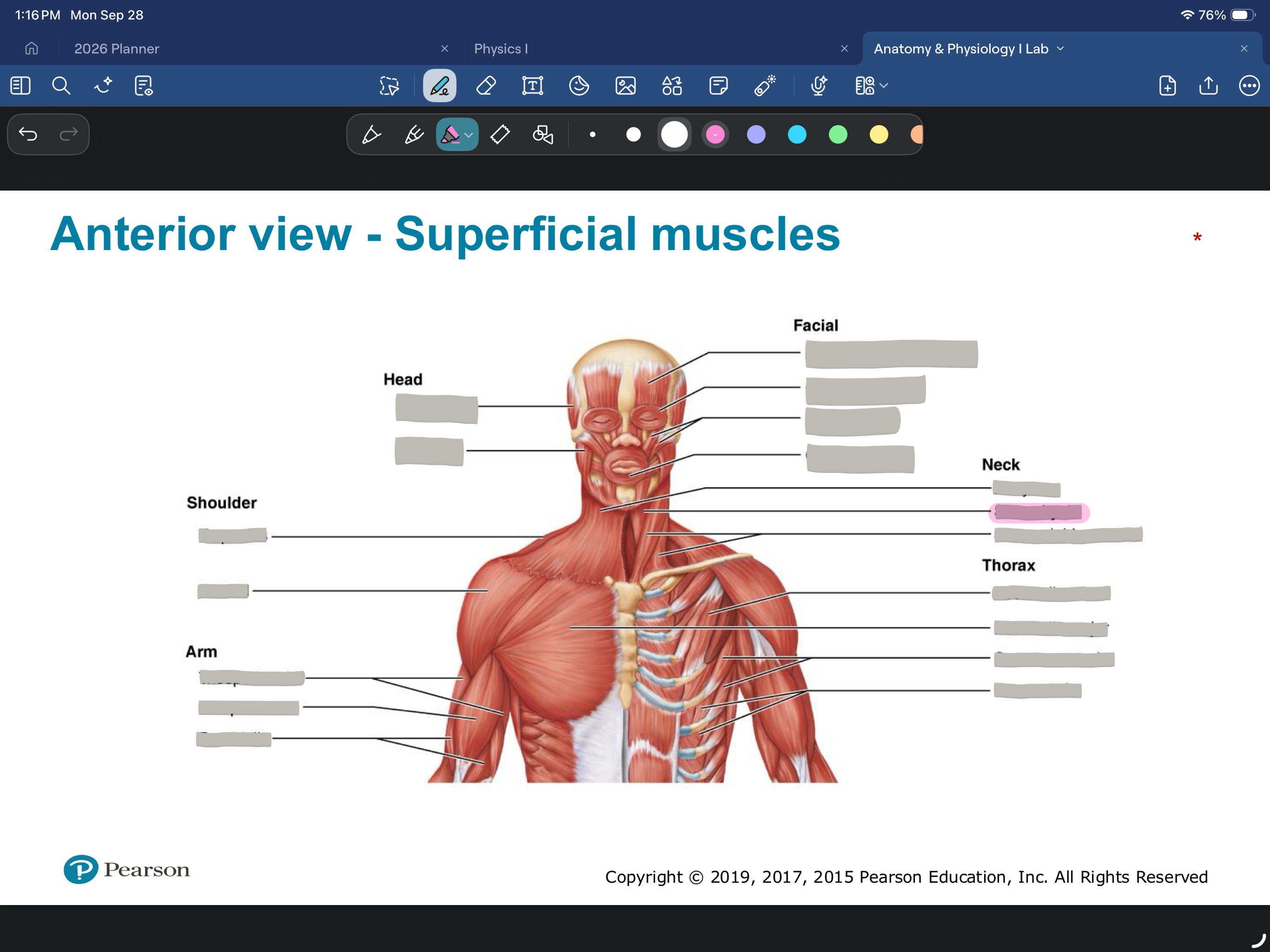
Sternohyoid

Sternocleidomastoid

Pectoralis minor

Pectoralis major

Serratus anterior

Intercostals

Temporalis

Masseter
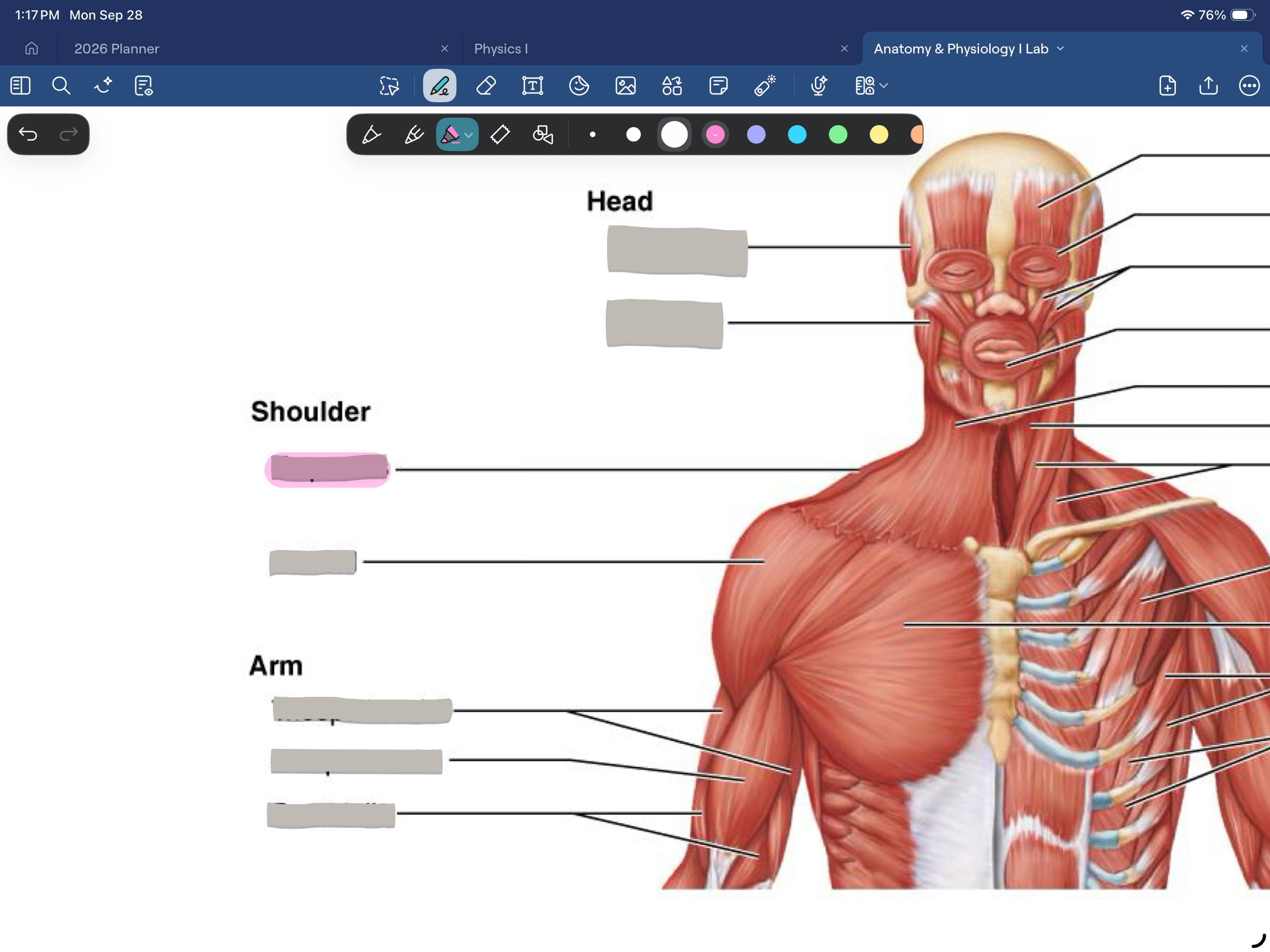
Trapezius
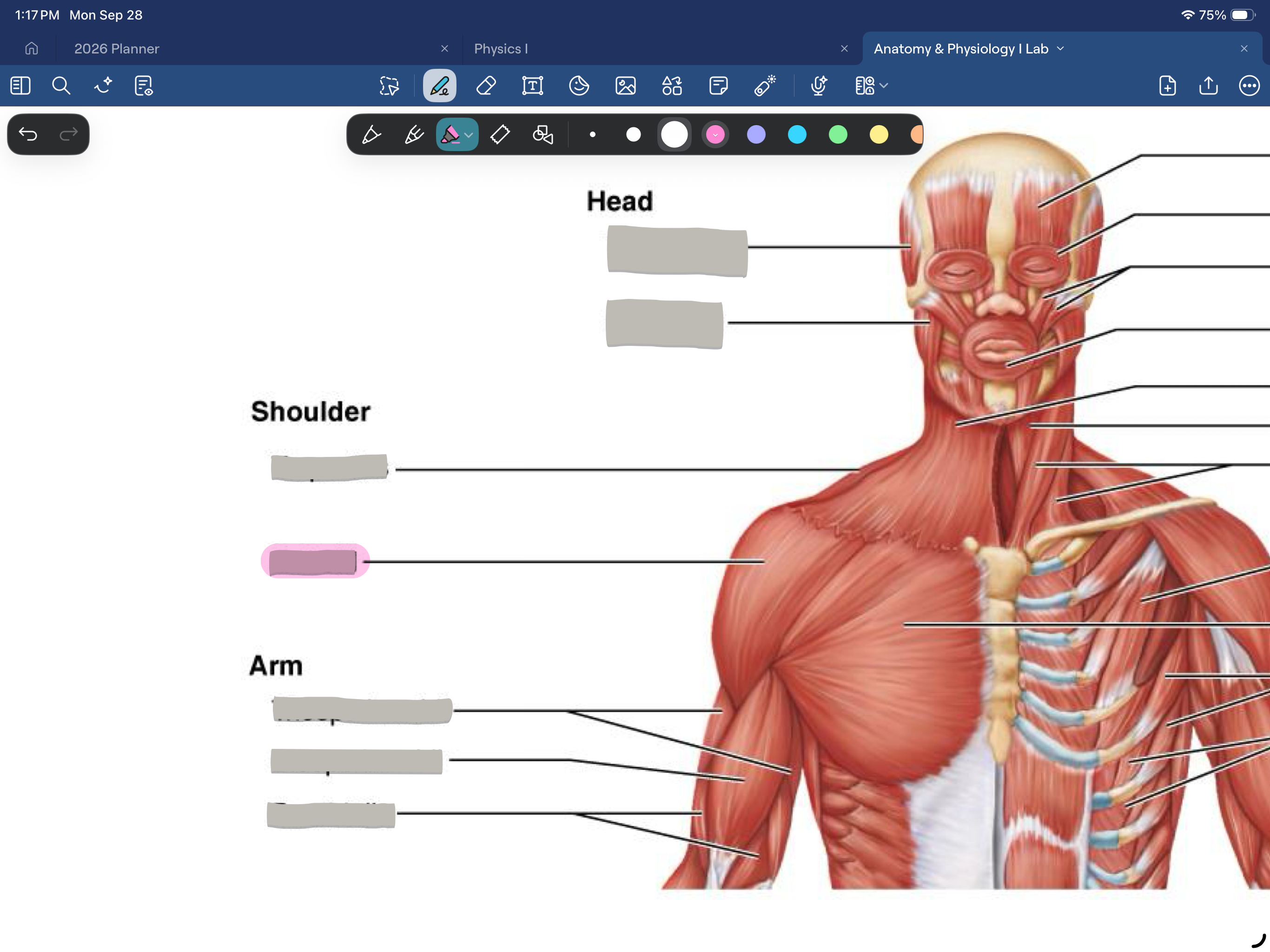
Deltoid

Triceps brachii

Biceps brachii

Brachialis

Pronator teres

Brachioradialis

Flexor carpi radialis

Palmaris longus

iliopsoas

Pectineus
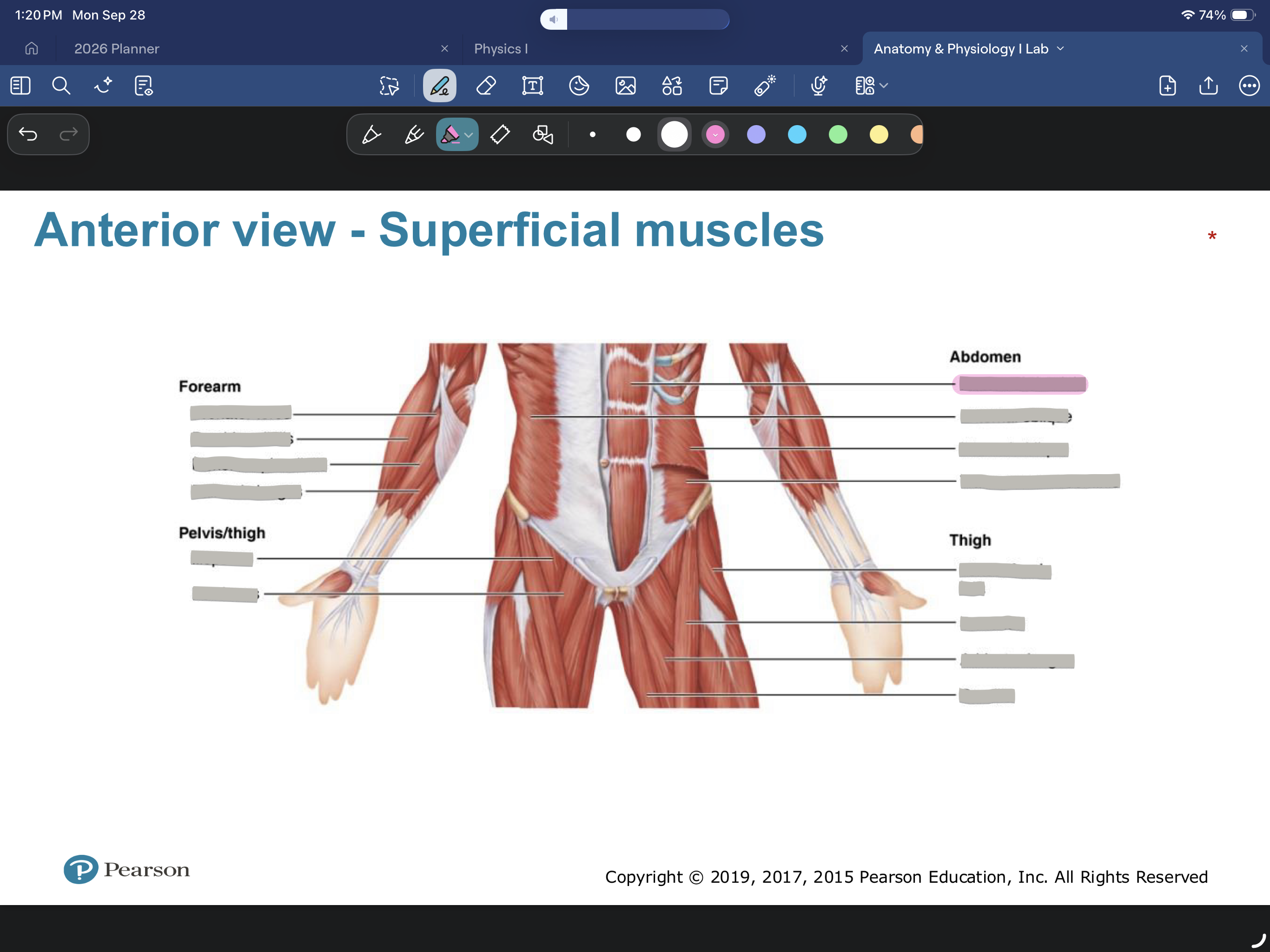
Rectus abdominis
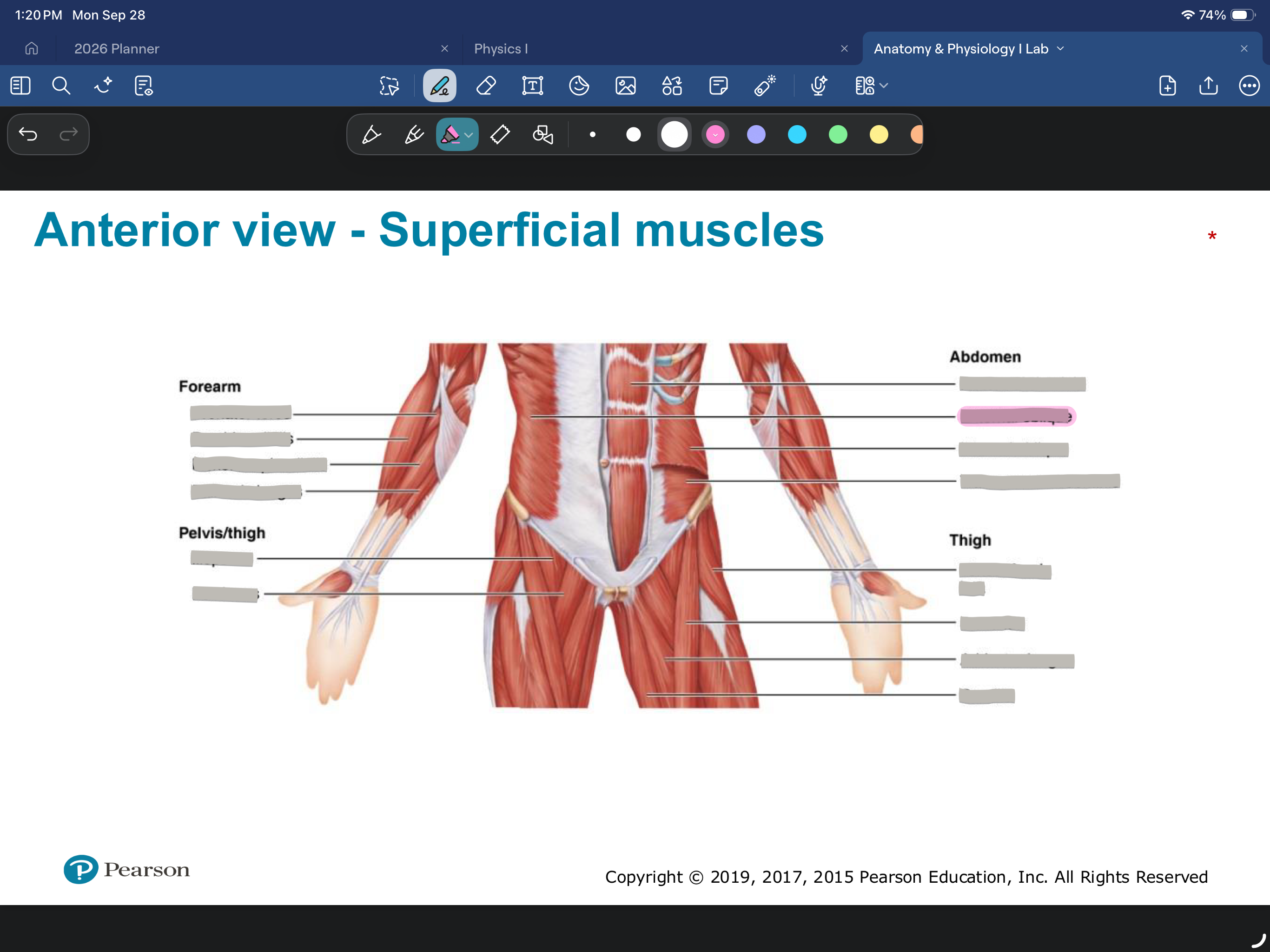
External oblique

Internal oblique

Transverse abdominis
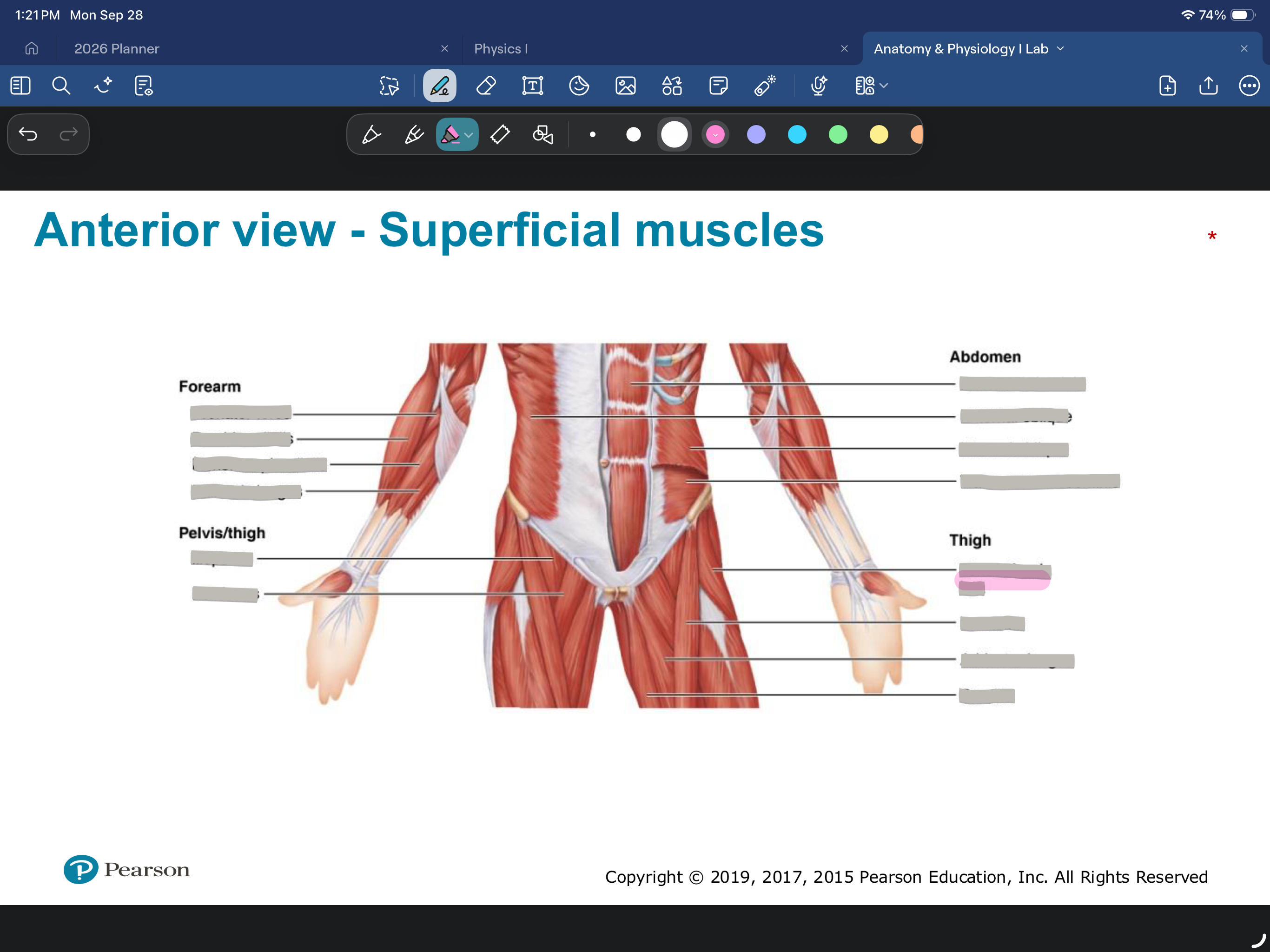
Tensor fascia lata

Sartorius
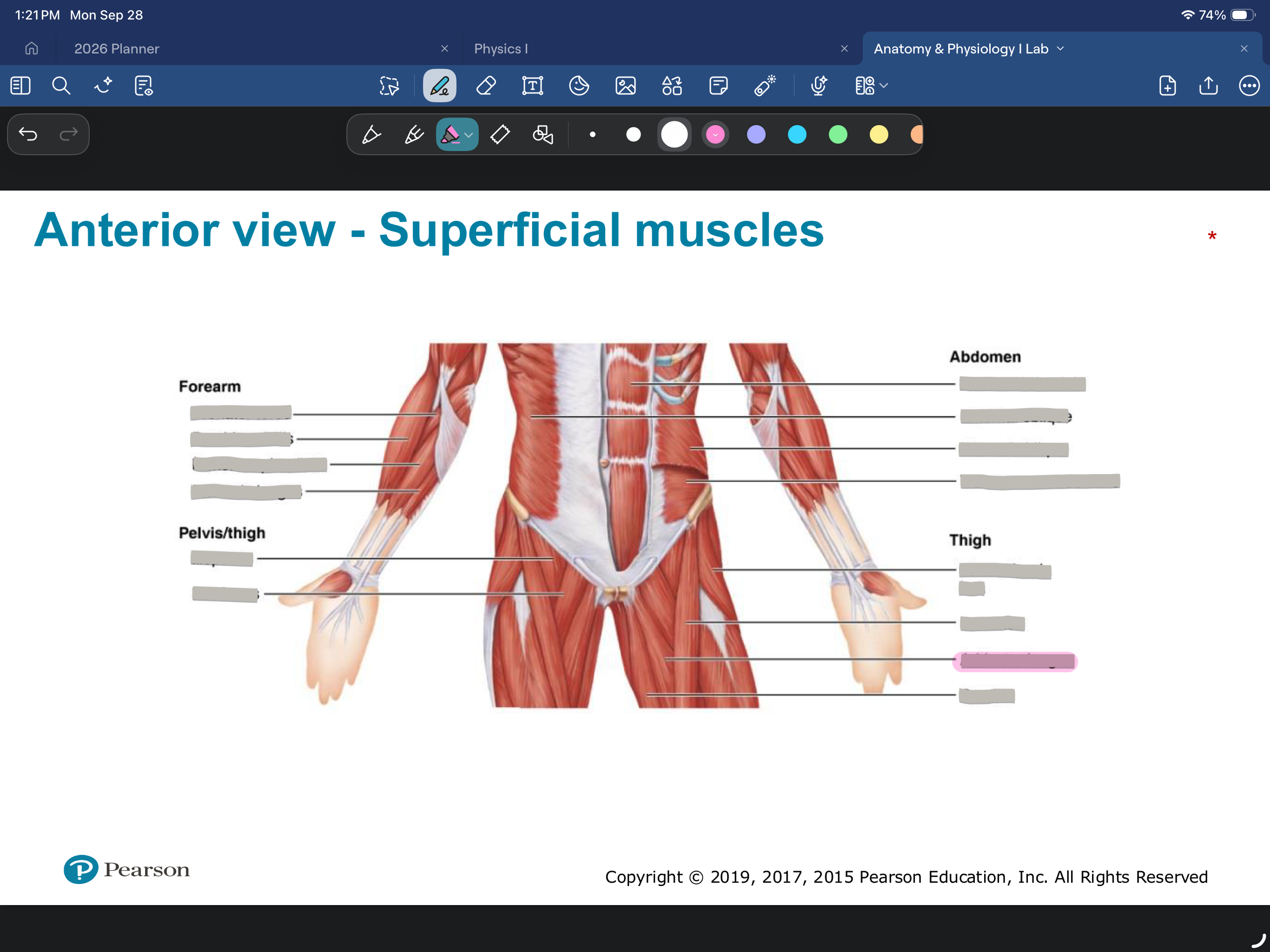
Adductor longus
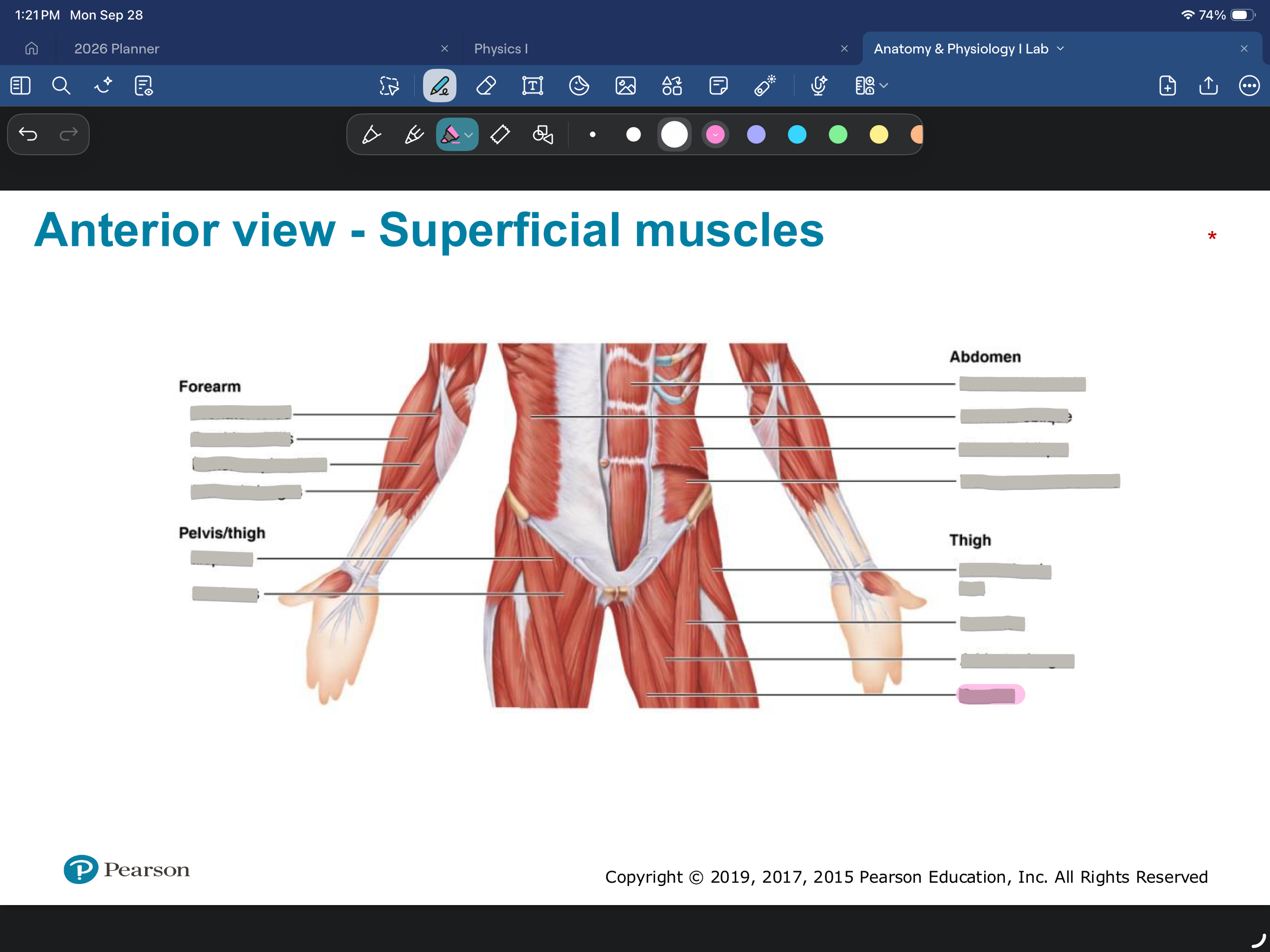
Gracilis

Rectus femoris

Vastus lateralis

Vastus medialis
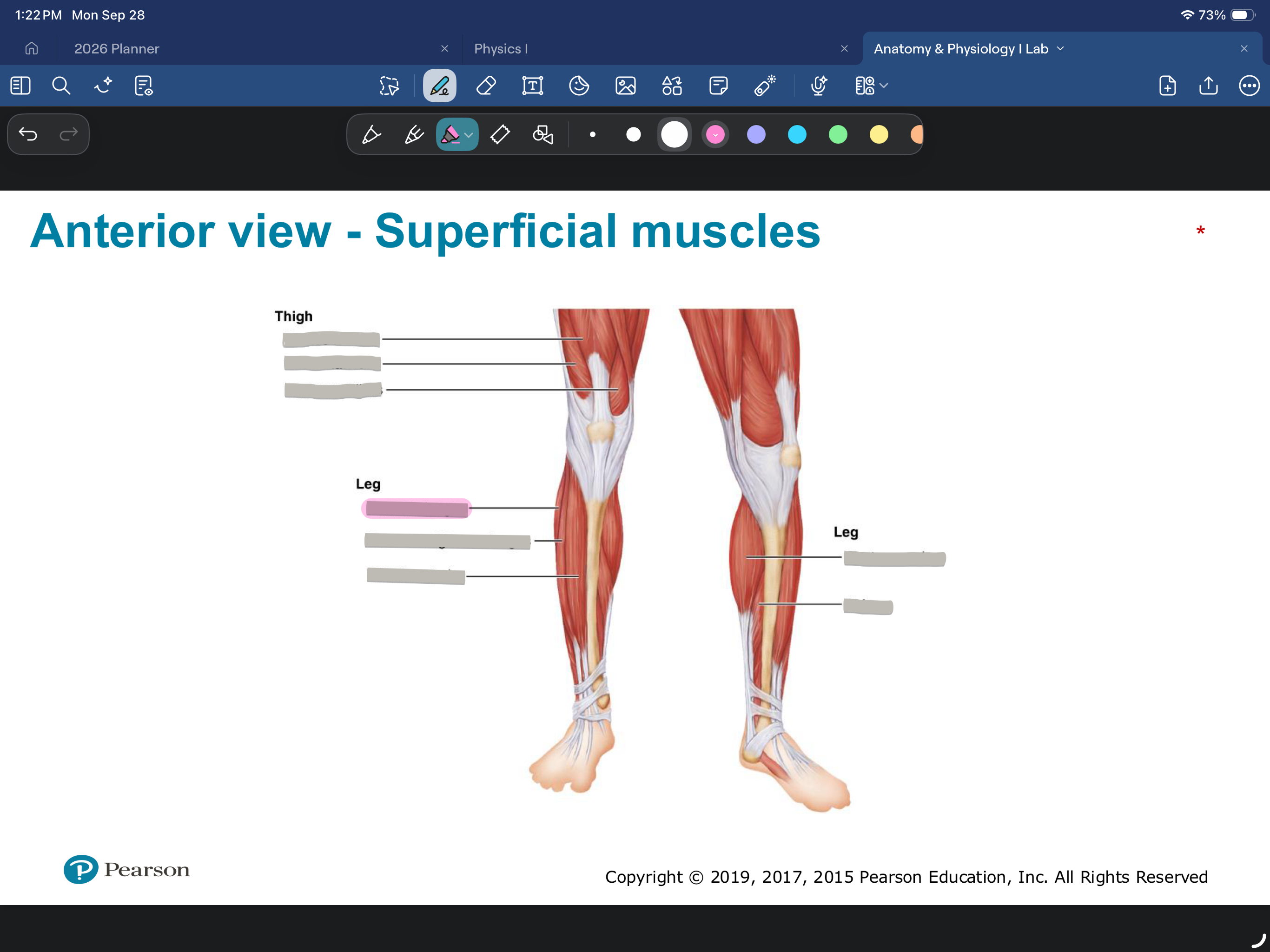
Fibularis longus

Extensor digitorum longus

Tibialis anterior

Gastrocnemius

Soleus
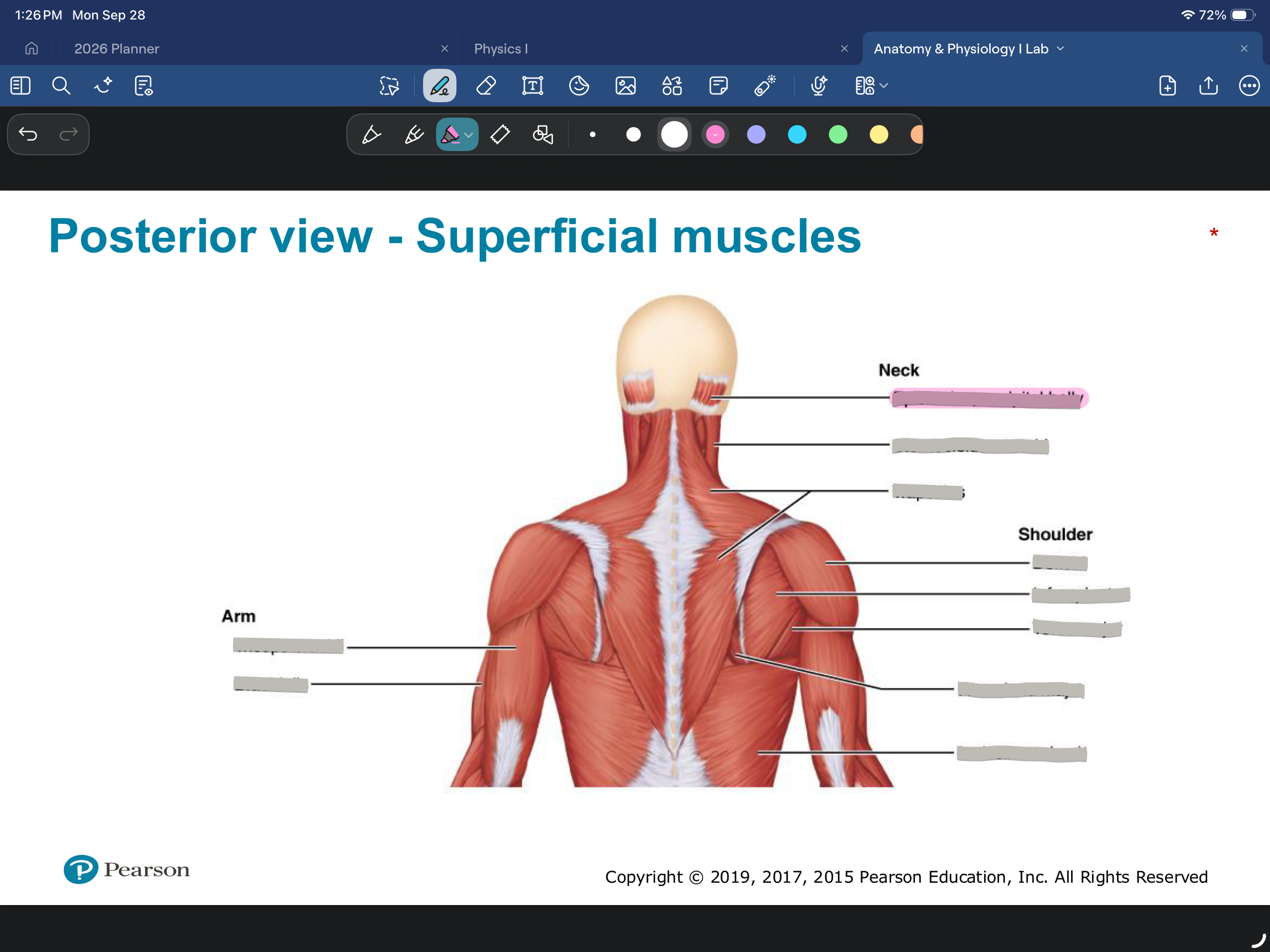
Epicranius
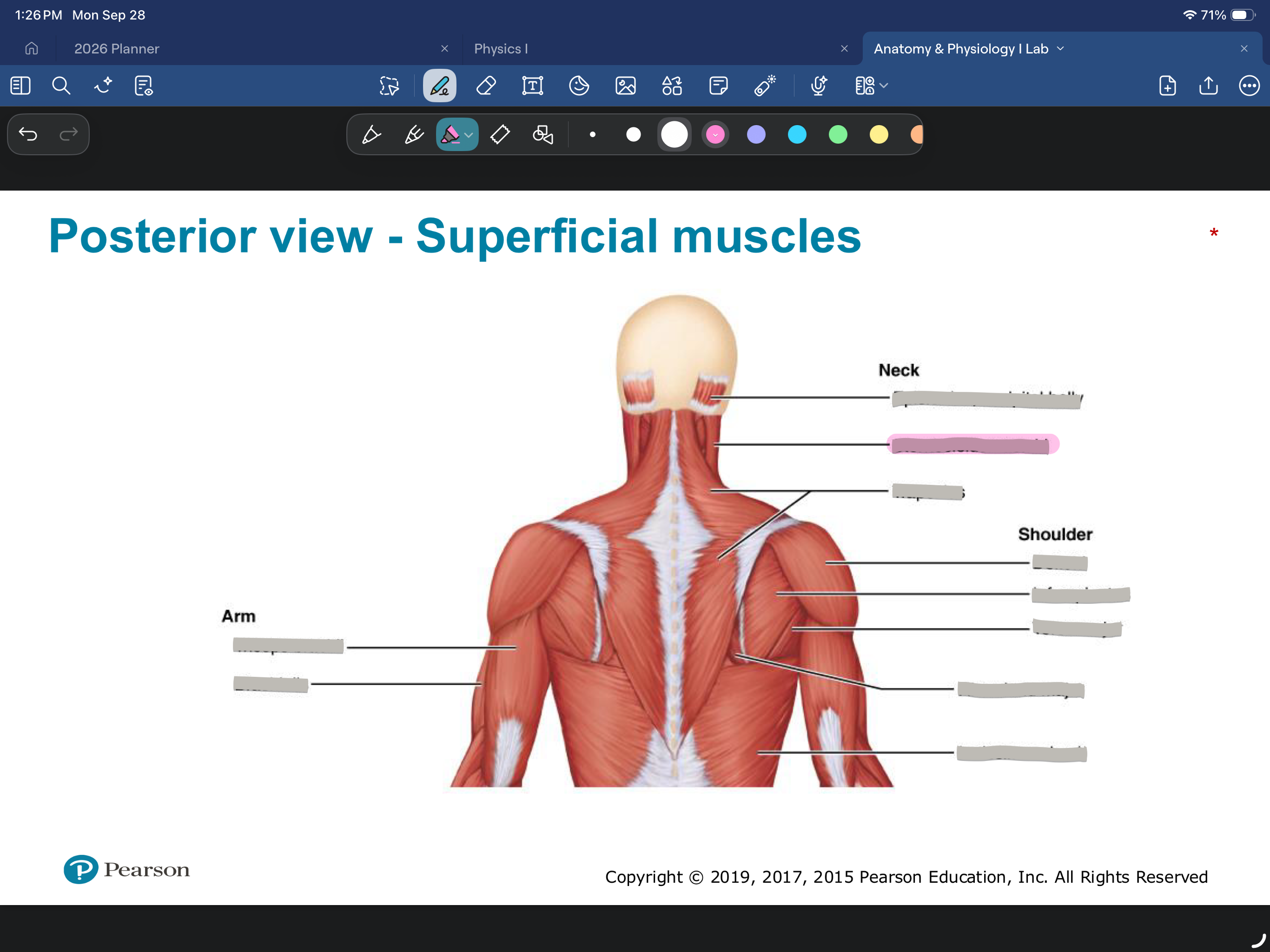
Sternocleidomastoid

Trapezius

Deltoid

Infraspinatus

Teres major

Rhomboid major
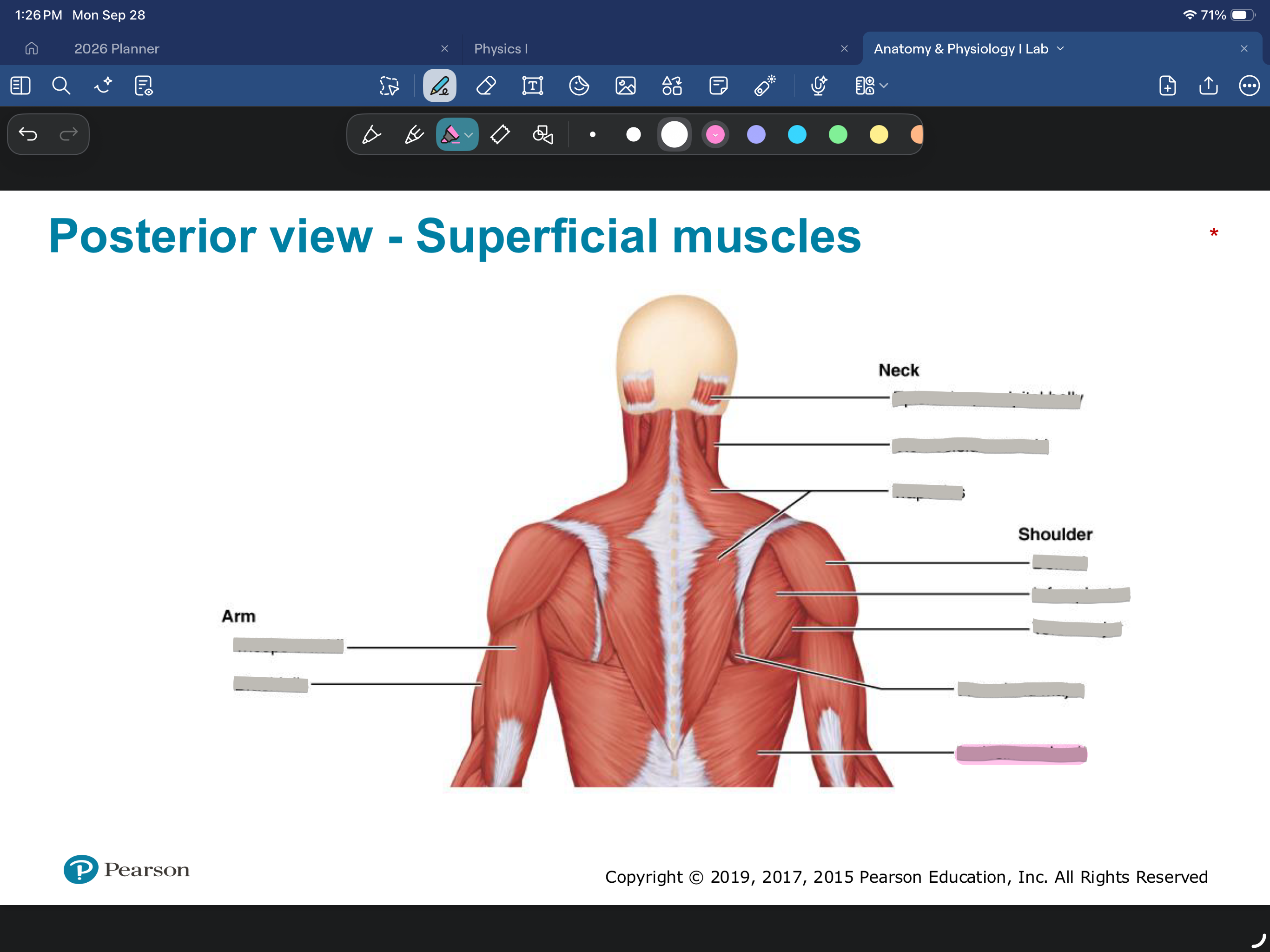
Latissimus dorsi

Triceps brachii

Brachialis

Brachioradialis

Extensor carpi radialis
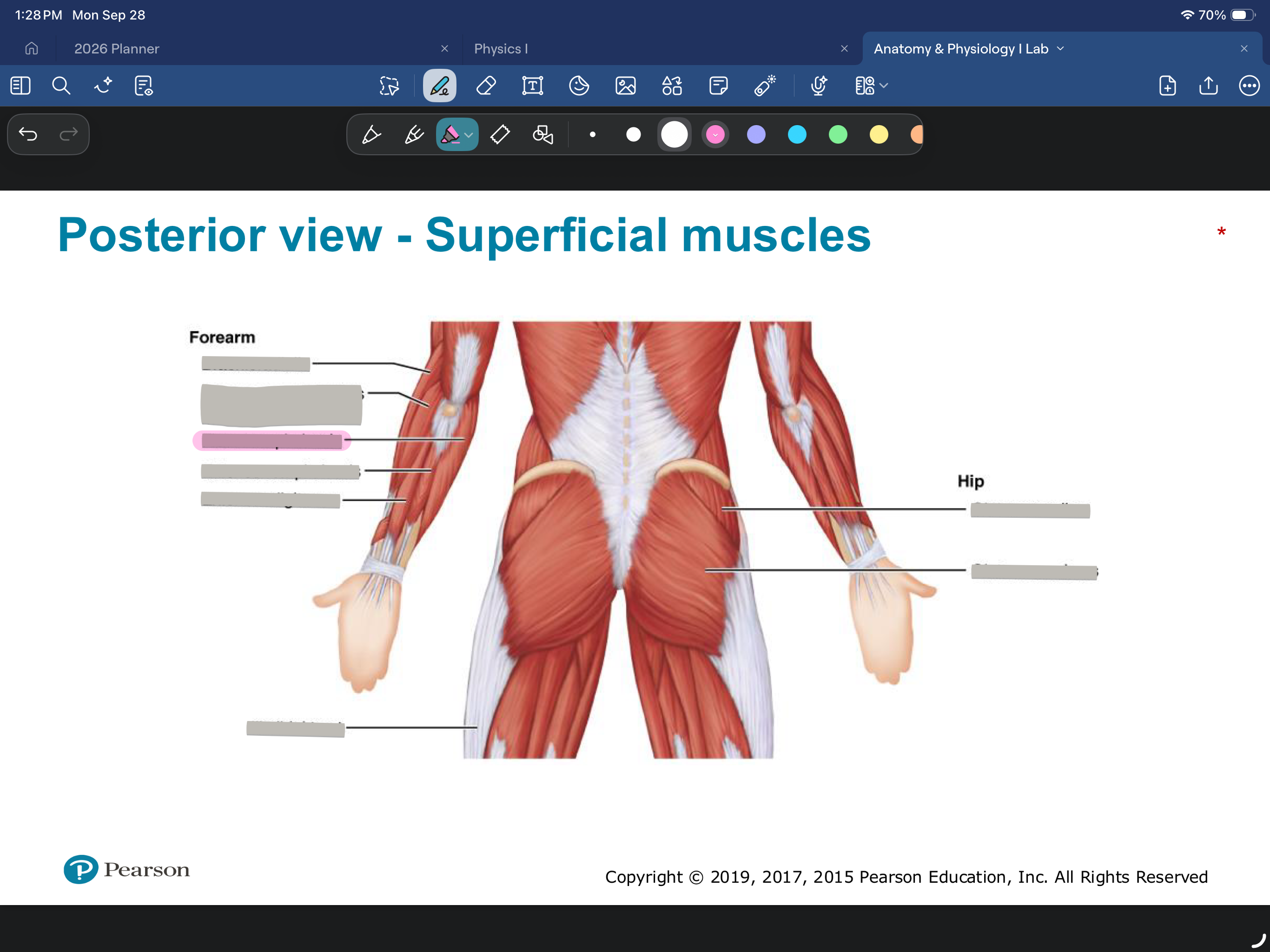
Flexor carpi ulnaris
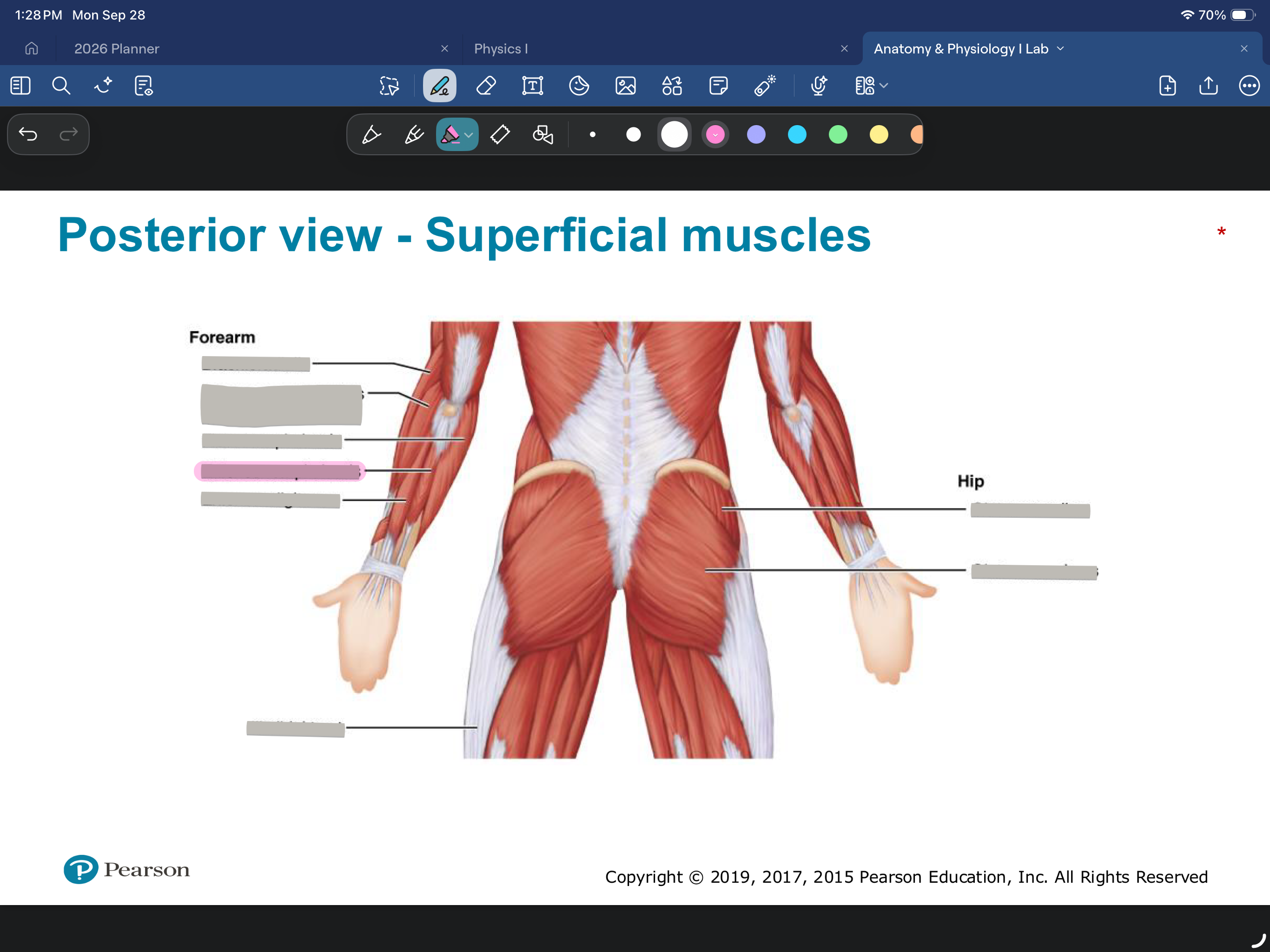
Extensor carpi

Extensor digitorum

iliotibial tract

Gluteus medius

Gluteus maximus

ilibotial tract

Gastrocnemius
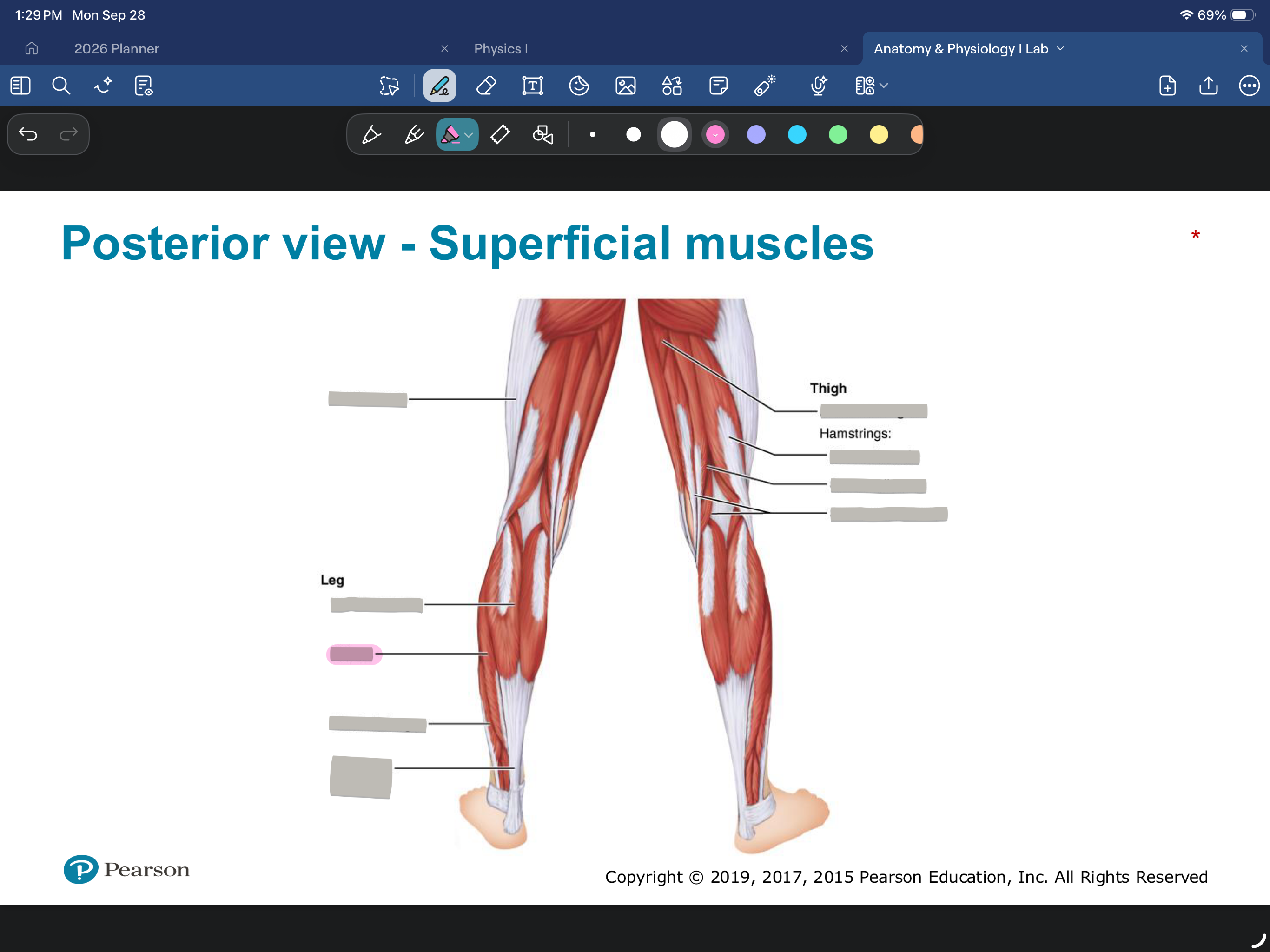
Soleus

Fibularis longus
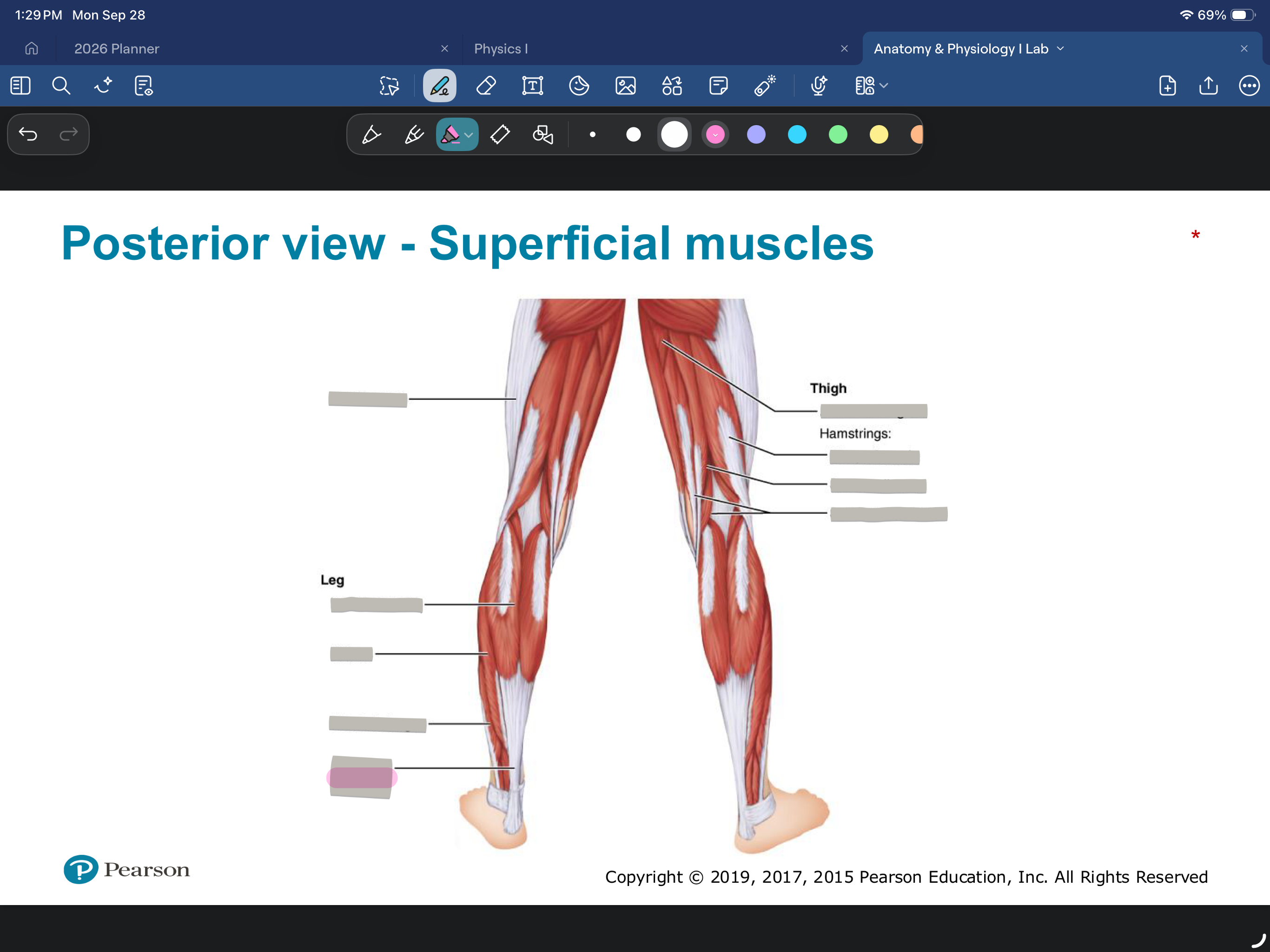
Calcaneal tendon

Adductor magnus

Biceps femoris

Semitendinosus

Semimembranosus
Concentric muscle contraction
muscle fibers shorten and there is visible movement at the joint
Eccentric muscle contraction
muscle fibers lengthen and there is visible movement at the joint
Isometric muscle contraction
muscle length does not change and no visible movement at the joint

Isotonic contraction
Concentric
the muscle develops enough force to lift the weight
once resistance is overcome, the muscle shortens and the tension remains constant for the rest of the contraction

Isometric contraction
weight exceeds the muscle’s peak force-developing capabilities
tension increases to the muscles peak force-developing capability but the muscle does not shorten
Range of motion
measurement of the distance and direction a joint can move to its full potential
Joint
location where bones connect and allow movement in predetermined directions
How is ROM measured?
using an instrument called a Goniometer that measures in degrees
Hyperextension
moving backwards of the joint
tilting head backwards (neck joint)
leaning torso backwards not moving legs (vertebral column)
moving straight arm backwards (shoulder joint)
Extension
a straightening movement
head tilted down moves up until head looking straight ahead (neck joint)
bent over at the waist to standing upright (vertebral column)
moving arm straight out in front of you to resting at your side (shoulder joint)
knee bent moves to straighten out to normal standing position (knee joint)
Flexion
a bending movement
tilting head downwards to chin to chest (neck joint)
torso bending down at the hip (vertebral column)
bending the knee
raising the arm to be straight out in front of you
Rotation
body part turns around its longitudinal axis
Lateral rotation
turning of a limb away from the midline of the body
Medial rotation
turning of a limb towards the midline of the body
Abduction
movement of a body part out and away from the midline —> abduct = take away
lifting ur arms up to form a “T”
spreading ur fingers apart
Adduction
movement of a body part towards the midline
moving ur arms back down to your side from a “T” position
squeezing your legs back together from a wide stance
Circumduction
a conical movement of a body part where the proximal end (closer to the center) stays relatively stationary while the distal end (away from the center) traces a circle
rotating your wrist in a circle
Pronation
palm facing up
Supination
palm facing down
Dorsiflexion
flexing your foot to make an L shape
Plantar flexion
pointing your toes
Inversion
pointing your foot inwards
Eversion
pointing your foot outwards
Elevation
shrugging your shoulders up
Depression
un-shrugging your shoulders
Protraction
to move outward/forward
pushing jaw out
Retraction
to move backwards/inward
moving your jaw backwards from it being pushed out