Lab Exam 1
 Call Kai
 Learn
 Practice Test
 Spaced Repetition
 Match
 Flashcards
 Knowt Play
1/101

There's no tags or description
Looks like no tags are added yet.
102 Terms

Angular Process

Auditory bulla

Occipital condyle
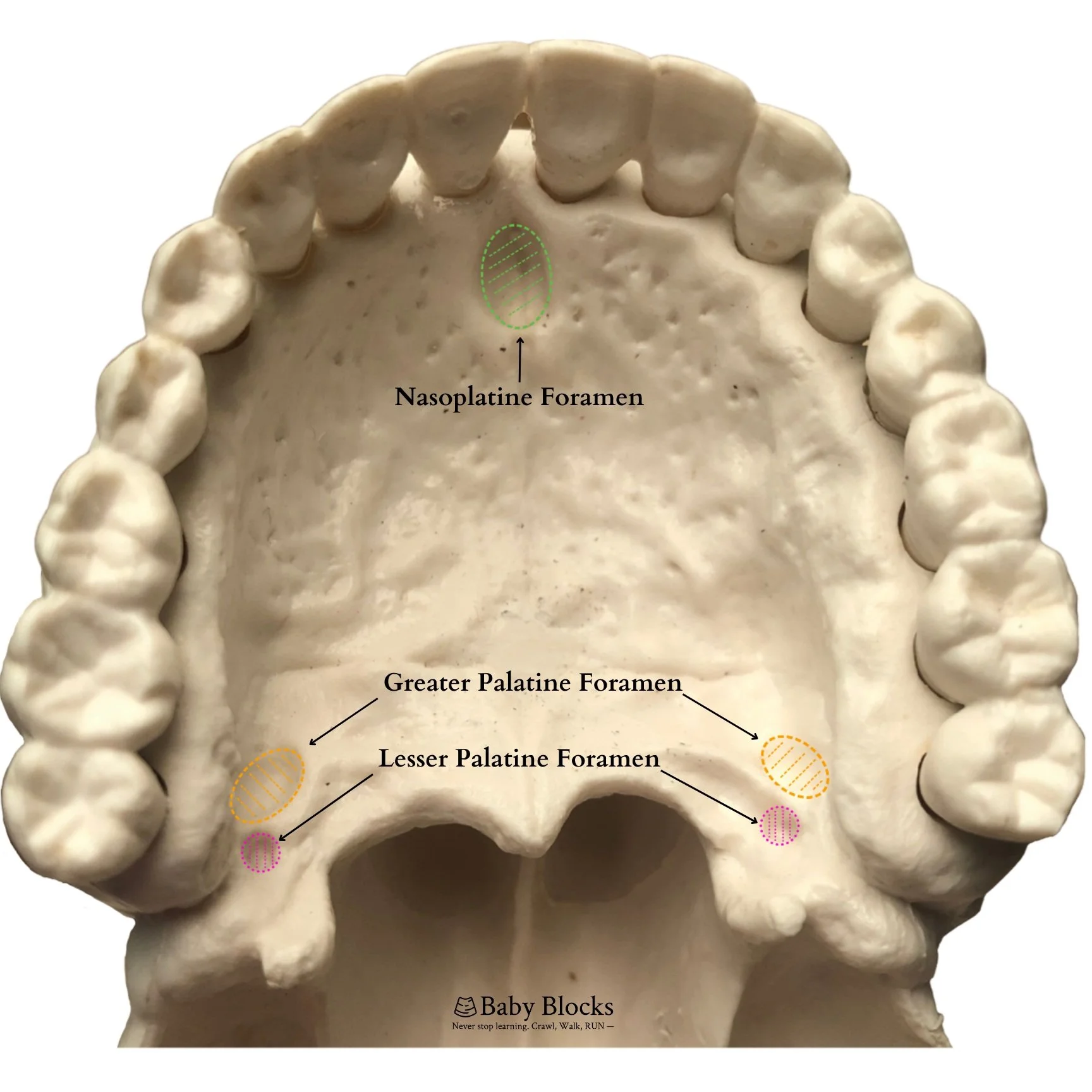
Palatine Foramina

Incisive foramen

Dentary

Zygomatic arch

Condyloid process
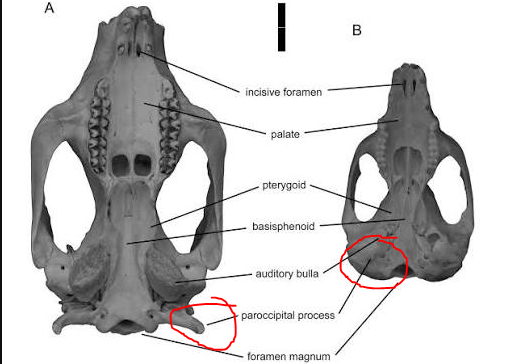
Paroccipital process
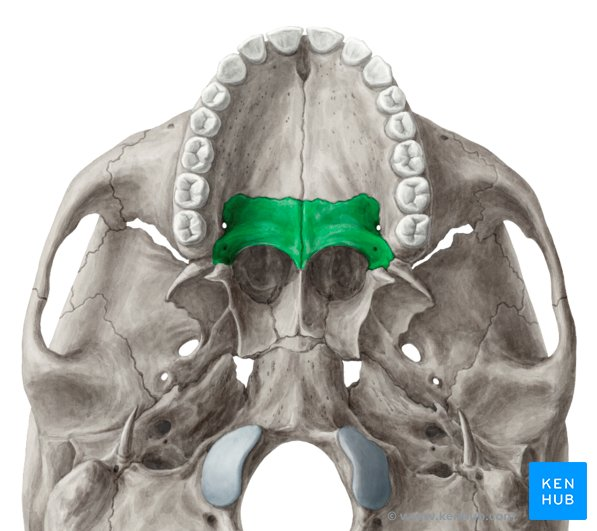
Palatine

Post oribital process

Premaxilla

Infraorbital foramen

Parietal
What are the 2 major difference between marsupial and placental skulls?
Nearly all marsupial skulls have large palatine vacuities
(absent in placentals)
Angular process inflects medially in marsupials
Why are teeth important?
Identification, fossilize well, species relationship, diet, age, size
Homodont
1 type of tooth (dolphins)

Heterodont
more than 1 kind of tooth

Diphyodonty
2 sets of teeth within a lifetime
(deciduous/milk teeth & adult teeth)
Hypsodont
high crowned, shallow roots (if any)

Brachyodont
short crowned, deep roots

Integument
Structure: Medulla, Cortex, and Cuticle
Cortex: Elongated cells which may contain pigment granules. The diameter of the combined cortex and cuticle compared to the medulla can be a useful taxonomic character.
Medulla: Loosely arranged cells forming the core of the hair shaft; contains pigment masses and air cells.

Cuticle
Cuticle: Outer sheeth composed of keratinous scales which may be of different sizes
and forms.
Coronal Cuticle Scales completely encircle hair shaft.
Imbricate Cuticle Scales do not encircle hair shaft, but overlap one another.
4 basic tooth types?
Incisors, Canines, Premolars, Molars
Teeth restricted to 3 bones
Premaxilla, Maxilla, Dentary
Teeth indicate
diet and age by tooth stage and wear on the tooth
Dental formula
(# of teeth in half of upper jar)/(# of teeth in half of lower jar) x 2 = total teeth

Coyote
DF= 3/3(I), 1/1 (C), 4/4 (P), 2/3 (M) x2 = 42
Bobcat
DF= I3/3, C1/1, P2/2, M1/1 x2 = 28
Rat
DF= I1/1, C0/0, P0/0, M3/3 x2 = 16
Peccary
DF= I2/3, C1/1, P3/3, M3/3 x2 = 38
Human
DF= I2/2, C1/1, P2/2, M3/3 x2 = 32
Opossum
DF= I5/4, C1/1, P3/3, M4/4 x2 = 50
Bear
DF= I3/3, C1/1, P2-4, M2/3 =34-42
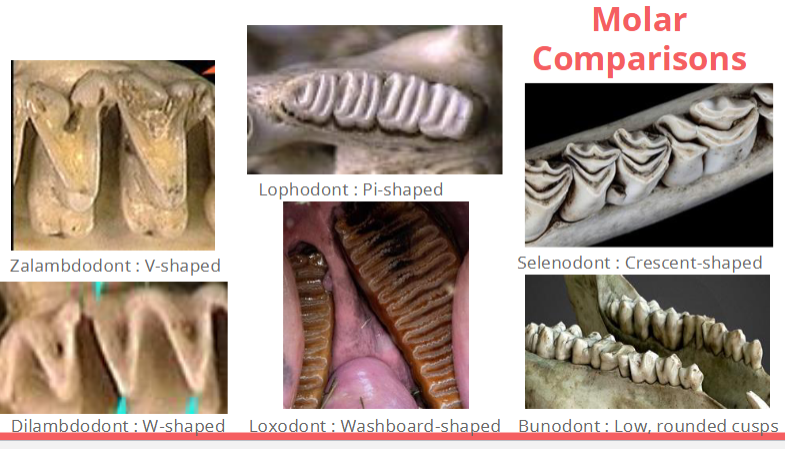
Zalambdodont
● V-shaped
● Apex of lingual ridge is protocone.
● Medial ridge (point) is paracone.
● Metacone is weakly developed.
● Insectivore diet

Dilambdodont
● Tooth pattern of most insectivore groups
● Paracone and Metacone form W-shaped ridge
(parastyle & metastyle) called the ectoloph
● Protocone forms a V-shape when the
hypocone is not developed
● Protocone forms a W-shaped ridge when the
hypocone is well developed

Selenodont
● Basic pattern seen in most Artiodactyls (ungulates)
● Anterior-posterior expansion of cusps into crescent-shaped ridges
● Herbivorous diet

Bunodont
● Basic pattern
● Crown consists of low, rounded cusps
● Omnivore diet
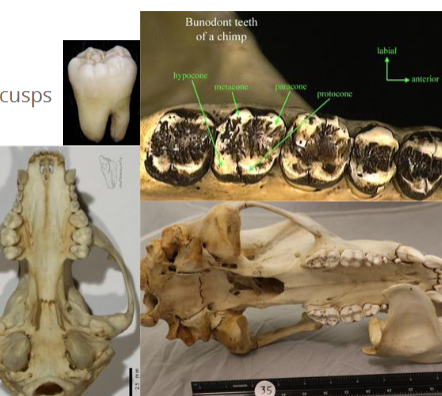
Lophodont
Characteristic of Order Perissodactyla (horse, rhinos, tapirs)
● Fusion of cusps to form long ridges or lophs
● Herbivorous diet ○ “Vegetable teeth”

Loxodont
● Extreme lophodonty
● Old-fashioned washboard
● 'sloping teeth'
● Browsing diet, mainly branches from trees and bushes

Carnassial Pair
Last upper premolar and 1st lower
molar (P4/M1)
- Hyper-developed to slice meat
- Order Carnivora (ex. Canis and Lynx
Molar comp
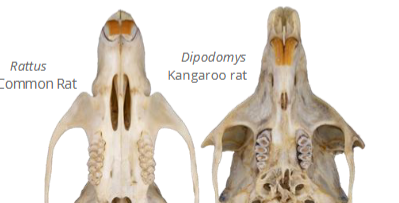
Rodent Teeth
- Incisors specialized for gnawing
- Complex molar patterns (ex. Common rat) or simple patterns (ex. Kangaroo rat)
- Incisors enamel is pigmented and confined to the anterior border of the tooth
- Chisel shape and effect is due to uneven wear

Order: Dasyuromorphia
Family: Thylacinidae
Range: Tasmania
Diet: Carnivorous
thylacine - extinct carnivorous marsupial

Order: Dasyuromorphia
Family: Dasyuridae
Range: Australia, Tasmania, and New Guinea
Diet: Insectivorous and carnivorous
Tasmanian devil and marsupial mice/cat

Order: Dasyuromorphia
Family: Myrmecobiidae
Range: Southern regions of Australia
Diet: Termites, ants, and other invertebrates
numbat

Order: Peramelemorphia
Family: Peramelidae
Range: Australia, Tasmania, and New Guinea
Diet: Insectivorous
bandicoot

Order: Diprotodontia
Family: Pseudocheiridae
Range: Australia and New Guinea
Diet: Herbivorous (some species coprophagous)
ringtail possum

Order: Diprotodontia
Family: Potoroidae
Range: Eastern and southern Australia; Tasmania
Diet: Omnivorous and herbivorous
bettong/potoroo

Order: Diprotodontia
Family: Petauridae
Range: Australia, Tasmania, and New Guinea
Diet: Insects, sap and gum of eucalypts and acacias
sugar glider/triok
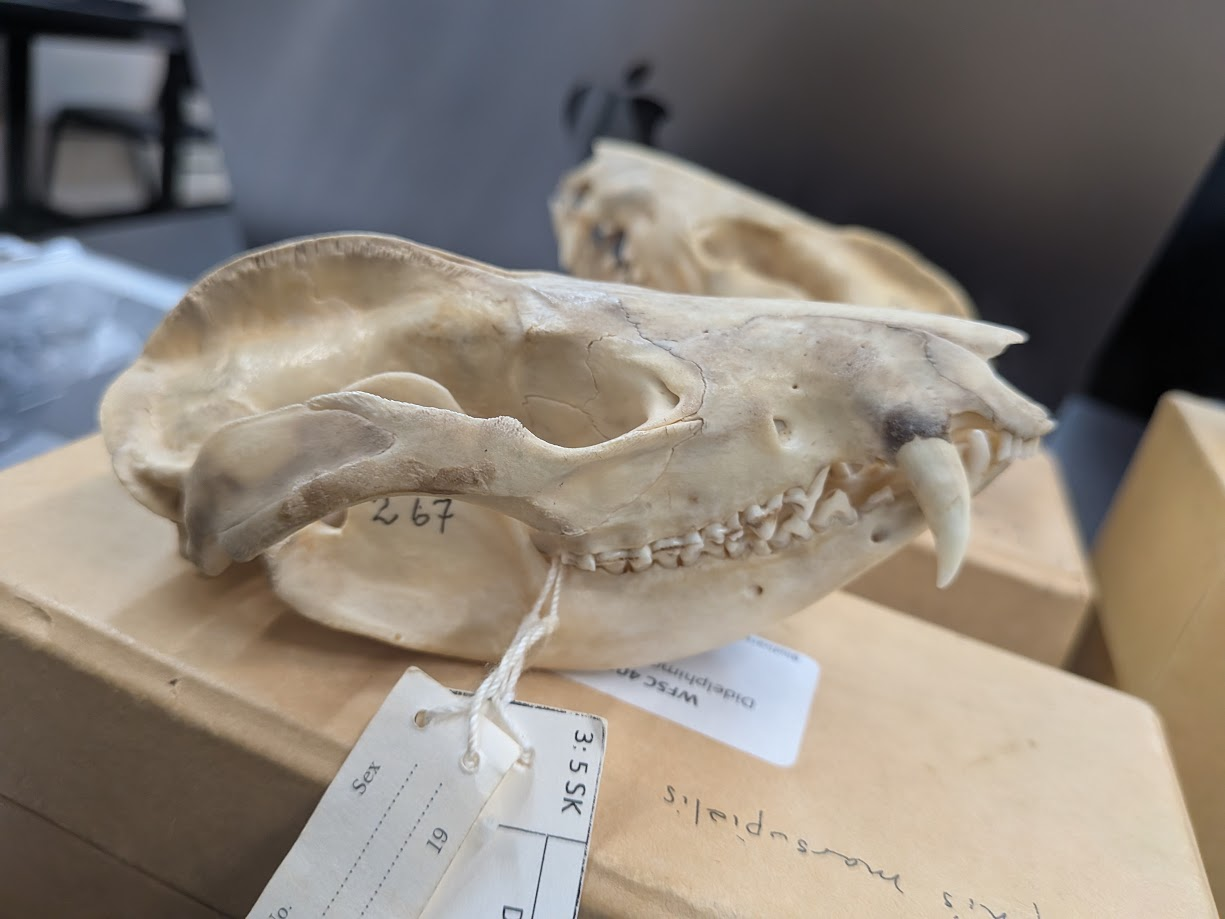
Order: Didelphimorphia
Family: Didelphidae
Range: Southern Canada through southern Argentina (North, Central, & South America)
Diet: Insectivorous, carnivorous, or omnivorous
opossum

Order: Monotremata
Family: Ornithorhynchidae
Range: Eastern Australia and Tasmania
Diet: Aquatic invertebrates and vegetation
platypus

Order: Monotremata
Family: Tachyglossidae
Range: Australia, Tasmania, and New Guinea
Diet: Termites, ants, earthworms, and other insects
echidna

Order: Diprotodontia
Family: Phalangeridae
Range: Australia, Tasmania, New Guinea, and other islands
Diet: Omnivorous
bush tail possum/cuscus

Order: Diprotodontia
Family: Phascolarctidae
Range: Wooded areas of eastern Australia
Diet: Eucalyptus
koala

Order: Diprotodontia
Family: Vombatidae
Range: Australia
Diet: Herbivorous
wombat
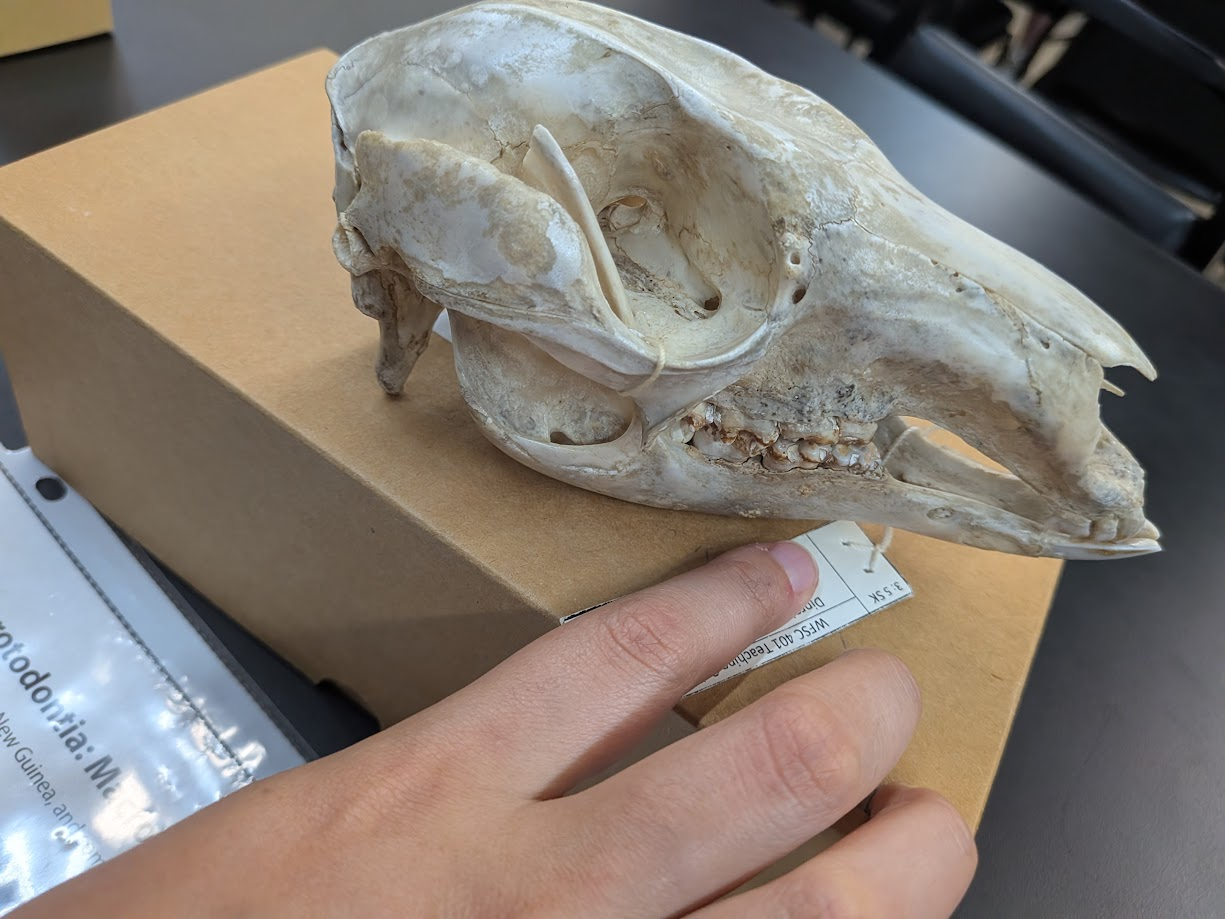
Order: Diprotodontia
Family: Macropodidae
Range: Australia, New Guinea, and some nearby islands
Diet: Herbivorous
kangaroo
Mammal Classification
Domain: Eukarya
Kingdom: Animalia
Phylum: Chordata
Subphylum: Vertebrata
Class: Mammalia
Monotreme Subclass
Prototheria
Monotreme Order
Monotremata
Marsupial Subclass
Theria
Marsupial Infraclass
Metatheria
Syndactylous
Digits 2 and 3 on foot are fused (ex. kangaroo, koala, wombat)
Polydactylous
Digits 2 and 3 on foot are separate (ex. opossum)
Pollux
First digit of forelimb
Hallux
First digit of hindlimb
Polyprotodont
Possessing 4 or 5 pairs of upper incisors
ex. Opossum
Diprotodont
Possessing 1 pair of enlarged lower incisors and 3 or fewer pairs of upper incisors
ex. Kangaroo
Plantigrade
Walking on the soles of the feet with the heel touching the ground (Sweat glands to keep soles moist)
Digitigrade
Walking on toes with heels not touching the ground
Unguligrade
Walking on tips of the toes/hooves
Saltatorial
Adapted for leaping. Hind legs much longer than forelimbs

Order: Proboscidea
Family: Elephantidae
Range: Sub-saharan Africa, southeast Asia, India, and Nepal
Diet: Herbivore
elephant

Order: Hyracoidea
Family: Procaviidae
Range: Sub-Saharan Africa, through Egypt to the Near East
Diet: Herbivorous
hyrax

Order: Sirenia
Family: Trichechidae
Range: Coast of the southeastern US, West Indies and adjacent parts of South America, Amazon and Orinoco drainages of South America and tropical west Africa
Diet: Herbivore (marine algae)
manatee

Order: Sirenia
Family: Dugongidae
Range: Coasts of east Africa, Red Sea, Asia, and Australia
Diet: Herbivorous (marine algae)
dugong

Order: Tubulidentata
Family: Orycteropodidae
Range: Sub-Saharan Africa
Diet: Ants, termites
aardvark
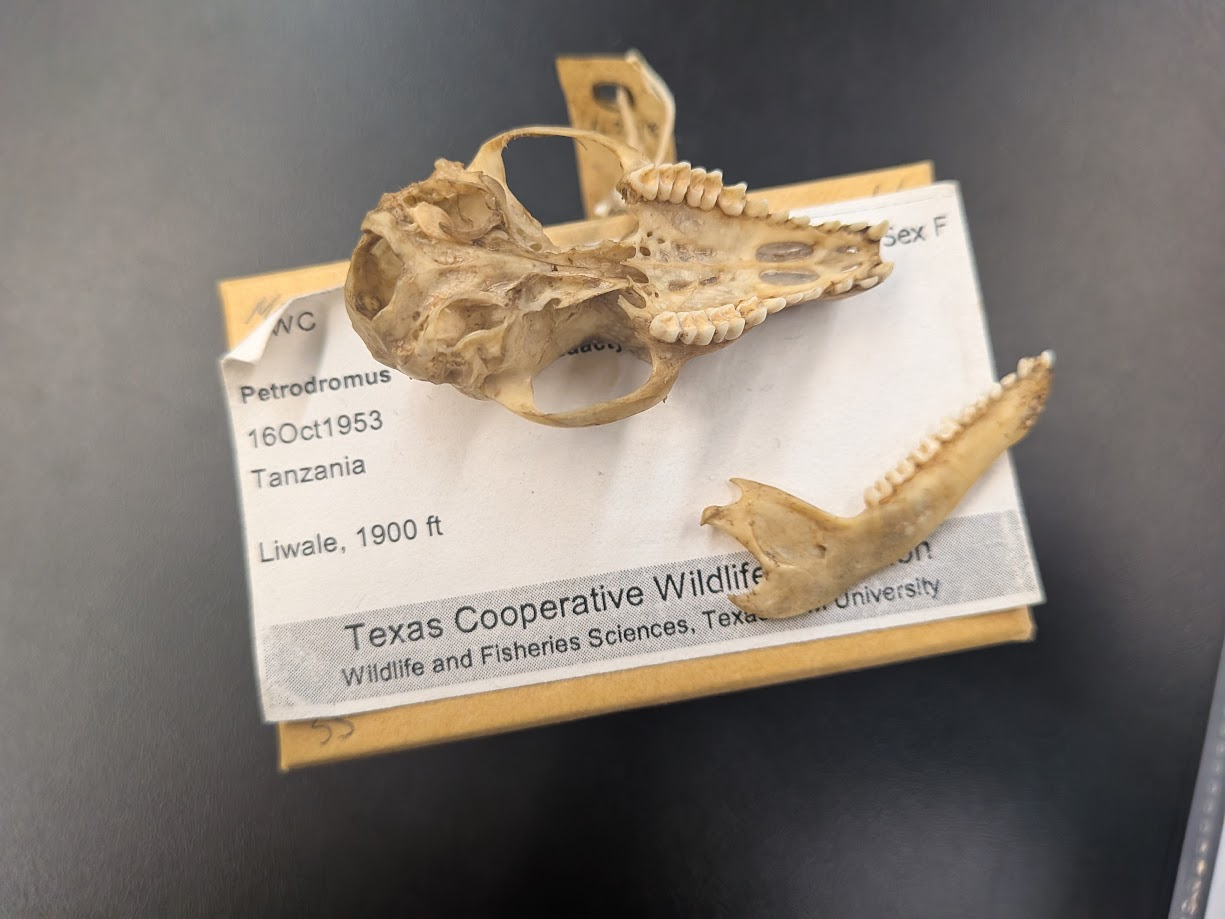
Order: Macroscelidea
Family: Macroscelididae
Range: Sub-Saharan Africa (disjunct)
Diet: Insectivorous
elephant shrew

Order: Afrosoricida
Family: Tenrecidae
Range: Western and Central Africa and Madagascar
Diet: Insectivorous
tenrec

Order: Cingulata
Family: Dasypodidae
Range: Americas, Kansas south to central Argentina
Diet: Insectivorous and herbivorous
armadillo

Order: Pilosa
Family: Choloepidae (two-toed sloths)
Range: Central America throughout northern South American and in the Amazon basin
Diet: Folivore with some fruits, buds, and small vertebrates

Order: Pilosa
Family: Bradypodidae (three-toed sloths)
Range: Central and South America (south to southern Brazil)
Diet: Folivorous

Order: Pilosa
Family: Cyclopedidae
Range: Forests from southern Mexico to Bolivia; can also be found in Brazil
Diet: Insectivorous (Ants and termites)
silky anteater

Order: Pilosa
Family: Myrmecophagidae
Range: Central and South America (Southern Mexico to northern Argentina)
Diet: Ants, termites (occasionally other invertebrates)
anteater
Key marsupial features
young born very early stage in development
5/4 incisors
only one premolar is diphyodont the rest monophy
large vacuities on palate
have epipupic bones

Order: Dermoptera
Family: Cynocephalidae
“flying lemur”
dilambdodont
Frugivorous
South East Asia

Order Scandentia
Family Tupaiidae
“treeshrew”
insects and fruits
South Asia, China, Southeast Asia
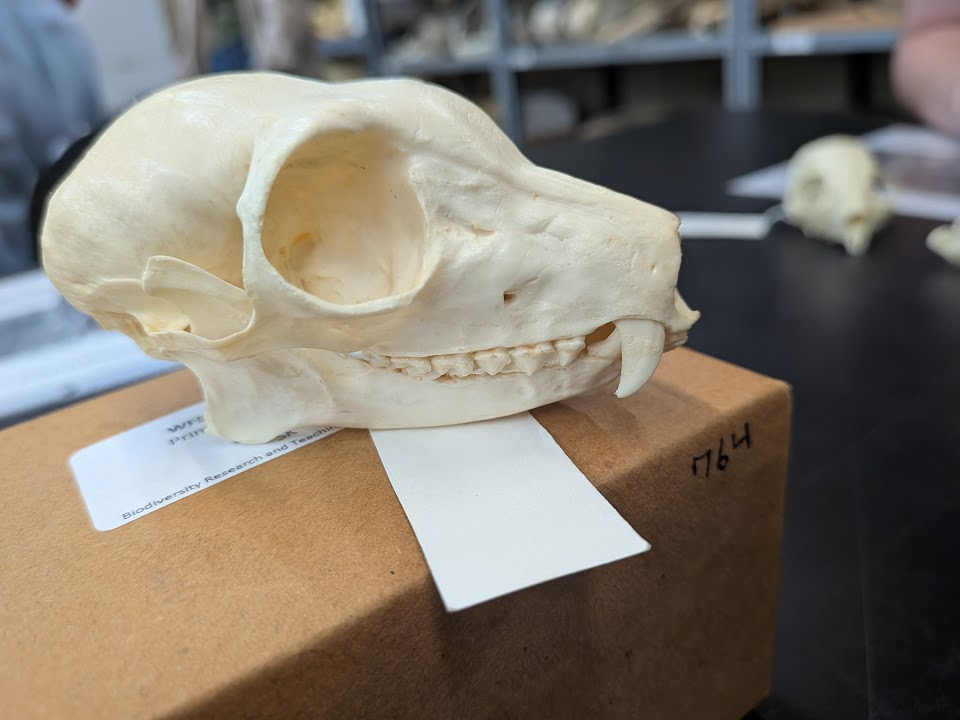
Suborder: Strep
Family: Lemuridae
dental comb and baculum
Herbivorous
Madagascar and Comoros

Suborder: strep
Family: Daubentoniidae
Aye-aye
Hook larvae with their 3rd finger, fruit, egg, bamboo, no toothcomb
Madagascar
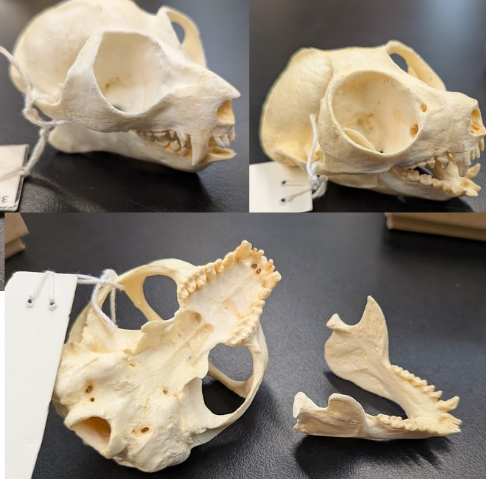
Suborder: strep
Family: Lorisidae
Loris/Potto
Insectivorous and carnivorous but also eat fruits
Toothcomb
Central Africa, Southeast Asia, Sri Lanka

Suborder: strep
Family: Galidae
Bushbaby/galago
Insectivorous/Omnivorous
Toothcomb and baculum
Africa

Suborder?
Strep (cheiro)

Suborder?
strep (indriidae)
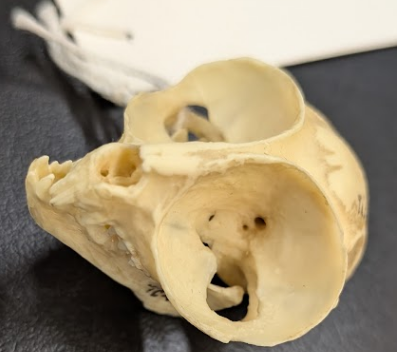
Suborder: Haplo
Family: Tarsiidae
Insectivorous
Southeast Asia

Suborder?
Haplo platy (aotidae)

Suborder?
haplo platy (atelidae)

Suborder?
haplo platy (pitheciidae)
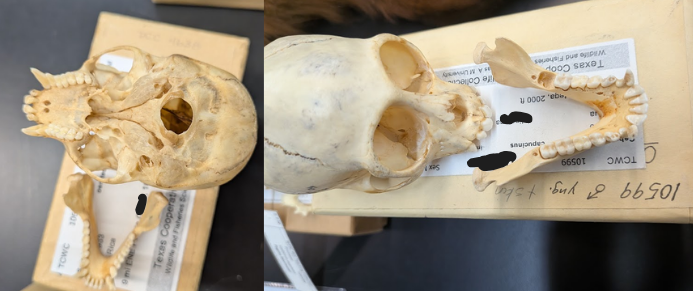
suborder: haplo platy
family: cebidae
Omnivorous
Central and South America

Suborder: haplo platy
Family: Callitrichidae
Insectivorous
Central and South America

Suborder: haplo cata
Family: cercopithecidae
bilophodont
Omnivorous
Gibraltar, NW Africa, Sub Saharan, Central/SE Asia, East Asia