nervous system functioning and stress defs
 Call Kai
 Learn
Learn Practice Test
 Spaced Repetition
 Match
Match Flashcards
 Knowt Play
1/38

There's no tags or description
Looks like no tags are added yet.
39 Terms
Central nervous system (CNS)
Include brain and spinal cord.
Receives neural messages and transmits neural messages. Receives sensory info from PNS. Sends motor information to effector.
Brain (part of CNS)
Organ contained within skull that coordinates mental processes and behaviour, and regulates bodily activity.
Command centre of NS, responsible for receiving and processing info and generating responses to it.
Spinal cord (part of CNS)
Cable of nerve tissue that extends from the brain, connecting it to peripheral nervous system (PNS).
Communicates neural info by: Carrying sensory messages along ascending tracts from the PNS to the brain for processing as well as sending motor messages along descending tracts from brain to muscles via PNS
Peripheral nervous system (PNS)
major division of NS, includes all nerves throughout the body, outside CNS (brain and spinal cord).
Somatic nervous system
division of pns
transmits neural messages related to voluntary motor movement.
Has two major functions:
· Transmits sensory info from receptors in the sense organs to CNS. Sensory (Afferent) Neuron
· To control voluntary skeletal muscle (muscles connected to the skeleton that carry out voluntary motor movements) movement via messages sent from CNS. Motor (Efferent) Neurons
Autonomic nervous system (ANS)
Divison of PNS
Relays messages between CNS and involuntary muscles (visceral muscles, organs, and glands), operating without conscious awareness. Consists of sympathetic and parasympathetic nervous systems.
Visceral muscles, organs, and glands.
not connected to skeleton, self-regulating and do not require conscious control.
Neuron, and types.
individual nerve cells that receive, process and transmit information. When neurons communicate with each other = neural transmission, occurs when neuron is activated, or fires, sending out an electrical impulse or action potential.
Motor (efferent) neurons: transmit neural messages about motor movement from CNS to PNS. Primarily In the PNS.
Sensory (afferent) neurons: transmit neural messages about bodily sensations from PNS to CNS. Primarily In the PNS
Interneurons: enable sensory neurons to communicate with motor neurons.

Sensory receptor
a nerve ending that detects internal sensations in body and external sensations from the environment
Neural synapse
region that includes the axon terminals of the presynaptic neuron, the synaptic gap, and the dendrites of the postsynaptic neuron. 2 neurons in a neural pathway meet at what is known as the neural synapse.

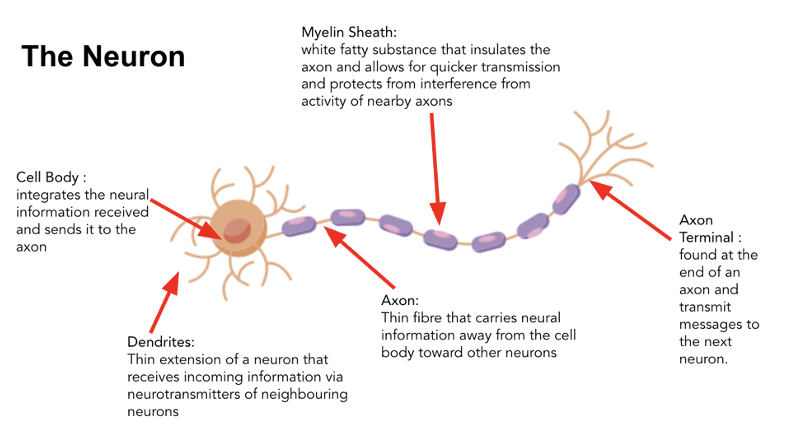
Parts of neuron:
Dendrite: branched extension of a neuron on which receptor sites are located
Receptor site: protein molecule on the dendrites of a neuron that receives neurochemicals.
Action potential: electrical impulse that travels down the axon of a neuron.

Synaptic transmission
chemical conveyance of neural information between two neurons across a neural synapse.

Glutamate
main excitatory neurotransmitter in the nervous system. involved in learning, memory formation, and synaptic plasticity in the brain.
GABA (gammaaminobutyric acid)
main inhibitory neurotransmitter in the nervous system. reduce neuronal excitability and induce calming effects. It regulates anxiety, stress, and fear, helps manage sleep, and prevents overexcitation in the brain
Synaptic plasticity
ability of synaptic connections to change over time in response to activity or experience. Changes include Formation, Strengthening, Weakening. Neural synapses change physically in response to experience. 3 mechanisms of synaptic plasticity: Sprouting, Rerouting, Pruning.
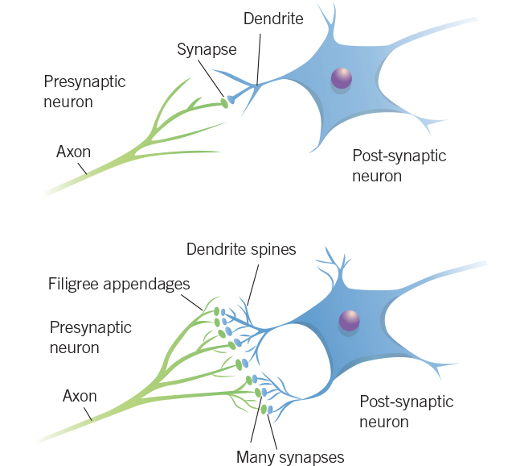
Sprouting
ability of dendrites or axons to develop new extensions or branches (growth).
Increases reach of neuron and helps in formation of new synaptic connections.
Change the physical structure of the neuron (Growth of dendritic spines on postsynaptic neuron, “bushier” dendrites. Growth of axon sprouts on axon terminal of presynaptic neuron. Formation of additional synapses where these dendritic spines and filigree appendages meet (synaptogenesis)).
Rerouting
ability of a neuron that is connected to a damaged neuron to create an alternative synaptic connection with an undamaged neuron.
Can be used in adaptation of behaviours to become more efficient. Synaptic connection is reestablished via alternative routes to restore brain functioning. Likely that the process of sprouting will occur as neurons in this ‘rerouted’ pathway would strengthen their connection.

Pruning
elimination of synaptic connections that are not adequately activated.
brain works out which routes are most efficient so that excess branches can be pruned away once this is established, making communication between neurons in this pathway more direct and efficient. Necessary to accommodate stronger and more essential synaptic connections- consequently enhancing brain function efficiency.

Memory
process of encoding, storing, and retrieving information that has been previously encountered
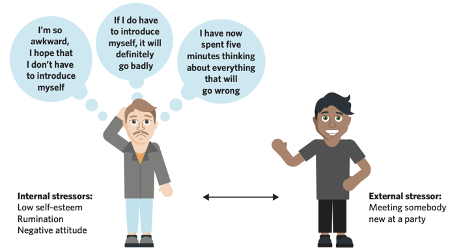
Stressor
stimulus (internal or external) that prompts the stress response.
Internal stressor: stimulus within person’s body that prompt stress response, psychological and biological. (physical pain, high expectations you have of yourself, Attitude, repetitive thinking, Low Self-Esteem, Nervous System Dysfunction.)
External: stimulus from outside body that prompts stress response (environmental events and social or cultural stressors, life events, loss of a significant relationship or environmental catastrophes).
distress vs eustress
d- form of stress characterised by neg psychological state. does not feel as though they have adequate resources to cope with a stressor. It can lower an individual’s level of mental wellbeing.
e- form of stress characterised by + psychological state
Acute stress vs Chronic stress
A: Form of stress, intense psychological and physiological symptoms that are brief, quick recovery once removed.
C: form of stress, endure for long time, prolonged and constant feeling of stress. Does not demand an immediate response, energise body over a period of weeks or months.
Tends to be worse for your body (suppress immune system, upset digestive, reproductive systems, increase risk of heart attack and stroke, speed up ageing). More vulnerable to anxiety, depression and other mental health problems.
FFF response
involuntary and automatic response to threat that takes form of either escaping it, confronting it, or freezing in the face of it.
Cortisol
Key stress hormone that is released at higher levels when people are stressed to increase their ability to cope.
When stressed, adrenal glands are activated (part of FFF response) associated with various biological responses (increased heart rate and respiratory rate).
In chronic stress, stressor persists and body continues to perceive it as a threat, stress hormone called cortisol is produced and is released from the adrenal cortex.
Allows body to continue to stay on high alert over long periods of time. Released over a prolonged period and takes longer to be secreted in the body
Cortisol can: Improve metabolism, Reduces inflammation, Boost energy levels, Increase blood glucose levels, Heighten alertness, Increase the body’s ability torepair tissue
· Divert energy from non-essential
bodily functions such as digestion, growth and reproduction.
***BUT, long term levels can suppress the immune system = more susceptible to contagious illnesses as well as psychiatric conditions such as anxiety and depression.
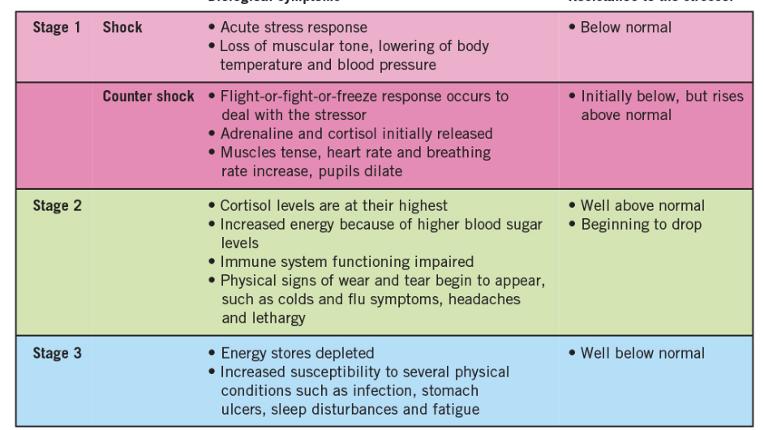
General Adaption Syndrome (GAS): SCARE
biological model involving three stages of physiological reactions that person experiences in response to persistent stressor.
S: shock
C: counter shock
A: alarm reaction
R: resistance
E: exhaustion

alarm reaction: shock and counter shock
first stage of GAS, involve initial decrease and subsequent increase in bodily arousal in response to an immediate stressor.
Shock: substage of alarm reaction that occurs first,
decrease bodily arousal for brief period following initial exposure to stressor.
Counter shock: 2nd substage of alarm reaction stage,
sympathetic NS responses occur that mobilise the body to respond to the stressor.

Resistance:
2nd stage of GAS involving maintaining high levels of bodily arousal in response to persistent stressor over prolonged period, has to adapt to. body’s ability to deal with stressor and level of resistance to it continues to rise above norm.
Cortisol: levels are at highest, helps repair damage, maximises body’s resources to cope, adapt to stressor over time. (For example, increased glucose and fat levels provide us with extra energy to deal with the stressor, and increased protein concentration in the blood improves the body’s ability to repair any damage.)
Body: cannot adapt to demands forever. Continuing high levels of stress hormones (cortisol), interferes with body’s ability to fight disease by suppressing the immune system. Eventually, begins to show signs of damage (cold and flu symptoms, sore throat, lethargy and headaches). Cannot
effectively resist threat or deal with properly (lead to: social withdrawal, moodiness, irritability).

Exhaustion
3rd stage of GAS
depletion of energy levels and bodily resources, result in inability to cope with stressor.
Primary appraisal
Appraisal: assessment of stimuli.
Primary appraisal: initial process of evaluating nature of stressor, kind of stress it might cause. Decides: if incoming stimulus will cause stress.
3 initial ways it is appraised:
· Not stressful - Benign-Positive: neutral/good, does not cause stress for the individual.
· Not stressful - Irrelevant: a non-issue for individual.
· Stressful: source of worry/ emotional significance for individual.
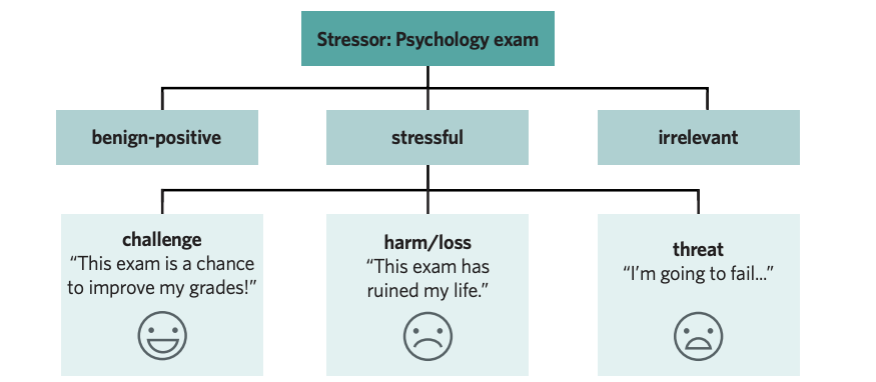
if primary appraisal considers event to be stressful can be either: harm/loss or threat or Challenge
H/L: further appraisal of a stressor as having caused some damage to individual.
T: further appraisal of a stressor as potentially causing damage to individual in future.
C: further appraisal of a stressor as potentially providing a positive opportunity for growth or change for individual.
Secondary appraisal
process of evaluating resources required and available for coping (process of dealing with a stressor).
either:
coping resources are inadequate: stress is heightened
coping resources are adequate: stress is minimised/managed

Emotion-focused coping vs problem focused coping
Emotion-focused coping: use of coping strategies that target emotional components of stressor, dealing with it indirectly rather than confronting its source.
Problem focused coping: use of coping strategies that directly target source of stressor, aiming to reduce it in practical way.


Gut microbiota
produces important neurotransmitters and can indirectly influence mood and cognition. Microbiota in gut are involved in regulating the production, storage and release of neurotransmitters by neurons in ENS. This can have effects within ENS itself as well as enabling fast signals to be transmitted to the brain via the vagus nerve.
• A nutritious and varied diet (e.g. high in fibre and probiotics) will increase the diversity of a nurse’s beneficial gut microbiota. Hence, a nutritious diet/healthy gut microbiota is likely to enable a more positive response/greater resistance to stress
Gut-brain axis
bidirectional connection between gut and brain through enteric and CNS.
· produces/contributes to the regulation of neurochemicals (e.g. serotonin, GABA)
· supports/maintains gut health
· aids with digestion
· increase/support immune function.
enteric nervous system
network of nerves in gut and is subdivision of autonomic nervous system. Controls the digestive system and is directly connected to the CNS but can operate independently from the CNS. Connections between the enteric nervous system and the brain contain both afferent (sensory) nerves and efferent (motor) nerves. Happens via the vagus nerve and gut microbiota.
vagus nerve: longest cranial nerve that connects gut and brain, enabling them to communicate.
approach strategies
:coping strategies that directly confront the source of the stress and thus reduce or eliminate it. (Seeking advice from an expert, talking through your problems with a friend or family, accepting responsibility for a problem, reframing a situation to recognise the positive aspects). Developing a plan to increase sense of control around an issue.
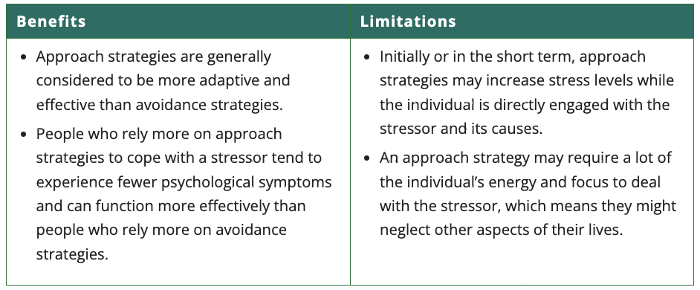
avoidance strategies
coping strategies that involve evading or distancing oneself from the source of stress. Generally maladaptive (involve changing behaviour to avoid thinking about, feeling or doing difficult things). Take focus away from stressor and are usually temporarily beneficial as they can relieve stress in the short term. (Procrastination, Napping, Substance use or abuse, Denial, Use of distractions such as television or computer games.)

self efficacy (in relation to coping strategies)
belief in our own ability and that our actions can influence outcome. Can be high and low (control own destiny)
resilience
ability to bounce back following adversity