Disorders of the Equine Lower Respiratory Tract 2
 Call Kai
 Learn
 Practice Test
 Spaced Repetition
 Match
 Flashcards
 Knowt Play
1/38

There's no tags or description
Looks like no tags are added yet.
39 Terms
What are the main differentials for coughing in equines?

When might we consider an infectious cause of respiratory disease?
• Answer yes to any of these questions
- Pyrexia?
- Is the horse unwell?
- Enlarged lymph nodes
- Other animals affected
• Then consider infectious cause
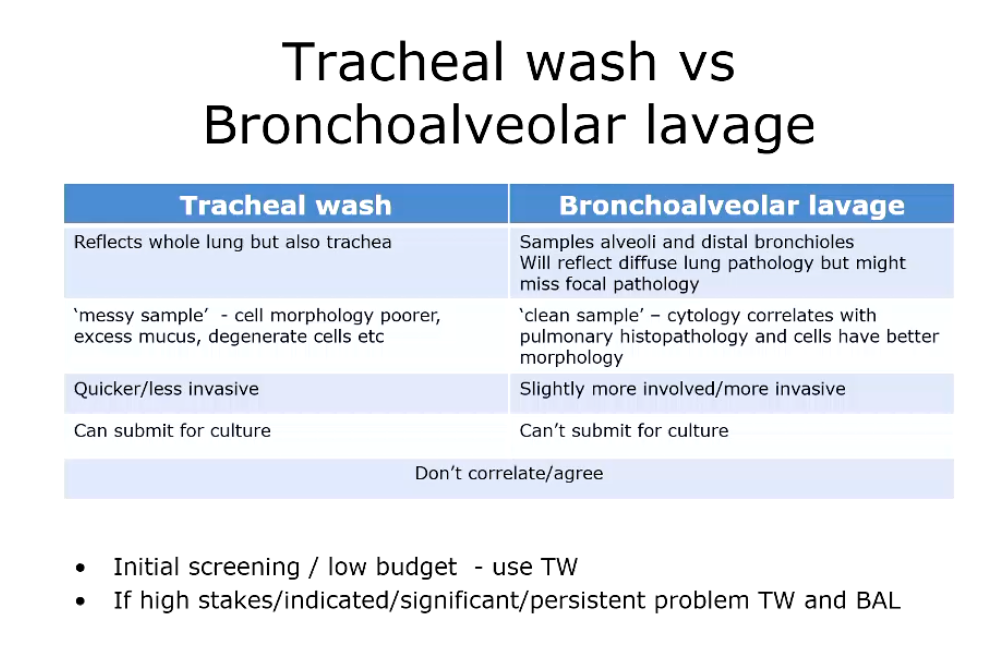
Compare tracheal wash to BAL, regarding the importance and drawbacks of each.
What is Summer Pasture Associated- Severe Equine Asthma,
Cannot control allergens outside - sometimes low dust stables may help

What medications are useful for summer pasture associated SEA?
• Medications as per SEA
Use of corticosteroids during expected periods of challenge
• Can have acute exacerbations
'Dyspnoea' and cyanotic
Hot humid summer evenings
Use of atropine may be warranted (single use) - rescue use while other drugs work
What are the main features of Mild to moderate equine asthma (MEA)?
• Young athletic horses (but can be any age)
• Often subtle clinical signs at rest
Exercise intolerance/poor performance
Coughing
Increased respiratory secretions
No increased expiratory effort (dyspnoea) at rest
But perhaps at exercise?
• Aetiology? - multifactorial
Environmental dusts/organic particles/gases etc
Bacteria/viruses
Genetics, immune status
Exercise induced pulmonary haemorrhage (EIPH)
Previously known as inflammatory airway disease
How is Mild to moderate equine asthma (MEA) diagnosed?
Grade the mucus
Rule out infection
Cytology of BAL - moderate, NOT as dramatic as SEA

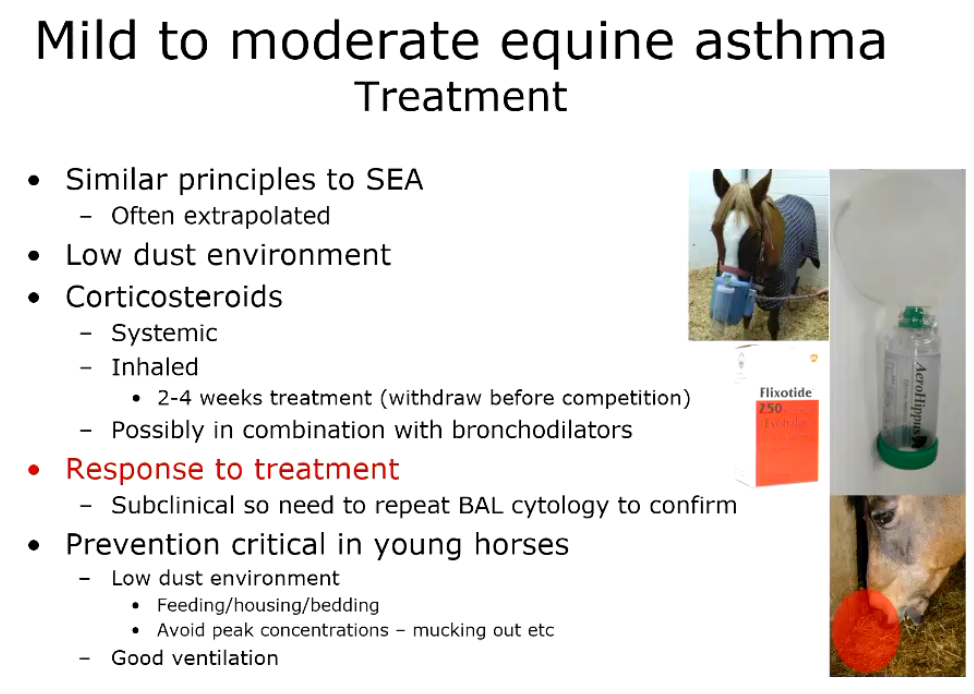
What does treatment look like for Mild to moderate equine asthma (MEA)?
Summarize the differences between MEA and SEA.

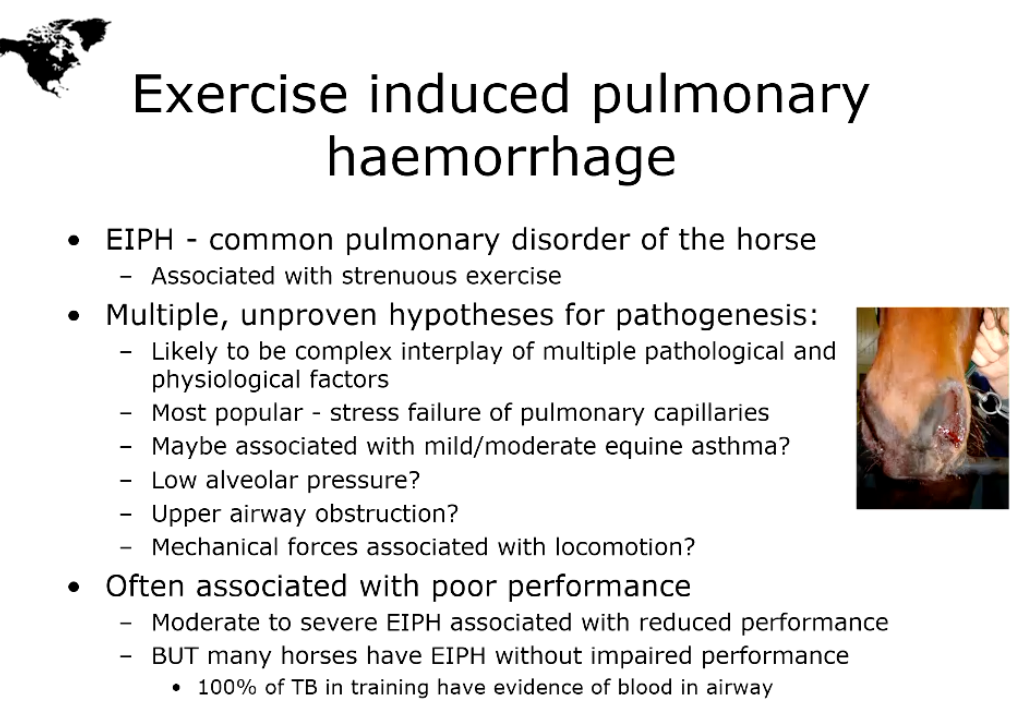
What is exercise induced pulmonary hemorrhage? (EIPH)
Associated with RACEHORSES - true sprinting and strenuous exercise at their maximal capacity - unknown pathogenesis
What are the presenting and clinical signs of EIPH?
• Presenting Signs
- none (!) or dramatic
- +/- post exercise/race epistaxis
- +/- poor performance
- +/- repeated swallowing post exercise/race
- +/- prolonged recovery post exercise/race
• Clinical signs
- none
- +/- epistaxis
- +/- abnormal lung sounds (rarely)
What does the diagnosis look like for EIPH?
• Endoscopy (30-60 min post exercise)
• BAL cytology
free red blood cells
haemosiderophages
+/- neutrophils
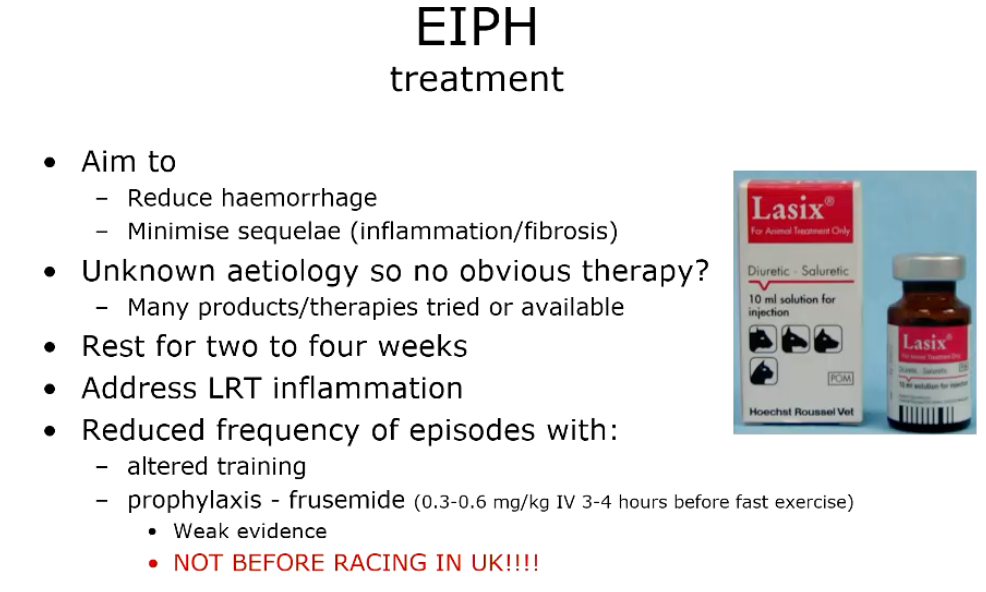
What does treatment for EIPH look like?
Describe the features of interstitial lung disease.
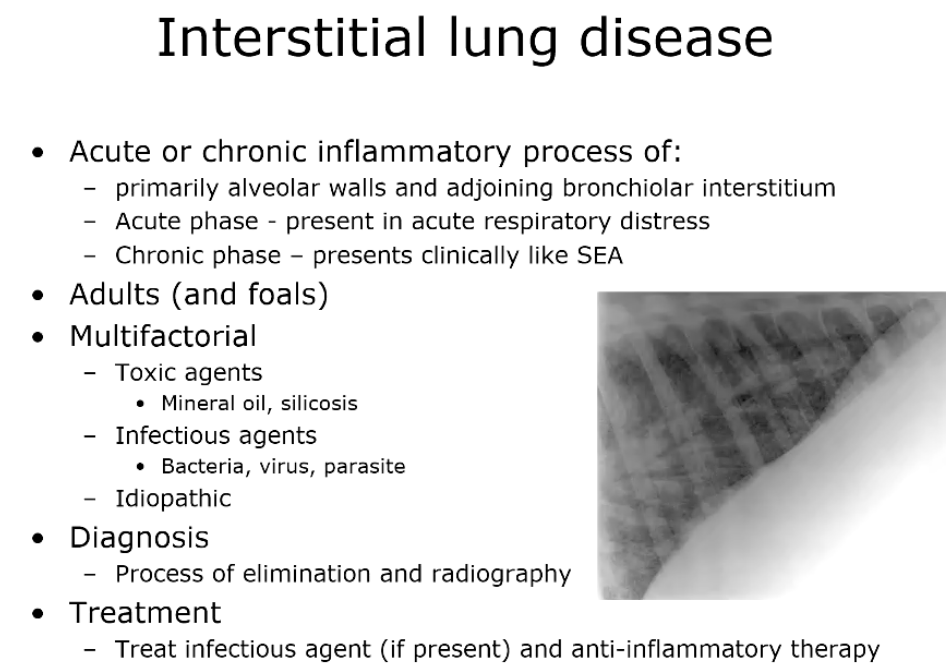
What are the main features of Equine multi nodular pulmonary fibrosis (EMPF)?
Type of interstitial lung disease

What are the diagnostics of Equine multi nodular pulmonary fibrosis (EMPF)?

What are the main features of Dictylocaulus arnfieldi (Lungworm)?
Important to determine if housed with donkeys
Not full patent infection in horses - just cause irritation - no eggs will be produced

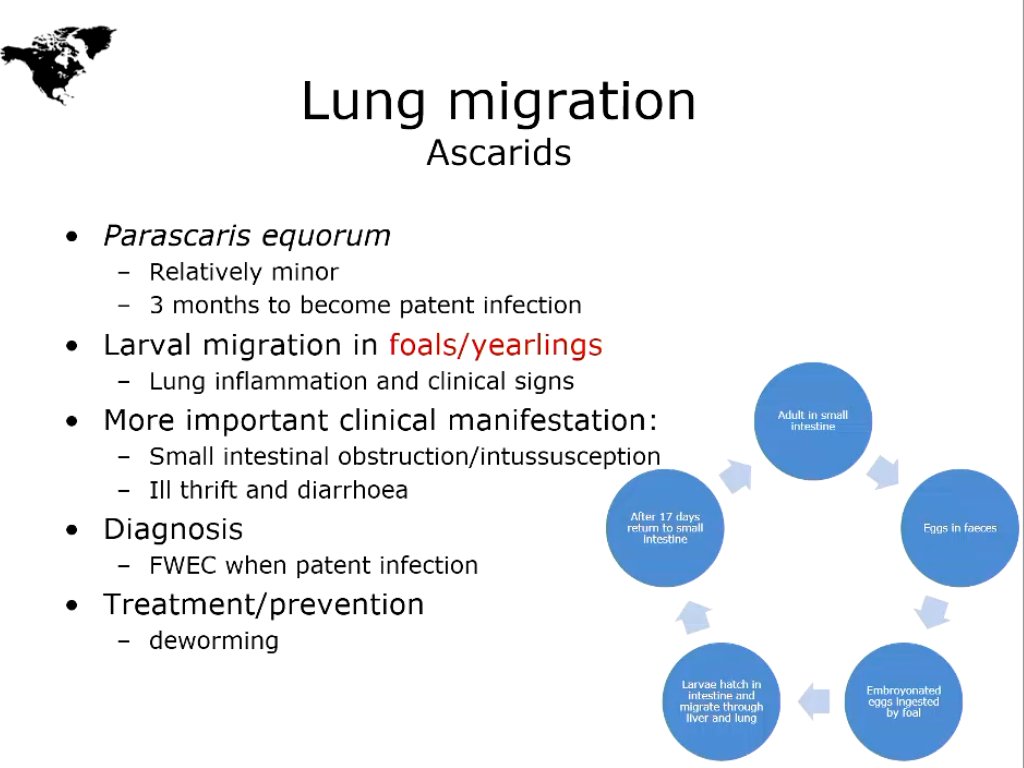
What are the main features of Ascarids?
Migrate through lungs - causes clinical signs in high amounts
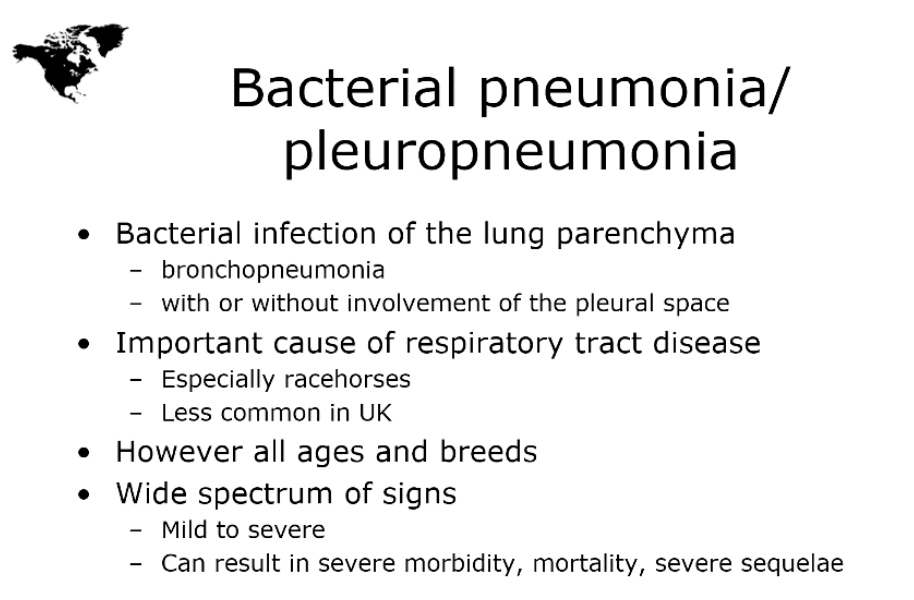
What are the main features of bacterial pneumonia/pleuropneumonia?
What is the aetiology of bacterial pneumonia?

What is the pathogenesis of bacterial pneumonia?

Summarize the pathogenesis of bacterial pneumonia. (Due to overwhelming challenge of LRT).
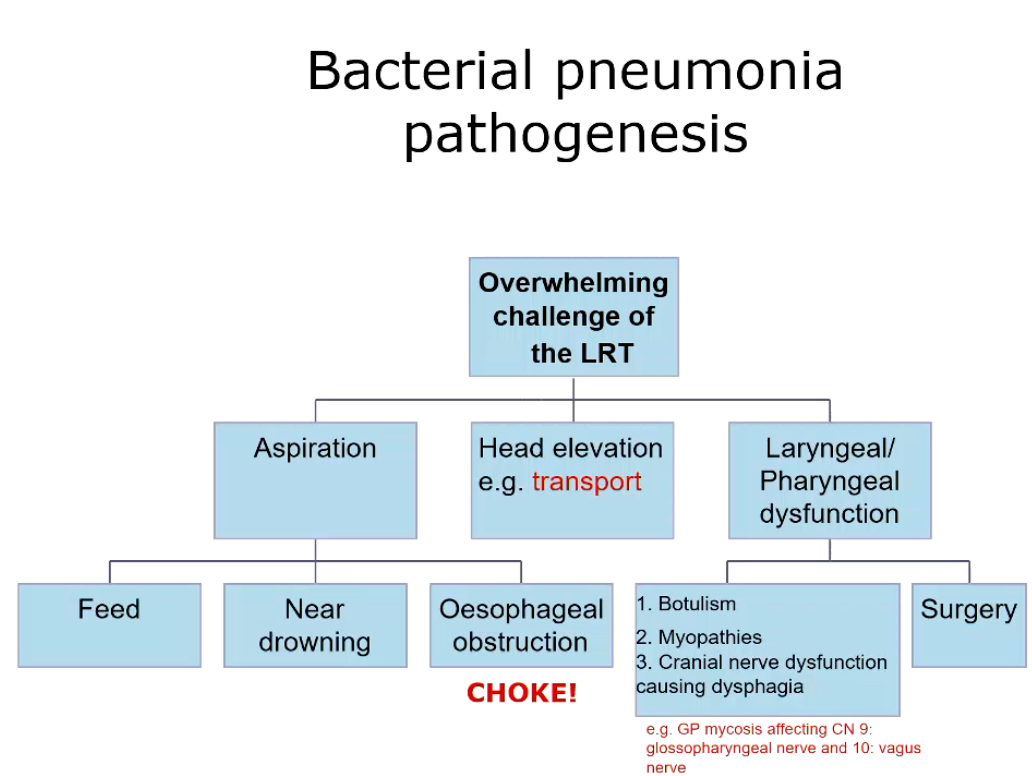
Summarize the pathogenesis of bacterial pneumonia. (Due to impaired LRT defenses).

What are the presenting signs of bacterial pneumonia?

What clinical signs might be noticed in bacterial pneumonia?

Most causes of bacterial pleuropneumonia are due to…
Extension of bacterial pneumonia

What is the diagnosis of bacterial pneumonia made on?
If really acute → can be neutropenic
• Endoscopy
laryngeal/pharyngeal abnormality?
mucopus in trachea
• Tracheal wash
- Culture for aerobic and anaerobic
- Cytology
Increased neutrophils >40% but up to 100% possible
Degenerate neutrophils and bacteria (intracellular)
• Diagnostic imaging
Ultrasonography
Radiography
• Thoracocentesis
Pleural effusion
• Ultrasonography
Comet tails - pleural thickening
Lung consolidation
Abscesses
Pleural fluid, fibrin etc
• Main findings often ventral
Aspiration 'follows gravity'
Ventral lung fields most affected
Systematic scan
Caudal to cranial
Dorsal to ventral
Identify end of lung field within each IC space
Right hemithorax affected more often
More direct route

What does pharmacological treatment look like for bacterial pneumonia?

What does supportive treatment look like for bacterial pneumonia?

When monitoring for a response to treatment for bacterial pneumonia, what are you looking to see?

What are complications of bacterial pneumonia?
• Abscess formation
• Pleural adhesions/abscess
• Cranial mediastinal mass/abscess
• Laminitis
• Broncho-pleural fistula
• Thrombophlebitis
• Pneumothorax
• Pulmonary necrosis
Reminder**
What are the acute phase proteins?

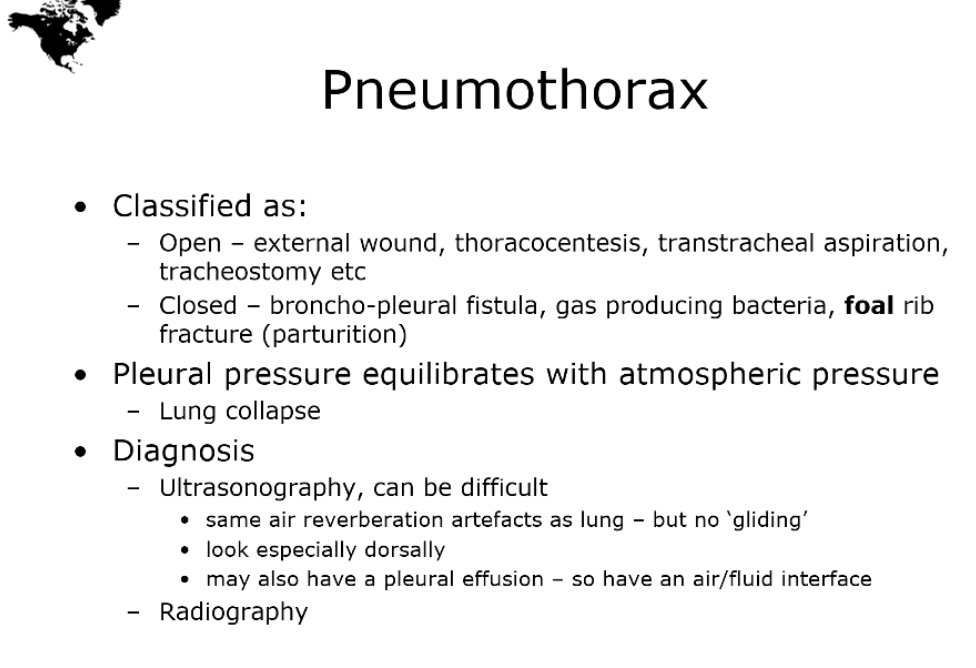
What are the main features of a Pneumothorax?
• Diagnosis
- Ultrasonography, can be difficult
same air reverberation artefacts as lung - but no 'gliding'
look especially dorsally
may also have a pleural effusion - so have an air/fluid interface
- Radiography
• Treatment
- Open - seal wound with plastic sheet or surgical closure
Remove air via trocar
- Closed
Remove air via trocar until source of air entry found
How does bacterial pneumonia present in foals?
Foals are very susceptible

What are the main features of rhodococcus equi?
Causes bacterial pneumonia in foals

What does treatment look like for rhodococcus equi?

What are some main causes of pleural effusion?
HF - rare in horses

Describe the pathogenesis of pleural effusion.

Describe the main features of neoplasia.
Most commonly lymphoma (Remember no benign form)
Other:
• Mesothelioma
Primary thoracic tumour
• Pulmonary granular cell tumours
Primary lung tumour
May be misdiagnosed as SEA
Nodules may be visible in airways
• Metastatic neoplasia
Adenocarcinoma
Melanoma
Haemangiosarcoma
Squamous cell carcinoma
