PSYC 169 Midterm 1
 Call Kai
 Learn
 Practice Test
 Spaced Repetition
 Match
 Flashcards
 Knowt Play
1/288

There's no tags or description
Looks like no tags are added yet.
Name | Mastery | Learn | Test | Matching | Spaced | Call with Kai | Chat |
|---|
No analytics yet
Send a link to your students to track their progress
289 Terms
neuropsychology
the scientific study of how the brain supports cognition, emotion, and behavior
overarching method in neuropsychology
examining damaged brains and the resulting deficits/differences in mental function
dorsal
superior/top
ventral
inferior/bottom
anterior
front
posterior
back
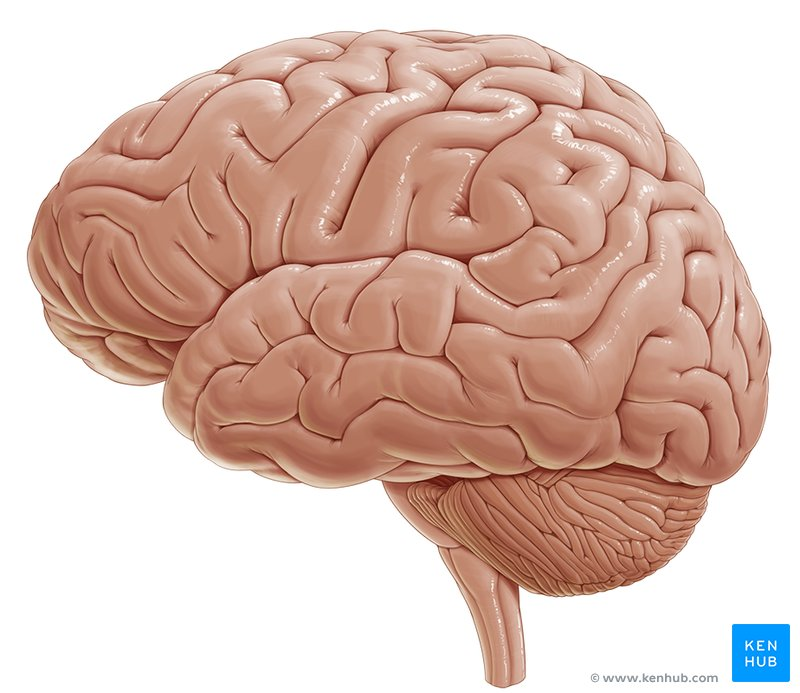
what view of the brain is this?
lateral

what view of the brain is this?
dorsal

what view of the brain is this?
ventral

what view of the brain is this?
coronal

what view of the brain is this?
saggittal

what view of the brain is this?
horizontal
unilateral
one-sided
bilateral
two-sided
ipsilateral
same-sided
contralateral
opposite-sided
T or F: there are way more glial cells than neurons in the brain
false
T or F: the number of glial cells and neurons is almost 1:1
true
the function of a neuron is determined by its ___
inputs and outputs
which glial cells form the blood brain barrier
astrocytes
which glial cells modulate synapses (connections between neurons)
astrocytes
which glial cells form myelin around CNS neurons
oligodendrocytes
which glial cells act as immune cells
microglia
which glial cells become phagocytes
microglia
which glial cells line ventricles
ependymal cells
which glial cells produce CSF
ependymal cells
gyrus: bump or valley?
bump
sulcus: bump or valley?
valley
[white/grey] matter is made by myelinated axons and glia cells
white
[white/grey] matter is made by cell bodies
grey
corpus callosum
white matter tract that connects the L and R hemispheres
the brain is cushioned by three things, which are:
CSF, meninges, skull
ventricles
spaces filled with CSF that protect the brain
ventricles functions
absorb shock
maintain homeostasis
maintain intracranial pressure
remove toxins
anterior cerebral artery supplies blood to:
superior/dorsal-medial parts of frontal and parietal lobes
posterior cerebral artery supplies blood to:
occipital and temporal lobes
middle cerebral artery supplies blood to:
lateral parts of frontal, parietal, and temporal lobes
each hemisphere responds mainly to sensory stimulation coming from the [ipsilateral/contralateral] side of the body
contralateral
each hemisphere controls the musculs on the [ipsilateral/contralateral] side of the body
contralateral
decussation
crossing of nerve fibers
info from the R visual field is processed in the [R/L] hemisphere
L
info from the [R/L] visual field is processed in the R hemisphere
L
T or F: info from the R eye is processed in the L hemisphere
false
acquired brain damage (ABI)
any brain damage that occurs after birth (not hereditary, congenital, degenerative, or induced by birth trauma)
two main types of ABI:
TBI and nTBI
TBI has an [internal/external] cause
internal
nTBI has an [internal/external] cause
external
open TBI
object penetrates the skull
#1 cause of open TBI
guns
closed TBI
blunt force, not penetrating the skull
open TBI example case study
Phineas Gage
T or F: all closed TBIs are concussions
false
acceleration, deceleration, rotation, and compression/deformation fall under which umbrella term?
closed TBI
acceleration damage
moving object strikes skull
deceleration damage
moving head strikes stationary object
rotation damage
twist of brain in skull
compression/deformation damage
change in shape of skull causing injury
acceleration example
bat swings on head
deceleration example
falling on ground and hitting head
rotation example
falling at an angle and hitting head
a cracked skull would be consider a(n) [open/closed] TBI
open
coup damage
occurs on the side of the impact
[coup/contrecoup] damage is more obvious externally and in brain scans
coup
contrecoup damage
occurs on the other side of the brain (not the impacted side)
T/F: coup damage is easier to miss than contrecoup damage
false
closed TBI subcategories
diffse, focal
diffuse TBI
widespread injury
focal TBI
injury to a specific, localized area
concussion is a type of [diffuse/focal] [open/closed] [TBI/nTBI]
diffuse closed TBI
mild, diffuse concussion: typical initial presentation
loss of consciousness (LOC) up to 30 minutes
post-traumatic amnesia/confusion (PTA) up to 24 hours
headaches, neckache, dizziness, nausea
no focal findings
mild, diffuse concussion: typical follow-up presentation
cognitive deficits (attention, memory, executive function)
systemic deficits (head/neckache, dizziness, poor sleep)
behavioral deficits (depression, anxiety)
mild, diffuse concussion: typical recovery time for a more severe LOC and PTA patient
months, years, or never
T/F: older patients take longer to recover from concussions
true
T/F: some patients still show deficits 1 year after their mild concussion
true
mild, diffuse concussion: typical recovery time for a less severe LOC and PTA patient
1-3 months
diffuse axonal injury (DAI) is a type of [diffuse/focal] [open/closed] [TBI/nTBI]
diffuse closed TBI
DAI is [easy/hard] to spot on MRI
hard
DAI: three types of damage
compression, tension, rotational force
diagnosis of this condition relies on symptoms rather than scans
diffuse axonal injury
diffuse axonal injury typical symptoms
confusion, disorientation
headache, nausea
drowsiness, fatigue, trouble sleeping
loss of balance, dizziness
changes in memory, concentration
chronic traumatic encephalopathy (CTE) is a type of [diffuse/focal] [open/closed] [TBI/nTBI]
diffuse closed TBI
T/F: chronic traumatic encephalopathy (CTE) can be diagnosed when it happens
false
chronic traumatic encephalopathy is caused by
repeated head trauma
chronic traumatic encephalopathy chemical explanation
accumulation of p-tau protein
which type of brain damage is associated with football players
chronic traumatic encephalopathy
T or F: chronic traumatic encephalopathy can be stopped after it begins
false
chronic traumatic encephalopathy: symptom progression
headache, impaired attention/concentration (similar to concussion)
depression, explosivity, short-term memory loss
executive dysfunction, cognitive impairments
dementia, word-finding difficulty, aggression
three types of diffuse injury
concussion, diffuse axonal injury (DAI), chronic traumatic encephalopathy (CTE)
two types of focal injury
contusion, hematoma
contusion
microhemorrhages (bleeding) from coup/contrecoup damage
hematoma
pooled blood
concussion is a [diffuse/focal] injury
diffuse
DAI is a [diffuse/focal] injury
diffuse
CTE is a [diffuse/focal] injury
diffuse
contusion is a [diffuse/focal] injury
focal
hematoma is a [diffuse/focal] injury
focal
concussion is a [TBI/nTBI]
TBI