AHIS398 Exam 1 Flashcards
 Call Kai
 Learn
Learn Practice Test
 Spaced Repetition
 Match
Match Flashcards
 Knowt Play
1/78

There's no tags or description
Looks like no tags are added yet.
Name | Mastery | Learn | Test | Matching | Spaced | Call with Kai | Chat |
|---|
No analytics yet
Send a link to your students to track their progress
79 Terms

What is this piece called?
Head from La Venta

What is this piece called?
Altar at La Venta

What is this piece called?
Teotihuacán (Main Structures)

Where does this piece originate from?
Mexico

What period/culture is this piece from?
Olmec, Pre-Classic (1500 BCE - 200 CE)
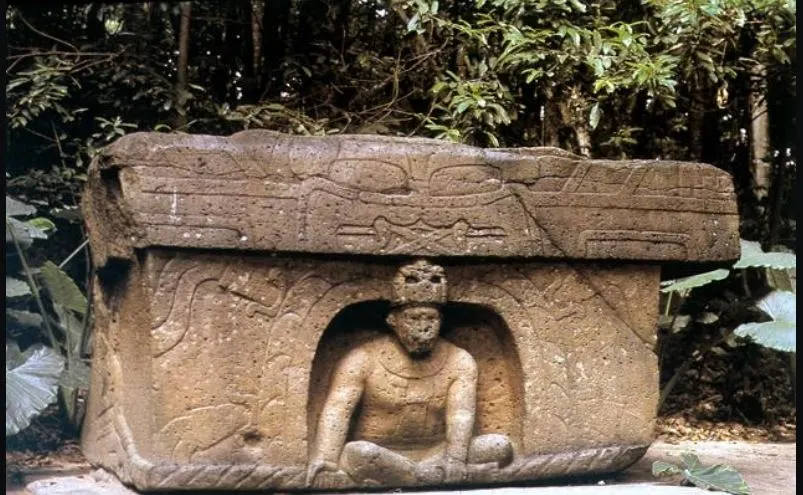
What period/culture is this piece from?
Olmec, Pre-Classic (1500 BCE - 200 CE)

What period/culture is this piece from?
Teotihuacán, Classic (200 - 900 CE)

What is the significance of this piece?
Representative of past Olmec rulers, high degree of Naturalism

What is the significance of this piece?
Representative of a deity, showed how Olmec art thought of 3D space in art earlier than other cultures

What is the significance of this piece?
Grid-shaped city, emphasis on the sun and gods for the orientation, heavy basis in cardinal directions which Spanish-American cities followed

What is the title of this piece?
Great Goddess (wall mural in the Tetitla apartment complex in Teotihuacán)

What period/culture is this piece from?
Teotihuacán, Classic (200 - 900 CE)
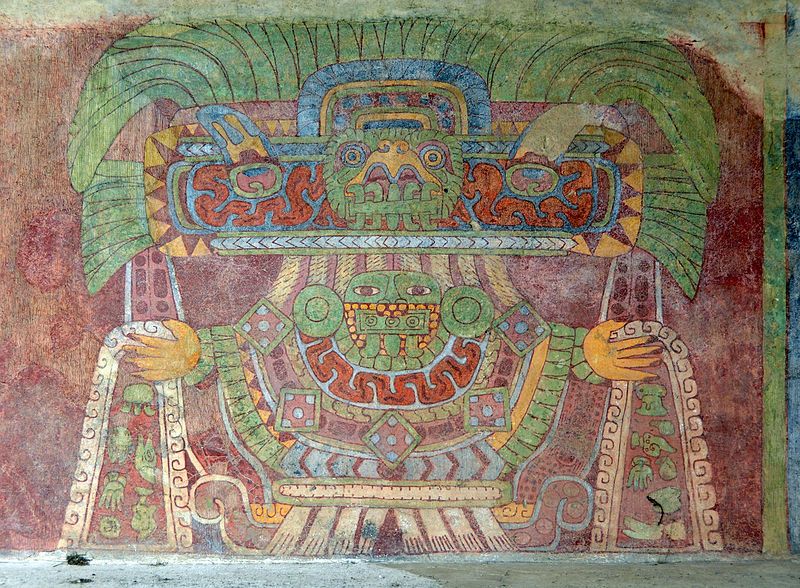
What is the significance of this piece?
Exemplifies the wave motif common with Aztec gods, uses green to represent privilege (and is also a fresco example)

What is the title of this piece?
Lid of the sarcophagus of Lord Pakal

Where does this piece originate from?
The Temple of the Inscriptions (Palenque, Mexico)

What period/culture is this piece from?
Maya, Classic (200 - 900 CE)

What is the significance of this piece?
Shows how temples were sites of “sacred theater” and not just burial grounds, sophisticated elements + abstract composition

What is the title of this piece?
Shield Jaguar and Lady Xoc

Where does this piece originate from?
Lintel 24, Yaxchilán, Mexico

What period/culture is this piece from?
Maya, Classic (200 - 900 CE)

What is the significance of this piece?
Shows blood’s importance in Mayan societies to function, Lady Xoc is elaborately dressed and pulling a thorned rose thru her mouth

What is the title of this piece?
The Founding of Tenochtitlan

Where does this piece originate from?
Codex Mendoza, Mexico City, Mexico

What year/culture is this piece from?
Aztec (post-contact), c. 1540

What is the significance of this piece?
Depicts the founding of Tenochtitlan, created by an Indigenous illuminator and potentially commissioned by Antonio Mendoza
What is the title of this piece?
Reconstruction of the Great Temple


Where does this piece originate from?
Tenochtitlan, Mexico

What is the year/culture of this piece?
Aztec, 15th Century (Post-Classic)

What is the significance of this piece?
Depicts how Tenochtitlan could’ve looked during its prime, taken the focus on cosmos in architecture and built like it was speaking to the deities up above

What is the title of this piece?
Coatlicue

Where does this piece originate from?
Tenochtitlan, Mexico

What year/culture is this piece from?
Aztec, c. 1487-1520 (Post-Classic)

What is the significance of this piece?
Depicts Huitzopochtli’s mother, Coatlicue, using abstract pictorals (Coatlicue parallels the Virgin Mary and Huitzopochtli parallels Jesus)

What is the title of this piece?
Feather Headdress

Where does this piece originate from?
Mexico

What year/culture is this piece from?
Aztec, before 1519 (Post-Classic)
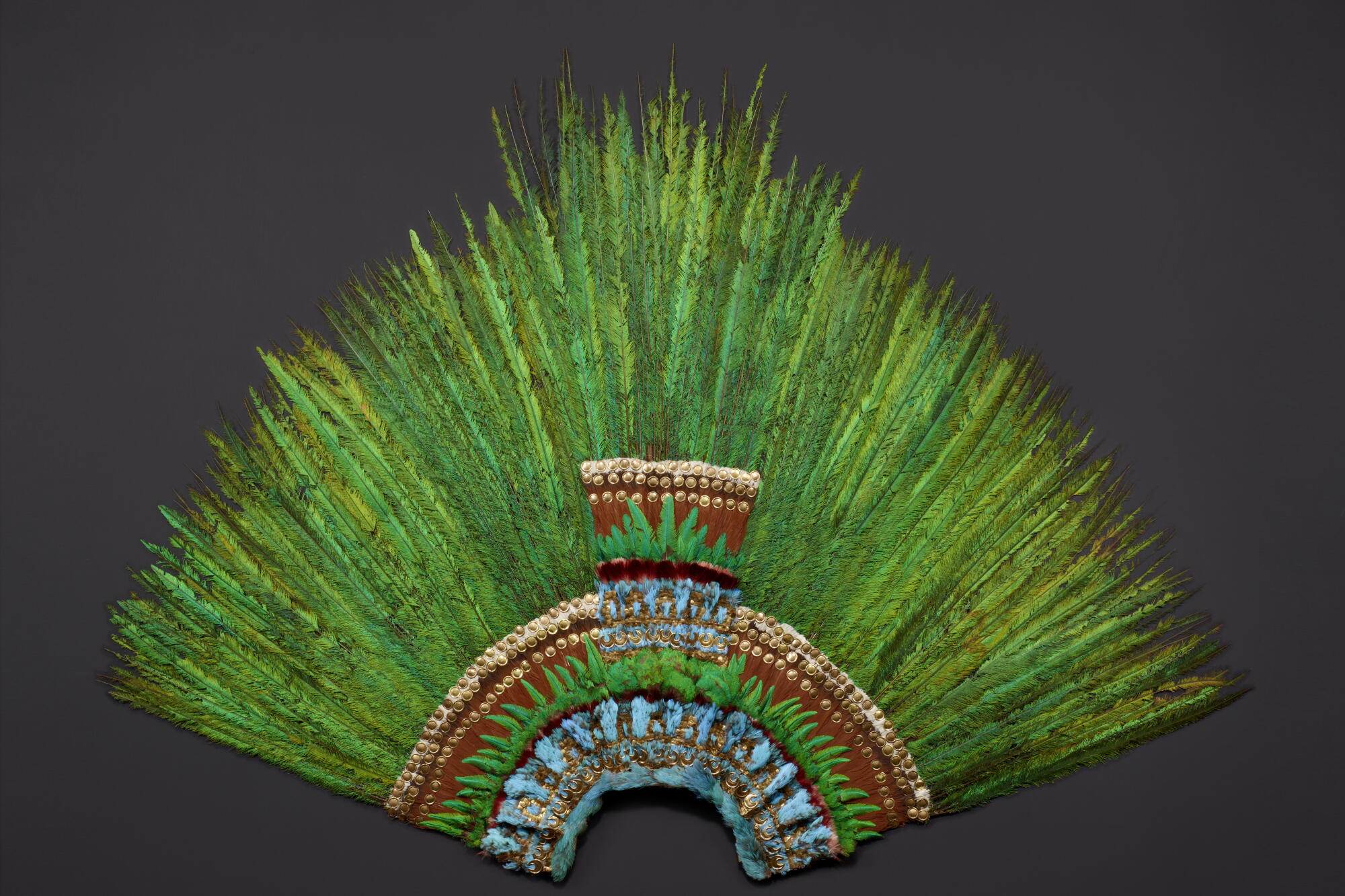
What is the significance of this piece?
Very significant in sacred matters, created by amanteca and used a variety of premium, sacred feathers (mainly quetzal / blue cotinga)
Jadeite
Most valuable form of jade, prominent in early Mesoamerican artwork as a show of status and of divinity
Roof comb
A structure topping a pyramid in Mesoamerican architecture
Autosacrifice
Self-inflicted bloodletting common in Mesoamerican culture
Moctezuma II (r. 1502-20)
Ninth Aztec emperor, ruling the empire during its prime era
Nahuatl
Group of ancient Mesoamerican languages
Tlaloc
Aztec rain god (north temple dedicated to him)
Huitzopochtli
Aztec sun god (south temple dedicated to him)
Featherwork
A piece made primarily out of the feathers of birds, namely the quetzal
Amanteca
Indigenous group of specialty featherworkers

What is this piece called?
Embroidered funerary mantle

What period/culture is this piece from?
Paracas Andes, Early Intermediate (200 BCE - 600 CE)

What is the significance of this piece?
Found in a funerary/necropolis context, object of status due to its size

What is the title of this piece?
Hummingbird
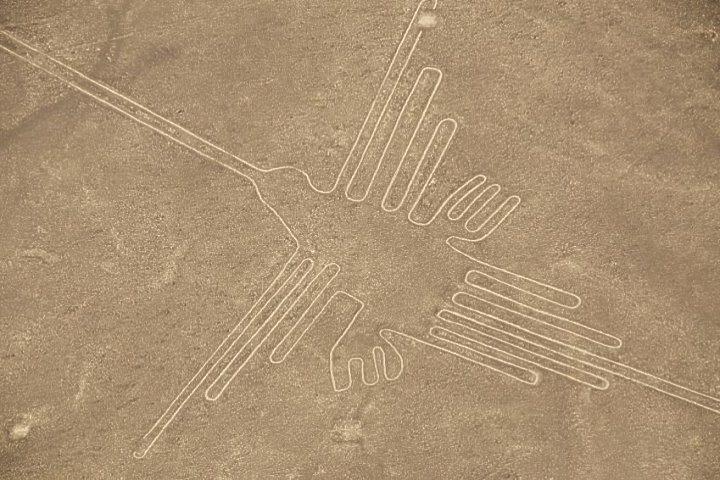
Where does this piece originate from?
Nasca Plain, Peru

What year/culture is this piece from?
Nasca Andes, c. 500 CE (Early Intermediate)

What is the significance of this piece?
Abstract hummingbird geoglyph that maintains a conformity to either the stars or underground aquifers, can also act as ritual walkways

What is the title of this piece
Quipu

What period/culture is this piece from?
Inca, Late Horizon (c. 1400-1532 CE)

What is the significance of this piece?
Shows how the Inca kept notation through abstract systems, less through pictoral methods and more through narrative

What is the title of this piece?
Remains of the Temple of the Sun (Coricancha)

Where does this piece originate from?
Cuzco, Peru

What year/culture is this piece from?
Inca, 15th Century (Late Horizon)

What is the significance of this piece?
Ended up surmounted by (aka built atop of) the 16th-Century Church of Santo Domingo, its socrality and existing sacred nature harnessed by the Viceroyalty
Geoglyph
“Earth writing” aka earthwork
Quipu
Incan system to keep information using string and knots
Tocapu
Small cubic “sign,” pictoral representation
Uncu
Incan tunic, used for royal, religious and wartime purposes among others
Quero
Cups used to drink corn beer (chicha)
Huaca
ANY site or object with religious significance
Inti
Incan sun god, in which the Incan emperor was the supposed son of (theocracy)