film studies midterm
 Call Kai
 Learn
Learn Practice Test
 Spaced Repetition
 Match
Match Flashcards
 Knowt Play
1/81

There's no tags or description
Looks like no tags are added yet.
Name | Mastery | Learn | Test | Matching | Spaced | Call with Kai | Chat |
|---|
No analytics yet
Send a link to your students to track their progress
82 Terms
Jurassic park visual effects
special effects/monster movie, match between plot and effects, blend of old and new tech
Cinema of attractions
a cinema not centered in narrative or “the real,” but a cinema of effect
Prince and Gunning Takeaways
Cinema’s power is to make us feel something, to have a bodily effect. Spectacle and visual effects are essential to cinema’s reason for being
Horkheimer and Adorno are Marxist critics
They argue that spectacle created by the culture industry has a political meaning. Mass spectacle affects audiences in particular ways
Jurassic Park
a celebration of spectacular filmmaking. It pushes the boundaries of what film can do.
Conglomeration
is when smaller groups join to create a larger umbrella entity.
Deregulation
removing restrictions on business practices like (in this case) mergers and acquisitions
Childishness
imagined audiences are not just youths, but 12 year old boys. Adult viewers constructed as children.
Original, imaginative take on a familiar form
sci-fi, horror, fantasy, etc.
Nuclear anxiety/ fear of fascism
The fight for the grail is a fight for an ultimate weapon
blockbuster strategy
Jaws premiered in Summer
Why was French culture so enthralled with American films in the post WWII era?
American films fill a vacuum left by decimated national cinemas. Desire for American films can finally be sated when German occupation ends
An auteur
is a director who writes his personal style into every film he makes. He returns to recognizable themes, aesthetics, and content in many or most of his films.
Auteur theory
(+ Cahiers du Cinéma) re-frames how French and American culture views cinema and its makers —> film as a legitimate art form, not merely as escapist, profit-driven entertainment.
Self-reflexivity
is when a film refers to the process of filmmaking; in other words, it’s when a film makes the audience aware they’re watching a movie.
Suture
is the process by which a film encourages viewers to attach themselves to an onscreen character.
Takeaway Hitchcock
Hitchcock visually establishes a connection among Jeffries’s voyeurism —> his frustrated sexual relationship (impotence?) —> his manipulative, objectifying tendencies
The Enlightenment
is a philosophical, sociocultural shift in how we know things (epistemology).
Pre-Enlightenment Epistemology
Religion and Superstition/Myth
Post-Enlightenment Epistemology
Reason/rationalism and Fact-finding, scientific method
Takeaway the Enlightenment
The Enlightenment is defined by a propensity to categorize and find rational explanations for previously unexplained phenomena
Aesthetic qualities
camera angles and techniques that call attn. to themselves (ex. lots of high/low angle shots rather than eye-level)
Aesthetics
attempt not to distort the surface of reality; concerned with mimicking the surface of reality
Non-obtrusive filming techniques
eye level shots predominate; continuity editing; techniques don’t call attention to themselves
Perspective
getting at the “truth” of how things look will help us get at the “truth” of how things feel
Classical Cinema
a vague but convenient term to designate the style of mainstream film from the mid-1920s to the late 1960s. During this time, film was at its most popular and its most streamlined (factory line system) BECAUSE film studios were at their most powerful.
The purpose of lighting
is to highlight (emphasize) some things and shade (hide) others. Classic 3-point lighting

Film noir lighting
High contrast between lights and darks—> creation of shadows and opacity
Cinematography
means what camera/lens/film is used, where the camera is, and how it moves.
Takeaway Welles
employs classical cinematic style (ie. in composition, lighting, narrativity) but warps its conventions until they are noticeable. By doing so, he draws viewers’ attention to the nature of storytelling (and storytellers).
Takeaway Citizen Kane
combines aesthetic traditions (realist AND formalist) to comment on American myth making in general, and on Hollywood in particular.

Point lighting

Backlighting
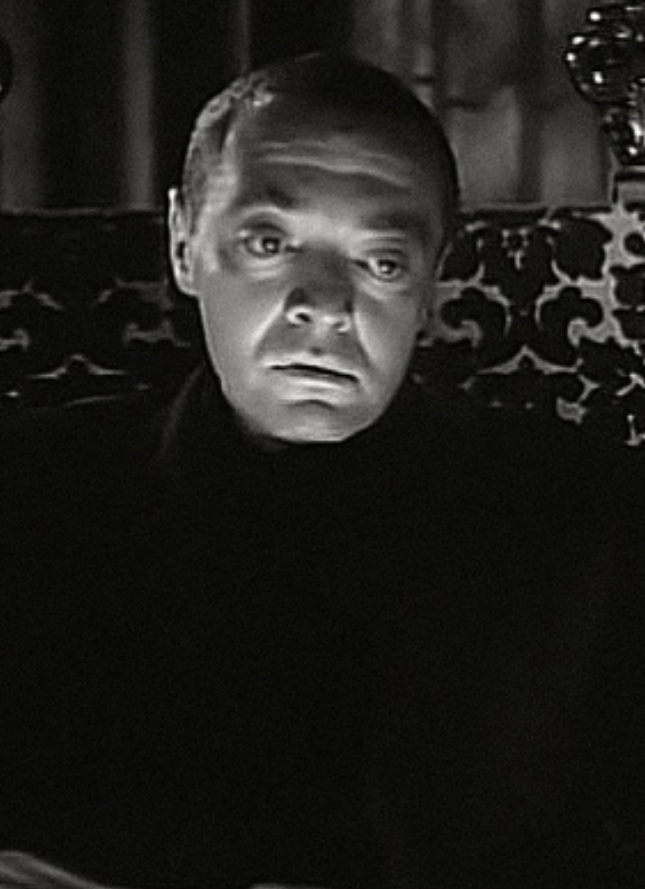
underlighting

Extreme close up

Medium shot

Extreme long shot

long shot
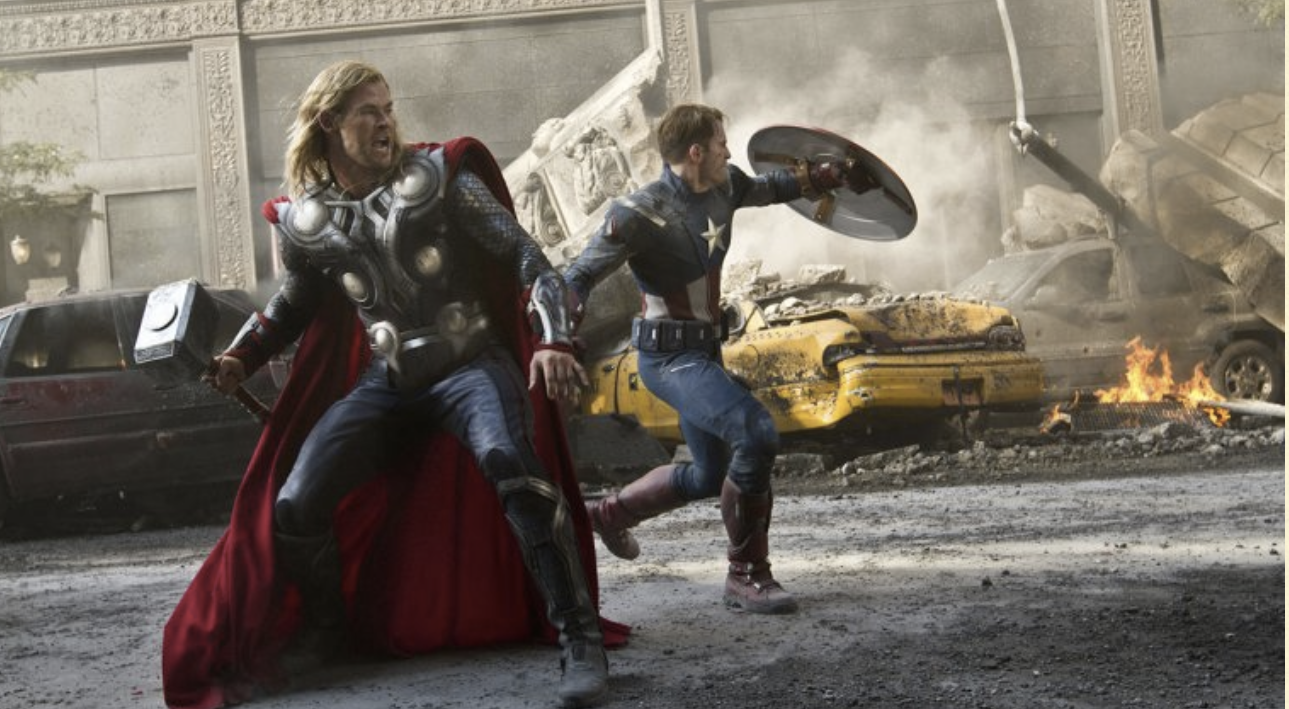
Medium shot

Close up

high angle

Low angle

Eye level shot

dutch/canted frame
Alfred Hitchcock
directed psycho, rebecca, vertigo, the birds and rear window
Spielberg
directed jaws, ET, saving private ryan, jurassic park
Orsen wells
directed citizen kane, touch of evil, the magnificent ambersins

birds eye
frame
The smallest unit of film structure; individual photographic image in projection filmstrip. Also, designates the boundaries of the image.
shot
images that are recorded continuously from the time the camera starts to the time it stops. That is, an unedited strip of film
scene
A vague term that describes a unit of narration; may consist of a series of shots or of a single sequence shot in one location.
sequences
Unit of film structure made up of one or more scenes or shots
Long take
A single unbroken shot, moving or stationary, that describes a complex action that might otherwise be represented through montage. Note: A long take is DIFFERENT THAN a long shot.
Pan
left-to-right movement of the camera on a fixed axis
tilt
Up-or-down movement of the camera on a fixed axis
tracking shot
Smooth shot in which the camera moves alongside (‘tracking within’) the axis of action, usually mounted on a dolly, in a side-to-side motion.
zoom
A lens of variable focal length used to create the illusion of optical motion without tracking the camera
Mise-en-scene
French term for “staging,” or “putting into the scene/shot.” In film theory, it refers to all the elements placed (by the director) before the camera and within the frame of the film,
Establishing shot
Usually a long (wide-angle or full) shot at the beginning of the scene (or a sequence) that informs the audience with an overview in order to help identify and orient the locale or time for the scene and action that follows
voiceover
Recorded dialogue, usually narration, that comes from an unseen, off-screen voice that can be heard by the audience but not by the film characters themselves.
Diegetic
Simply refers to the narrative elements of a film (such as spoken dialogue, other sounds, action) that appear in, are shown, or naturally originate within the content of the film frame. What is presented before the camera is in the diegesis of the narrative
Extra-diegetic
Refers to elements without an origin in the film frame (ex. soundtrack, credits, or voiceover).
cut
A move from one image or shot to another
match cut
A cut in which two different shots are linked together by visual or aural continuity
Subjective camera
A technique that causes the viewer to observe events from the perspective of a character
invisible editing
The system of editing that developed in the early 20th century to provide a continuous and clear movement of events/images in a film.
Continuity
Continuity also refers to the degree to which a film is self-consistent
without errors, jump cuts, or mis-matched shots and details
continuity cut
refers to an editing cut that takes the viewer seamlessly, unobtrusively, and
logically from one sequence or scene to another, to propel the narrative along.
Montage
Refers to a filming technique, editing style, or form of movie collage consisting of a series of short shots or images that are rapidly put together into a coherent sequence to create a composite picture
Fade-in/fade-out
an image gradually appears on a blackened screen
Dissolve
A transitional editing technique in which the visible image or one shot or scene is gradually replaced, superimposed or blended into another.
Superimposition
An optical printing process that places or ‘exposes’ one image on top of another on the same piece of film stock; sometimes this image is composed as a double exposure.
Matte shot
The optical process of combining separately photographed shots (usually actors
in the foreground and the setting in the background) onto one print through a double exposure that does not meld two images on top of each other, but masks off
Cross-cutting/ parallel editing
Interweaving one narrative action (scene, sequence, or event) with another - usually in different locations or places, thus combining the two; this editing method suggests parallel action
Realist
Style of filmmaking that attempts to duplicate the look of objective reality as it’s commonly perceived, with emphasis on authentic locations and details and minimum of distorting techniques
Formalist
Time and space are often distorted, aesthetics are often extreme or unusual; often, the goal of a formalist film is to capture moods, experiences, or environment as they are felt instead of how one might objectively perceive them.
Classical cinema
A vague but convenient term used to designate the style of mainstream films produced in American from roughly the mid-teens to the late 1960s.
German expressionism
cinematic style concerned not just with relating a narrative, but more importantly, communicating states of mind, moods and atmosphere through the photographic image
Chiaroscuro
Literally, the combination of the two Italian words for "clear/bright" and "dark"; refers to a notable, contrasting use of light and shade in scenes; often achieved by using a spotlight; this lighting technique had its roots in German Expressionistic cinematography
Doppelganger
A German word literally meaning: "doublewalker," a shadow-self, duplicate, counterpart or double (spiritual, ghostly, or real) to a character.
Method Acting
A style of performance derived from Russian stage director Stanislavsky, dominant since the 1950s. Method actors emphasize psychological intensity, emotional believability rather than technical mastery and “living” a character internally rather
than merely imitating the external behavior of a character