3.11 Stem cells
 Call Kai
 Learn
 Practice Test
 Spaced Repetition
 Match
 Flashcards
 Knowt Play
1/13

There's no tags or description
Looks like no tags are added yet.
14 Terms
Define what a stem cell is
an undifferentiated cell that can give rise to other differentiated cells that can divide to produce more stem cells
Describe how cells become specialised (3)
chemical signals cause some genes to be switched on
only the activated genes produce mRNA
mRNA leads to synthesis of specific proteins which cause cell modification
Define the term totipotent cells
embryonic stem cells that are unspecialised up to the 16 cell stage cell early development that has the ability to differentiate into all types of cells - including extraembryonic cells (placenta and umbilical cord)
Explain what is meant by the term pluripotent stem cell (2)
embryonic stem cells that are unspecialised have the ability to differentiate into all types of cells excluding extraembryonic cells (placenta and umbilical cord)
Explain what is meant by the term multipotent stem cells (2)
stem cells that can differentiate into a limited range of cell types e.g red blood cells, white blood cells and platelets
Describe how a fertilised egg can be used as a source of human pluripotent stem cells (3)
fertilised egg is allowed to grow for a few days (5 days)
blastocyst forms
cells in inner cell mass are pluripotent
the cells are harvested
Suggest 3 potential risks of using stem cells as a treatment for a disease e.g Alzhemier’s
risk of infection
risk of rejection
risk of cancer
suggest why stem cells can be used to reverse paralysis (2)
they are undifferentiated cells that are able to differentiate into specialised cells e.g nerve cells to replace the damaged ones
Stem cells can be used to repair damaged organs. Human embryos are another source of stem cells used in medical therapies.
Describe the decisions that society has to make about the use of these embryonic stem cells. (3)
embryonic stem cells are totipotent and can be used in a wider range of therapies
source of embryonic stem cells has to be regulated
moral / ethical issues as the use of embryonic stem cells destorys embryos
need for research establishments to be regulated
Describe how society controls the use of embroynic stem cells in medical reseach (4)
regulatory bodies
checking that the source of the stem cell is acceptable
setting or considering ethical aspects e.g potential harm to the embryo or the embryo does not give consent
judging what is acceptable
deciding on a maximum age of embryo allowed for research
State the advantages and disadvantages of using adult stem cells e.g bone marrow as a source of stem cells
advantages:
donor is able to give consent - ethical
has been tested for many year - reliable and safe
disadvantages:
adult stem cells being donated from another donor with slightly different blood type can cause immune rejection - whereby the bodies immune system attacks the stem cells as they are considered as ‘foreign’
painful process
limited number of diferentiation types
Evaluate the use of embryonic stem cells in medicine
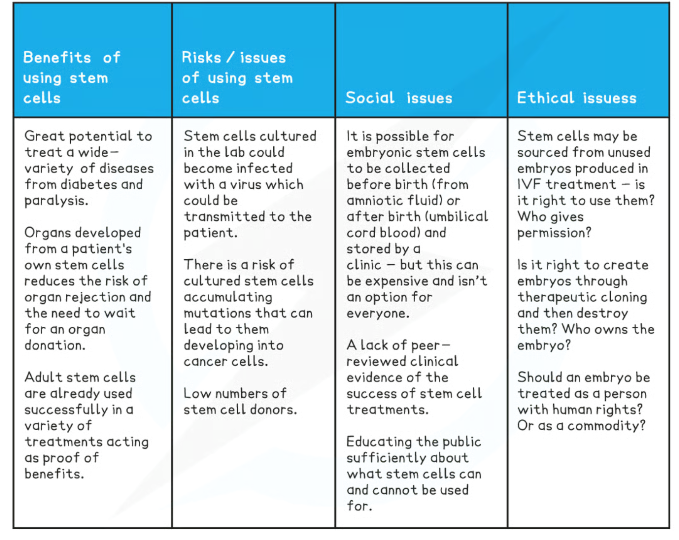
State and explain the steps of differentiation
chemical signals activate genes within a cell
activated genesare transcribed producing specific mRNA
specific mRNA is translated into specific proteins
these specific proteins help determine the structure of the cell - cell modification
as these proteins continue to modify the cell, the cell becomes increasingly specialised
the process of specialisation become irreversible
Explain why chemicals from the eye are needed to produce corneal cells from a suitable source of stem cells. (4)
chemicals cause some genes related to the corneal to be switched on
these genes are transcribed producing specific mRNA
specific mRNA is translated into specific proteins (mRNA synthesises specific proteins)
these proteins cause the cells to develop into a corneal cell