Chemical Communication and Neuron Biochemistry
 Call Kai
 Learn
Learn Practice Test
 Spaced Repetition
 Match
Match Flashcards
 Knowt Play
1/39

Earn XP
Description and Tags
Vocabulary flashcards reviewing neurochemistry, neurotransmission versus neuromodulation, signal molecule classes, synthesis pathways, and receptoral mechanisms from the lecture notes.
Name | Mastery | Learn | Test | Matching | Spaced | Call with Kai | Chat |
|---|
No analytics yet
Send a link to your students to track their progress
40 Terms
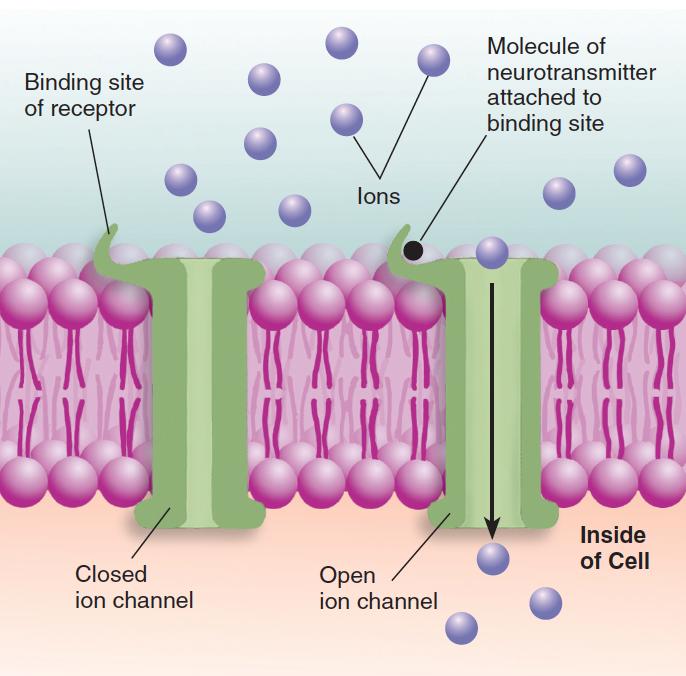
Ionotropic Receptors
Fast-acting receptor proteins that form an integrated ion channel, opening directly upon ligand binding with short-term effects lasting up to tens of milliseconds.
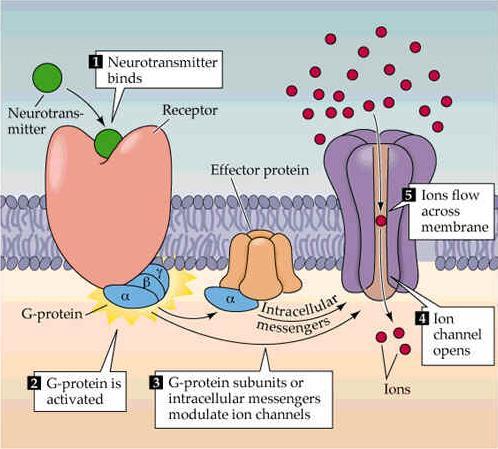
Metabotropic Receptors
Receptors separate from ion channels that act via intracellular second messengers (such as G-proteins) with slower, longer-lasting effects ranging from hundreds of milliseconds to tens of seconds.
Discrete Signal Transmission
Fast, point-to-point synaptic signaling limited to synapses that conveys specific information content, such as sensory details or precise movement activation.
Diffuse Modulation
Slow, non-synaptic signaling that alters the excitability or state of entire neural circuits to establish global climate states like sleepiness, vigilance, or calmness.
Neurotransmitters (NTs)
Signal molecules used for rapid, point-to-point transmission across a local synaptic cleft (∼20–40nm) triggered by action potentials to induce EPSPs or IPSPs.
Neuromodulators (NMs)
Signal molecules released into general extracellular space that alter global neural excitability and circuit responses over timescales of seconds to minutes.
Volume Transmission
The release of neuromodulators outside of synaptic clefts into the general extracellular space, enabling broad outward diffusion across distances from nanometers to millimeters.
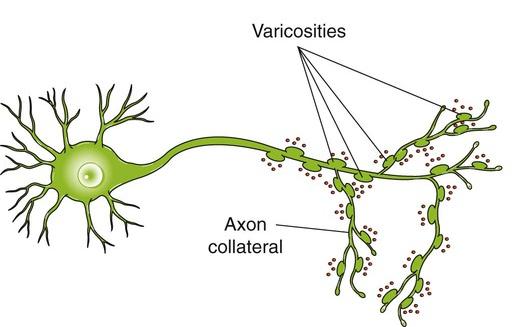
Axon Varicosities
Swellings along unmyelinated axons or axon branches that contain vesicles, release mechanisms, and reuptake transporters for volume transmission of neuromodulators.
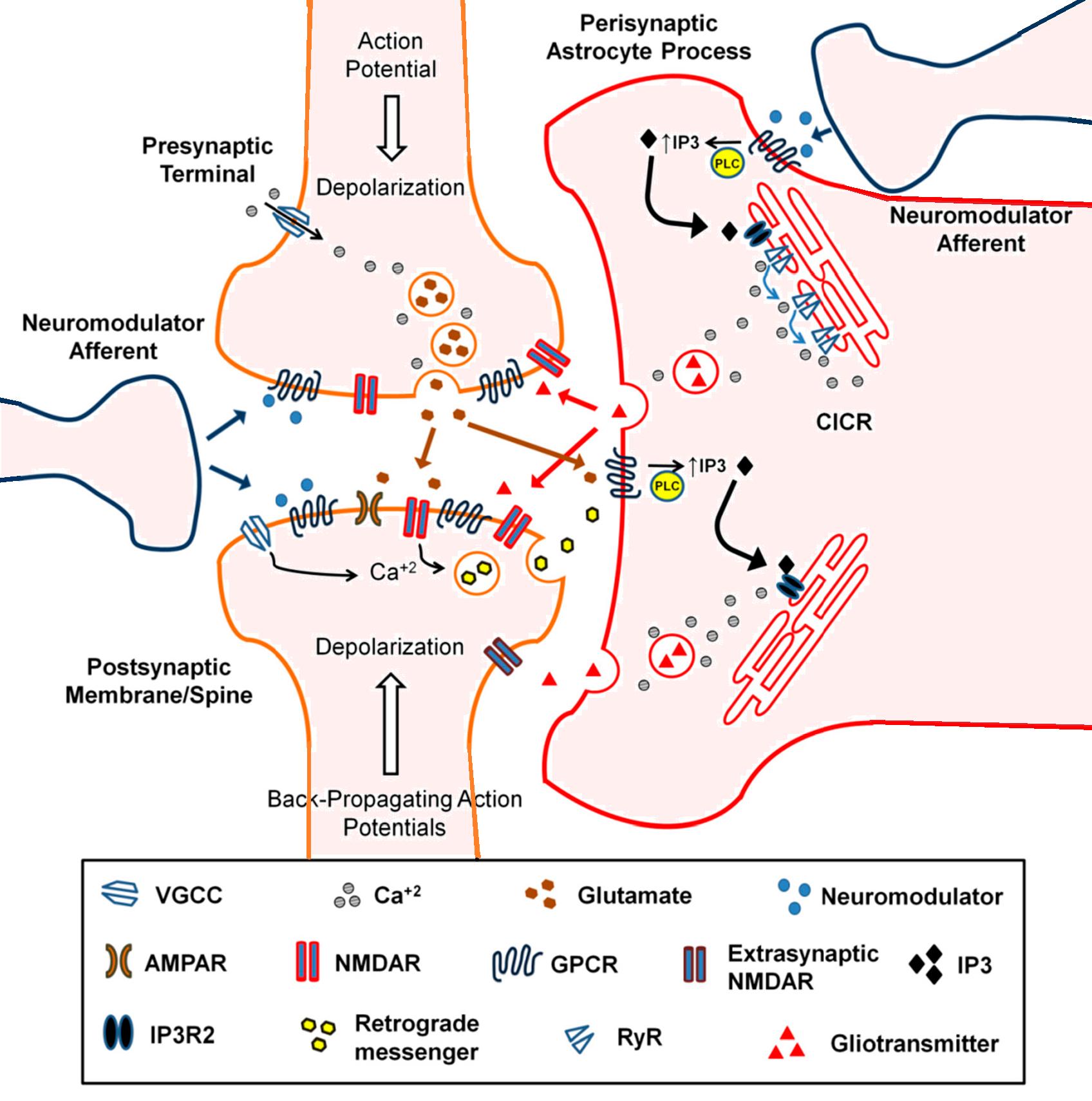
Astrocytes in Synaptic Transmission
Glial cells that shield the synaptic cleft to hinder neurotransmitter diffusion, take up neurotransmitters, and release their own signaling molecules to neurons.
Amino Acid Neurotransmitters
Single amino acid signal molecules that serve as the most common neurotransmitters in the central nervous system, primarily driving fast discrete synaptic transmission.
Glutamate (GLU)
A primary amino acid neurotransmitter used in human protein synthesis that acts as the dominant excitatory signal molecule in most central nervous system contexts.
Gamma-aminobutyric Acid (GABA)
An amino acid neurotransmitter synthesized from glutamate that is not used in protein synthesis and functions as the primary inhibitory signal in the central nervous system.
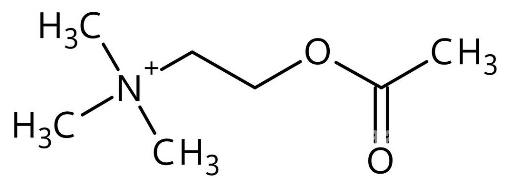
Acetylcholine (ACh)
A major signaling molecule involved in diffuse modulation in the central nervous system and discrete synaptic transmission within neuromuscular junctions and autonomic pathways.
Nicotinic Receptors
Fast ionotropic receptors that bind acetylcholine, mediating rapid synaptic responses at neuromuscular junctions and autonomic ganglia.
Muscarinic Receptors
Slow metabotropic G-protein-coupled receptors that bind acetylcholine, mediating neuromodulatory and autonomic effects.
Monoamines
A chemical group of neurotransmitters and neuromodulators synthesized from a single amino acid, defined by containing one amine group (NH2) in their structure.
Catecholamines
A subgroup of monoamine signal molecules derived from the amino acid tyrosine that contain a catechol ring, including dopamine, norepinephrine, and epinephrine.
Serotonin (5-HT)
A monoamine neurotransmitter and neuromodulator synthesized from the precursor amino acid tryptophan.
Histamine (HIS)
A monoamine neurotransmitter and neuromodulator synthesized from the amino acid histidine.
Dopamine (DA)
A catecholamine neuromodulator in the central nervous system involved in movement control, action selection, reinforcement, decision-making, and self-regulation.
Norepinephrine (NE)
A catecholamine molecule that functions as a neurotransmitter in the sympathetic nervous system and as a diffuse neuromodulator in the central nervous system.
Epinephrine (EPI)
A catecholamine signal molecule, also known as adrenaline, produced in the catecholamine pathway and released as a hormone from the adrenal medulla.
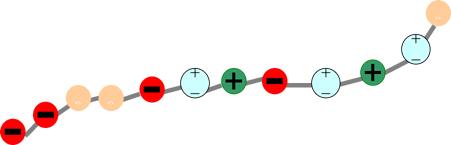
Beta-endorphin (β-END)
A 31-amino-acid peptide that serves as a brain neuromodulator (altering pain perception and disinhibiting dopamine) and a pituitary stress hormone.
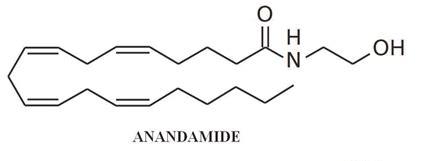
Anandamide
A lipid-based endocannabinoid neuromodulator synthesized from membrane phospholipids that acts via retrograde, autocrine, or paracrine mechanisms.
Retrograde Signaling
A signaling mechanism where a molecule produced by a postsynaptic cell travels backward to bind receptors on the presynaptic neuron, inhibiting neurotransmitter release.
Nitric Oxide (NO)
A soluble gas synthesized on demand from L-arginine that diffuses instantly in all directions across cell membranes to directly influence target cell interiors.
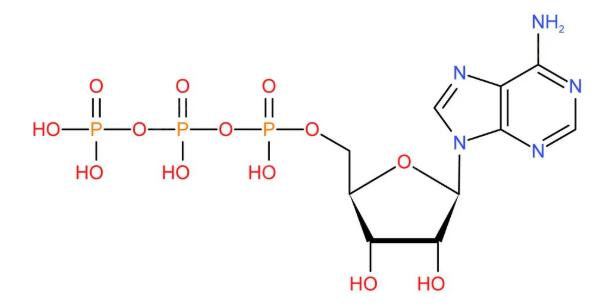
Adenosine
A nucleoside byproduct formed when three phosphate groups are removed from ATP that acts as a sleep-promoting neuromodulator blocked by caffeine.
Enzymes
Protein catalysts that accelerate specific biochemical reactions under physiological conditions without being permanently altered or consumed in the process.
Substrates
The target chemical molecules operated on by an enzyme, which act as precursors during synthesis or as the molecule being degraded.
Products
The resulting chemical compounds produced from an enzyme-catalyzed reaction.
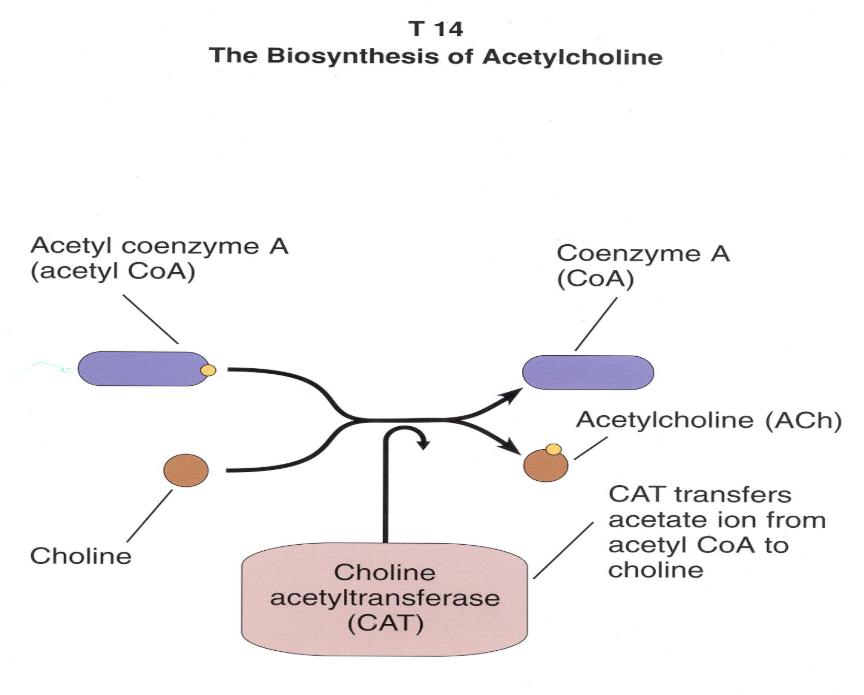
Choline Acetyltransferase (CAT)
The enzyme responsible for synthesizing acetylcholine by transferring an acetate ion from acetyl coenzyme A to choline.
Acetylcholinesterase (AChE)
An enzyme located in the synaptic cleft that rapidly inactivates acetylcholine by splitting it into acetate and choline.
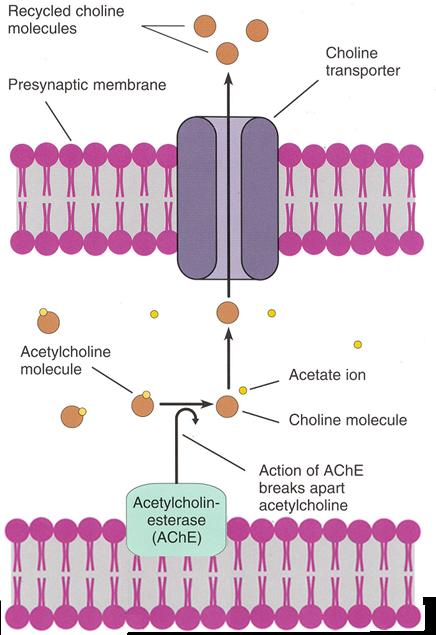
Choline Transporter
A specialized membrane protein on presynaptic terminals that actively transports recycled choline back into the cell for acetylcholine resynthesis.
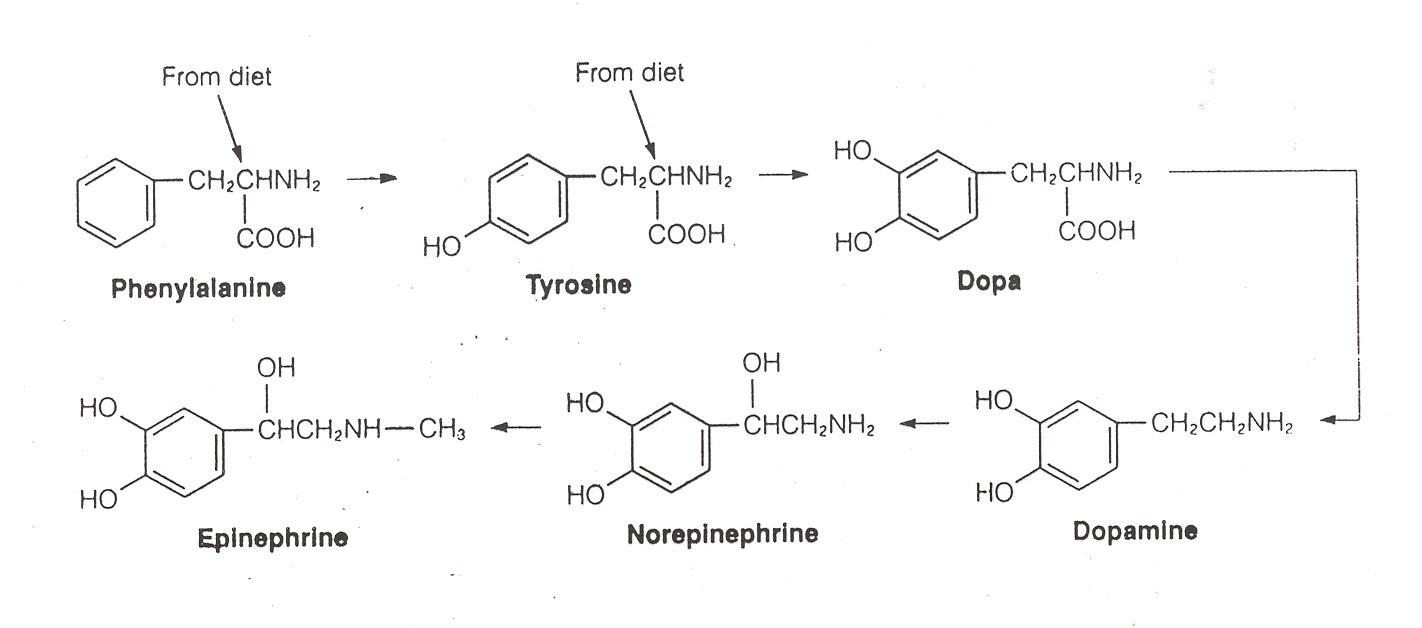
Phenylalanine
An essential dietary amino acid that serves as the initial precursor at the start of the catecholamine synthesis pathway.
Tyrosine
An amino acid precursor obtained from diet or phenylalanine conversion that actively crosses the blood-brain barrier to enter catecholamine synthesis.
L-Dopa (Dopa)
An intermediate precursor compound in the catecholamine pathway synthesized from tyrosine that actively crosses the blood-brain barrier.
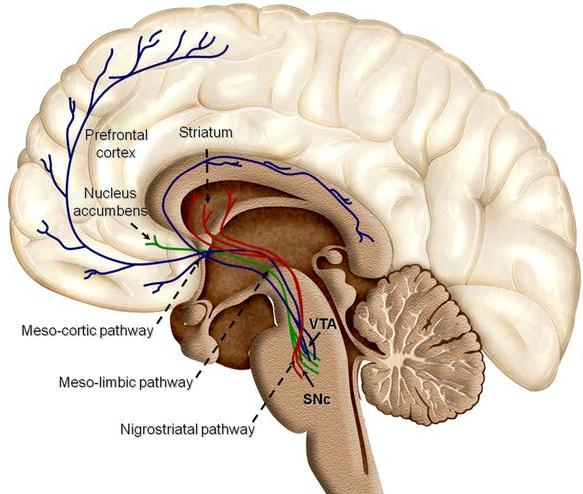
Nigrostriatal Pathway
A central dopaminergic projection extending from the substantia nigra pars compacta (SNc) to the striatum, essential for motor control, action selection, and initiation.
Mesolimbic Pathway
A central dopaminergic pathway projecting from the ventral tegmental area (VTA) to the nucleus accumbens, primarily driving reinforcement processes.
Mesocortical Pathway
A central dopaminergic projection extending from the ventral tegmental area (VTA) to the prefrontal cortex, underlying decision-making and self-regulation.
Monoamine Oxidase (MAO)
An enzyme primarily responsible for the intracellular enzymatic degradation of monoamine neurotransmitters including dopamine, norepinephrine, epinephrine, serotonin, and histamine.