HK 302 Cranial Nerves
 Call Kai
 Learn
 Practice Test
 Spaced Repetition
 Match
 Flashcards
 Knowt Play
1/38

Earn XP
Description and Tags
exam 3 :/
39 Terms

olfactory nerve
cranial nerve I
olfactory nerve
sense of smell
sensory nerve
Examination of CN I
-have patient close one nostril then place test substance to the other nostril & repeat
-anosmia: loss of sense of smell-often with colds
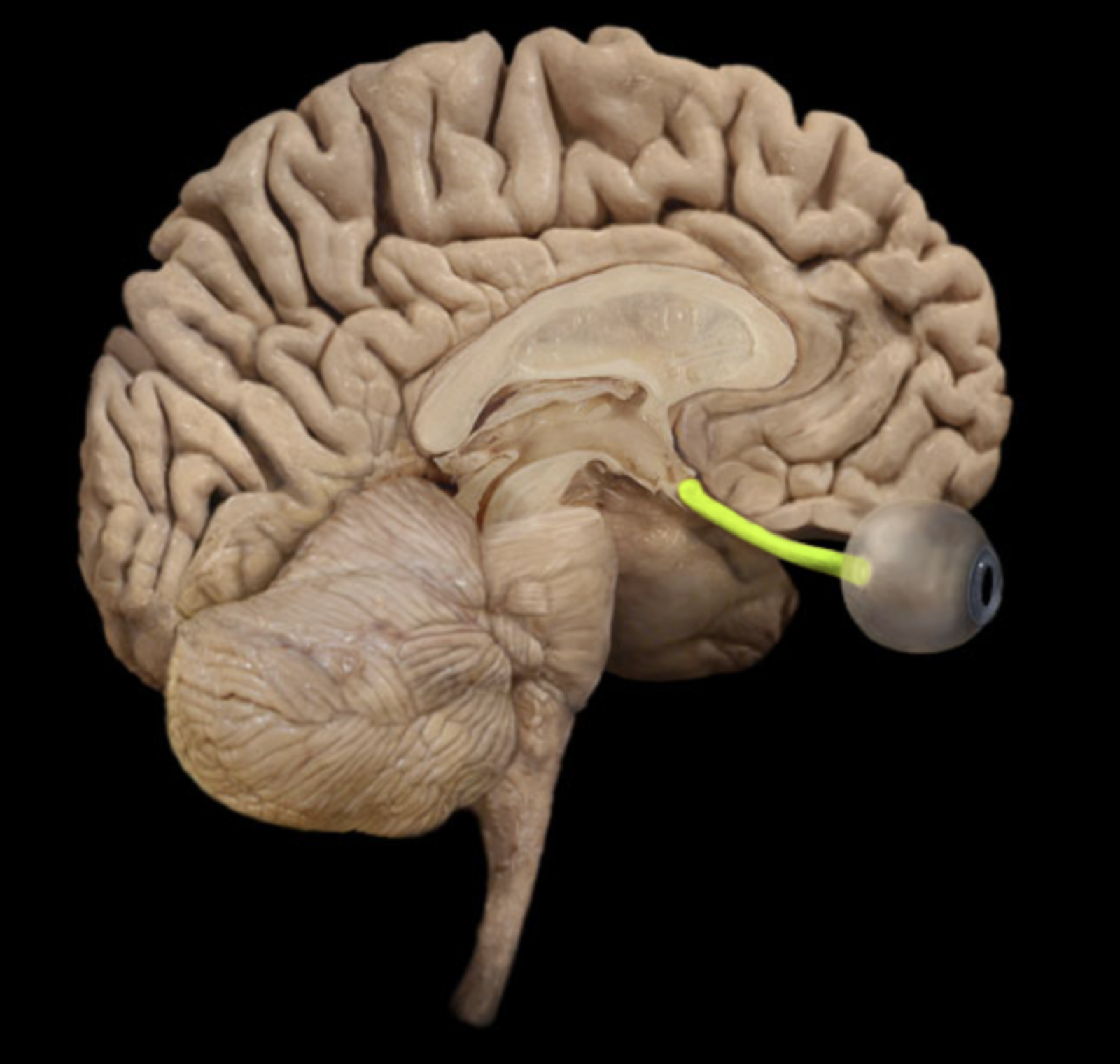
optic nerve
cranial nerve II
optic nerve
vision/visual acuity
sensory nerve
Rods: responsible for illumination, twilight & night vision
Cones: Sharp visual definition & color discrimination
Examination of CN II
-ophthalmoscopy
-visual acuity & the ability to read

oculomotor nerve
Cranial Nerve III
Oculomotor Nerve
cardinal fields of vision, pupillary reflex, eye movement
Motor nerve
Examination of CN III
-patient follows finger and note if eyeball moves in various directions
-ptosis: lid droop due to paralysis of levator palpebrae
-diplopia: double vision
-lateral strabismus: eye pulled laterally

Trochlear Nerve
Cranial Nerve IV
Trochlear Nerve
superior oblique eye muscle movement
Motor Nerve
Examination of Cranial Nerve IV
-With the patient’s eye in abducted position, ask patient to look downward. If superior oblique muscle is compromised it will result in double vision

Trigeminal Nerve
Cranial Nerve V
Largest Cranial Nerve
Trigeminal Nerve
facial sensation and chewing muscles
contains three nerves: VI-VIII
Mixed Nerve

Trigeminal- V1 Opthalmic
innervates upper face and head

Trigeminal- Maxillary V2
innervate maxillary region of the face
Examination of V1, V2, and V3
-V1, V2, V3 (sensory) sensation of the skin supplied by V1 by using a wisp of cotton or a pin
-V3 (motor) palpate the temporalis and masseter while the patient clenches his teeth

Trigeminal- V3 Mandibular
innervation muscles of mastication

Abducens Nerve
Cranial Nerve VI
Abducens Nerve
lateral eye rotation
Motor nerve
Examination of CN VI
-if lateral rectus muscle is paralyzed, the patient is unable to abduct the eye which causes double vision (diplopia) when the person tries to look laterally or abduct the eye
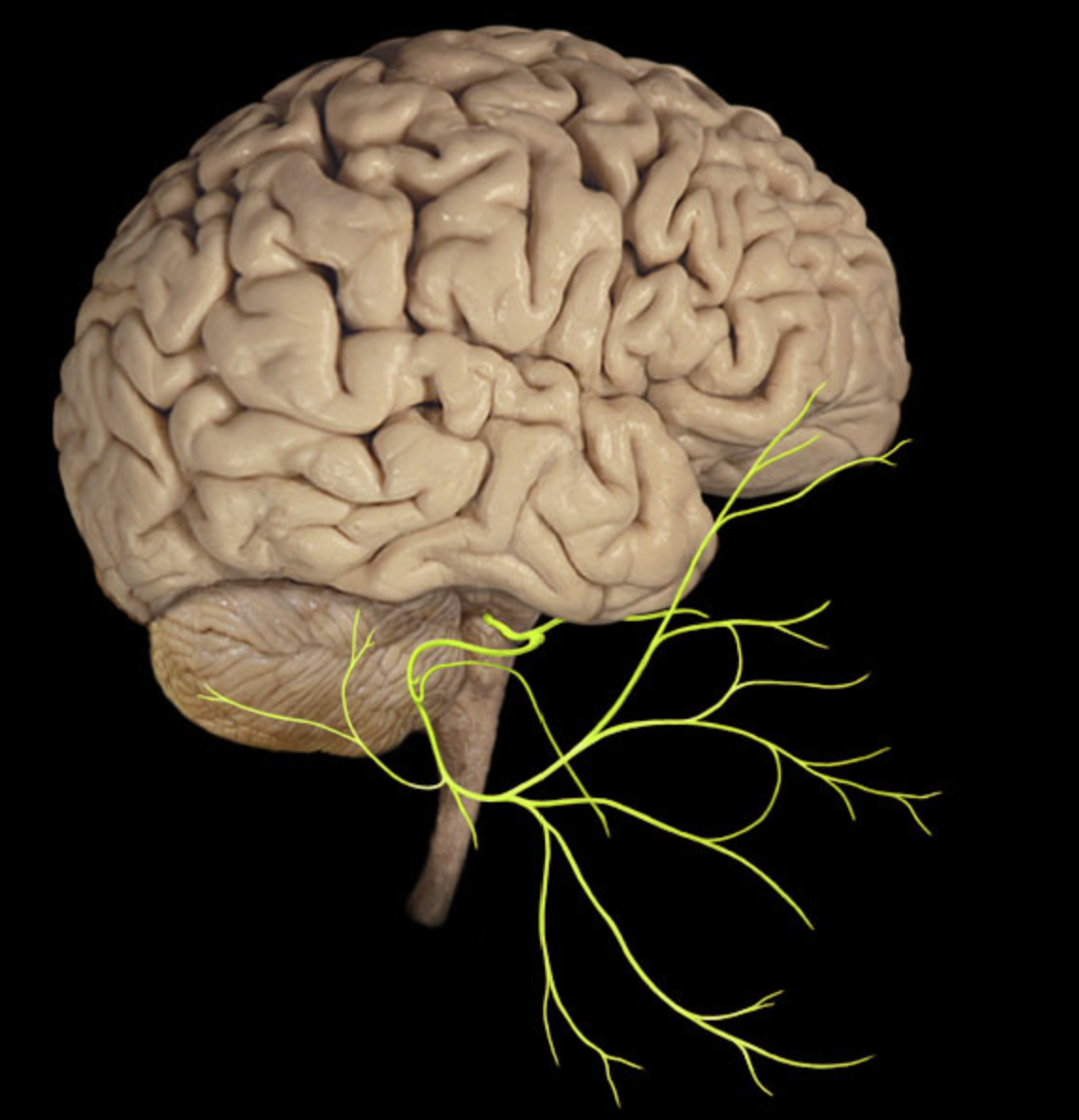
Facial Nerve
Cranial Nerve VII
Facial Nerve
-facial sensation & chewing muscles
-Mixed sense
Examination of Cranial Nerve VII
-motor component: patient puff out cheeks, close eyes, round mouth, wrinkle forehead and frown
-Bells Palsy: facial paralysis of unknown reason
-Sensory component: test lacrimation by stimulating nasal mucosa with ammonia; test taste tongue

Vestibulocochlear Nerve
Cranial Nerve VIII
Vestibulocochlear Nerve
Hearing & balance (equilibrium)
Sensory Nerve
Examination of Cranial Nerve VIII
-vestibular division: vertigo or loss of position (labryinthitis)-patient gets dizzy and starts to fall
-cochlear division: use an audiometer to test patient for sensitivity to sounds

Glossopharyngeal Nerve
Cranial Nerve IX
Glossopharyngeal Nerve
taste, swallowing, and gag reflex
Mixed Nerve
Examination of Cranial Nerve IX
-special sensory component: test for taste on tongue
-general sensory component: stroke back of throat for gag reflex

Vagus Nerve
Cranial Nerve X
Vagus Nerve
swallowing, autonomic features
Examination of Cranial Nerve X
-have patient say “ah” and check uvula to see if it moves backwards
-unilateral vagal paralysis deviates the uvula towards the normal side

Spinal Accessory Nerve
Cranial Nerve XI
Spinal Accessory Nerve
neck and shoulder movement
motor nerve
Examination of Cranial Nerve XI
-cranial roots: use same check with uvula
-spinal roots: shrug shoulder (trapezius) & then rotate their head (sternocleidomastoid)

Hypoglossal Nerve
Cranial Nerve XII
Hypoglossal Nerve
tongue movement
Motor nerve
Examination of Cranial Nerve XII
-protrude tongue, if a unilateral lesion is present, tongue will protrude towards affected side; bilateral lesion would prevent tongue protrusion