General Science - Life Science - The Skeletal System
 Call Kai
 Learn
 Practice Test
 Spaced Repetition
 Match
 Flashcards
 Knowt Play
1/93

There's no tags or description
Looks like no tags are added yet.
94 Terms
The human skeleton serves as the supporting framework of the body, and an adult human body contains a total of __________ bones.
206
What is the structural definition and overall composition of the adult human skeletal system?
The human skeleton is the supporting framework of the body consisting of 206 bones.
Which of the following defines the composition and role of the axial skeleton?
Consists of 80 bones supporting the main axis of the body
The axial skeleton is comprised of __________ bones that support the main axis of the body.
80
What anatomical structures and bone count comprise the human skull?
22 to 29 bones including cranial, facial, and ear ossicles
The skull consists of __________ bones, which include cranial, facial, and ear ossicles.
22 to 29
Where is the single hyoid bone located within the human axial skeleton?
In the neck
The axial skeleton includes exactly __________ hyoid bone located in the neck.
1
What are the structural components of the vertebral column (spine)?
24 individual vertebrae plus the sacrum and coccyx
The vertebral column is composed of __________ individual vertebrae plus the sacrum and coccyx.
24
What components make up the thoracic cage?
24 ribs (12 pairs) and the breastbone (sternum)
The thoracic cage consists of __________ ribs, which form 12 pairs, alongside the breastbone.
24
What is the primary function and bone count of the appendicular skeleton?
Supports the limbs and movement with 126 bones
The appendicular skeleton contains __________ bones dedicated to supporting the limbs and movement.
126
How many bones make up the upper limbs and shoulders, and what parts are included?
64 bones including collarbones, shoulder blades, arms, wrists, and hands
The upper limbs and shoulders comprise __________ bones, including collarbones, shoulder blades, arms, wrists, and hands.
64
The upper limbs and shoulders comprise __________ bones, including collarbones, shoulder blades, arms, wrists, and hands.
62 bones including hip bones, thighs, kneecaps, lower legs, ankles, and feet
The lower limbs and pelvis are structured from __________ bones, including hip bones, thighs, kneecaps, lower legs, ankles, and feet.
62
How do fixed joints function within the skeletal system?
Hold the bones firmly together, as seen in the skull
Fixed joints, such as those found in the __________, hold the bones firmly together.
skull
Which characteristics describe hinge joints?
Partly movable and provide some flexibility, as in the knee and finger
Which joint type is partly movable and provides flexibility in locations like the knee and finger?
Hinge joints
What is the structural relationship between pivot joints and hinge joints?
Pivot joints are similar to hinge joints but can also be rotated
Pivot joints, such as the one located in the __________, are similar to hinge joints but can also be rotated.
elbow
What is the defining property of ball and socket joints?
Provide greatest flexibility, as in the hip or shoulder
The joints that provide the greatest flexibility in the body, such as the hip or shoulder, are __________ joints.
ball and socket
What is cartilage and where is it found in the body?
A flexible material that lines and cushions joint surfaces, also found in the outer ear and tip of the nose
The surfaces of joints are lined and cushioned by a flexible material called __________.
cartilage
What is the definition and role of ligaments in the skeletal system?
Bands of tissue that support the bones of movable joints
Bands of tissue called __________ support the bones of movable joints.
ligaments
Which of the following body parts contains cartilage in addition to joint cushioning?
Outer ear
Which of the following structures is NOT a location where cartilage is found according to the notes?
Cranial suture line
Which option correctly lists locations where cartilage is found?
Surfaces of joints, the outer ear, and the tip of the nose.

What label should be in position A?
Frontal Bone

What label should be in position B?
Nasal Bone

What label should be in position C?
Temporal Bone

What label should be in position D?
Zygomatic Bone

What label should be in position E?
Maxilla

What label should be in position F?
Sternum

What label should be in position G?
Forearm

What label should be in position H?
Ulna

What label should be in position I?
Radius

What label should be in position J?
Hipbone (Pelvic Girdle)
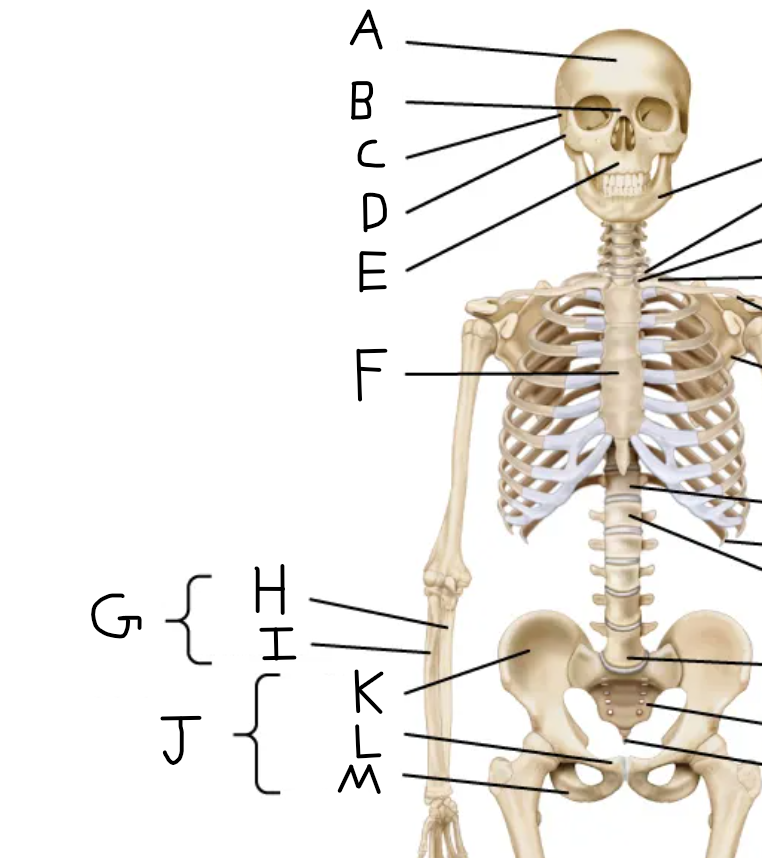
What label should be in position K?
Ilium

What label should be in position L?
Pubis

What label should be in position M?
Ischium

What label should be in position A?
Mandible
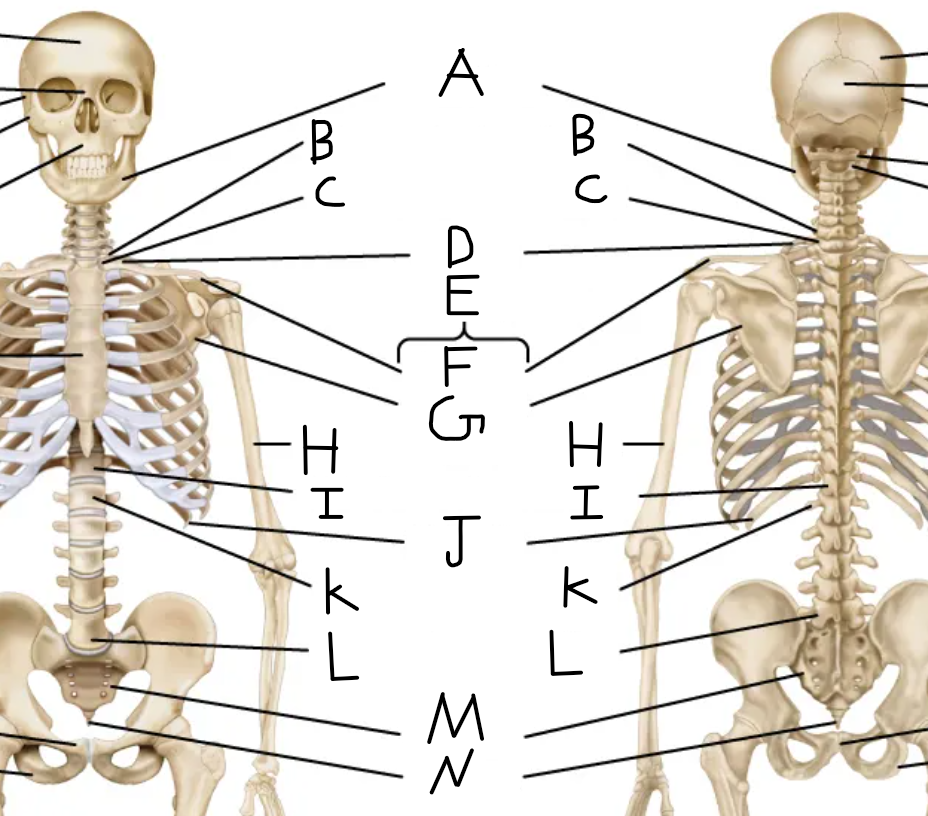
What label should be in position B?
7th Cervical Vertebra
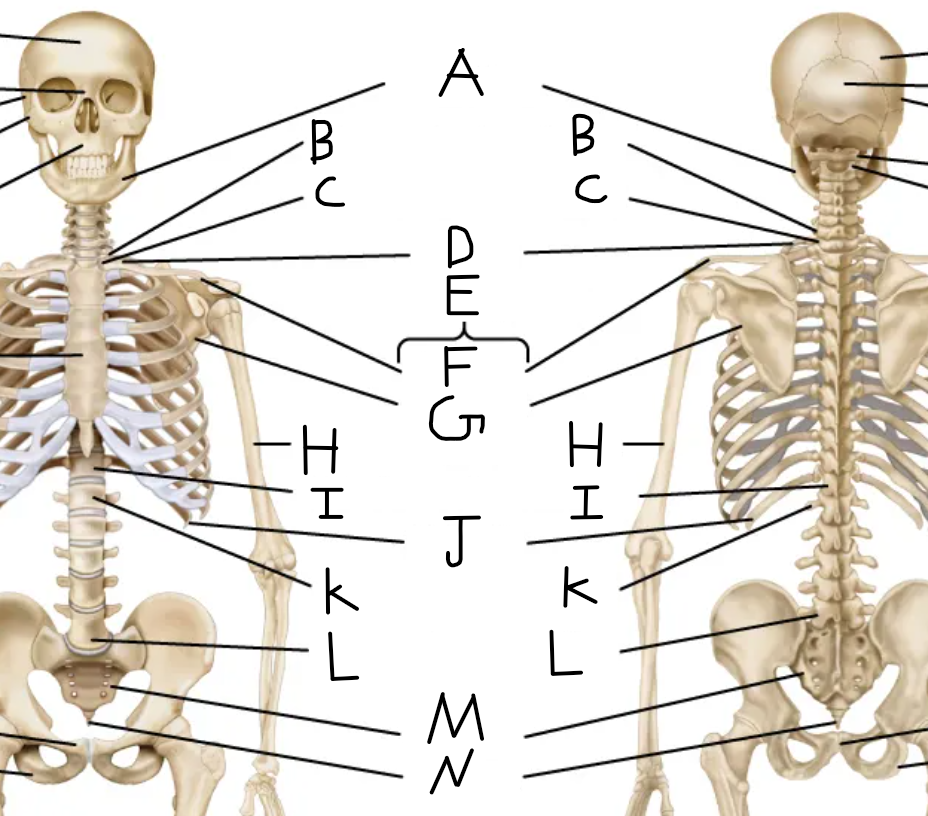
What label should be in position C?
1st Thoracic Vertebra

What label should be in position D?
1st Rib

What label should be in position E?
Shoulder Girdle
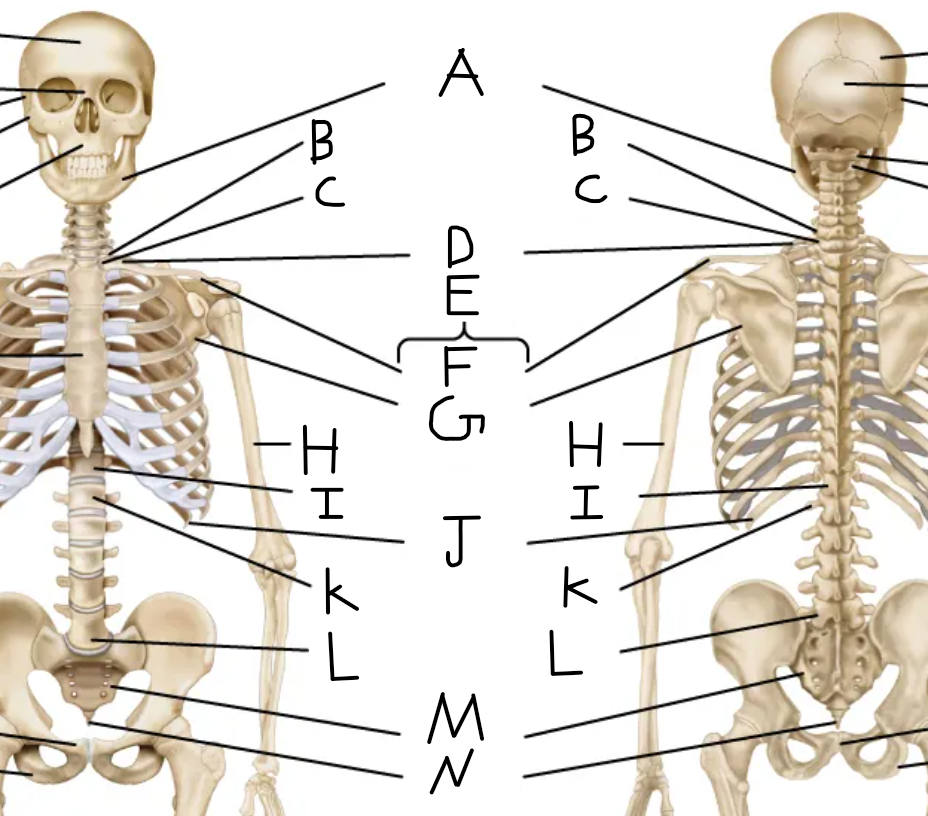
What label should be in position F?
Clavicle

What label should be in position G?
Scapula

What label should be in position H?
Humerus
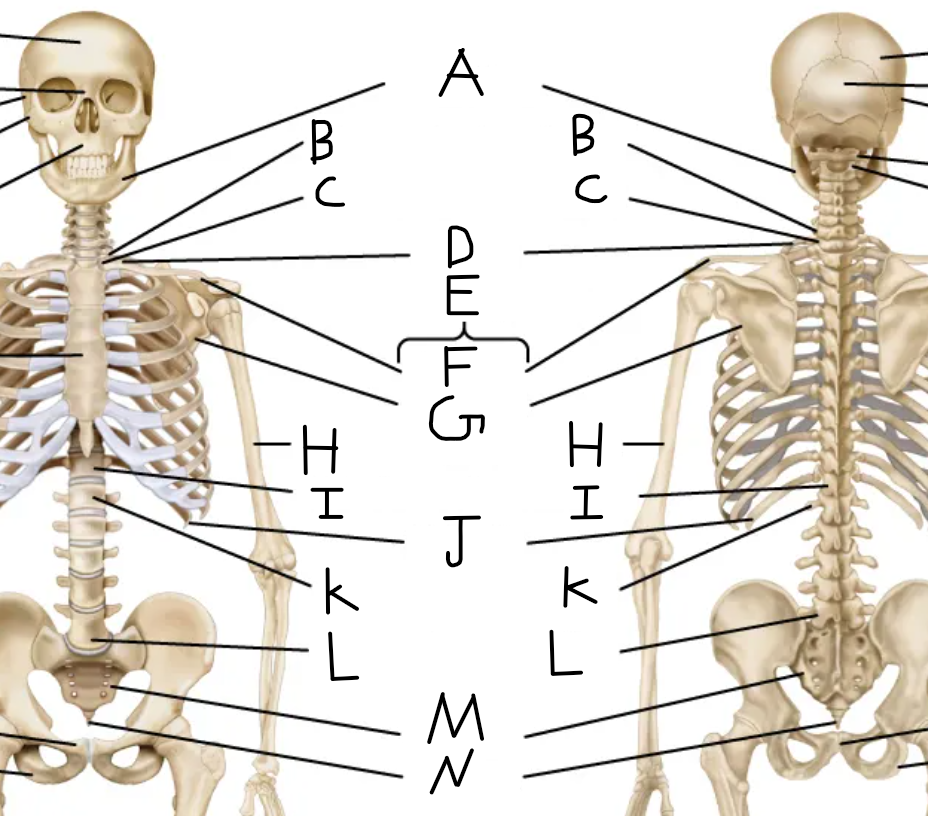
What label should be in position I?
12th Thoracic Vertebra

What label should be in position J?
12th Rib

What label should be in position K?
1st Lumbar Vertebra

What label should be in position L?
5th Lumbar Vertebra

What label should be in position M?
Sacrum

What label should be in position N?
Coccyx
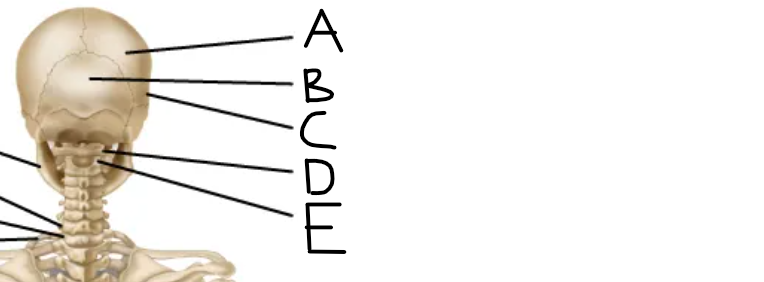
What label should be in position A?
Parietal Bone

What label should be in position B?
Occipital Bone
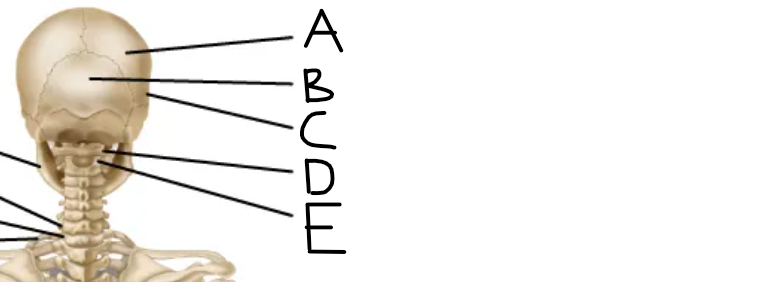
What label should be in position C?
Temporal Bone
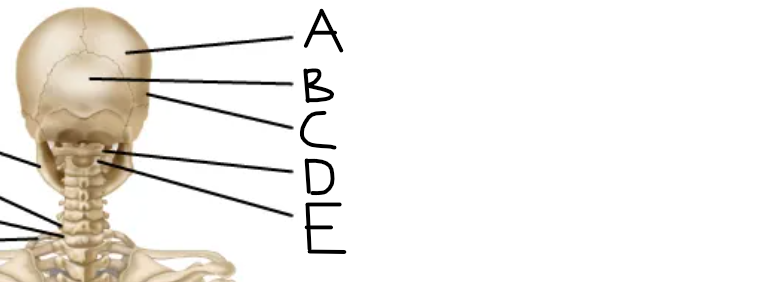
What label should be in position D?
1st Cervical Vertebra (Atlas)

What label should be in position E?
2nd Cervical Vertebra (Axis)

What label should be in position A?
Femur (Thigh)

What label should be in position B?
Patella (Kneecap)

What label should be in position C?
Leg

What label should be in position D?
Tibia

What label should be in position E?
Fibula

What label should be in position F?
Tarsus

What label should be in position G?
Talus

What label should be in position H?
Calcaneus

What label should be in position A?
Foot

What label should be in position B?
Tarsus

What label should be in position C?
Calcaneus
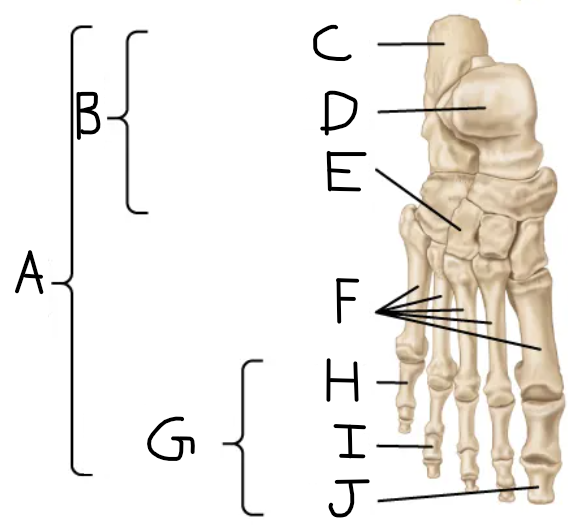
What label should be in position D?
Talus

What label should be in position E?
Lateral Cuneiform Bone

What label should be in position F?
Metatarsal Bones

What label should be in position G?
Phalanges

What label should be in position H?
Proximal
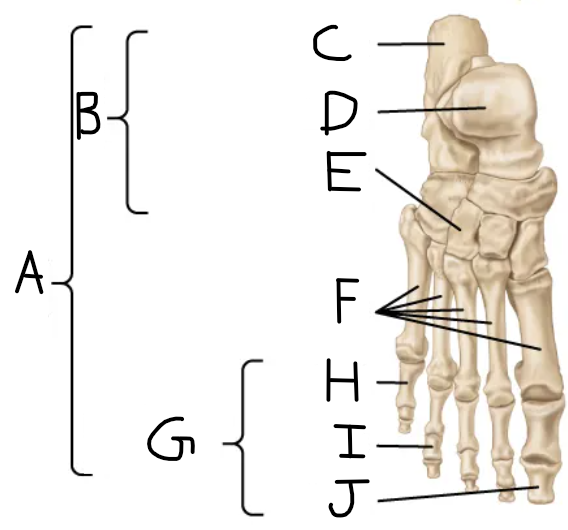
What label should be in position I?
Middle

What label should be in position J?
Distal

What label should be in position A?
Carpal (Wrist) Bones

What label should be in position B?
Metacarpal Bones

What label should be in position C?
Proximal Phalanx

What label should be in position D?
Distal Phalanx

What label should be in position E?
Proximal

What label should be in position F?
Middle
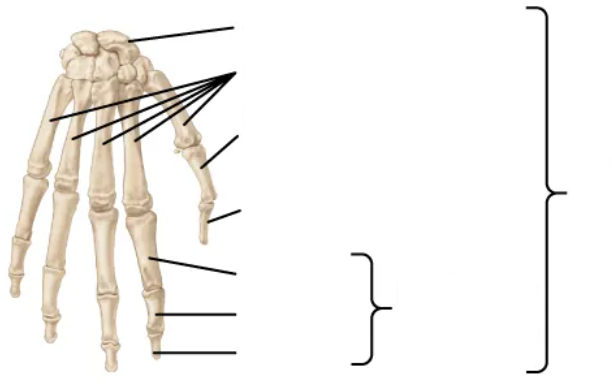
What label should be in position G?
Distal

What label should be in position H?
Phalanges

What label should be in position I?
Middle

What label should be in position J?
Distal

What label should be in position K?
Hand