ch10 - identifying and classifying microorganisms
 Call Kai
 Learn
 Practice Test
 Spaced Repetition
 Match
 Flashcards
 Knowt Play
1/16

There's no tags or description
Looks like no tags are added yet.
17 Terms
principles of taxonomy - taxonomy
science of classifying organisms into groups, or taxa
divided into groups based on phenotypic and genotypic relatedness
useful for:
identification: process of characterizing in order to group
classification: arranging organisms into similar or related groups
nomenclature: system of assigning names, providing universal names for organisms
genus, specific epithet
principles of taxonomy - taxonomic hierarchies
classification categories arranged in hierarchical order
species is basic unit:
eukaryotes: group or organisms capable of producing fertile offspring
prokaryotes: group of closely related isolates or strains (genetic variant or subtype of a species)
many strains of E. coli even tho the species is still E. coli
no kingdom designation for prokaryotes

principles of taxonomy - phylogeny
it’s based on evolutionary relatedness
three-domain system based on rRNA sequence by Carl Woese et al.
Bacteria
Archaea
Eukarya
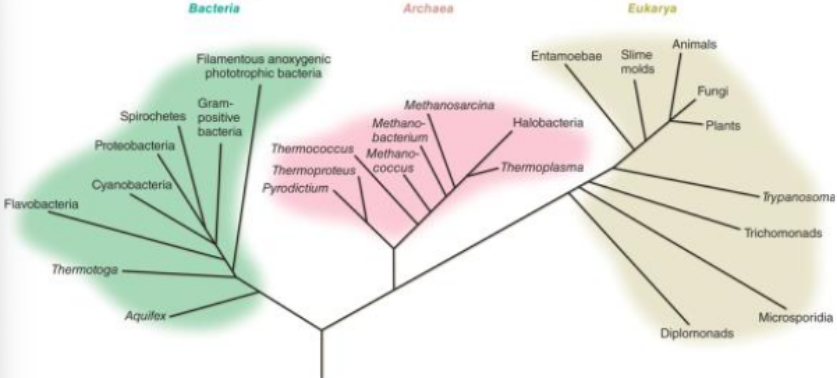
characterizing and identifying prokaryotes
historically, classification based on phenotypic characteristics (morphology, physiology)
size, shape, staining characteristics and metabolic capabilities
current methods: molecular techniques make identification more accurate
compare molecular sequences of DNA, RNA, and protein
allow for accurate construction of phylogenetic tree
trees show divergence and relationships between organisms
using phenotypic characteristics to identify prokaryotes
general characteristics → specific characteristics
microscopic examination
culture characteristics
biochemical test (metabolic capabilities)
ex. can they break down lactose
ex. do they contain catalase
serological testing
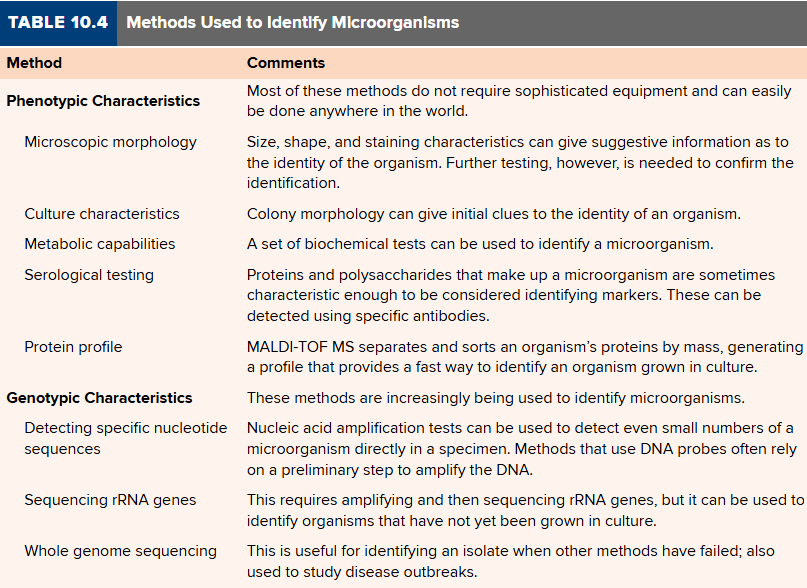

using phenotypic characteristics to identify prokaryotes - microscopic examination
size, shape, staining characteristics
gram stain: distinguishes between Gram-positive and Gram-negative bacteria
may provide sufficient information to start appropriate therapy
ex. the gram stain showed the organism was gram-positive, which helped clinicians choose an appropriate initial antibiotic while waiting for culture and susceptibility results
special stains (e.g., acid-fast, endospore, capsule) useful
can help with rapid preliminary diagnosis of infections

using phenotypic characteristics to identify prokaryotes - culture characteristics
culture characteristics can give clues
Serratia marcescens - red pigment at 22*C
Pseudomonas aeruginosa - produces green pigment
cultures also have distinct fruity odor
differential media aids in identification
Streptococcus pyogenes (strep throat) - B-hemolytic colonies on blood agar
E. coli (urinary tract infection) - ferments lactose, forms pink colonies of MacConkey agar

using phenotypic characteristics to identify prokaryotes - metabolic capabilities
biochemical tests provide more conclusive identification
catalase test
breaks down hydrogen peroxide to oxygen and water
catalase positive the result is formation of bubbles, the gas that forms the bubbles is oxygen
no bubbles makes it catalase negative
many rely on pH indicators
sugar fermentation
not every bacterium can break down every sugar
E. coli can break down glucose and lactose but not sucrose
urease production
they are also phenol red, it turns into a hot pink color
breaks down urea to produce ammonia → the pH is basic
phenol red: pH indicator that is yellow at acidic conditions and red at neutral to basic pH
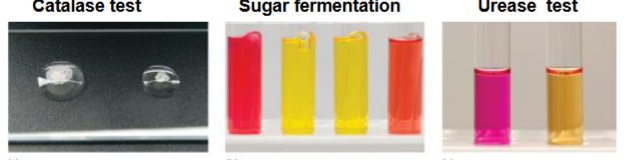
using phenotypic characteristics to identify prokaryotes - tests
commercial biochemical tests allow for rapid identification
running a series of tests with a single inoculation
standardized, uniform → easier for comparison
API test strip: strip with wells, one bacterial suspension, many biochemical tests, results in a pattern/code, purpose is to identify bacterium/prokaryote
Enterotube: tube with compartments, one inoculation, many biochemical tests, results in a pattern of reactions, purpose is to identiy bacterium/prokaryote

using phenotypic characteristics to identify prokaryotes - serological testing
uses antibodies for detection - relies on specific interaction between antibodies and antigens (proteins or polysaccharides of cell wall, capsule, flagella, pili)
commercial antibodies available for specific bacteria; rapid detection of an organism
E.g., Streptococcus pyogenes
using genotypic characteristics to identify prokaryotes - nucleic acid analysis
genotyping: analysis of nucleotide sequences
identify species or group based on unique sequences
can identify organisms that can’t be grown in culture
using genotypic characteristics to identify prokaryotes - nucleic acid amplification tests
NAATs
amplify specific sequences for detection and/or identification
polymerase chain reaction (PCR) is a common technique
useful when
organisms are present in low numbers (from bodily fluids, soil, food, water)
organisms grow slowly
Mycobacterium tuberculosis
routinely used now
faster (3-4hrs vs. up to 6 weeks for cultures)
organisms cannot be cultured in the lab
using genotypic characteristics to identify prokaryotes - sequencing rRNA genes
we use this bcuz there’s little genetic variation in rRNA
amplify and sequence 16S (18S in eukaryotes) rDNA
compare sequence to database → to show the nearest relative
can identify organisms that cannot be grown in culture
Mycobacterium leprae
can’t be grown in standard laboratory culture
scientists were able to study its DNA and sequence its genome even though it could not be cultured in the laboratory
PCR can be used to amplify specific DNA sequences, including sequences useful for identification

characterizing strain differences - bacterial strains
specific genetic variant, or subtype within a single bacterial species
have distinct genetic, biochemical or physical traits
example of ancestral E. coli’s original DNA to
same (no change): a replica of the original E. coli, genetically identical to the ancestor
mutation: random mutations change the DNA, small genetic changes create a new strain
gene acquisition: acquires external DNA from another source, new genes are added, creating a new strain

characterizing strain differences - serological typing
E. coli distinguished by antigenic type of flagella, capsules, lipopolysaccharide molecules
E. coli O157:H7 (O antigen is lipopolysaccharide; H antigen is flagella)
Group of microorganisms with characteristic specific combination of antigens: serovar or serotype
have different antigens that stimulate different antibodies

characterizing strain differences - whole genome sequencing (WGS)
detects subtle differences in the DNA sequences of phenotypically identical strains
used to trace epidemics and outbreaks
PulseNet (CDC): surveillance network used to track foodborne outbreaks
CDC collects WGS data from foodborne pathogens submitted by labs around the country → allows tracing of foodborne illness and recognition of multistate foodborne illnesses (outbreaks)
characterizing strain differences - antibiograms
identify organisms/ bacterial strains based on antibiotic susceptibility patterns
disc impregnated with antimicrobial placed on inoculated plate
clearing indicates microbial susceptibility
different strains will have different susceptibility patterns
zone of inhibition - clearing around disc is where bacterial growth is inhibited
no zone means resistant
zone means not resistant and the organism is affected by the antimicrobial
different strains can have different susceptibility patterns
differences can result from mutations, plasmids carrying resistance genes, and transposons that can move resistance genes between DNA molecules
