MMSC 1-6 exam non chabaner terms in progress
 Call Kai
 Learn
Learn Practice Test
 Spaced Repetition
 Match
Match Flashcards
 Knowt Play
1/53

There's no tags or description
Looks like no tags are added yet.
Name | Mastery | Learn | Test | Matching | Spaced | Call with Kai | Chat |
|---|
No analytics yet
Send a link to your students to track their progress
54 Terms
what are the body cavities and the organs within each cavities?
Cranial cavity
brain, pituitary gland
Thoracic cavity
lungs, heart, esophagus, trachea, bronchial tubes, thymus gland, aorta
Abdominal cavity
stomach, large and small intestines, spleen, pancreas, liver, gall bladder
Pelvic cavity
portions of small and large intestines, bladder, rec tum, urethra, ureters and vag ina (in females)
Spinal
nerves of spinal cord
cranial cavity

thoracic cavity (pleural cavity)

thoracic cavity (mediastinum)

abdominal pelvic cavity

abdominal cavity vs peritoneal cavity
The abdominal cavity is the entire physical region bound by your diaphragm, abdominal muscles, and backbone. The peritoneal cavity is a narrow, enclosed space inside that region formed by the Peritoneum membrane
The peritoneal cavity itself contains no organs; it is only a slick layer of lubricating fluid separating the inner and outer layers of the membrane
peritoneum
smooth membrane that lines the abdominal and pelvic cavities and wraps around the internal organs. Split into 2 parts
parietal peritoneum
he outer layer that lines the internal walls of the abdominopelvic cavity and the underside of the diaphragm
visceral peritoneum
The inner layer that folds inward to wrap directly around and cover the abdominal organs
peritoneal cavity
space between the parietal and visceral layers that contain no organs, but rather lubricating fluid to let organs move without fricton
regions in the abdominolpelvic cavity

spinal cavity

types of tissue and differences
muscle tissue
nucleus and muscle fibers
nervous tissue
lots of neurons
epithelial tissue
covers whole outer surface of body/linings of internal organs
made up of close packed cells in one or more layers
connective tissue
loose connective tissue (areolar) and dense connective tissue (regular)

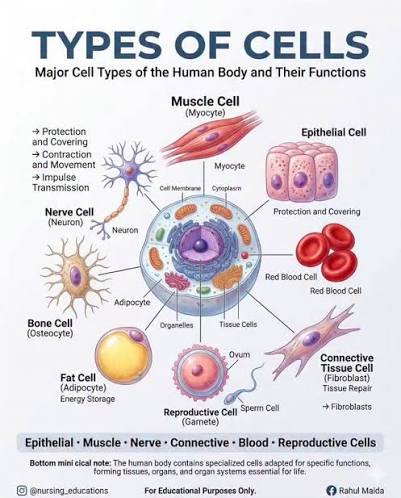
types of cells and their descriptions (be able to identify based off an image)
Muscle cells
long fiber like shaped (contract to generate force and create movement)
Nerve cells
neurons (central cell body with axon and dendrites)
transmit signals/communication
Epithelial cells
closely packed in shapes arranged in layers
forms protective layers that cover outer body surfaces and line internal organs cavities and ducts
Fat cells
central fat droplet and nucleus on edge
stores energy as fat (insulates)
directional terms and their meanings (posterior, dorsal, anterior, ventral, deep, superifical, proximal, distal, caudad/caudal, inferior, cephalad/cephalic, superior, lateral, medial, unilateral, bilateral, anteroposterior, and posteroanterior)
posterior/dorsal: toward back of body
anterior/ventral: toward front of body
superior/cephalic/cephalad: toward head or upper part of body
inferior/caudad/caudal: toward feet or lower part of body
medial: toward middle of body
lateral: away from middle of the body
unilateral: occurring only on one side of the body
bilateral: occurring on both sides of the body
proximal: closer to the point of attachment
distal: farther away form the point of attachment
superficial: close to surface of body
deep: farther away from surface of the body
anteroposteroir: oriented from the front to back
posteroanterior: oriented from the back to the front
anatomic planes of the body

sternum
breast bone/long flat bone in middle of ribs. Protects heart and lungs


4 main functions of digestive/gastrointestinal system
ingestion
digestion
absorption
elimination
ingestion
physical take of putting food into the body
happens in mouth
digestion
food is broken down mechanically AND chemically as it travels through the digestive tract (mostly mouth, stomach, and large intestine)
enzymes aid breakdown of complex nutrients
proteins —> amino acids
sugars —> glucose
fats —> fatty acids and triglycerides
absorption
digested food passes into the bloodstream through lining in the small intestine
the nutrients travel to all cells of the body
cells use the nutrients and burn them to release the energy
elimination
in the form of fec es
eliminates solid waste materials that cannot be absorbed into the bloodstream
happens in large intestine and the fe ces go out through the anus
6 step process of digestive system
1) intake of food and liquids
2) mixing masticating (chewing) and lubrication of food with bodily secretions to form bolus (soft mass)
3) mechanical and enzymatic breakdown of cabs, fats, and proteins
4) absorption of nutrients and water
5) production of nutrients (ex: vitiam K and biotin) by symbiotic bacteria in intestines
6) excretion of waste products vis rec tum and an us
oral cavity

anatomy of a tooth in the oral cavity

aphthous stomatitis
inflammation of the mouth with ulcers
herpetic stomatitis
inflammation of mouth by infection of herpes (cold sores)
oral leukoplakia
white plaques or patches in mouth due to tobacco use
3 salivary glands

peristalsis
movement of food down the throat (deglutition is swallowing)


dysphagia
difficulty swallowing or eating
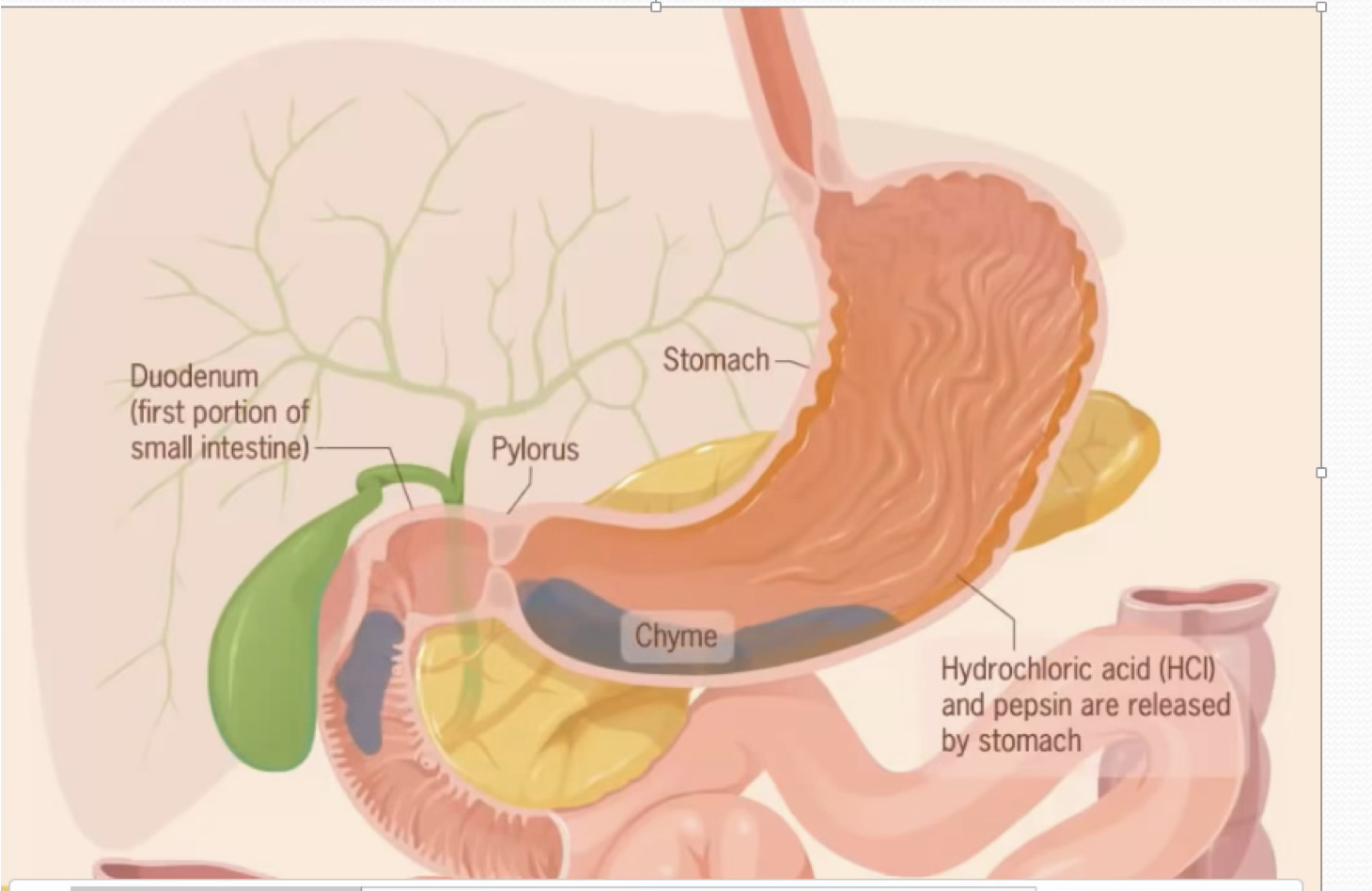
esophagust/stomach parts

gall bladder, liver, pancreas

roles of liver
maintenance of metabolic homeostasis
process nutrients and vitamins
detoxifies the blood
production of bile
stomach
liver

large intestine/roles
absorb water and solutes
concnetrates and forms stool
