cell cycle and cell communication
 Call Kai
 Learn
 Practice Test
 Spaced Repetition
 Match
 Flashcards
 Knowt Play
1/17

There's no tags or description
Looks like no tags are added yet.
18 Terms

anaphase
-centromeres split, and the sister chromatids separate
-daughter chromosomes moves toward opposite poles, pulled by shortening spindle fibers
G1
-cell grows rapidly and performs metabolic functions
-organelles are duplicated and proteins needed for DNA synthesis are produced
-ensures the cell has enough energy and materials to prepare for DNA replication

cytokinesis
cytoplasm divides, completing cell division
in animals cells, a cleavage furrow forms and pinches inward until two daughter cells separate
in plant cells, a cell plate forms in the middle of the cell, developing into a new cell wall
result = two genetically identical daughter cells
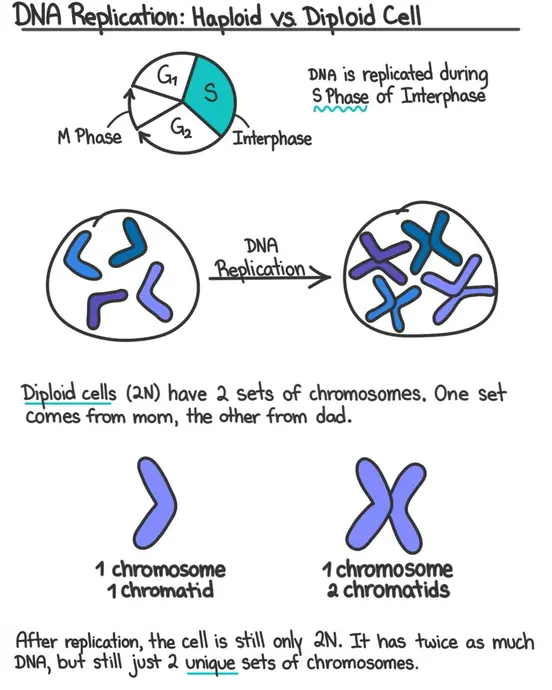
S phase
-cell replicates its DNA, producing two identical copies of each chromosome
-each chromosome now consists of two sister chromatids joined at the centromere
-guarantees that both daughter cells will receive a complete set of genetic information
Metaphase
-Chromosomes line up single file along the metaphase plate at the center of the cell
-Each chromosome’s centromere is attached to spindle fibers from opposite poles
-stage identified by chromosomes perfectly aligned along the cell’s equator
G2
-Cell continues to grow and produce proteins required for mitosis
-Organelles such as mitochondria and centrioles are duplicated, cytoplasm expands
-Final preparation for cell division, ensuring everything is ready for mitosis
prophase
-Chromatin condenses into visible chromosomes; each chromosome has two sister chromatids joined at the centromere
-nucleolus disappears and the nuclear envelope begins to break down
-centrosomes move toward opposite poles, and spindle fibers negin forming from microtubules
-first stage where chromosomes are visible under a microscope
g1 checkpoint
cell verifies that is has grown sufficiently and that the DNA is undamaged
if yes → S phase; if no → G0 state
determines whether division could continue
telophase
chromosomes reach opposite poles and begin to uncoil back into chromatin
nuclear envelopes reform, and nuceloli reappear
spindle apparatus breaks down
final stage of nuclear division
G2 checkpoint
checks if any of the DNA was damaged and if it was completely copied during S phase
if errors are detected the cell cycle pauses for repair before mitosis begins
M checkpoint
cell examines whether all the sister chromatids are correctly attached to the spindle microtubules
paracrine signaling
molecules that travel short distances to stimulate nearby cells like neurotransmitters diffusing across a synapse
ex. quorum sensing in bacteria
endocrine signaling
involves hormones that travel through the bloodstream to reach distant target cells
autocrine signaling
occurs when a cell releases a signal that binds to receptors on the same cell
signal transduction pathways steps
Reception
Transduction
Response
signal transduction
G-protein coupled receptor activates a G protein, which in turn activates the enzyme Adenylyl Cyclase, converting ATP into cAMP, a second messenger, second messenger triggers an intracellular signaling cascade
receptor tyrosine kinases (RTKs), ligand binding causes monomers to form a dimer which activates kinase activity and leads to phosphorylation cascades (each kinase adds a phosphate from an ATP molecule to tyrosines on the other monomer)
ion channel receptors: contain a portion of the protein that changes shape and acts like a gate when its ligand binds to it
cellular response
gene expression changes
enzyme activation
apoptosis (programmed cell death carried out by caspases)
rtks and cancer
rtks are often involved in pathways that stimulate cell division; such rtks are oncogenic which means they accelerate cell division causing cancer to develop
many cancer treatments interfere w/ rtk signaling pathways