Plant ID Exam 2
 Call Kai
 Learn
 Practice Test
 Spaced Repetition
 Match
 Flashcards
 Knowt Play
1/95

There's no tags or description
Looks like no tags are added yet.
96 Terms

What family is being shown?
Fabaceae
Fabaceae floral formula

Fabaceae leaf traits
Alternate; pinnately compound/palmate compound/trifoliate/rarely simple; Stipules prominent; stipellules/pulvinules at base of leaflets
Fabaceae floral traits
Spikes/clusters; synecious; mostly zygomorphic/actinomorphic showy; 5 fused sepals in 5 lobed tube; ovary superior, 1 carpel; petals typically have a “banner” and a “keel”
Fabaceae fruit traits
Legume (1 carpel, 2 lines of dehiscence); loment (split into 1 seeded indehiscent segments)

Stipules at base, palmately compound leaves
Fabaceae

Banner and keel, alternate, sepals fused
Fabaceae

Actinomorphic symmetry, long showy stamens, superior ovary, 5 fused petals, 5 fused sepals
Fabaceae

Brassicaceae
Brassicaceae floral formula

Brassicaceae leaf traits
alternate; estipulate; often basal; simple to pinnately dissected'; often sessile and auriculate
Brassicaceae floral traits
Racemose or corymbose; synecious; actinomorphic, 4 free sepals; 4 free, clawed petals, 6 stamens (usually 4+2); ovary superior
Brassicaceae fruit traits
Silique (2-3x longer than wide); silicle (shorter and wider); schizocarpic (least common)

4 free petals, 4 free sepals, 6 stamens, fruits silicle
Brassicaceae

4 free petals, 4 free sepals, 6 stamen, superior ovary
Brassicaceae

4 free petals, 1 pistil, 6 stamens
Brassicaceae

Onagraceae
Onagraceae floral formula

Onagraceae leaf traits
Various, alternate, opposite, basal; entire, toothed, or pinnatified
Onagraceae floral traits
Synecious, actinomorphic or zygomorphic, 4 merous, elongated hypanthium; sepals, petals, stamens free; sepals reflexed; inferior ovary of 4, very prominent!
Onagraceae fruit traits
Capsules, seeds may have tuft of hairs

4 free petals, 4 reflexed, free sepals, inferior ovary, 8 stamens
Onagraceae

Long hypanthium, inferior ovary
Onagraceae

4 free petals, 4 free, reflexed sepals, 8 stamens, 4 stigmatic lobes, (prominent) inferior ovary
Onagraceae

Chenopodiaceae
Chenopodiaceae floral formula

Chenopodiaceae leaf traits
Shaped like a goose-foot; often farinose/mealy; may be succulent; alternate, estipulate, entire to lobed
Chenopodiaceae floral traits
Spikes or close clusters; dioecious, monoecious, synoecious; actinomorphic; subtending bracts; 2-5 tepals; 5 stamens (1-6, very small means a lot of variation); 2-3 carpels, superior
Chenopodiaceae fruit traits
Often surrounded by persistent bracts, winged; achene, urticle, 1-seeded capsule.

farinose/mealy; 5 tepals; 5 stamens
Chenopodiaceae

Chenopodiaceae

euphorbiaceae
Euphorbiaceae floral formula
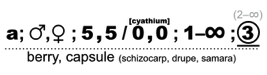
Euphorbiaceae leaf traits
Milky latex; simple to compound, alternate or opposite; usually stipulate
Euphorbiaceae floral traits
Cymose with showy bracts; actinomorphic, imperfect flowers; 1 female flower surrounded by male flowers of 1 stamen each; fused bracts and glands may mimic perianth; 3 fused carpels usually with divided stigmatic lobes
Euphorbiaceae fruit traits
Berry, capsule; ovary reflexed when immature and erect when mature, dehiscence is explosive

monoeicious (female flowers below, male flowers above), glands present
Euphorbiaceae

Milky latex; gland appendages on cyanthium mimic petals; female flower to the side when immature; male flowers clustered together at the base of the female flower
Euphorbiaceae

Milky latex; gland appendages on cyanthium mimmic petals; momoeicious; female flower to the side when immature and erect when mature
Euphorbiaceae

Polygonaceae
Polygonaceae floral formula

Polygonaceae leaf traits
Nodes swollen, internodes angled; mostly alternate; simple, entire; OCREA
Polygonaceae floral traits
Synoecious; clusters or involucrate fascicles; 6-5 tepals in two whorls; stamens 6-9 in two whorls; ovary of 3 or 2 fused carpels, superior
Polygonaceae fruit traits
Achene or nutlet; lenticular (2 carpels); triangular (3 carpels)

Swollen nodes, ocrea, internodes slightly angled
Polygonaceae

5 tepals; 8(ish) stamens in two whorls; superior ovary
Polygonaceae

5 tepals in two whorls; ocrea; 9 stamens (hard to see) in two whorls
Polygonaceae

Caryophyllaceae
Caryophyllaceae floral formula

Caryophyllaceae leaf traits
Swollen nodes (no ocrea); simple, entire, linear; opposite; estipulate
Caryophyllaceae floral traits
Synoecious; actinomorphic; petals “pinked”; 5 or 4 free or fused in a tube sepals; 5 or 4 petals, sometimes with an appendage at the junction between blade and claw; stamens 1-2x the number of sepals; ovary 2-5 fused carpels, styles free; superior
Caryophyllaceae fruit traits
Capsule sometimes surrounded by a persistent calyx; splits at the top, rarely fully dehisces

5 deeply lobed petals; 5 free sepals; 10 stamens (2x sepals); 3 free styles
Caryophyllaceae

5 free sepals; 5 free petals; 10 stamens (2x sepals); 3 free styles
Caryophyllaceae

fused sepals; 5 petals with appendages; opposite leaves
Caryophyllaceae

Ericaceae
Ericaceae Floral Formula

Ericaceae leaf traits
Alternate leaves, simple, coreaceaous, margins often revolute; estipulate; restricted to acidic soils
Ericaceae floral traits
Solitary or racemose clusters; synoecious; actinomorphic or zygomorphic; campanulate to funnelform; urceolate (like an urn); 5 or 4 fused or free sepals; 5 or 4 fused petals; 10 or 8 stamens (2x petals), dehisce by pore; 4-5 carples, superior or inferior
Ericaceae fruit traits
capsule, berry, or drupe

5 fused petals, slightly zygomorphic; sepals free; stamens dehisce by pore; urceolate flowers
Ericaceae

5 free petals; anthers dehisce by pores; superior ovary
Ericaceae

Stamens dehisce by pores
Ericaceae

Apiaceae
Apiaceae floral formula

Apiaceae leaf traits
Internodes hollow, ribbed stems, prominent tap roots; leaves estipulate, alternate, cauline or basal; leaves mostly compound, highly dissected, sheathing petiole base
Apiaceae floral traits
Actinomorphic; hypanthium present but reduced; 5 sepals, reduced; 5 petals, free; 5 stamens, free, alternate with petals; ovary 2 fused, inferior carpels; fused at base, split styles
Apiaceae fruit traits
Schizocarp of 2 mericarps, held by carpophore, ridged

5 free sepals; ribbed stem; carpels fused at base and free at stigma, 2 carpels
Apiaceae

5 petals, 5 sepals, 5 stamens alternate with petals
Apiaceae

5 petals; 2 free styles; 2 fused carpels
Apiaceae
Apocynaceae
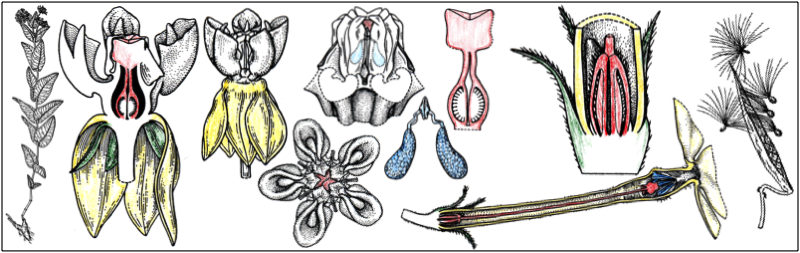
Apocynaceae floral formula

Apocynaceae leaf traits
Latex bearing canals; leaves opposite, estipulate, simple, entire or lacking
Apocynaceae floral traits
synoecious; actinomorphic; 5 sepals, fused or almost distinct; 5 petals, fused at base or more; 5 stamens, epipetalous with a corona; pistil has two ovaries free at base but fused by style or stigma (gynoecium)
Apocynaceae fruit traits
follicle, berry, drupe

5 petals, fused at base; stamens have corona
Apocynaceae

2 carpels free at base and fused at style; stamens have corona
Apocynaceae

fused petals, stamens have a “knee bend”; superior ovaries
Apocynaceae

Rubiaceae
Rubiaceae floral formula
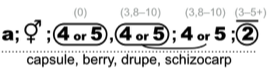
Rubiaceae leaf traits
Leaves simple, entire, opposite/whorled; interpetiolar stipules (can look like leaves); glands on upper surface or margin of leaf
Rubiaceae floral traits
Solitary or paniculate to head-like; synoecious; actinomorphic; 4(5) sepals, distinct or fused; 4(5) petals, fused; 4(5) stamens, epipetalous; ovary inferior, 2 fused carpels
Rubiaceae fruit traits
Capsule, berry, drupe, or schizocarp
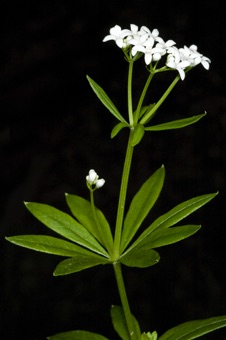
four fused petals, 4 stamens, 2 carpels; leaves either whorled or opposite with leaf-like stipules
Rubiaceae

Opposite leaves with interpetiolar stipules; fruit a schizocarp
Rubiaceae

4 fused petals, two carpels; opposite leaves with interpetiolar stipules
Rubiaceae

Caprifoliaceae
Caprifoliaceae floral formula

Caprifoliaceae leaf traits
Leaves opposite, decussate, simple, estipulate
Caprifoliaceae floral traits
Clusters or pairs; synoecious; zygomorphic, tubular; 5 sepals, tiny, often constricted at base above ovary; 4 petals, fused, tubular, often bilabiate, often will have a gibbous pouch; 5 epipetalous stamens; ovary inferior, 2-5 fused carpels; stigma usually capitate
Caprifoliaceae fruit traits
Berry or drupe, capsule or achene

zygomorphic; stigma capitate; 5 stamens
Caprifoliaceae

Inferior ovary; stigma capitate; epipetalous stamens
Caprifolicaceae

stigma capitate; inferior ovary; gibbous pouch present
Caprifoliaceae

Portulaceae