Mosques and Aniconism Midterm
 Call Kai
 Learn
 Practice Test
 Spaced Repetition
 Match
 Flashcards
 Knowt Play
1/38

There's no tags or description
Looks like no tags are added yet.
39 Terms
hijra
Prophet Muhammad’s migration from Mecca to Medina
The Umayyad Period
661-750
Spain through North Africa, Greater Syria, Perisa, and edge of Oxus river (border of Central Asia)
NOT friends with the Byzantine Empire
‘Abd al-Malik (r. 685-705)
Center is Jerusalem, Damascus
exist in collab with Christianity and Judaism
Islam is just getting started
The ‘Abbasid Period
750-1258
Large dynasty with little mini ones throughout
North Africa, Holy lands of Greater Syria, Persia, Oxus river border, center is Iraq
New city Baghdad! Establish as brand new Islamic city, not having to work around ancient holy cities

the shahada
Muslim profession of faith
fundamental base of Islamic art and Islam itself
“There is no God but Allah alone,” Muhammad is the messenger of God
shows up on coins at the start of the Umayyad period — transmitting the new Muslim faith in a place where they’re the minority via something that changes hands easy

common characteristics of Islamic art
vegetal/natural motifs
geometric and repetitive patterns
Arabic inscriptions (the shahada or parts of the Qur’an)
no figuration in public spaces, but okay in private/royal spaces

Mihrab
prayer niche in a mosque
doesn’t have anything in it
indicates the direction of prayer to Mecca and the Kaba
located on the qibla wall

Iwan
vaulted hall, 3 walls with open courtyard
image is Arch of Khusraw
responds to Sassanian architecture (early 6th century — 530s)
Sassanian architecture with mud bricks

Chahartaq / Zoroastrian Fire Temple
4 arches
Sassanian, pre Islam, 3rd century
Dome around central fire altar — inspires domes around other central structures later
fire worship — hierarchical scale of fire attendants shows up later


Senmurv!
Sassanian mythical creature
composite animal with dog head and wings
popular Sassanian myth, present in later Islamic art
Prophet Muhammad dates
570-632 CE
late 6th century, early 7th century
start of Islam
Four Righteous Caliphs dates
632-661 CE
‘Uthman b. ‘Affan — 644-656
the Qur’an is finally codified under his rule, about 20 years after death of Muhammad
remember 650 CE ish!!!

The Dome of the Rock
years: started 691-2 CE
Temple Mount, Jerusalem
patron: ‘Abd al-Malik
earliest body of Qur’anic inscriptions on public shrine
purpose still unknown but suggestions:
Muhammad ascended to heaven and the rock at the center has his footprint (the Mi’raj) — imitates the Christian martyria in the area, center altar with dome
Competition with the Hagia Sophia being revived in Byzantium
octagonal space, 2 circumambulation spaces with columns, interior is decorated with Umayyad mosaics — responds to Byzantine basillica churches in Italy and across to Turkiye
inscriptions of Qur’anic verses — some addressing the Christian population and how Jesus is not the son of God but is accepted, the Shahada, date of creation and patron
mosaics of Byzantine and Persian royal jewels/crowns — a take on no figuration, represents the relationship between the Umayyads and the other empires in the area (jewels of Sassanian kings, Justinian like we see at Ravenna — mosaic artists from the Mediterranean were hired)
triumph over the empires
the natural world (plants, vegetal motifs, meant to look like an image of the Garden of Eden), build up maps of cities and houses (possibly nearby cities or places under Umayyad rule), nearby river
vines coming out of vases is a motif seen in Byzantine mosaics, these just don’t have birds or other animate beings

The Umayyad Caliphate dates
661-750 CE
Spain, North Africa, Greater Syria, Persia, through to the Oxus river/border with Central Asia
Capital city of Damascus — in part with previous Jewish and Christian influence
Important rulers
‘Abd al-Malik — 685-705
‘Ibn al-Zubayr — 680s to death in 692
‘Abd al-Malik’s rival in Mecca
Al-Walid I, son of ‘Abd al-Malik 705-715
spolia
parts of old architecture in ruins used to create new structures
The Dome has Roman corinthian column spolia — the leafy one

Mosaic in the inner dome of the Dome of the Rock
Sassanian winged crown — symbol could only be Persian/in response to seeing Persian iconography
worn by the Khusraw


Hypostyle mosque
big during the Umayyad period!!
rows and rows of columns facing the qibla wall
modeled after Muhammad’s house in Medina (the 1st Mosque) ~630 CE
usually more square with a courtyard for ablutions fountain/etc. in the middle
space with more columns is typically the prayer area
used exclusively in Egypt and Persia at first (think the Temple of Amon in Luxor and the audience hall in Persepolis)

Mosques of Al-Walid, son of ‘Abd al-Malik
Ruling years: 705-715 CE
Al-Aqsa Mosque, Temple Mount in Jerusalem (709-715 — think last 5 years of rule)
mosque on the same plaza as Dome of the Rock
Reconstruction of the Mosque of Medina (Muhammad’s house) (706-710)
expanded a now pilgrimage site to accommodate more people — removed the family’s rooms and built around Muhammad’s burial site
Great Mosque of Damascus (706, major commission of his time)
created on an already sacred plot of land similar to Temple Mount— called a Temenos

The Great Mosque of Damascus
Umayyad, 706 CE
patron: Al-Walid I, ‘Abd al-Malik’s son
congregational Friday mosque (BIG important one!) — enlarged the OG
hypostyle hall with 3 rows of columns facing the qibla wall (more columns, more space to accommodate people)
dome and Roman-esque arcade before the columns
site in Damascus is a holy site (like Temple Mount)
Syrian storm god, then Roman temple to Jupiter, Christian church to John the Baptist
use of spolia, more for aesthetic quality instead of purely political
rare domed structure inside with relics of J the B
style follows both Muhammad’s house and Royal Byzantine palace
expansive bunching of mosaics
gold background, large river near Damascus (the Barada), urban and natural landscape like the Dome
buildings in that city map style, panoramic view of nearby towns in receding perspective)


City mosaic in the Great Mosque of Damascus
very similar to the city mosaics in the Dome of the Rock
based on the Madaba Mosaic Map in the Church of St George in Jordan
6th century!!!!
inscriptions include Greek, Persian, and Arabic

Umayyad Palaces in the 1st half of 8th cent
combo of Roman, Byzantine, and Sassanian art style
theme: kingship and royal pastime
representation of Umayyad caliph and princes
representation of ideal ruler and/or King Solomon
Structure
large square building with towers filled with rubble
space around central courtyard
contains a mosque and bathhouse
decorated with sculpture, mosaic, and paintings
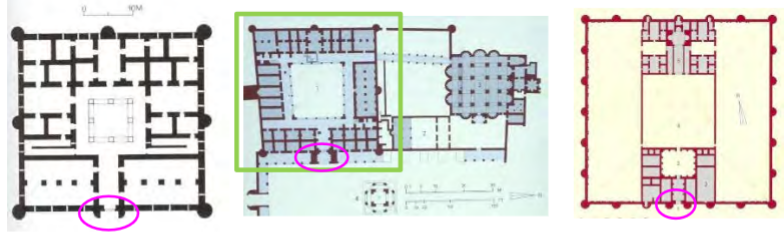

Qasr Kharana — 710 CE
“road palace” — inn for travelers
patron: Al-Walid
Qasr — “palace”
“Qa” — big A sound, big palace
“Qu” — little u sound, little palace “cutie”

Qasr Mshatta
Jordan, early 8th century
patron: Al-Walid II
limestone carvings, friezes of repetitive motif
vine scrolls, geometric patterns, symmetry → fundamentals of Islamic art
Wall remains are at the Pergamon Museum in Berlin, as gifted by Ottoman Sultan to Emperor Wilhelm II

Qasr Mshatta wall carvings
triangles with rosettes, lacy flora, some animals
Roman mosaic theme of animals drinking from a vase
mythical creatures — Senmurv (Persian winged animal), gryphon (Greek myth), Pegasus, Centaur (Greek and Roman myth)
Senmurv shows exposure to Persian influence
Islam conquered lands with both Greek and Persian/Zoroastrian tradition
only 1 human figure in the Berlin fragment
looks at the animals below
likely Greek myth of Orpheus taming the animals with music — did the myth mean the same to the Islamic tradition as it did in Greek time? or did he get a new story
very popular myth in Roman times!
Right side of the wall — no animal or figuration, just vegetal and vase reliefs
this section of the wall holds the qibla wall


Khirbat al-Mafjar reliefs
Jericho, Palestine, 8th cent
construction start under Hisham, other son of ‘Abd al-Malik (720s) but is unfinished during an earthquake in 749 CE
Khirbat — “ruins”
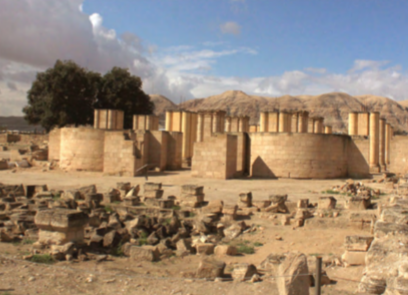
Khirbat al-Majfar bathhouse
largest and most decorated compared to other rooms
likely the first place built and only one used


Khirbat al-Mafjar Caliph relief statue
8th century, Hisham
lifesize royal figure carving found above the facade of the bathhouse, likely flanked by two smaller guard figures or attendants
royal figure standing above lions → pair of lions under ruler is Sassanian
shows either a good king in the image of King Solomon, or depicting Solomon himself — hope is to be a good king
textual and material evidence that the baths were named in reference to Solomon (The One Ring — Solomon is such a just king that he can control demons with a ring and uses them to heat his bath
human figure in princely character in a secular space of the palace complex

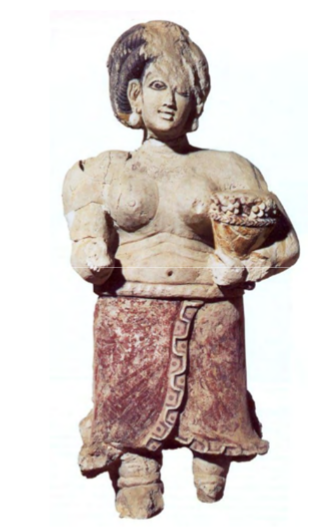
Khirbat al-Mafjar ladies
attendants or court dancers/attendants
found beneath the caliph figure
long skirts, no top, jewelry, flowers, dark hair, beauty
echo of Mediterranean fertility deities and classical Arabic er@tic poetry — think venus of Willendorf

Lion Gazelle Mosaic at Khirbat al-Mafjar
floor of the bathhouse were mosaics
likely patrons are either Hisham, son of al-Malik (720s-40s) OR al-Walid II (740s)
lion and gazelle motif — maybe love poetry, lover lady is the antelope
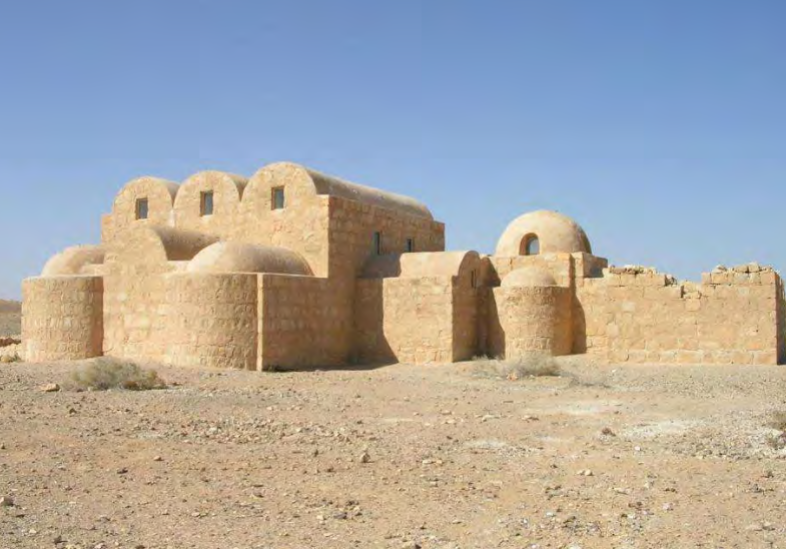
Qusayr Amra
Jordan, mid-early 8th century
patron: al-Walid II when he was a baby prince
murals! not mosaic
representations of female dancers like the attendants at Khirbat al-Mafjar
central image — enthroned prince with attendants, looks similar to standing caliph relief at Khirbat
hierarchical scale
likely allegorical representation of Solomon or the ideal of the caliph as the perfect king
right wall → wrestlers/court entertainment, 6 Kings (kings from Sassanian tradition, Byzantine emperor, king of Ethiopia, king of Spain, emperor of China, ruler of Turkic peoples
everyone gestures to a panel → al-Walid with his scribe?

Transition of coins
Sassanian coins → Arab Sassanian (added Arabic/Quranic script, kept the zoroastrian fire temple and Sassanian shah with his crown)
Arab Byzantine coins → gold coins with 3 rulers of Byzantine empire and cross on the back, new shift removed the horizontal bar of the cross to make it not a cross
reform under ‘Abd al-Malik → around 696 → kept byzantine motif of 3 rulers and cross structure w/o bar, added arabic inscription of shahada
around 695 → created one ruler with non-cross on the back, likely depicts the caliph with a sword. arabic inscriptions of the shahada and when the coin was minted
official coin of Islam after al-Malik → all epigraphic (no figures), Islam is the state religion, Arabic is the language of administration
shahada phrase → god is the only god, and quranic phrase → rejecting Jesus as son (important for interacting with Christian hands, coins travel easy)
aniconism
anti-figuration or icons, fundamental aspect of Islam
mosaics in churches were pixelated bc they had people and animal figures
tesserae, church of the Lions (6th century)
churches could still be used — accepting of christianity, just needed to iconoclast
The ‘Abbasid Caliphate
720-1258 (last half of the period)
North Africa across to Oxus river, expanded more into Turkiye
focus point of life shifted to Iraq instead of Greater Syria
lack of Roman spolia, things now made with mud brick — significantly less remaining today than from the Umayyads
little sub dynasties throughout (Fatimid, Ayyubid, Seljuqs and Seljuqs of Anatolia)
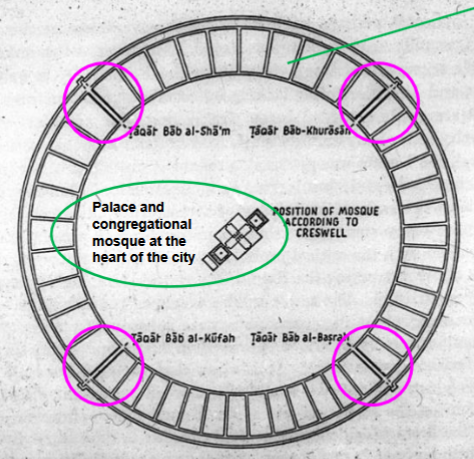
Baghdad—the Round City
762
patron: Caliph al-Mansur
based on the 3rd century Sassanian round city of Firuzabad
divided into geometric sectors circled around the congregational mosque and palace
gates face major cities and are named for them
palace or central building had a green dome with a statue of a horseback rider

Samarra, Abu Dulaf
836 CE
patron: Caliph al-Mutasim
architectural chunks of decoration
style A: shows continuity of late-antiquity motifs (5 lobed vine leaves)
style B: geometric and abstract shapes like the yin/yang
‘Abbasid artists found the shape, but what did it mean to them? Trade with China is evident in greensplash stoneware found nearby
style C: repetition of abstract geometric themes, covers the entire wall, and all symmetrical
also includes decorative wall niches found in early Sassanian reliefs/carvings


Noh Gumbad Mosque
Afghanistan
9th century
likely the oldest early Islamic building in Afghanistan
located out in the fringes of the empire but the decorative motifs of the center reach and influence architecture
also decorated with paisley motifs that are very Buddhist
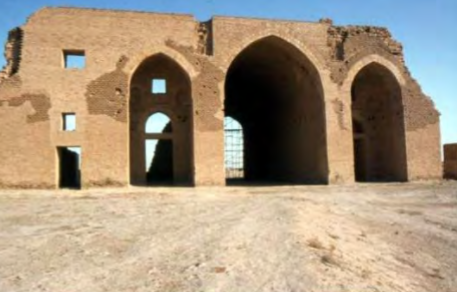
Jawsaq al-Khaqani Palace
Samarra, 830s
figurative murals of princely pleasures and royal lifestyle

Two Dancers mural at Jawsaq al-Khaqani
pouring wine, dancing, holding fruits
even though the Qur’an says not to drink wine, people still did as celebration
Khamriyyat — wine poetry
represents banquets and social life

Great Mosque of Samarra
Samarra, 847-861
patron: Caliph al-Mutawakkil
large spiral minaret directly across from the qibla wall (these became popular in the ‘Abbasid period")
Ziyada/storage space ring around the complex
‘Abbasid Minarets
tall, usually on the central axis of the mosque
spiral staircases for the prayer caller to walk up and call everyone to prayer
usually sectioned with decorative horizontal friezes — helps the human eye construct how tall these actually are
spread across the empire out to the fringes