Presentation 5: Platform pricing and monetization
 Call Kai
 Learn
Learn Practice Test
 Spaced Repetition
 Match
Match Flashcards
 Knowt Play
1/20

Earn XP
Description and Tags
Platform launch, monetization and value
Name | Mastery | Learn | Test | Matching | Spaced | Call with Kai | Chat |
|---|
No analytics yet
Send a link to your students to track their progress
21 Terms
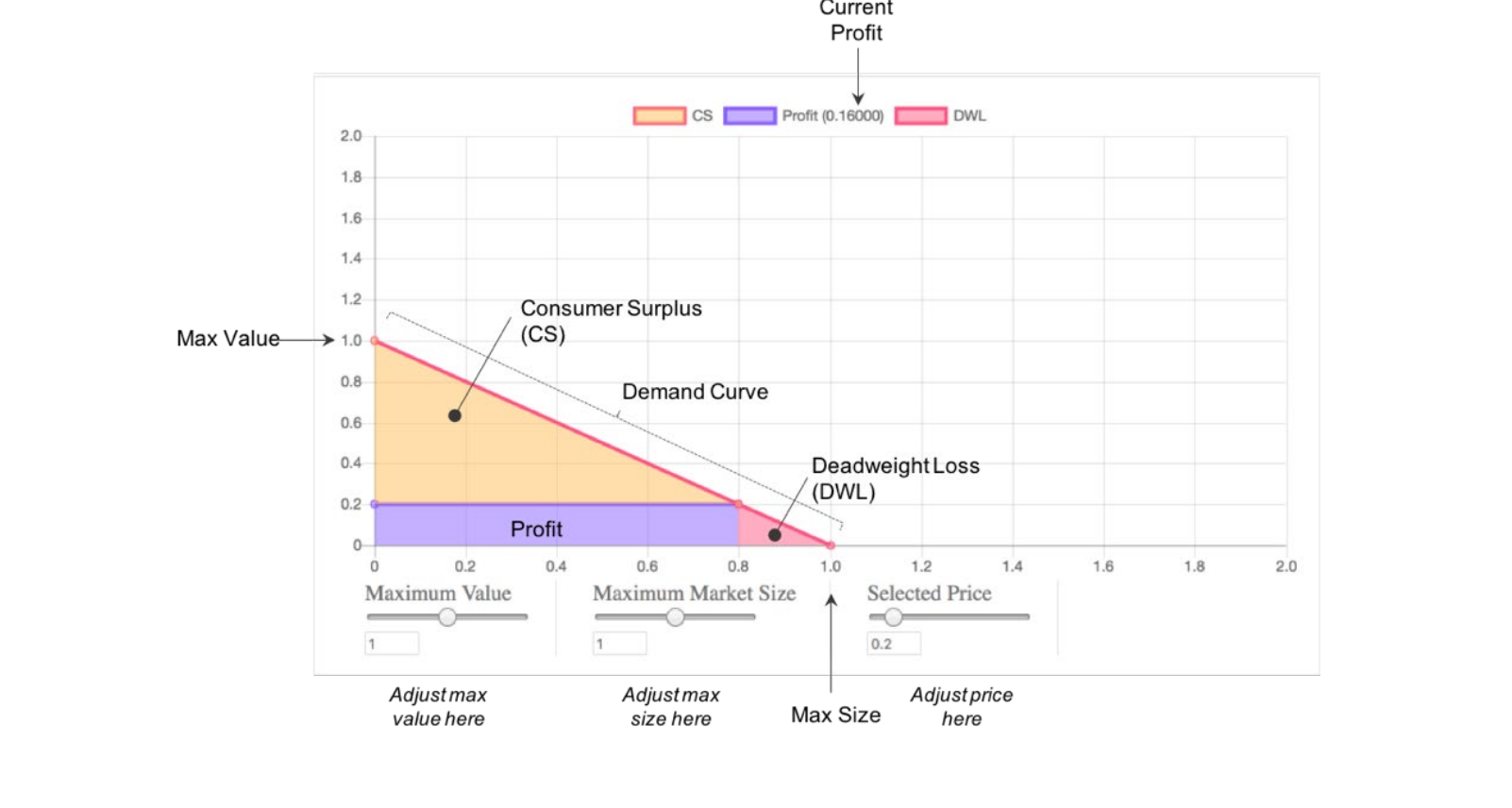
Explain the Normal Demand Curve.
Profit/Revenue: Prie x Quantity
Consumer Surplus (CS) (Überschuss):
Value of the purchase beyond the price
Willingness of consumers to pay more
→ Difference between willing to pay and actually pay (e.g max willingness:100€; actual price: 70€ → CS: 30€)
Deadweight Loss (DWL):
Opportunity Costs
Consumers priced out by the product
→ Some customers would have bought the product at €60 but not at €70 (Those trades never happen → loss of value called DWL)
Normal Demand Curve (Optimized one product):
If the price is
too high → high margin but few customers.
too low → many customers but little money per customer.
The optimum is somewhere in the middle
Explain the Interdependent Demand Curve and the Interdependent Demand Curve Collectively.
Iterdependent Demand Curve (Optimized one side of a platform):
Two-sided platform
Consumer demand is influenced by the number of developers (apps), and developer demand is influenced by the number of consumers
Optimize only one side
Interdependent Demand Curve Collectively (optimized entire platform):
Two-sided platform
Platform owner optimizes both sides together
May subsidize one side to maximize total platform profit
Uses cross-side network effects
→ Platforms should not optimize each market separately
→ Because of cross-side network effects, the best decision for one side (e.g., maximizing Mac profits) is not necessarily the best decision for the entire platform ecosystem.
What is the difference between pricing a traditional product and pricing a two-sided platform?
Traditional product:
One demand curve
Optimize the price of one product
Goal: maximize the profit of the product
no (or few) network effects and no subsidies
Two-sided platfoms:
Two interdependent demand curves
Optimize prices on both sides
Goal: maximize the total platform profit
Strong cross-side network effects
Often subsidize one side to attract the other
Name and explain pricing strategies.
Symmetric Pricing:
Make money on (or subsidize) both consumers and complementors side
Subsidy = Price does not cover the platform cost
e.g. amazon: consumers pay price and complementors pay fees
e.g. Uber (2014-2017): consumers and complementors were subsidized
Asymmetric Pricing:
Make money on one side and give subsidy to the other
When something is free to your side, you are subsidized
Subsidy on one side can lead to maximization of total profit
e.g. Microsoft (1990er): consumers paid and complementors get SDKs free
e.g. Facebook: users free, advertisers pay
Subsidy Pricing as a pricing decision within an asymmetric strategy
One side is intentionally priced below cost (or free) to stimulate network effects and maximize total platform profit
What two questions are important for subsidy choices?
Which side to subsidize?
How long to subsidize?
Explain why the Subsidy choices depends on the strength of Network Effects.
Which side to subsidize?
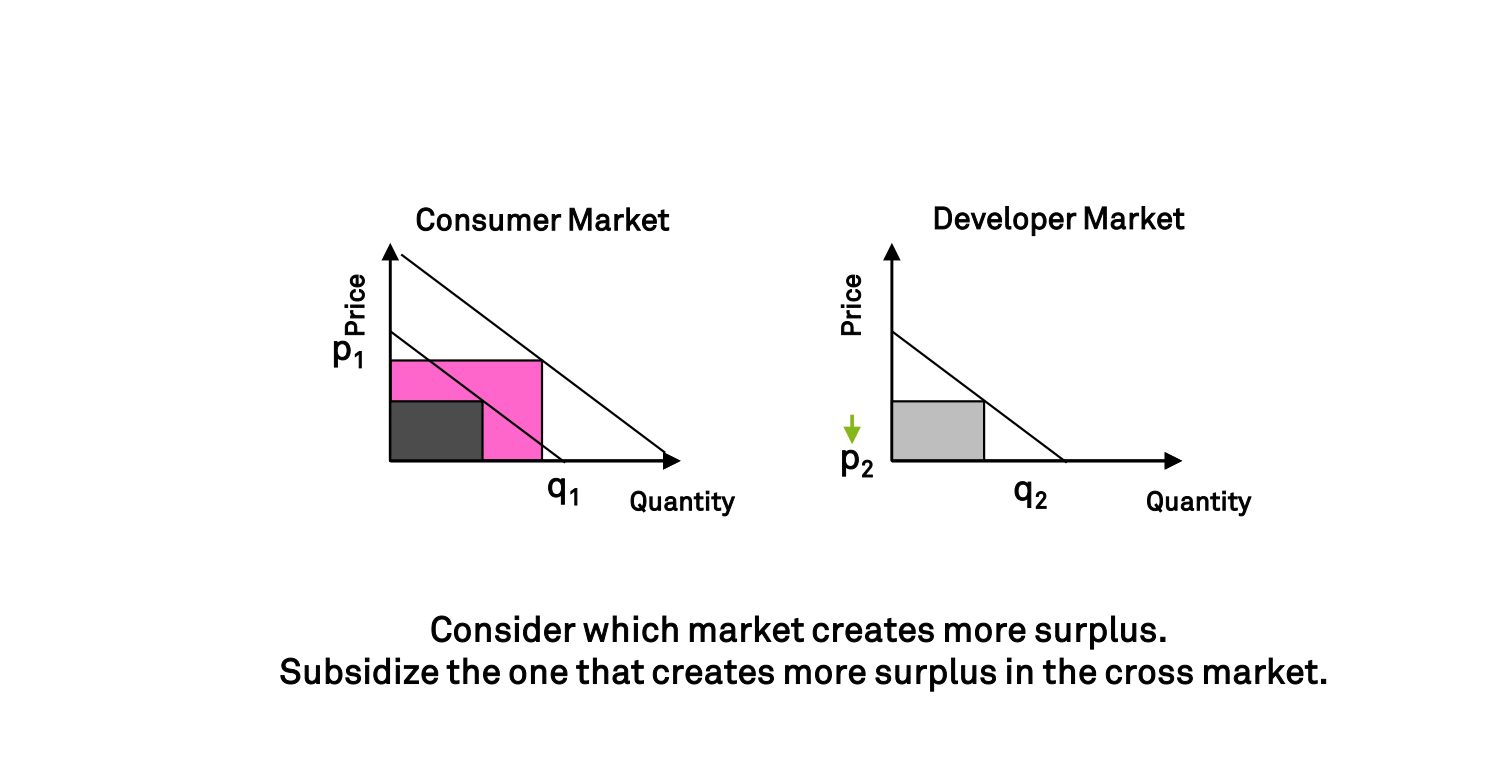
Subsidize the side that creates the largest positive cross-side network effect
Charge the side with the higher willingness to pay
Impacted by low marginal costs
Always consider the cross sided influence of the price
Goal: maximize the total platform profit, even if it means to lose money on one side → not profit on each side
How long to subsidize? → Depends on the Strenght of Network effects
If network effects remain strong, the subsidy may need to remain permanent
Removing the subsidy too quickly can cause users on the subsidized side to leave the platform
this reduces cross-sided network effects, decreases the platform´s value for the other side , can lead to the collapse of poth sides of the platform
e.g., making users pay for a previously free service could scare them away, in turn hurts ad revenue and reduces total profit
Transition to symmetric pricing needs to be carefully planned and is best implemented slowly
Explain the difference between Pricing Strategy and Monetization Pattern.
Pricing Strategie: Who pays?
Symmetric and Asymmetric Pricing (inkl. Subsidy)
e.g. Spotify: Consumers pay; Artists don´t (asymmetric)
→ setting prices
Monetization Pattern: How does the platform capture revenue / earn money?
6 Strategies (Transaction fees, Pay for Tool…)
e.g. Spotify: Subscription, Advertising
→ revenue mechanism
Describe why network effects are robust.
Without network effects:
Two seperate markets with two prices
Independent most profitable price
With network effects:
Cross-sided effects
Price on one side changes demand on other side
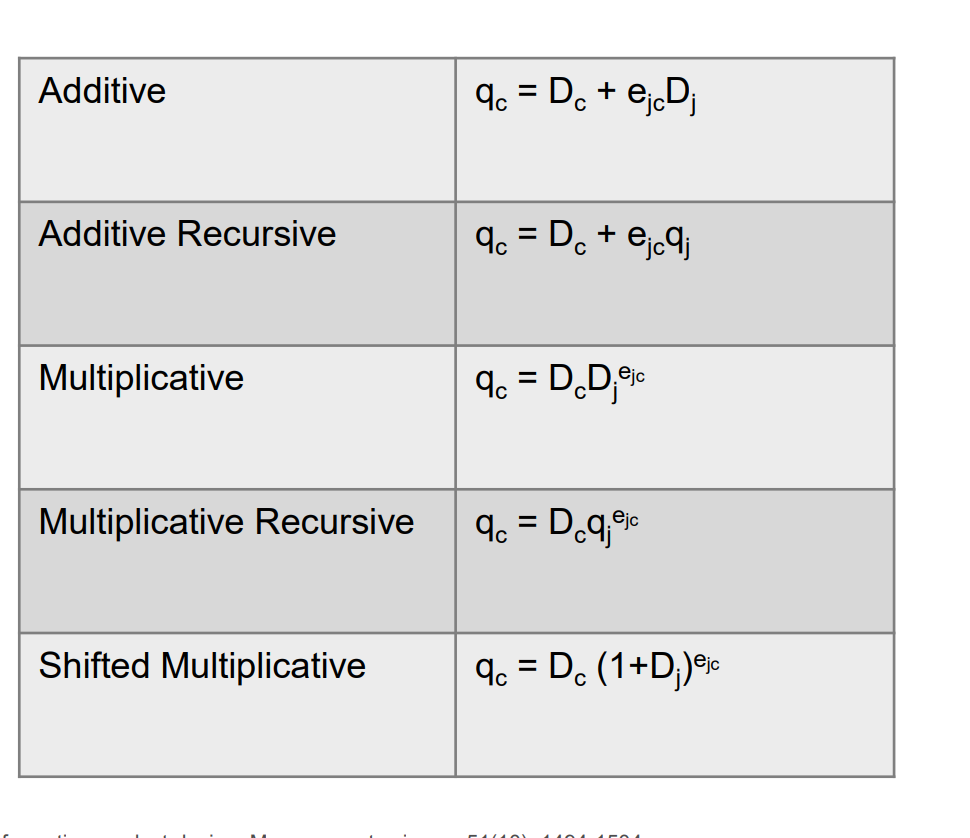
Scalling the Network effects via mathematical specifications
Why is price more important in network markets?
In traditional markets: Price only influences the demand → Demand curve stays fixd
In Network markets: Price influences demand and value → Demand curve shifts
The entire demand curve can change with price
→
Why is price more strategic in two-sided networks? Why is two-sided network pricing important for the adoption?
In two-sided platforms, prices are used not only to maximize revenue from one side but also to drive adoption, stimulate cross-side network effects, and maximize total platform profit
Does free make sense?
Yes—if the free side generates value for the paying side
e.g. Google: Users are free but advertisers pay
e.g. Windows SDK: Developers free → More Windows applications → more Windows sales
→ free =/= no revenue
→ free = strategic subsidy
Explain what flows are in platforms.
Three key flows: Goods/Services, Money, Information
Ensure as many travel through platform as possible
Danger: you can´t monetize whatever travels off platform
e.g. On Uber the ride happens off-platform, but the money and data stay on-platform
On UpWork/Fivver, the service, $ and data happen on-platform but next exchange may happen off-platform
Name six monetization patterns for generating revenue.
Transaction fees (Commission/Take rate)
Access fees (Subscription/Membership)
Revenue Sharing
Advertising (Monitize attention and data)
Ranking/Promotion fees (Match or Ranking Influencing (Advertisement))
Pay for Tools (Saas/Enablement)
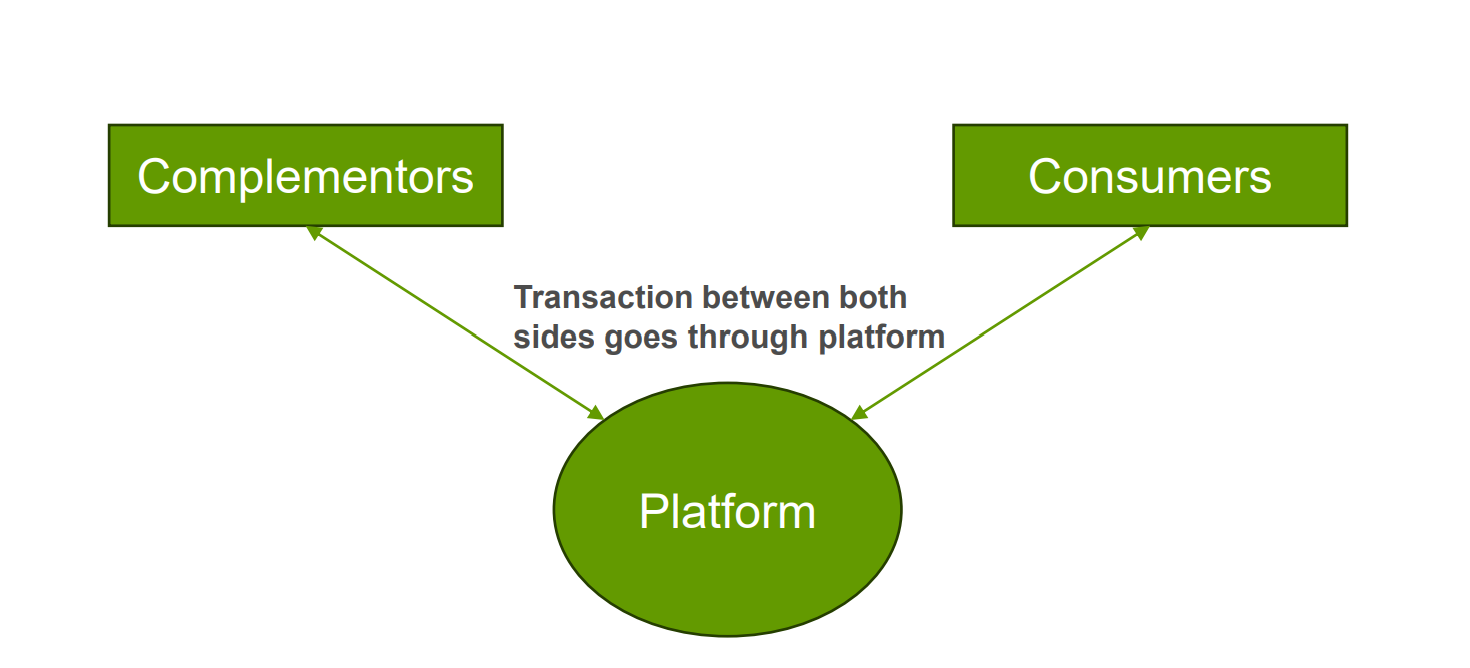
Explain the monetization pattern of transaction fees.
Charge fee (eine Gebühr erheben) for facilitating transaction
Some charge users, some charge complementors, some charge both
most of the time a cut from a one-time payment tha is hidden from the user
Transaction between both sides goes through platform
Example: eventbrite, Uber, upwork, AppStore, airbnb, amazon
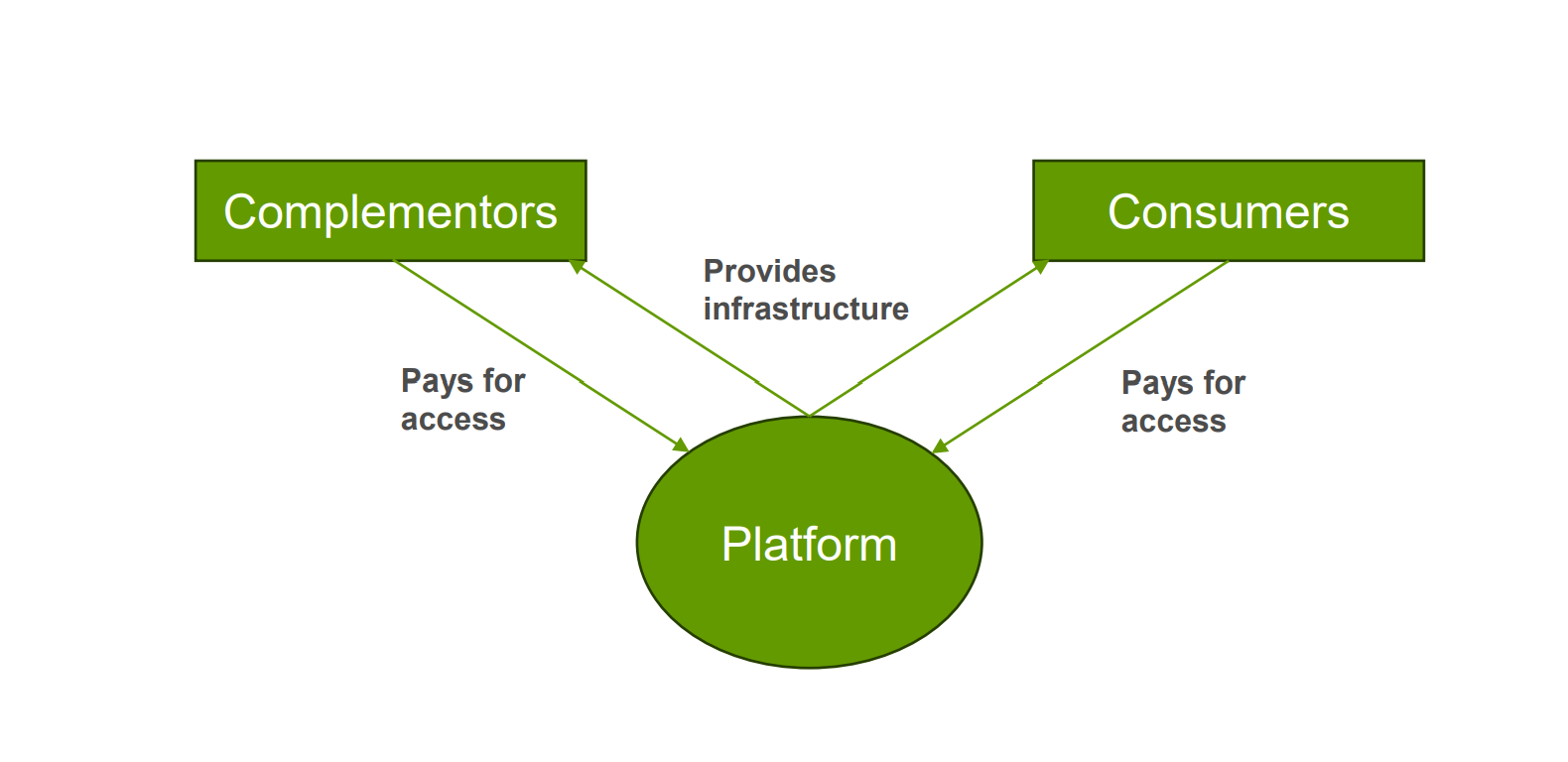
Explain the monetization pattern of access fees.
Pay for access to platform infrastrcture
Charge fee for facilitating lead generation
Usally the side is charged that needs the other more
Can be in many forms as in subscription or one-time payment
Example: DatingWebsites, Lead Generation, AppStore
e.g. Complementors and consumers pay for access to the platform and platform provides infrastructure for complementors and consumers
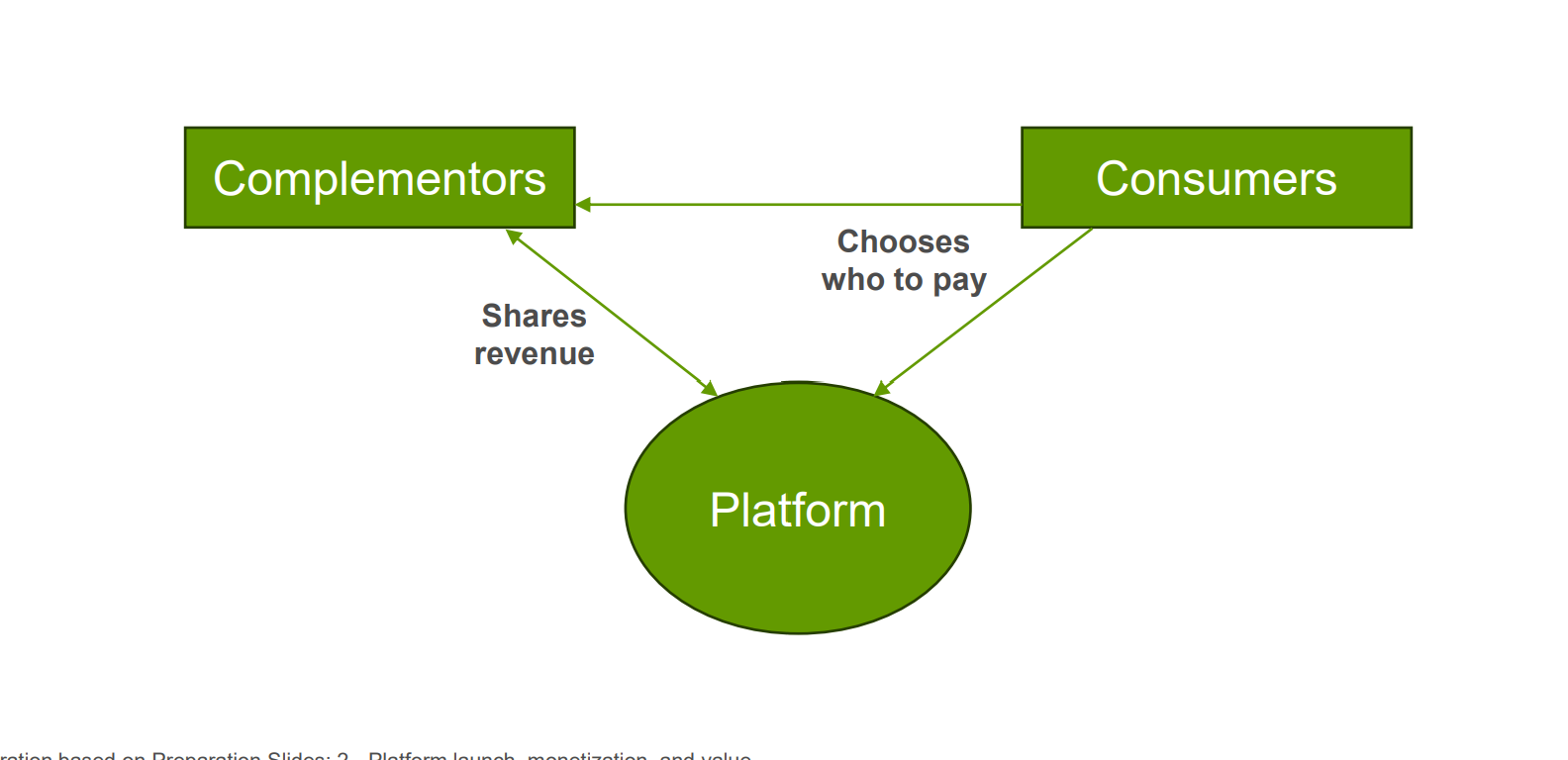
Explain the monetization pattern of Revenue sharing.
Platform owners share the revenue with complementors
Customer pays, and the platform shares part of the revenue with complementors according to an agreed revenue-sharing model
Can be a fixed percentage or decided with a sliding scale
Example: Twitch
Explain the monetization pattern of Advertising.
Monetizing through user attention and data
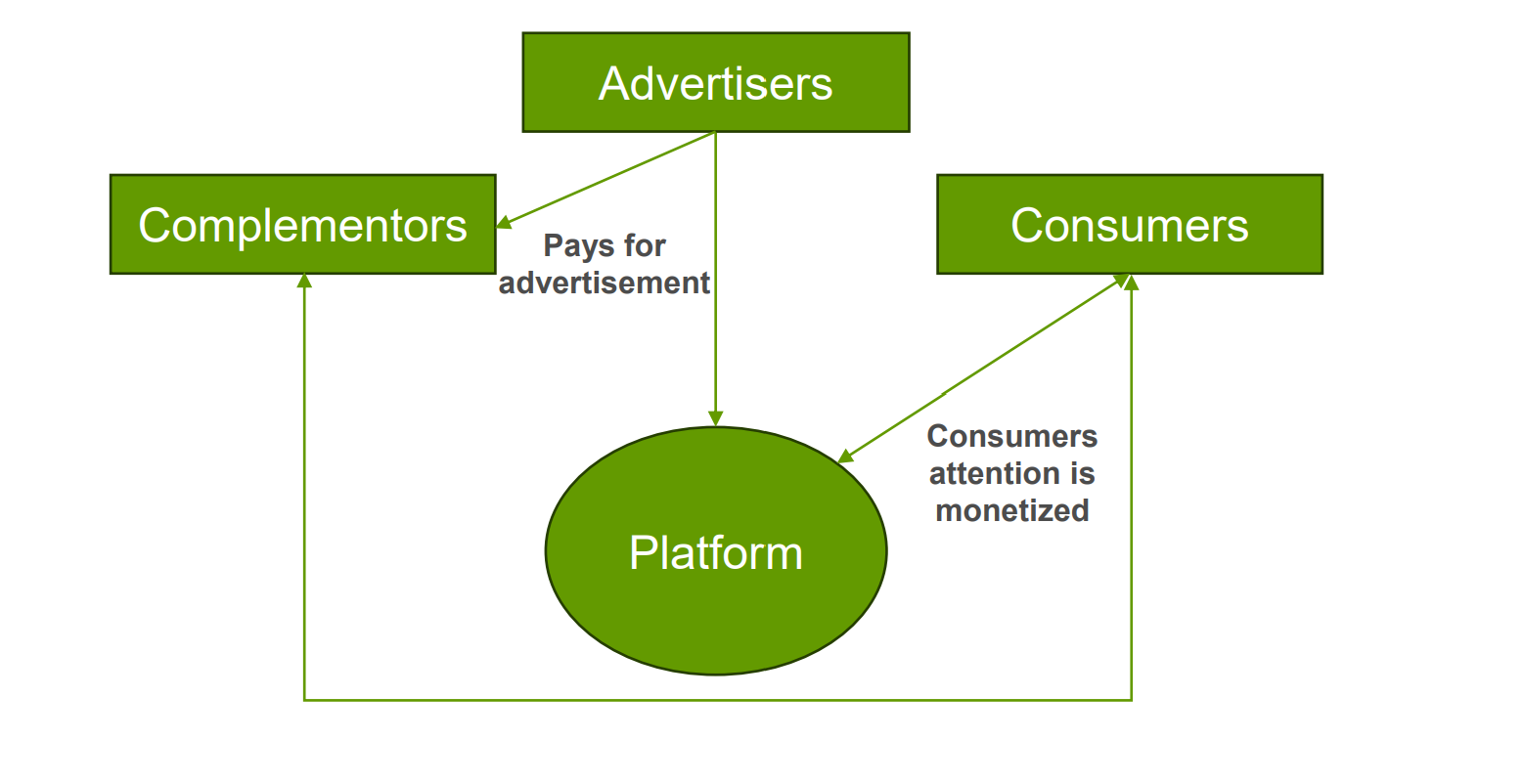
Company pays the platform to show their ad
Advertisers pay for access to users' attention, often based on impressions, clicks, or conversions
Do not clutter the transaction
Money goes to the platform but can also go to the complementors
Advertiser pays for advertisement to complementors and/or platform owner and than consumers attention is monetized
Example: Youtube, Instagram, X, TikTok
Explain the monetization pattern of Ranking/Promotion fees (Match or Ranking Influencing (Advertisement)).
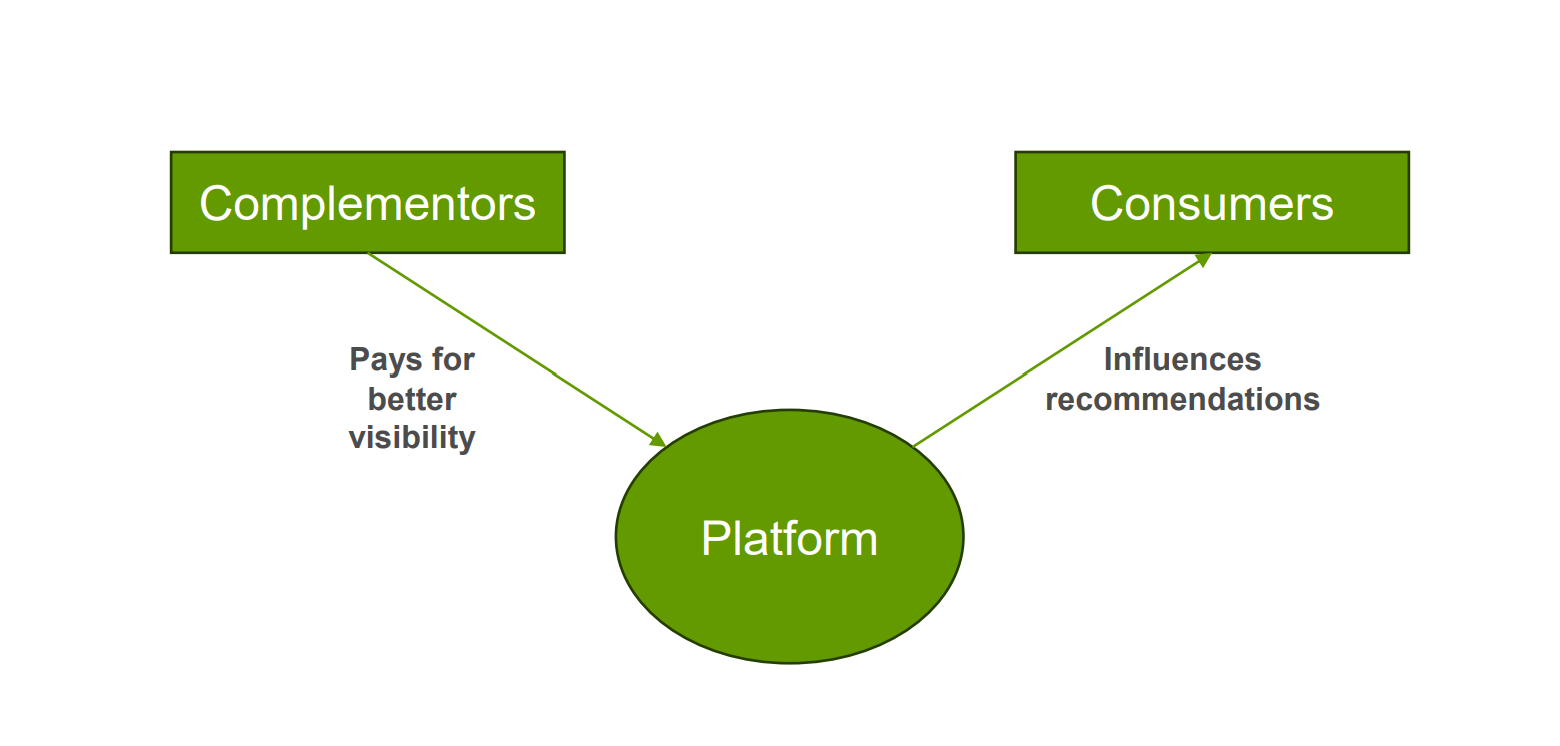
Charge for sponsored search or recommendations (is used to influence recommendations to be seen by more consumers)
Typically auctions
Do not clutter the transaction, keep network effects in mind
Complementors pay for better visibility within search results or recommendations
Can be paid by percentage cut or per promotion
Example: amazon, AppStore, Immo,Scout24, ebay
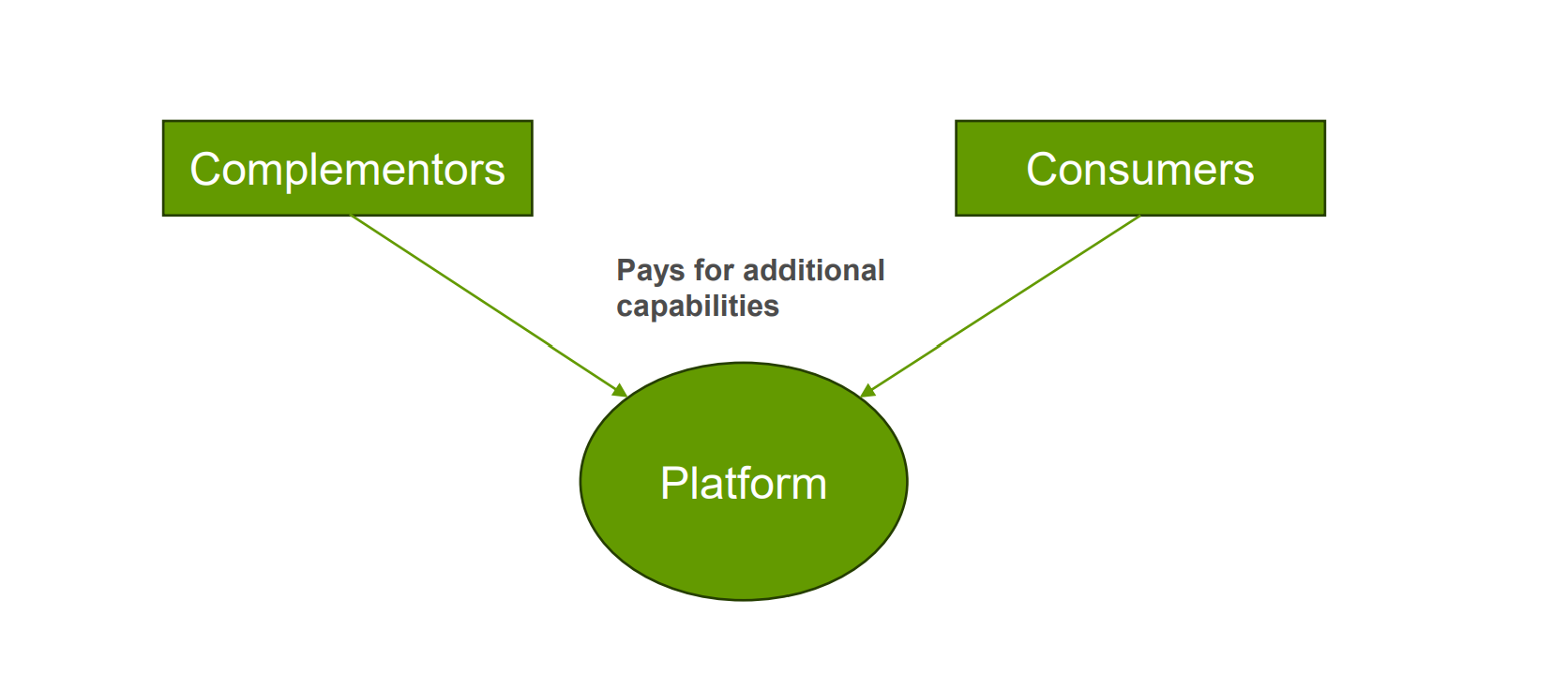
Explain the monetization pattern of Pay for tools.
Charge fee for better/upgraded tools → Users/Complementors pay for additional platform tools or capabilities
Basic versions often free to test/use
Can be in many forms as in subscription or one-time payment
Example: SAP, LinkedIn, X
Explain, using two platforms as examples, how differently they make their money.
Uber:
Pricing strategy: Asymmetric pricing
drivers and riders may be subsidized during growth
Monetization pattern: Transaction fees
Uber earns a comission from every completed ride
Instagram:
Pricing strategy: Assymetric pricing
Users acces the platform for free and advertisers pay for advertisements
monetization pattern: Advertising
dvertisers pay Instagram to reach users, so user attention and data are monetized
Why should a platform use subsidies?
To overcome the Chicken & Egg problem
attract users
strengthen cross-side network effects
increase platform adoption
and maximize total platform profit
e.g. Google: free Search to users → Millions of users attract advertisers → Advertisers pay Google ==> The subsidy (free search) creates much higher overall profit