ap bio unit 4
 Call Kai
 Learn
 Practice Test
 Spaced Repetition
 Match
 Flashcards
 Knowt Play
1/32

There's no tags or description
Looks like no tags are added yet.
33 Terms
gap junction (animal cells)
cytoplasmic connections that have membrane proteins that create a pore for ions, sugars, amino acids, and other small molecules to pass
plasmodesmata (plant cells)
membrane lined channels that connect plant cells as one unit
homeostasis
the process by which cells sense internal or external changes and use signaling pathways to coordinate responses that keep internal conditions
target cell
cells that detect and respond to a specific chemical signal
paracrine (local signaling)
a central cell that secretes to nearby target cells
synaptic (local signaling)
electrical signal along nerve cell triggers release of neurotransmitter which diffuses across synapse to the target cell
hormonal (long distance signaling)
endocrine cells release hormones that travel through blood vessels in the bloodstream to the target cell
signal transduction pathway (STP)
links signal receptions with cellular responses. they enable cells to respond to incoming signals
mechanism of STP
signaling cascades relay signals from receptors to cell targets, often amplifying (strengthening) the incoming cells, resulting in the appropriate responses by the cell

3 stages of an STP
receptions
transduction
response
ligand
chemical messenger/signal
reception stage
a ligand is recognized by a receptor protein in a target cell
ligand-binding domain of a receptor
recognizes a specific chemical messenger, which can be a peptide (protein) or small molecule
where is reception located?
surface of a target cell (membrane) or in the cytoplasm or nucleus of target cell
transduction stage
after the ligand binds, the intracellular domain of a receptor protein changes shape, initiating transduction of the signal. enzymes and secondary messengers such cyclic AMP (cAMP) relay and amplify the intracellular signal
response stage
could include cell growth, secretion of molecules, gene expression, or apoptosis
kinases enzymes
add phosphates groups in the transduction stage
phosphotases
remove phosphate groups breaking bonds in the transduction stage

negative feedback loop (feedback inhibition)
maintain homeostasis by returning system back to its target set point if a system is disrupted
ex: body temp

positive feedback loop
amplify responses and processes in biological organisms. the variable initiating the response is moved further away from the initial set point
ex: pregnancy
why do all living things need cell division?
growth, repair/replacement, reproduction, and self efficiency
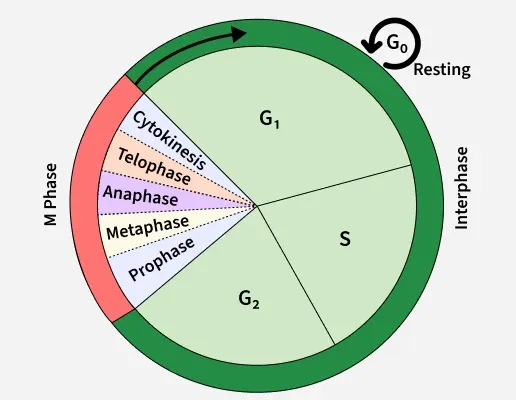
cell cycle
G1
S
G2
mitosis
cytokinesis
G1 phase
the cell is metabolically active, duplicating organelles and cytosolic components. it also grows
G0 phase
cells that are non-dividing are in this phase
ex: neurons and muscles
S phase
DNA is the form of chromatin and replicates to form two sister chromatids connected at a centromere
G2 phase
protein synthesis occurs, ATP is produced in large quantities, and centromeres replicate. DNA replication is proofread and edited
mitosis phase
ensures the transfer of a complete genome from a parent cell to two genetically identical daughter cells in eukaryotes
mitosis steps
prophase
metaphase
anaphase
telophase

prophase
sister chromatids condense (become visible), mitotic spindle begins to form, and centrosomes to move to opposite poles of the cell

metaphase
spindle fibers align chromosomes along the metaphase plate of the cell
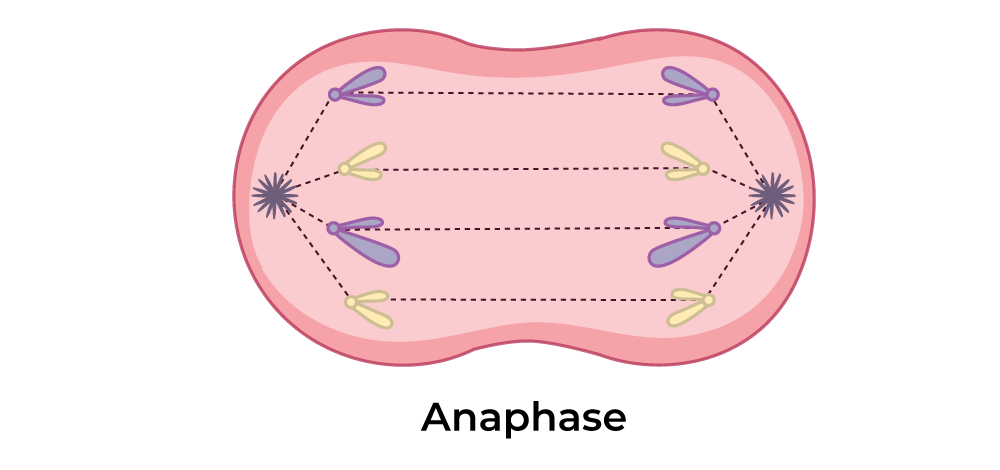
anaphase
paired sister chromatids separate as spindle fibers pull chromatids apart torward poles

telophase
mitotic spindle breaks down, a new nuclear envelope develops around two nuclei (one in each cell)

cytokinesis
formal splitting into two new cells. a cleavage furrow forms in animal cells or a cell plate forms in plant cells, resulting in two new daughter cells