GI infections helminths
 Call Kai
 Learn
 Practice Test
 Spaced Repetition
 Match
 Flashcards
 Knowt Play
1/41

There's no tags or description
Looks like no tags are added yet.
42 Terms
gut-associated lymphoid tissue
contain T and B cells
produce IgA
stomach normal biota
some may colonize, species found may just be “passing through”
biota of large intestine
billions of microbes
E.coli function as normal biota
synthesizes vitamin K
three categories of helminths
nematodes (roundworms)
trematodes (flukes)
cestodes (tapeworms)
eosinophilia
increase in leukocytes
hallmark of a helminthic infection
how are helminth infections acquired
fecal-oral
penetration of skin
Cycle A
worm develops in intestines
egg released in feces
eggs ingested by host and hatch in intestines

Cycle B
worms mature in intestines
eggs released with feces
larvae develop in environment

Cycle C
matures in human intestine
eggs released into environment
larvae develops in cattle (cyst)
humans eat meat with cysts
cysts release larvae in humans

Cycle D
eggs released from human
humans infected through ingestion or direct skin penetration
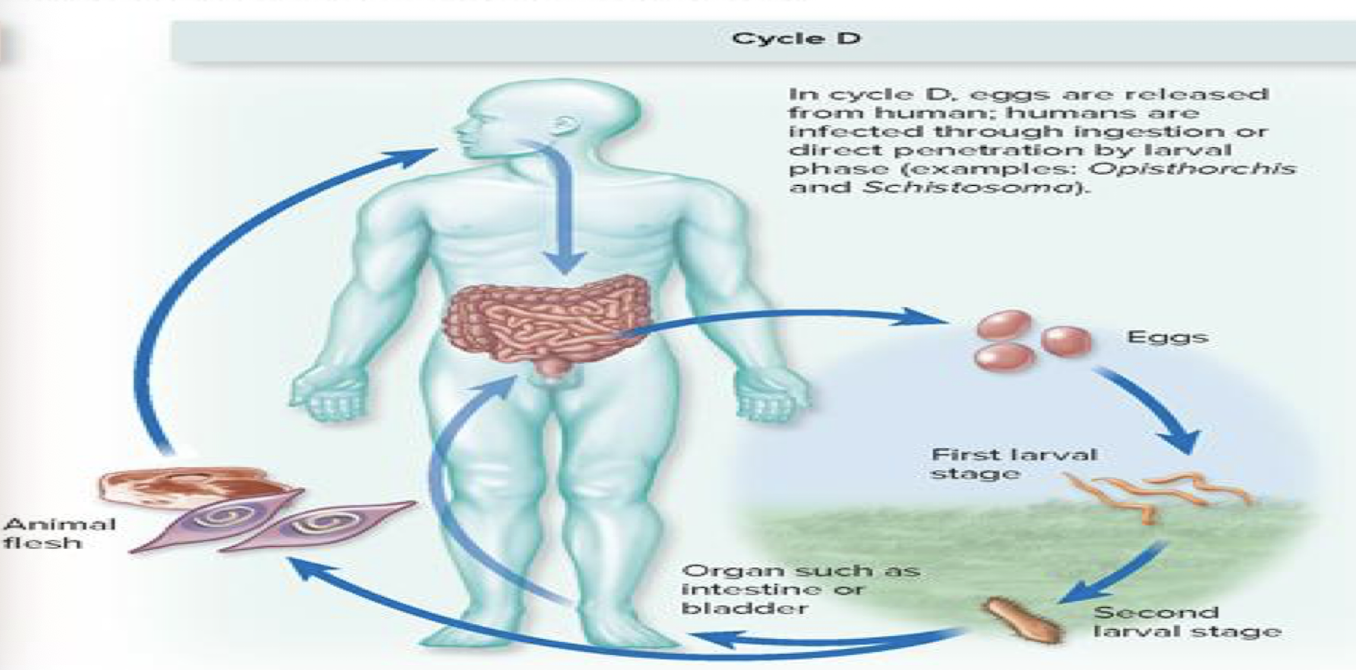
general helminth virulence
mouthparts for attachment
enzymes to penetrate tissues
covering to protect from host defense
what is the cause of damage in helminthic infections
typically caused by the host’s response to the presence of the invader
definitive host
where the adult worm is found
intermediate host
larval stage of helminth
may or may not require intermediate host
helminth diagnosis
ova + parasite test = stool sample microscopy
blood count showing eosinophilia
travel history
helminth prevention/treatment
no vaccines
prophylactic treatment twice a year w anthelminthic drugs in places where infections are common
some may require surgery to remove
how do antihelminthic drugs work
target metabolic processes more important to the worm than the human
prevent movement
enterobius vermicularis
pinworm
enterobius vermicularis transmission
type A cycle

enterobius vermicularis sx
anal itching, disrupted sleep (move at night), nausea, abdominal discomfort, diarrhea
enterobius vermicularis testing
tape to anus to microscope
trichuris trichiura
whipworm

trichuris trichiura lifestyle
type A
trichuris trichiura sx
localized hemorrhage from worms piercing intestines, dydentery, loss of muscle, rectal prolapse
trichuris trichiura epidemiology
tropics, low sanitation
Diphyllobothrium latum
largest human tapeworm

Diphyllobothrium latum life cycle
life cycle C
Diphyllobothrium latum transmission
raw foods/fish
Taenia solium
tapeworm

Taenia solium life cycle
life cycle C
Taenia solium transmission
undercooked pork
fecal oral
cysticerci
young tapeworms that are primarily the infective stage for humans
Taenia solium treatment
praziqantel
cysticercosis
humans become the host of encysted larvae
ingestion of Taenia solium eggs
which species can humans serve as intermediate and definitive host
Taenia solium
neurocysticerosis
larvae of Taenia solium encyst the brain
responsible for 10% of seizures
schistosomiasis
infection of schistosoma masoni or schistosoma japonicum
schistosomiasis sx
liver swelling
eosinophilia
schistosoma haematobium
causes disease in the bladder
schistosoma transmission
can invade intact skin
schistosoma life cycle