A1.1
 Call Kai
 Learn
 Practice Test
 Spaced Repetition
 Match
 Flashcards
 Knowt Play
1/45

There's no tags or description
Looks like no tags are added yet.
46 Terms
Electronegativity
An atom's ability to attract electrons in a bond.
Covalent Bonds
Form when atoms share electrons
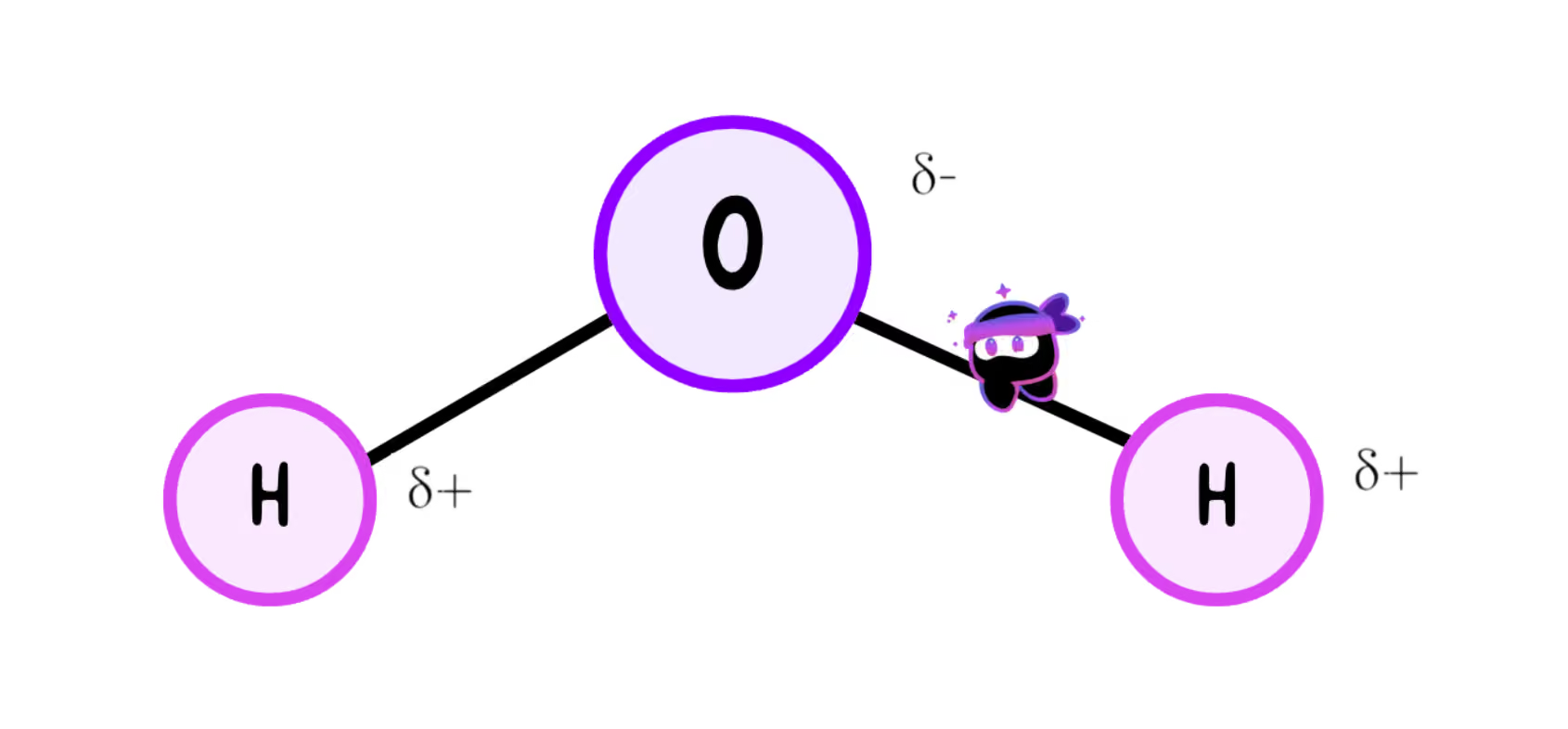
In a water molecule sharing is unequal because of oxygen being more electronegative than hydrogen.
Structure of a Water Molecule
Polar molecule with two H atoms that have a partial + charge
One O atom that has a partial - charge
Why Water is Polar
Uneven charge distribution makes water a polar molecule,
Has a positive end (hydrogen side) and a negative end (oxygen side).
Hydrogen Bonds
Polarity is what allows hydrogen bonds to form between water molecules
The δ+ hydrogen of one molecule is electrostatically attracted to the δ− oxygen of neighbouring molecule
Since opposite charges attract, these polar regions create weak intermolecular attractions called hydrogen bonds
Cohesion
Attraction between water molecules due to hydrogen bonding
Each water molecule can form hydrogen bonds with neighbouring water molecules
How Cohesion Enables Xylem Transport
Water evaporates from leaves through stomata (transpiration)
This creates tension (negative pressure) that pulls water up through the xylem
Hydrogen bonds between water molecules allow them to be pulled as a continuous column from roots to leaves
Matters because hydrogen bonds hold water molecules together, preventing the column from snapping and allows water to move up against gravity
Surface Tension
Water molecules at the surface are pulled inward by hydrogen bonds with molecules below and beside them
This creates a "skin" or elastic-like layer at the water's surface
Small organisms can walk on water due to surface tension
Transpiration
Movement of water from roots to leaves via xylem
Transpiration Steam
As water leaves leaf, it is replaced by water drawn up from the roots through the xylem.
This continuous flow from roots to leaves is the transpiration stream.
So a cost of gas exchange also delivers water and dissolved minerals to the whole plant.
Water as a Medium for Life
Comes from polar nature
Has unique liquid properties important to life on Earth
Water's Unique Liquid Properties Important to Life on Earth
Cohesion
Buoyancy
Adhesion
Density
Specific Heat
Thermal Conductivity
Viscosity
Goldilocks Zone
Search for extraterrestrial life is focused on finding planets within Goldilocks Zone, where conditions are just right for liquid water to exist.
Factors of Goldilocks Zone
Temperature (heat vs distance of the sun)
Size of the Planet (enough gravity to hold water onto water and atmosphere to trap water vapor)
Goldilocks zone
Region around a star where conditions are “just right” for liquid water to exist on a planet’s surface
Temperature Determines Water's State
Too close to the star: Temperatures too high → water evaporates → exists only as vapor.
Too far from the star: Temperatures too low → water freezes → exists only as ice.
Just right (Goldilocks zone): Temperatures allow water to remain liquid.
Finding Water Means Finding Life
Water is the medium for metabolism and biochemical reactions
All known life on Earth requires liquid water to function.
Without liquid water, the complex chemical processes needed for life as we know it cannot occur.
Life and Water
Cohesion
Adhesion
Surface tension
Solvent
Viscosity
Thermal Conductivity
Specific Heat
Three Hypotheses About Origins of Water
Always here
Formed here
Arrived with asteroid (within planetary eclipses)
Why Early Earth Was Too Hot for Water
During Earth's formation, temperatures were extremely high.
Any water present would have evaporated and been lost to space.
Therefore, water had to come from an extraplanetary source, beyond Earth itself.
How Asteroids Delivered Earth's Water
During Earth's early history, there was a period of intense asteroid bombardment.
Many of these asteroids contained water (as ice or hydrated minerals).
When asteroids collided with Earth, they delivered water to the planet's surface.
Evidence Asteroids Delivered Earth’s Water
The isotopic composition of water in some asteroids matches Earth's water
Buoyancy
How well an object can float
Buoyancy in Water
Water = more dense
Less energy needed to remain afloat
Buoyancy in Air
Air = less dense
More energy required to stay afloat
Viscosity
Measure of a fluids resistance to flow, determined by the internal friction between its molecules
High Viscosity = thicker, slower flowing liquid (like honey)
Low Viscosity = thinner, faster flowing liquid (like water)
Viscosity in Water
Water = more viscous
Aquatic organisms experience high drag forces while moving.
Must overcome significant resistance to swim.
Viscosity in Air
Air = low viscous
Creates minimal resistance
Thermal Conductivity
Rate at which heat transfers through a substance
Thermal Conductivity in Water
Water = high thermal conductivity
Conducts heat away from the body efficiently.
Thermal Conductivity in Air
Air = Low Thermal Conductivity
Poor conductor of heat
Animals retain body heat more easily
Specific Heat Capacity
Amount of energy required to raise the temperature of 1 gram of a substance by 1°C
Specific Heat Capacity of Water
Specific Heat Capacity = High
Resists temperature changes
Specific Heat Capacity of Air
Specific Heat Capacity = Low
Air temperature changes rapidly with environmental conditions
Water as a Powerful Solvent
Water is often called the "universal solvent" because it dissolves a wide variety of substances, due to its polarity.
When polar or charged substances enter water, water molecules surround them, forming hydration shells.
The δ− oxygen attracts positive charges; the δ+ hydrogens attract negative charges.
This separates and suspends the particles, keeping them dissolved.
Hydrophilic
“Water loving”
Polar molecules and charged ions are hydrophilic
Dissolves easily in water
Ex. Glucose and amino acids
Hydrophobic
"Water-fearing"
Non-polar molecules are hydrophobic.
Do not dissolve in water.
Dissolves in non-polar solvents instead.
Ex. Fats, oils, cholesterol
Solvent
Medium that holds solute
Solute
Particle found in the medium
Water as a Universal Solvent
Like dissolves like
Polar molecules dissolve in water
Many important compounds for life are polar
Metabolism
Sum of all chemical reactions occurring in an organism to maintain life
Including reactions that break down molecules for energy (catabolism) and reactions that build molecules for growth and repair (anabolism)
Adhesion
Attraction between water molecules and other surfaces, enabling water to cling to them and move against gravity
Capillary Action
The movement of water through narrow spaces, even against gravity
Requires both adhesion and cohesion
Cell Walls Stay Hydrated by Adhesion
Water molecules adhere to cellulose in the cell wall through hydrogen bonding.
Cohesion between water molecules creates a continuous network of water throughout the cell wall
Together, adhesion and cohesion produce capillary action within the cell wall, drawing water through the narrow spaces of the cellulose mesh.
As water evaporates from leaf surfaces during transpiration, adhesive forces pull more water from the xylem into the cell walls.

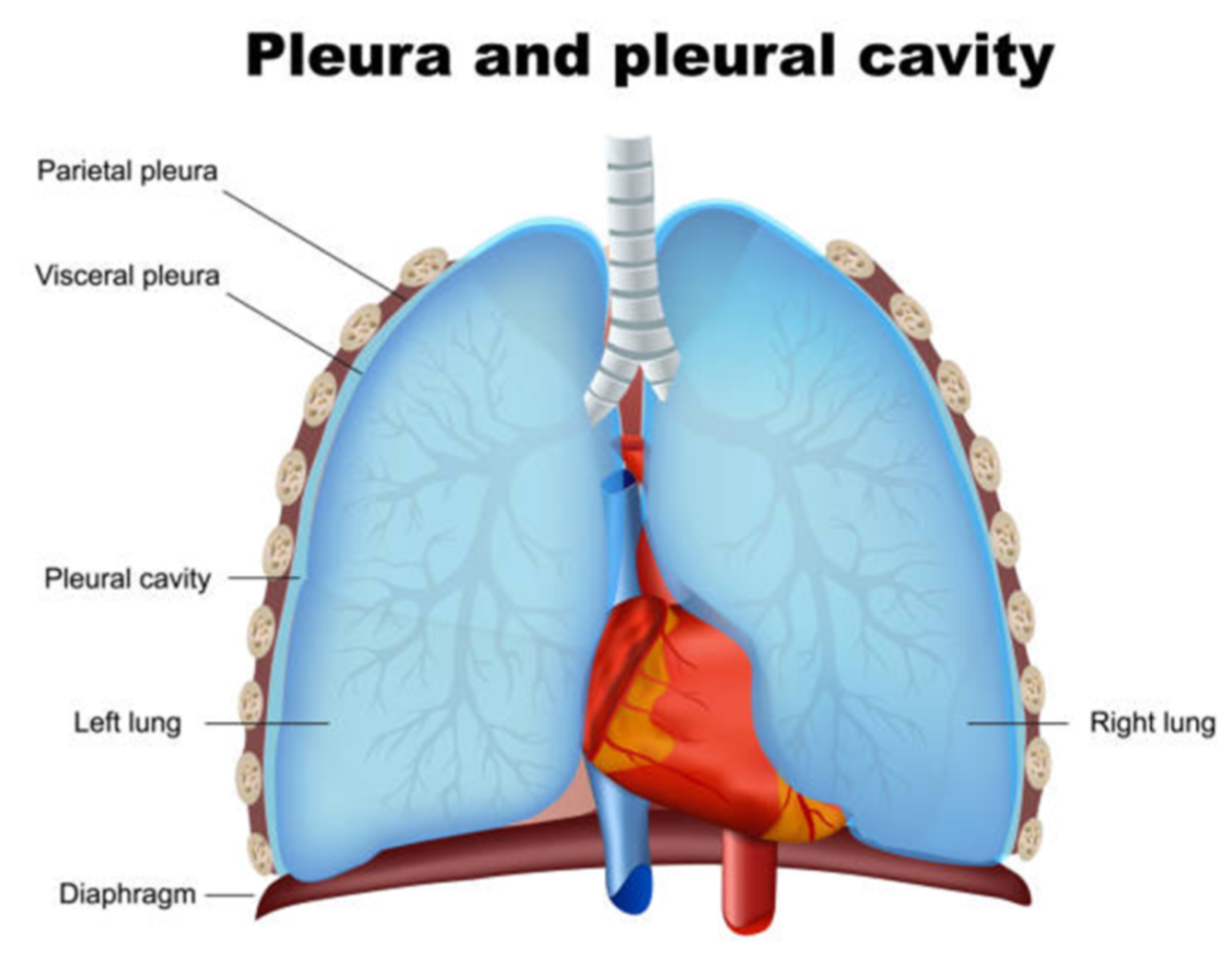
Pleural Cavity
Maintains lungs and prevents them from collapsing
Diffusion
Movement of particles from a region of high concentration to a region of low concentration