AG Topic 3: The Constitution
 Call Kai
 Learn
 Practice Test
 Spaced Repetition
 Match
 Flashcards
1/34

There's no tags or description
Looks like no tags are added yet.
35 Terms
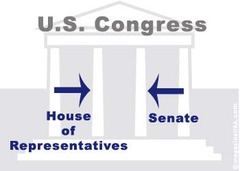
bicameral legislature
A law making body made of two houses (bi means 2). Example: Congress (our legislature) is made of two house - The House of Representatives and The Senate.
Popular Sovereignty
A government in which the people rule by their own consent.

Limited Government
The idea that certain restrictions should be placed on government to protect the natural rights of citizens.

Constitutionalism
Basic principle that government and those who govern must obey the law; the rule of law

Separation of Powers
the division of power among the legislative, executive, and judicial branches of government
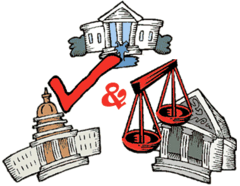
Checks and Balances
A system that allows each branch of government to limit the powers of the other branches in order to prevent abuse of power

Rule of Law
No one is above the law

Judicial Review
The power of the courts to declare laws unconstitutional
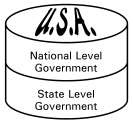
Federalism
A system in which power is divided between the national and state governments

Unconstitutional
Not allowed under the constitution

James Madison
"Father of the Constitution," Federalist leader, and fourth President of the United States.

Alexander Hamilton
United States statesman and leader of the Federalists
Andrew Johnson, Bill Clinton, Donald Trump
presidents who have been impeached but not removed from office

Amendment
A change to the Constitution

Thomas Jefferson
12th amendment added after presidential election of 1800

Bill of Rights
First 10 amendments to the Constitution

treaty
a formal agreement between the governments of two or more countries

Electoral College
the body of electors who formally elect the United States president and vice-president

Cabinet
A group of advisers to the president.

Ratification
Formal approval

Franklin D. Roosevelt
22nd amendment proposed to limit term after his presidency

executive agreement
an agreement between the president and the leader of another country

senatorial courtesy
Presidential custom of submitting the names of prospective appointees for approval to senators from the states in which the appointees are to work.
Division of Powers
basic principle of federalism; the constitutional provisions by which governmental powers are divided on a geographic basis

delegated powers
powers granted by the constitution

Expressed powers
powers that congress has that are specifically listed in the constitution

implied powers
Powers inferred from the express powers that allow Congress to carry out its functions.
inherent powers
powers claimed by a president that are not expressed in the Constitution but are inferred from it
reserved powers
Powers not specifically granted to the federal government or denied to the states belong to the states and the people
exclusive powers
powers only the national government may exercise
concurrent powers
powers shared by the national and state governments
Supremacy Clause
Constitution is the supreme law of the land
Full Faith and Credit Clause
Constitution's requirement that each state accept the public acts, records, and judicial proceedings of every other state
Enabling Act
A congressional act directing the people of a United States territory to frame a proposed State constitution as a step towards admission to the Union
categorical grants
Federal grants that can be used only for specific purposes, or "categories," of state and local spending. They come with strings attached, such as nondiscrimination provisions.