AMSTUD 1783-1824 Image Quiz
 Call Kai
 Learn
 Practice Test
 Spaced Repetition
 Match
 Flashcards
 Knowt Play
1/46

There's no tags or description
Looks like no tags are added yet.
47 Terms

The Brave Boy of Waxhaws
The Incident. In April 1781, a British officer captured 14-year-old Andrew Jackson in the Waxhaws region of the Carolinas and ordered the boy to polish his muddy boots. Jackson refused to clean the boots, and the angered officer slashed him across the head and hand with a saber, leaving permanent scars. The Legacy. The story became an enduring symbol of Jackson's fierce independence, patriotism, and resilience before he eventually became the seventh president of the United States.

The Proclamation of Neutrality
The Proclamation of Neutrality was a formal announcement issued by President George Washington on April 22, 1793, declaring the United States neutral in the war between revolutionary France and Great Britain. Core Purpose. It aimed to keep the young, militarily weak nation out of costly European conflicts so it could focus on domestic stability and trade. Legal Warning. The proclamation threatened federal prosecution against any American citizen who aided, armed, or fought for either warring power. Cabinet Debate. It highlighted deep divisions between Treasury Secretary Alexander Hamilton, who favored neutrality to protect British trade, and Secretary of State Thomas Jefferson, who argued the U.S. owed loyalty to France under the 1778 Treaty of Alliance.

The Election of 1800
The Election of 1800 (often called the "Revolution of 1800") was a landmark U.S. presidential election in which Democratic-Republican Thomas Jefferson defeated incumbent Federalist John Adams, marking the first peaceful transfer of power between rival political parties in American history. The Electoral Tie. Jefferson and his running mate, Aaron Burr, accidentally tied with 73 electoral votes each, sending the decision to the House of Representatives. The Outcome. After 36 ballots and crucial behind-the-scenes influence from Federalist leader Alexander Hamilton, the House elected Jefferson as president and Burr as vice president.Constitutional Impact. The crisis exposed a flaw in the original voting system, leading directly to the passage of the 12th Amendment in 1804 to separate electoral votes for president and vice president.

Dolley Madison
Dolley Madison was the First Lady of the United States from 1809 to 1817, widely celebrated for shaping the ceremonial role of the First Lady and saving national treasures during the War of 1812. Political Hostess. Married to fourth president James Madison, she hosted popular bipartisan social gatherings in Washington, D.C., using her charm to ease political tensions. War of 1812 Heroism. Before British troops burned the White House in August 1814, she famously ensured the rescue of Gilbert Stuart's full-length portrait of George Washington and important state papers. White House Legacy. She helped furnish the newly built Executive Mansion and set lasting traditions for White House hospitality, fashion, and charity work.

The Clermont
The Clermont was the first commercially successful steamboat, built by inventor Robert Fulton and launched on the Hudson River in 1807. The Maiden Voyage. In August 1807, the vessel traveled 150 miles upstream from New York City to Albany in about 32 hours, proving that steam power could reliably carry passengers and cargo against river currents. Commercial Impact. Funded by businessman Robert Livingston, the Clermont kicked off a regular passenger service between New York City and Albany, making river travel much faster and more predictable than sailing ships. Historical Legacy. Its success sparked the steamboat era in the United States, transforming American trade, transportation, and westward expansion in the 19th century.
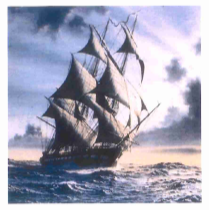
The U.S.S.Constitution
The USS Constitution is a historic wooden-hulled, three-masted heavy frigate of the United States Navy, launched in 1797. It is the world's oldest commissioned warship still afloat. The Nickname. During the War of 1812, the ship earned the nickname "Old Ironsides" after British cannonballs appeared to bounce off its thick live-oak hull during a battle with HMS Guerriere. War of 1812 Service. The vessel defeated five British warships during the conflict, boosting American morale and proving the strength of the young U.S. Navy. Current Role. Today, the ship remains a commissioned Navy vessel docked in Boston, Massachusetts, where it serves as a floating museum.

Marbury V. Madison
Marbury v. Madison is a landmark 1803 U.S. Supreme Court decision that established the principle of judicial review. This power gives American courts the authority to strike down laws and government actions that violate the U.S. Constitution. The Dispute. Outgoing President John Adams appointed William Marbury as a justice of the peace, but incoming Secretary of State James Madison refused to deliver the official commission. The Ruling. Chief Justice John Marshall ruled that while Marbury had a right to his commission, the specific law allowing him to bring his case directly to the Supreme Court was unconstitutional. The Impact. The decision firmly established the Supreme Court as an equal branch of the federal government and the final interpreter of the Constitution.
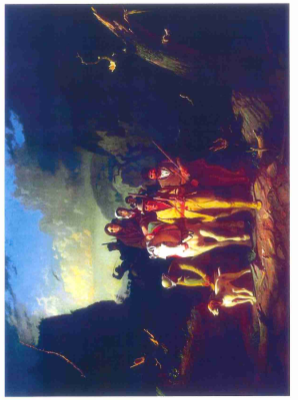
Daniel Boon-Daniel Boone Escorting Settlers through the Cumberland Gap
The Historical Event. In 1775, frontiersman Daniel Boone and a crew of woodsmen blazed the Wilderness Road through the Cumberland Gap, a natural mountain pass where Kentucky, Tennessee, and Virginia meet. This route opened the Kentucky frontier to tens of thousands of early American pioneers. The Painting. George Caleb Bingham's iconic artwork—housed at the Mildred Lane Kemper Art Museum—portrays Boone leading his wife, Rebecca, and fellow settlers out of a dark gorge into bright light. The Symbolism. Bingham used religious and classical imagery, casting Boone as a Moses-like figure guiding pioneers to a "Promised Land" to celebrate the 19th-century ideal of Manifest Destiny.
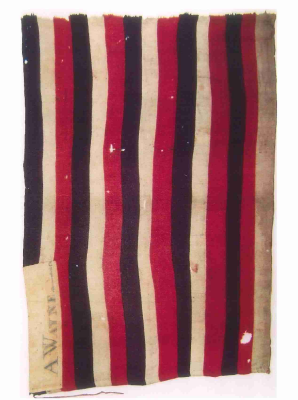
Mad Anthony Wayne Flag
The "Mad" Anthony Wayne Flag—officially known as the Greenville Treaty Flag—is a unique 1795 American presentation banner given by Major General Anthony Wayne to Miami Chief She-Moc-E-Nish at the signing of the Treaty of Greenville. The Design. Unlike standard U.S. flags, it features 15 alternating red, white, and blue stripes and a plain white linen canton. Instead of stars, the upper corner displays the inscription "A. Wayne, Commander in Chief". The Historical Event. Following the U.S. victory at the Battle of Fallen Timbers, Wayne gifted the banner as a diplomatic token of peace. The 1795 treaty ended the Northwest Indian War and ceded vast Native American lands across the Great Lakes region to the United States. The Preservation. Passed down through the chief's descendants, the original artifact is the only known surviving treaty flag from the event and is preserved by the Indiana Historical Bureau.

Washington Resigning His Commission
General George Washington Resigning His Commission is a monumental 1824 oil painting by American artist John Trumbull that hangs in the United States Capitol Rotunda. The Historical Moment. The artwork depicts December 23, 1783, when Washington voluntarily stepped down as commander-in-chief of the Continental Army before the Congress of the Confederation in Annapolis, Maryland. The Symbolic Meaning. Trumbull considered the peaceful surrender of military power to civilian authority to be "one of the highest moral lessons ever given to the world"
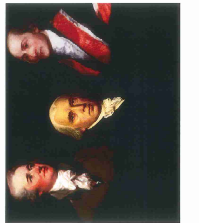
The Federalist Paper Authors
The Federalist Papers writers were Alexander Hamilton, James Madison, and John Jay, three American statesmen who authored a series of 85 essays between 1787 and 1788 to urge the ratification of the United States Constitution. The Pseudonym. All three men wrote under the shared pen name "Publius," named after Publius Valerius Publicola, one of the founders of the Roman Republic. The Contributions. Alexander Hamilton organized the project and wrote 51 essays, James Madison wrote 29 essays, and John Jay wrote 5 essays before falling ill.
The Purpose. Published primarily in New York newspapers, the essays explained the structure of the proposed government and argued why a stronger federal union was necessary to replace the weak Articles of Confederation.

The Articles of Confederation
The Articles of Confederation was the first written constitution of the United States, establishing a loose alliance of sovereign states with a weak central government. Drafted in 1777 and ratified in 1781, it served as the nation's governing framework until the current U.S. Constitution replaced it in 1789. State Sovereignty. The document left most governing power with the individual states, reflecting the founders' fear of creating a tyrannical central authority like the British monarchy. Limited Federal Power. It created a single-branch Congress that lacked the authority to collect taxes, regulate interstate trade, or enforce its own laws. The Outcome. Because the national government could not effectively raise money or manage economic disputes, the Articles were scrapped at the Constitutional Convention of 1787.

The Capitol Building
The United States Capitol is the meeting place of the United States Congress and the seat of the legislative branch of the U.S. federal government. Located on Capitol Hill in Washington, D.C., the iconic neoclassical building is easily recognized by its massive central dome. Legislative Function. The building houses both chambers of Congress, with the Senate meeting in the north wing and the House of Representatives meeting in the south wing. Historical Significance. Construction began in 1793 under the supervision of President George Washington, and the building has been expanded and rebuilt several times, including after being burned by British troops during the War of 1812. National Symbol. Beyond its daily political role, the Capitol serves as a monument to American democracy and hosts major ceremonial events, such as presidential inaugurations and state funerals.
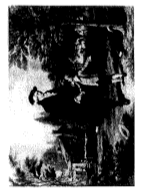
Washington “I can’t tell a lie”
George Washington chopping down the cherry tree is a famous American legend illustrating the first U.S. president's childhood honesty and integrity. According to the story, six-year-old Washington used a new hatchet to damage his father's prized cherry tree and famously confessed by saying, "I cannot tell a lie. "The Origin. The anecdote was invented by biographer Mason Locke Weems in the 1806 fifth edition of his book, The Life of Washington. Historical Fact. Historians agree the event never actually happened, as Weems created the tale to provide moral lessons for young readers after Washington's death. Cultural Impact. Despite being fictional, the story became one of the most enduring myths in American folklore and solidified Washington's reputation as a model of truth and virtue.
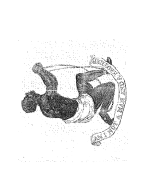
Am I not a Man and Brother
The "Am I Not a Man and a Brother?" medallion is a famous anti-slavery ceramic cameo created in 1787 by British potter and abolitionist . Depicting a kneeling, chained enslaved African man asking the titular question, it served as the official seal and most recognizable symbol of the transatlantic abolitionist movement. The Creation. Produced in black-and-white jasperware at Wedgwood's factory, the design was sculpted for the British Society for Effecting the Abolition of the Slave Trade. Political Fashion. Abolitionists mounted the medallions into bracelets, hairpins, and snuffboxes, turning anti-slavery advocacy into a widespread personal statement. Transatlantic Reach. Wedgwood shipped hundreds of medallions to Benjamin Franklin in 1788, spreading the emblem throughout early American anti-slavery circles.

John Jay Burning in Effigy
Burning John Jay in effigy refers to the widespread public protests in 1795 where angry Americans burned life-sized dummy figures of Chief Justice John Jay to condemn the unpopular Jay Treaty with Great Britain. Many citizens viewed the agreement as a betrayal of American sovereignty and a humiliating surrender to British interests. The Cause. Negotiated in 1794 to avoid war with Britain, the treaty failed to stop the British seizure of American ships or the forced impressment of U.S. sailors. The Protests. Outraged Democratic-Republicans and angry crowds across the country paraded straw-stuffed figures of Jay through the streets before setting them on fire or hanging them from mock gallows. Jay's Reaction. The backlash was so intense that John Jay famously remarked he could travel the entire length of the country at night by the light of his own burning effigies.
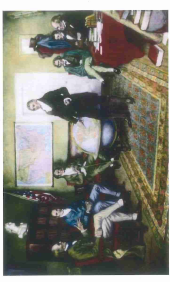
The Monroe Doctrine
The Monroe Doctrine was a 1823 U.S. foreign policy statement declaring that the Western Hemisphere was closed to further European colonization or interference. Introduced by the President during his annual message to Congress on December 2, 1823, it established the Americas as a distinct sphere of influence separate from Europe. Non-Colonization. The doctrine warned European powers that the independent nations of North and South America were no longer open for future colonization. Non-Intervention. It stated that any European attempt to control or oppress nations in the Western Hemisphere would be viewed as a hostile act against the United States. American Neutrality. In exchange, the United States promised to stay out of existing European colonies and internal European wars.

Fort McHenry
Fort McHenry is a historic coastal star-shaped fort located in Baltimore, Maryland, best known for successfully defending the city's harbor from a British naval attack during the War of 1812. Its resilience during the battle directly inspired the writing of the U.S. national anthem. The Battle of Baltimore. In September 1814, American soldiers at the fort withstood a 25-hour bombardment by the British Royal Navy, forcing the British forces to retreat. The Star-Spangled Banner. Witnessing the oversized American flag still flying over the fort at dawn, Francis Scott Key wrote the poem that became the lyrics to the U.S. national anthem. The Monument. Today, it is preserved as the Fort McHenry National Monument and Historic Shrine, honoring both its military history and its connection to the American flag.
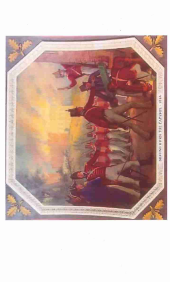
The Burning of Washington D.C.
The Burning of Washington was a major British military invasion and attack on the United States capital on August 24, 1814, during the War of 1812. British forces occupied the city and set fire to numerous government landmarks in retaliation for American raids in Canada. The Target. British troops burned several key public buildings, including the White House, the U.S. Capitol, and the Library of Congress. The Cause. The attack was ordered as direct payback for the earlier American destruction of York (modern-day Toronto) and Port Dover in Upper Canada. The Aftermath. A sudden, violent storm—likely a tornado or hurricane—extinguished the fires the next day and forced the British to retreat, leaving Washington D.C. as the only U.S. capital ever occupied by a foreign power.
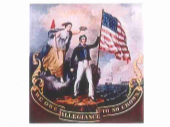
We Owe No Allegiance
We Owe Allegiance to No Crown is an 1814 patriotic oil-on-canvas painting by Philadelphia artist John Archibald Woodside. Created during the War of 1812, the work celebrates American independence and the rejection of British monarchical rule. The Imagery. The painting depicts a proud American sailor holding a large American flag beside a coastal shore while Lady Liberty places a laurel wreath on his head. The Banner. A prominent scroll at the bottom displays the title motto, "We Owe Allegiance to No Crown," while a broken chain and crushed royal crown lie at the sailor's feet. The Significance. Measuring 60 by 50 inches, the piece became an iconic visual emblem of early American nationalism and pride following the War of 1812.

Stephen Decatur's raid in Tripoli
A daring 1804 U.S. Navy covert operation during the First Barbary War to destroy the captured American warship USS Philadelphia. British Admiral Horatio Nelson famously called the mission "the most bold and daring act of the age." The Context. In October 1803, the frigate USS Philadelphia ran aground in Tripoli Harbor and was captured by Barbary pirates, who planned to add the ship to their own fleet. The Raid. On February 16, 1804, Lieutenant Stephen Decatur led a small crew aboard a disguised ketch named Intrepid into the heavily guarded harbor. The Outcome. Decatur's men boarded the Philadelphia, overwhelmed the guards, and set the ship on fire to keep it out of enemy hands before escaping without losing a single man.

Lewis & Clark Expedition
The Lewis and Clark Expedition (1804–1806) was the first American overland expedition to cross the western portion of the United States to the Pacific Coast and back. Commissioned by President Thomas Jefferson shortly after the Louisiana Purchase, the mission was officially known as the Corps of Discovery. The Leaders. Army Captain Meriwether Lewis and his close friend, Second Lieutenant William Clark, commanded a select group of U.S. Army and civilian volunteers. The Goals. The expedition aimed to map the newly acquired territory, establish trade and diplomacy with Native American tribes, and find a practical water route to the Pacific Ocean. The Outcome. With vital guidance from a Shoshone woman named Sacagawea, the crew traveled roughly 8,000 miles, documented hundreds of new plant and animal species, and paved the way for American westward expansion.

Signing of the Louisiana Purchase
The signing of the Louisiana Purchase (April 30, 1803) was the historic land deal in which the United States acquired approximately 828,000 square miles of territory from France. Negotiated in Paris by American envoys Robert Livingston and James Monroe, the treaty instantly doubled the size of the young nation. The Cost. The United States agreed to pay France $15 million—roughly four cents per acre—to secure control of the Mississippi River and the vital port of New Orleans. The Context. French leader Napoleon Bonaparte decided to sell the vast territory to fund his European wars after losing control of Haiti. The Impact. The purchase gave the U.S. control over land that eventually became all or part of 15 future states, setting the stage for westward expansion and the Lewis and Clark Expedition.
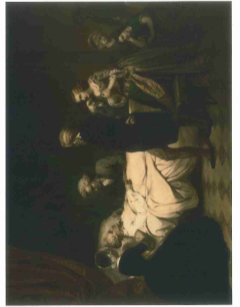
Death of Washington
The death of George Washington (December 14, 1799) was the passing of the first president of the United States at age 67 at his Mount Vernon estate in Virginia. Following a brief, severe throat infection, his death triggered a massive wave of national mourning across the young republic. The Illness. After riding across his plantation in freezing rain and snow on December 12, Washington woke up the next night with a severe sore throat and extreme difficulty breathing. The Treatment. Physicians treated him using standard 18th-century practices, including repeated bloodletting that drained roughly five pints of his blood, which likely worsened his condition. The Legacy. His passing united the politically divided nation in grief and prompted famous eulogies, including Henry Lee's tribute describing Washington as "first in war, first in peace, and first in the hearts of his countrymen."

Cotton Gin
The cotton gin is a mechanical device invented by Eli Whitney in 1793 that quickly separates cotton fibers from their seeds. The machine drastically sped up cotton processing, transforming the economy of the American South. How It Works. Short-staple cotton passes through a wooden drum lined with fine wire hooks, which pull the soft fibers through a mesh too narrow for the seeds to pass. Economic Impact. By automating a task that previously took hours of manual labor, the machine made short-staple cotton immensely profitable and turned it into the leading cash crop of the United States. Historical Consequence. The booming demand for cotton led to a massive expansion of plantation agriculture and deeply entrenched the institution of slavery across the American South.

Washington’s Farewell Address
Washington's Farewell Address is a 1796 open letter written by President George Washington announcing his decision not to seek a third term and offering political advice to the young United States. Published in newspapers near the end of his presidency, the letter became a foundational guide for American governance and foreign policy. Political Unity. Washington urged Americans to put national identity above regional loyalties and warned against the divisive dangers of political parties. Foreign Policy. He advised the nation to avoid permanent alliances with foreign countries, recommending trade and peaceful relations without getting entangled in European wars. Two-Term Precedent. By stepping down voluntarily after eight years, Washington established the unwritten two-term limit for U.S. presidents that lasted until the 22nd Amendment made it law.

The Whiskey Rebellion
The Whiskey Rebellion was a 1791–1794 violent tax protest in the United States led by frontier farmers against the federal government's first domestic tax on distilled spirits. It served as the first major test of federal authority under the newly ratified U.S. Constitution. The Cause. Treasury Secretary Alexander Hamilton proposed an excise tax on whiskey to help pay off Revolutionary War debt, which disproportionately hurt western farmers who turned surplus grain into whiskey for easier transport and trade. The Protest. Angry farmers in western Pennsylvania refused to pay the tax, intimidated tax collectors, and engaged in armed resistance. The Resolution. In 1794, President George Washington personally led a federalized militia of nearly 13,000 troops into Pennsylvania, causing the rebels to disperse without a battle and proving the new government could enforce its laws.
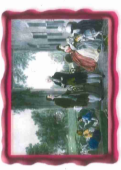
"Lafayette with Washington at Mt. Vernon"
A historic 1784 reunion between George Washington and the Marquis de Lafayette at Washington's Virginia estate and a famous 1859 oil painting commemorating the event. The Historical Visit. Following the American Revolutionary War, the French nobleman Marquis de Lafayette returned to the United States in 1784 and spent weeks at Mount Vernon reuniting with Washington, whom he regarded as a father figure. The 1859 Painting. Artists Thomas Pritchard Rossiter and Louis Rémy Mignot painted Washington and Lafayette at Mount Vernon, 1784, a widely reproduced work housed at The Metropolitan Museum of Art. The Scene. The artwork depicts Washington and Lafayette casually conversing on Mount Vernon's piazza alongside Martha Washington, her grandchildren, and enslaved workers. It symbolized domestic peace and Franco-American friendship for 19th-century audiences.

Signing of the U.S. Constitution
"The Signing of the U.S. Constitution" refers to the historic September 17, 1787 ceremony in which 39 delegates officially approved the new supreme law of the United States at the Constitutional Convention in Philadelphia, as well as several famous artworks depicting the moment. The Historical Event. Following four months of intense debate at Independence Hall, delegates representing 12 states signed the document to replace the weak Articles of Confederation. The Holdouts. Three attending delegates—Elbridge Gerry, George Mason, and Edmund Randolph—refused to sign because the initial document lacked a Bill of Rights. The Famous Artwork. The event is famously immortalized in Howard Chandler Christy's 1940 oil painting Scene at the Signing of the Constitution of the United States, which hangs in the U.S. Capitol building.
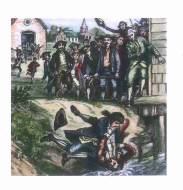
Shays Rebellion
Shays' Rebellion was an armed uprising of farmers in western Massachusetts from 1786 to 1787. Led by Revolutionary War veteran Daniel Shays, the protest exposed the weaknesses of the early American government and directly led to the creation of the U.S. Constitution. The Cause. Thousands of indebted farmers faced foreclosures and prison because of high state taxes and economic depression following the Revolutionary War. The Action. Rebels shut down local courthouses to stop debt hearings and later attempted to seize the federal armory in Springfield in January 1787. The Impact. Because the national government under the Articles of Confederation lacked the power to raise an army or funds to stop the revolt, state leaders called the Constitutional Convention to create a stronger federal government.

John Marshall
John Marshall was the fourth Chief Justice of the United States, serving from 1801 until his death in 1835. He is widely considered the most influential leader in the history of the Supreme Court because he established the judiciary as a co-equal branch of the federal government. Judicial Review. In the landmark 1803 case Marbury v. Madison, Marshall established the principle of judicial review. This gave the Supreme Court the power to strike down laws that violate the U.S. Constitution. Federal Supremacy. Throughout his 34-year tenure, his rulings consistently strengthened the power of the federal government over individual states.
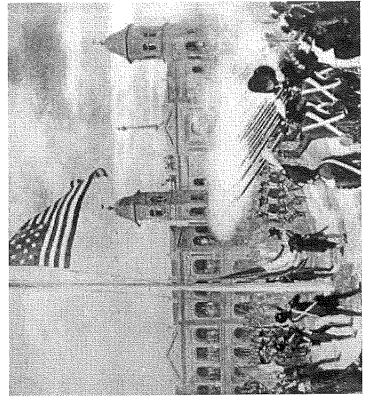
Exchange of New Orleans
The formal transfer of the city and the surrounding Louisiana Territory from France to the United States on December 20, 1803, completing the Louisiana Purchase. The Ceremony: Held at the Place d'Armes (now Jackson Square) in front of the Cabildo, the event featured the lowering of the French tricolor flag and the raising of the American flag. Key Figures: French colonial prefect Pierre Clément de Laussat officially handed control over to U.S. commissioners William C.C. Claiborne and General James Wilkinson. Significance: The transfer finalized the $15 million acquisition of roughly 828,000 square miles of land, securing permanent U.S. control over the vital port of New Orleans and the Mississippi River.

Hamilton Burr Duel
The Hamilton–Burr duel was a fatal pistol duel fought between former U.S. Treasury Secretary Alexander Hamilton and sitting U.S. Vice President Aaron Burr on July 11, 1804, in Weehawken, New Jersey. Cause: The duel was the culmination of a bitter, years-long political and personal rivalry, triggered after Hamilton reportedly insulted Burr's character during Burr's 1804 campaign for Governor of New York. Outcome: Burr shot Hamilton in the abdomen, causing a mortal wound that led to Hamilton's death the following day in New York City. Aftermath: Although Burr survived unharmed, the duel destroyed his political career and led to murder charges against him in both New York and New Jersey, though he was never tried.
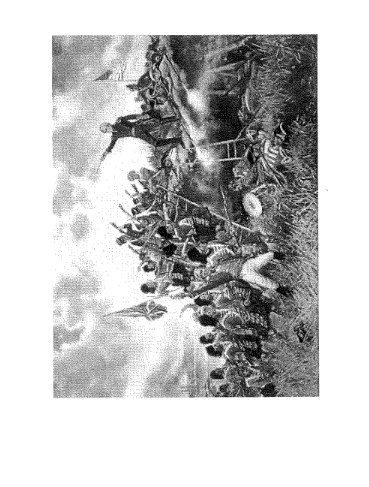
Battle of New Orleans
The Battle of New Orleans, fought on January 8, 1815, was the final major battle of the War of 1812, in which U.S. forces led by Major General Andrew Jackson decisively defeated a larger invading British army. The Strategy: Jackson assembled a diverse force—including regular soldiers, frontier militiamen, free Black troops, Choctaw warriors, and Jean Lafitte’s pirates—behind heavily fortified earthworks to repel the British assault. The Outcome: American forces inflicted over 2,000 British casualties while suffering fewer than 100 of their own, securing control of the vital Mississippi River port. Significance: Although the Treaty of Ghent had already been signed two weeks earlier to end the war, news had not yet reached Louisiana. The stunning victory boosted American morale and catapulted Jackson to national heroism, paving his way to the U.S. presidency.
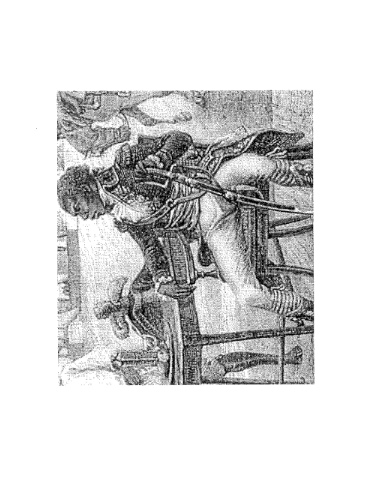
Toussaint Louverture 1743-1803
Formerly enslaved Haitian general who became the primary leader of the Haitian Revolution, the only successful slave revolt in history. Military Leadership: A brilliant military strategist, he united enslaved people and defeated invading forces from Spain, Great Britain, and France to abolish slavery in the French colony of Saint-Domingue. Governance: He established control over the entire island of Hispaniola, drafted a constitution naming himself governor-general for life, and worked to rebuild the island's economy. Legacy: In 1802, he was captured by troops sent by Napoleon Bonaparte and died in a French prison in 1803, just months before his lieutenants declared Haiti an independent nation in 1804.

Plan of Washington D.C. by L’Enfant
The L'Enfant Plan is the 1791 urban design created by French-born engineer Pierre Charles L'Enfant for the layout of Washington, D.C., the capital of the United States. Commissioned by President George Washington, the plan established the city's distinctive grid of streets intersected by broad diagonal avenues and public spaces. Grid and Diagonal Avenues: L'Enfant overlaid wide, radial avenues (named after U.S. states) onto a standard north-south and east-west street grid, creating traffic circles and triangular parks at the intersections.
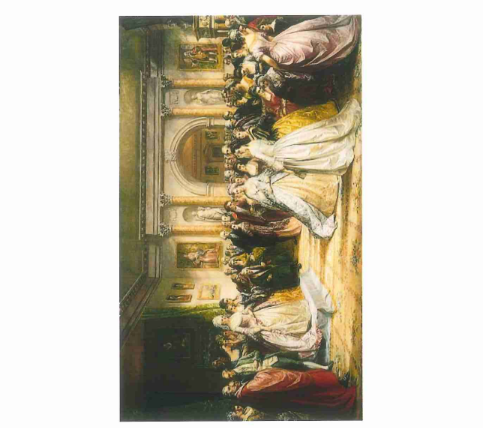
The Republican Court in the time of Washington
The Republican Court in the Time of Washington, or Lady Washington's Reception Day is a monumental 1861 oil painting by American artist Daniel Huntington. Now housed in the Brooklyn Museum, the work presents an idealized scene of the weekly Friday evening social gatherings hosted by First Lady Martha Washington during George Washington's presidency.
Subject and Composition: The painting brings together over 60 prominent figures of the early American republic, including George and Martha Washington, Alexander Hamilton, John Adams, and Thomas Jefferson. While styled after an aristocratic European royal court, it depicts an imagined composite of the Philadelphia and New York drawing-room receptions rather than a single historical event. Historical Context: Painted at the outbreak of the American Civil War in 1861, Huntington created the nostalgic scene to evoke national unity and remind Americans of the founding generation's shared heritage.

The Erie Canal
The Erie Canal is a historic 363-mile artificial waterway in New York State that created the first navigable water route connecting the Atlantic Ocean to the Great Lakes. Completed in 1825, it linked the Hudson River at Albany to Lake Erie at Buffalo. Economic Impact: The canal slashed freight shipping costs by over 90 percent. It transformed New York City into the nation's premier commercial port and spurred rapid settlement and economic growth across the Midwest. Engineering Feat: Built largely by immigrant laborers using hand tools, horses, and black powder, it was considered an engineering marvel of the 19th century. The original waterway featured 83 locks to overcome a nearly 600-foot change in elevation.
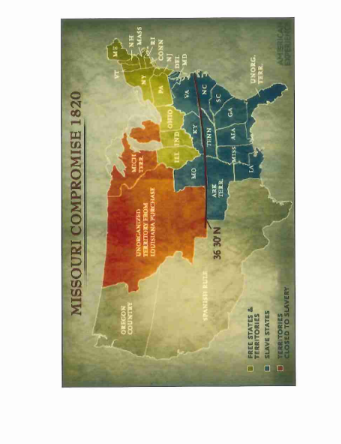
The Missouri Compromise 1820
The Missouri Compromise of 1820 was a landmark federal law passed by the U.S. Congress that admitted Missouri as a slave state and Maine as a free state to maintain the balance of power in the Senate. It also banned slavery in the remaining territories of the Louisiana Purchase north of the 36°30′ parallel. Political Balance: Before 1820, the United States had an equal number of free and slave states. Admitting Missouri alone would have tipped the balance of power in the U.S. Senate in favor of slaveholding states. The Geographic Boundary: Congress drew a line across the western territories at the 36°30′ north latitude, which was Missouri's southern border. Slavery was permitted south of this line and prohibited north of it, with the exception of Missouri itself.

Treaty of Ghent
The Treaty of Ghent was the peace agreement signed on December 24, 1814, in Ghent, Belgium, that officially ended the War of 1812 between the United States and Great Britain. The treaty restored the pre-war borders between the two nations without resolving the original disputes that started the conflict. Return to Pre-War Status: Both sides agreed to return all conquered territory, restoring relations to status quo ante bellum (the state existing before the war).

Tenskwatawa- “The Prophet”
Tenskwatawa (also known as The Shawnee Prophet) was a Native American religious and political leader of the Shawnee people in the early 19th century who co-founded a pan-tribal confederacy alongside his brother, Tecumseh, to resist American westward expansion. Spiritual Revival: After experiencing a powerful vision in 1805, he preached a return to traditional Indigenous customs and urged Native Americans to reject European-American influences, including alcohol, manufactured goods, and Christianity. Prophetstown: He and Tecumseh established a major multi-tribal settlement called Prophetstown in present-day Indiana, which served as the spiritual and political center of their resistance movement.Battle of Tippecanoe: In 1811, while Tecumseh was away recruiting allies, Tenskwatawa ordered a premature attack against American forces led by William Henry Harrison at the Battle of Tippecanoe, resulting in a devastating defeat that shattered his spiritual credibility and weakened the confederacy.
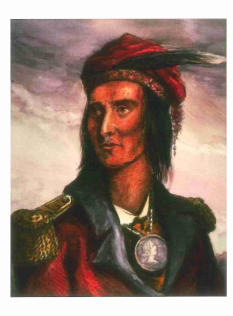
Tecumseh
Tecumseh (c. 1768–1813) was a prominent Shawnee chief, warrior, and orator who organized a large intertribal Native American confederacy to resist United States expansion onto Indigenous lands. Core Mission. He argued that Native Americans owned their lands in common and worked alongside his brother, Tenskwatawa (The Prophet), to unite tribes from Canada to the Gulf of Mexico against American settlement. War of 1812. Tecumseh allied with British forces to protect Native territory, playing a decisive role in the capture of Detroit in 1812. Legacy. He was killed on October 5, 1813, at the Battle of the Thames in present-day Ontario, an event that effectively ended organized pan-Indian resistance in the Great Lakes region
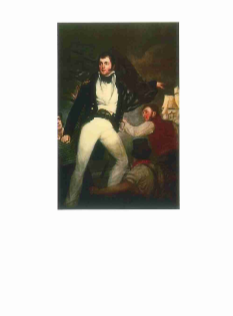
Oliver Hazard Perry
"Don't Give Up the Ship" is a famous United States Navy motto popularized by Commodore during the War of 1812. He flew the words on a large blue battle flag aboard his flagship, the USS Lawrence, during the Battle of Lake Erie on September 10, 1813. Origin of the Quote. The phrase was originally spoken by Perry's close friend, Captain James Lawrence, as his dying command while mortally wounded aboard the USS Chesapeake in June 1813. Perry's Tribute. To honor his fallen friend, Perry had the motto stitched onto a custom battle flag for the Lake Erie campaign.Battle of Lake Erie. When the USS Lawrence was heavily damaged during the fight, Perry famously rowed through enemy fire to transfer his flag to a sister ship, the USS Niagara, leading the American fleet to a decisive victory. Today, the phrase remains an unofficial motto of the U.S. Navy, and Perry's original battle flag is preserved at the U.S. Naval Academy in Annapolis, Maryland.
Francis Scott Key
Francis Scott Key (1779–1843) was an American lawyer, author, and amateur poet best known for writing the lyrics to "The Star-Spangled Banner," the national anthem of the United States. Origin of the Anthem. During the War of 1812, Key witnessed the overnight British bombardment of Fort McHenry in Baltimore Harbor on September 13–14, 1814. The Poem. Seeing the large American flag still flying over the fort at dawn inspired him to write a poem originally titled "Defence of Fort M'Henry." National Recognition. His words were soon set to the tune of a popular British drinking song, and Congress officially adopted "The Star-Spangled Banner" as the U.S. national anthem in 1931. Legal Career. Outside of his poetry, Key was a prominent Washington, D.C. attorney who served as the U.S. Attorney for the District of Columbia and argued numerous cases before the Supreme Court.

The House of Representatives
The House of Representatives (1822, reworked 1823) is a monumental oil-on-canvas history painting by American artist and telegraph inventor Samuel F. B. Morse depicts the old U.S. House chamber inside the newly rebuilt U.S. Capitol. Measuring roughly 7 by 11 feet, the painting captures the domed hall—now National Statuary Hall—glowing in warm lamplight as lawmakers gather before an evening session. It celebrates “The People’s House” and democracy.
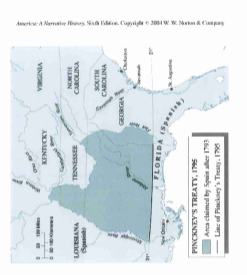
Pinckney’s Treaty
Pinckney's Treaty (1795), officially known as the Treaty of San Lorenzo, was a landmark diplomatic agreement between the United States and Spain that resolved territorial disputes and secured vital trade access along the southern frontier. Mississippi River Access. Spain granted American ships the right of free navigation along the entire length of the Mississippi River. Right of Deposit. Americans received duty-free access to the Spanish-controlled port of New Orleans, allowing western farmers to transfer goods onto ocean-going vessels for export. Border Settlement. Spain recognized the 31st parallel as the northern boundary of Spanish West Florida, ceding disputed territory to the United States. Impact. Negotiated by American envoy Thomas Pinckney, the treaty strengthened U.S. sovereignty, eased frontier tensions, and spurred westward expansion and economic growth in the Ohio and Mississippi River valleys.

Gabriel’s Rebellion
The Letter to Monroe Warning of a Slave Rebellion refers to an urgent August 30, 1800 letter written by a Virginian enslaver to the Virginia Governor Monroe, alerting him to an imminent uprising by enslaved people known as Gabriel’s Conspiracy. The Warning. Two enslaved men, Pharoah and Tom, informed Sheppard earlier that day about the plot led by an enslaved blacksmith named Gabriel. Sheppard immediately wrote to Monroe to report that rebels planned to march on Richmond, seize arms and ammunition, and take control of the city.Immediate Response. Upon receiving the letter, Governor Monroe mobilized the state militia to guard the capitol and public armories. Combined with a severe rainstorm that washed out roads and bridges, this military response thwarted the uprising before it began. Historical Impact. Preserved in the , the letter led to the arrest and execution of Gabriel and dozens of his followers. It also prompted Virginia lawmakers to pass stricter laws limiting the movement, education, and assembly of free and enslaved Black people.