Price, Income, and Demand Elasticities : Economics
 Call Kai
 Learn
 Practice Test
 Spaced Repetition
 Match
 Flashcards
 Knowt Play
1/4

There's no tags or description
Looks like no tags are added yet.
5 Terms
own-price elasticity of demand (PED)
Measures the sensitivity or responsiveness of the quantity demanded of a good to a change in its own price. A a unit-free measure of the responsiveness of demand
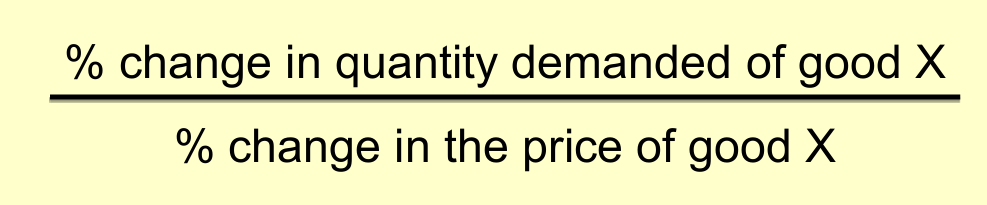
Elasticity
Definition: Measures the responsiveness of one economic variable to a change in another.
Elastic demand: Quantity demanded changes by a greater percentage than price (PED greater than 1 in absolute value).
Inelastic demand: Quantity demanded changes by a smaller percentage than price (PED less than 1 in absolute value).
Unitary elasticity: Quantity demanded changes by the same percentage as price (PED equals 1 in absolute value).
Income elasticity of demand (IED)
Measures the sensitivity or responsiveness of the quantity demanded of a good to a change in income
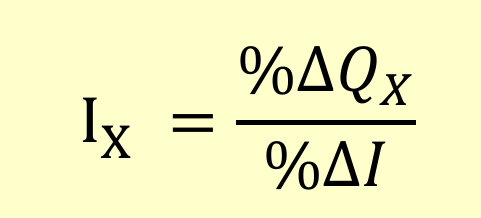
Normal and inferior goods
Normal goods have a positive income elasticity of demand
An increase in income leads to an increase in the quantity demanded
Dairy or vegetables
Inferior goods have a negative income elasticity of demand
An increase in income leads to a fall in quantity demanded
Bikes
Price elasticity of supply (PES)
The responsiveness of quantity supplied to a change in price.