Classics - Art Pieces
 Call Kai
 Learn
Learn Practice Test
 Spaced Repetition
 Match
Match Flashcards
 Knowt Play
1/50

There's no tags or description
Looks like no tags are added yet.
Name | Mastery | Learn | Test | Matching | Spaced | Call with Kai | Chat |
|---|
No analytics yet
Send a link to your students to track their progress
51 Terms

early terracotta rhyta
ceramic vessel for holding liquid, leaping bull
Minoan, 2000-1900

Crete seal stone - Minoan
1500 - 1450

Crete seal stone
1500 - 1550

Lion(ess) Gate at Mycenae -- Cyclopean masonry
convays strength and protection
Toumba building, Lefkandi
c. 950
Building used for about a century 1050-950 BCE
Linen garment in Toumba male burial
Very rare preservation, Evidence for weaving and textile arts
Cemetery, Elite graves used for about 100-150 years after Toumba burials
Ancestor worship
Toumba cemeteries : c. 900-750

“Nestor’s cup” c. 750
Made in
Rhodes (eastern Mediterranean) and
found in Ischia, Bay of Naples in Italy.
inscription of poetry - silly message
nestor is a hero from pylos who is famous for being a drinker who used a big cup
this is a small cup and inscription was carved in after owner git it
from a communal tomb, greek writing found in italy
Temple of Apollo, Delphi.
5th c. BCE

Metropolitan Kouros (Archaic Greek) c. 590 BCE
New York Kouros. From western Attica, grave marker. C. 590 BCE. Imported marble
pose and style inspired by egyptians
legs are symetrical and distribute weight evenly - this is not a realistic pose
focus on some musculature

Bronze cuirass (breastplate) found at Olympia (c. late 6th c.) with engraved epigastric arch and pectoral muscles
designed to look like a naked chest

weird appolo
The image shows the Mantiklos "Apollo", an ancient Greek solid bronze votive statuette from the early Archaic period (c. 700–675 BC) found in Thebes

Right. Kritios Boy (c. 480 BCE

Riace bronzes (c. 460 BCE)
physically perfect
big buts, muscles next to spinal column are purposefully exaggerated, huge iliac crest

Temple of Apollo at Syracuse (Sicily)
590
open and u shaped
cella, backroom, and pillars
monolithic columns from limestone (very uncommon later on bc inconvenient)
funded by Kleomenes , name engraved on temple it is unusual that it was sponsored by one person

Temple of Artemis at Corfu.
doric
590
top-heavy, very long and big
first temple where we see decoration on pediment
medusa
medusa symbolism - could be for protection (stone gaze)
also imagery of her d=being decapitated by Perseus and Pegasus coming out of her head, makes for a story
could be connected to Corinth, Corfu is a colony from there

Temple of Artemis at Ephesus Bronze Age sanctuary (c. 1200)
Geometric-style pottery (c. 800-700) Flood destroyed temple around 650-600 “Croesus” temple, named after Lydian ruler rebuilt
● New cult image of Artemis (ebony) Destroyed by fire in 356 BCE Third temple even larger: 450’ (137m) x 225’ (69m), columns 60’ (18m) high
● Another cult image created Damaged in invasion by Germanic peoples in 268 CE, closed by Christian church in 5th c. C
not top heavy and has tall columns, lots of columns )two rows)
more elaborately decorated and HUGE
rebuilt many times, ground was unstable and woudld sink but people still rebuilt it

Kylix - cup

Krater - mixing bowl

Amphora - wine vessel

Hydria - water vessel

oinochoe or olpe - pouring vessel

Chigi vase
Polychrome and black-figure olpe: for pouring wine
Orientalizing/Protocorinthian, 650 B.C.E.
Decorative program: Lion Hunt (Eastern sport)
Phalanx
horses
hunting for fun
cirinthian vase found in veii
found in etruscan tomb
potery as a marker of trade

Eleusis (Attica) amphora. ProtoAttic c. 650
Perseus and the Gorgons, medusa, cyclops blinding scene
very tall
storage vessel
has filling ornaments - not as triangular people from geometric period but still some inspo

Aristonothos Krater, c. 650. Made in Euboea.
It was discovered in an Etruscan tomb at Cerveteri (ancient Caere) in Italy
Depicts Odysseus and his men driving an incandescent stake into the eye of the drunken Cyclops from Homer’s Odyssey.
artist signed his name
Features a clash at sea between a Greek oared warship and a high-prow vessel, reflecting early maritime interactions and conflicts between Greeks and Etruscan cultures
serves as a bridge between Homeric epic tradition, early Greek craftsmanship, and the emergence of Etruscan elite culture.

Caryatids = female figures used as columns

● “Lady of Auxerre”
● Limestone
1/3 lifesize
● Probably from Crete
● Egyptian and
eastern style
● Abstracted form
● Incised (carved)
details
● c. 650-600 BCE
combo of eastern and Egyptian style
-fingers all same length, hair - Egyptian
fully clothed
Greece is looking towards east for luxury art

Kore of Thera (c. 650 BCE)
2.48m (7’6” tall) - unusual for female sculptures to be this tall
Discovered in 2000, recently
displayed for first time
Marble!!! Huge technological
achievement for the era
Cemetery context (grave marker) but likely
never used (dropped)
looks kinds like lady of auxerre - has hiar, long fingers, bidy shape, fully clothed, bread loaf feat = early archaic period style

Nikandre
(inscription)
Discovered in
the sanctuary of
Artemis on the
island of Delos
"Nikandre dedicated me to the
goddess, far-shooter of arrows,
Nikandre, the daughter of
Deinodikos of Naxos,
distinguished among women,
sister of Deinomenes and wife
of Phraxos."
Dedicated on island of Delos
C. 650 BCE
looks like lady of auxerre and kore on thera - all tall and thin

● Sounion Kouros (Attica) c. 600 BCE
● Marble imported from Naxos to athens
● 10’ (3m) high, about
dedication to apollo from Sunion
back muscles are more defined/modeled than met kouros
focus on thoracic arch

Colossal kouros,
Samos
Found along Sacred
Way in the sanctuary
of Hera on Samos
5.25m (17.22’)
“Isches dedicated it,
son of Rhesios” on left
thigh
C. 560 BCE
smoother/less carved, mouch rounder than met and Sunion kouros and less angular
looking down on you - represents devinity

● Akropolis Rider (c. 550) Athens
● Imported marble from Paros
● 3.5” (1.08m) high (as preserved); 2’5” (.77m) long
● Head in France, body in Athens
● May represent a victor in panhellenic games at
the sanctuary at Nemea
riding a horse - huge technological advancement
head tilted and gaze shifted - neck muscles, modeled spinal column
after a while the Greeks got bored of stiff Egyptian style
archaic smile and big eves to express vividness and liveliness
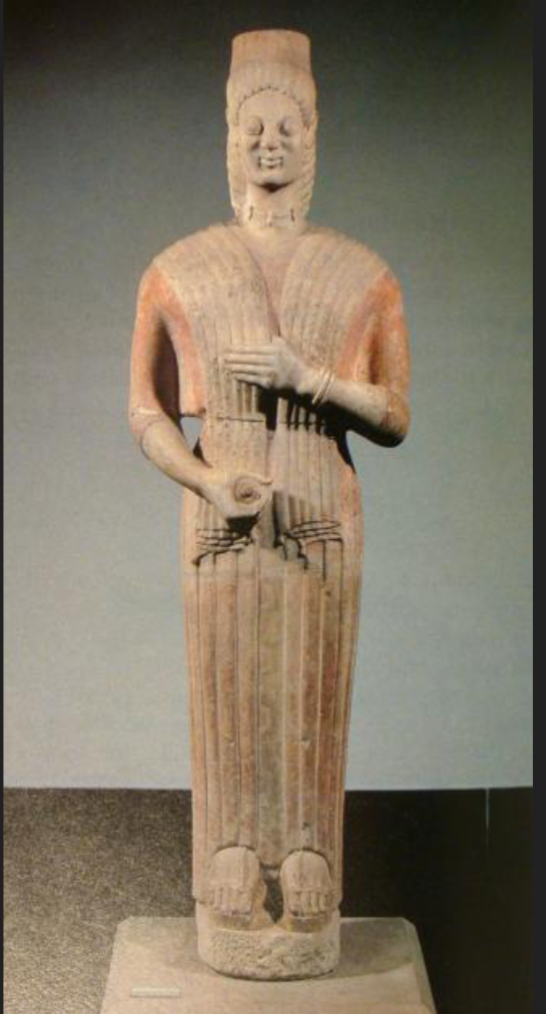
Korai: Often (but not always) votive dedications
● Agalma (“pleasing”) to the gods
● Highly decorative, elaborate hair, jewelry, dress
Figures are typically much smaller than
early 6th century examples like the kore
from Thera
Hold offerings (in contrast to kouroi)
later on could have metal atachments (crown, earrings)
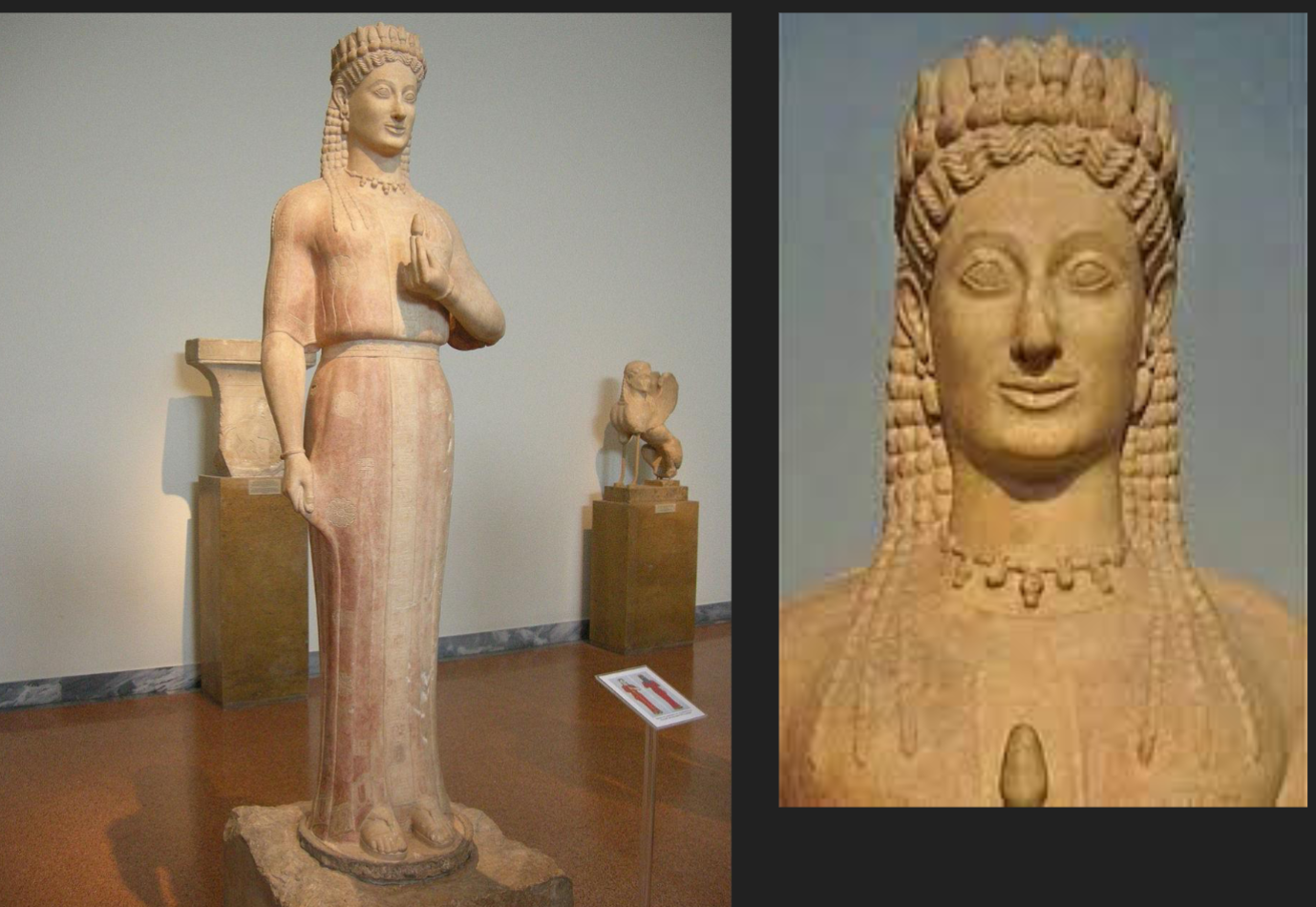
Phrasikleia. FUNERARY - uncommon
(Important). Attica 540
● 5’9” (1.76m) tall
● Marble
● Inscription:
“The marker of Phrasikleia.
Forever shall I be called
kore (maiden), the gods
having granted me this
instead of marriage. Aristion
of Paros made it.”
inscribed with makers description - this is uncommon
● Buried w/kouros
(so-called “brother”)
likely after Persian
invasions (490-480)

“Peplos” Kore/Artemis?
C. 530. Akropolis,
Athens

Antenor’s Kore (inscription)
Akropolis. 6’7” (c. 520)
eyes inlayed
her size and build was unusual for the time

Anavysos Kouros (Attica)
530 BCE
Inscription on base:
“Stay and mourn at the
monument of dead
Kroisos, who raging Ares
slew as he fought in the
front ranks.”

François vase, found in Chiusi
(Etruria). Attic black-figure. 570-560 - early 6th
(26”/66cm h)
found in italy with greek writing
● Iconography is complex, mythical,
programmatic, labeled (for
whom? What purpose?)
icanography
Wedding of Peleus and Thetis,
origin of Trojan War
great myth hits
● Potter and painter identified
every figure is labeled - poeple even elite at this time usually could not read, having a labeled vase shows how fancy you are

Pylos Combat Agate
made by Minoans on Crete
seal stone
1450 BCE
very small - incredibly complex craftsmanship
combat scene and warrior has Mycenean sword

venus of willendorf
ice age hunter gatherers, exaggerates fertility features
carved around 30,000 to 25,000 BCE
Willendorf, Austria,

, louterion from Thebes, c. 730 BC, terracotta
Such generic scenes decorate other funeral markers, but the specificity of some Geometric vase paintings suggests the possibility of myth. On a louterion (spouted krater) said to be from Thebes
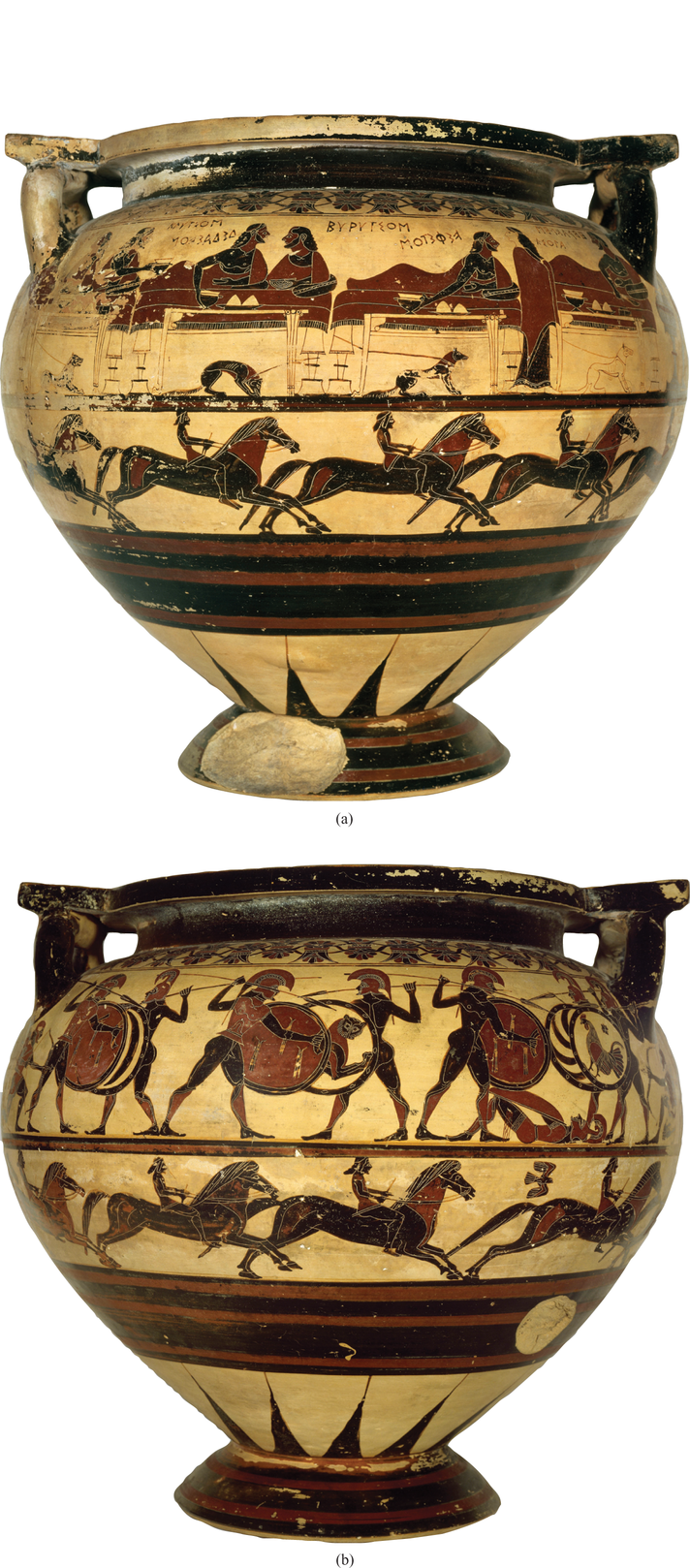
(“Eurytios krater”), Corinthian column krater from Etruria, Herakles banqueting with Eurytios and his family, c. 600–590 BC, terracotta,
This is the earliest scene in Greek vase painting of a symposion, a custom that appeared in Greece not long before. Another Trojan War theme (Fig. 2.46b; cf. Fig. 2.45b) decorates the reverse of the krater: fighting warriors, including Odysseus and Diomedes, and Ajax, who has impaled himself on his sword; again, all figures are named.

(“Aristonothos krater”), c. 650 BC, terracotta,
Aristonothos. Discovered in an Etruscan tomb at Caere (modern Cerveteri, Italy),
historical marker of early trade, cultural convergence, and shared storytelling between Greek and Etruscan civilizations in the Western Mediterranean. [1, 2, 3]
Side A (The Blinding of Polyphemus): Depicts Odysseus and his men driving an incandescent stake into the eye of the drunken Cyclops Polyphemus,
Side B (Naval Battle): Features a sea clash between a Greek-style oared warship on the left and a high-prow vessel on the right (often interpreted as an Etruscan ship), symbolizing early maritime encounters and cultural exchange in the Mediterranean

Exekias eye cup - 540–530 BC
unusual bright red interior - Dionysus with dolphins is weird, might be him arriving at Greece
symposium

Exekias amphora - 540–530 BCE
found in tomb
achilles and ajax playing dice
achilles wearing cloak - very detailed, word bubbles coming out of his mouth
scene is not in og poem
Depicts the return of the Dioscuri (the twin heroes Castor and Pollux) to the household of their parents, Leda and Tyndareus, - famous with etruscans - shows pot was made for export

Exekias amphora
ajax planting his sword - normally potters show the suicide here he is preparing for it
Achilles slaying the Amazon queen Penthesilea - in myth he falls in love with her when he glances her as he kills her
exikias focuses on the glace, and the killing of a woman not a man

Exekias calyx crater - 530 bc
fight over body of Patroclus
dedication to Athena

amasis painter black figure lekythos (little)
oil flask
women weaving - daily work not a myth
usully dont see women unless they support male heroes

amasis painter sayter amphora
sayters making wine, they are working and ones at top are drunk and dancing

amasis maenads amphora
maenads giving Dionysus a bunny and fawn

amasis painter kylix
men in stable but small people are running on backs of horses, came from metopie and came alive! archer wears clothes of a northener (sythia)
unknown myth

attic hydra
520-500
shows woman at fountain house, everyday people needed water, fountain house built by Peisistratus

Harmodius and Aristogeiton sculpture depicted the famous ancient Athenian "tyrant slayers" who assassinated the tyrant Hipparchus in 514 BCE.
Commissioned around 509–510 BC