biochem chapter 13: enzyme kinetics
 Call Kai
 Learn
 Practice Test
 Spaced Repetition
 Match
 Flashcards
 Knowt Play
1/12

There's no tags or description
Looks like no tags are added yet.
13 Terms
(obj.) how do enzymes alter the overall free energy change of a chemical reaction?
stabilize the transition state
provide multiple lower-energy paths
alter the electronics of substrate/product
what are enzymes?
proteins (and occasionally nucleic acids) that function to catalyze reactions
workhorses of the cell
(obj.) by what general approach do enzymes accelerate chemical reactions?
lowering activation energy compared to an uncatalyzed reaction
what do reaction rates depend on?
the amount of energy required to break the bonds, or activation energy (change in g double dagger)
the frequency of productive collisions (generally, the more they collide, the more quickly the reaction occurs)
increasing temp., concentration, and pressure generally increases reaction rate
what is a catalyst?
substance that speeds up the rate of a chemical reaction, but it itself is unchanged
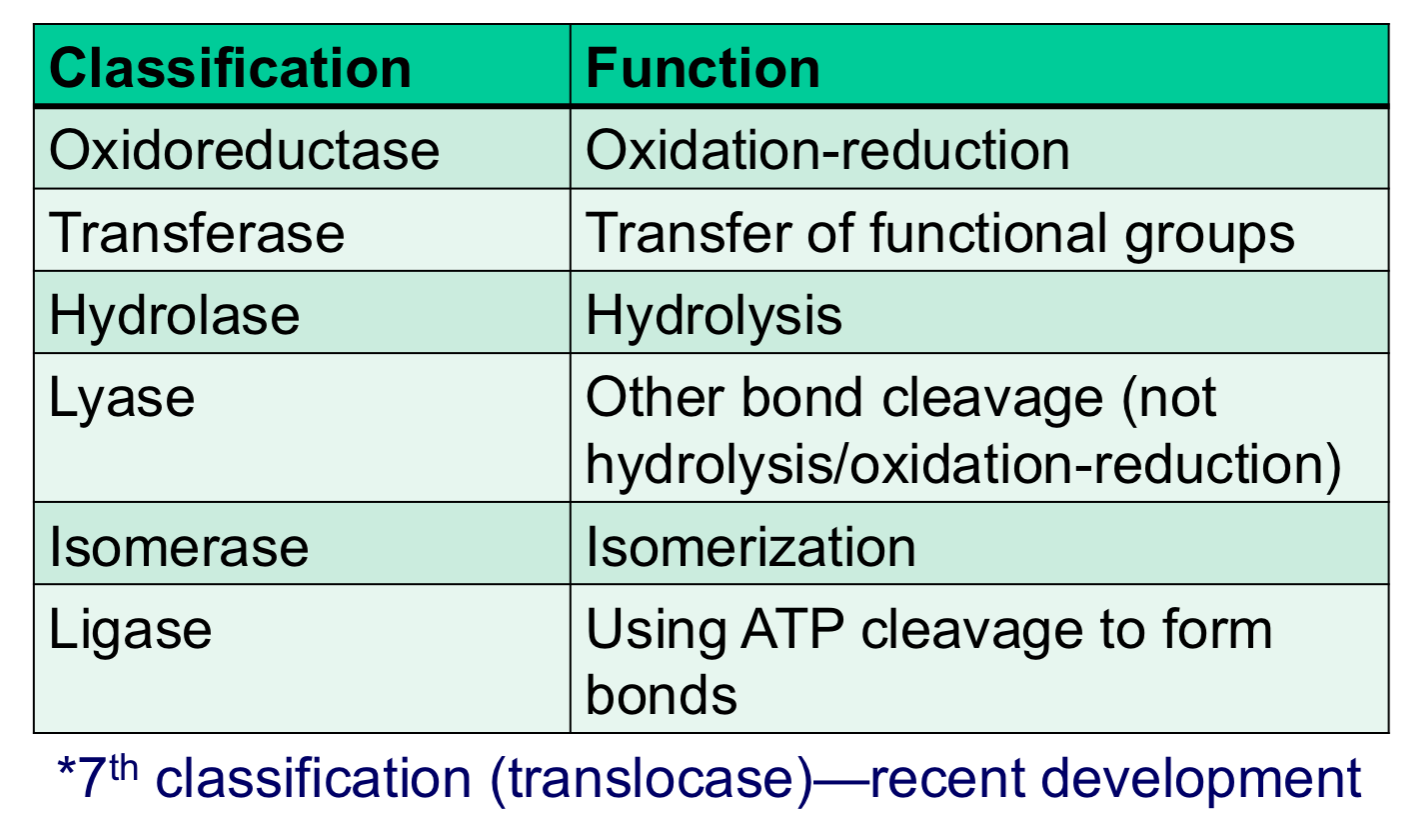
(obj.) what are the classes of enzymes?
oxidoreductase → oxidation-reduction
transferase → transfer of functional groups
hydrolase → hydrolysis
lyase → other bond cleavage (not hydrolysis/oxidation-reduction)
isomerase → isomerization
ligase → using ATP cleavage to form bonds
7th classification → translocase
(obj.) what are the characteristics of enzymes?
catalytic power
specificity
regulation
coenzymes and cofactors
catalytic power explanation
ratio of catalyzed rate to uncatalyzed rate
enzymes can accelerate reactions as much as 10^16 over uncatalyzed rates

explain specificity of enzymes
enzymes are generally specific for a narrow range of substrates
high specificity = high yield
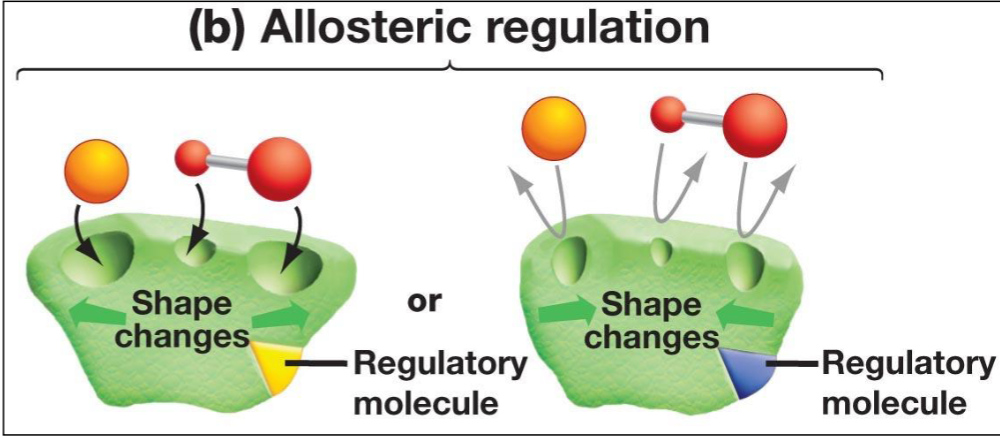
explain regulation of enzymes
regulation tunes rate to appropriate cellular requirements
most complex metabolic processes driven by enzymes that are regulated (ex. turning glucose to pyruvate)
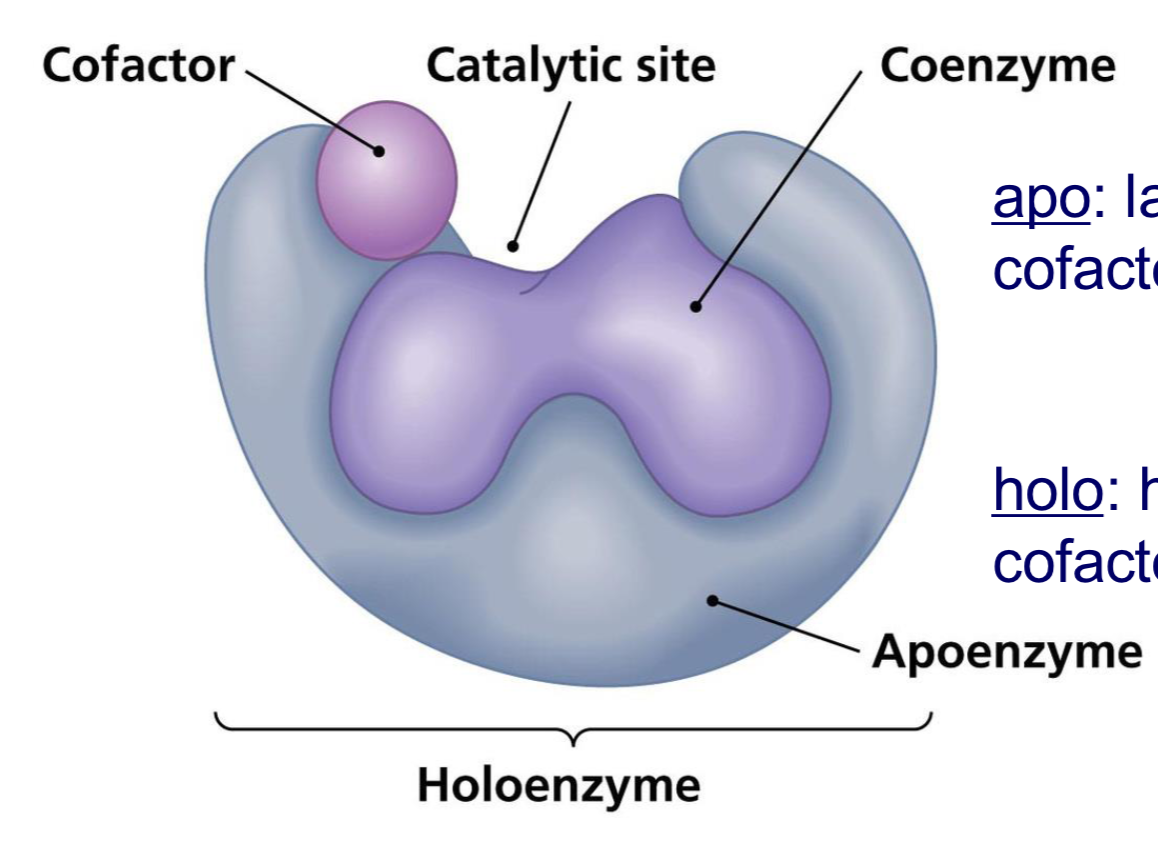
explain coenzymes and cofactors of enzymes
cofactors and coenzymes are non-protein components important for activity
cofactor: small non-protein component; generally ion
coenzyme: larger, more complex non-protein component; generally derived from vitamins
(obj.) what is the difference between a holoenzyme and an apoenzyme? which of these is catalytically active?
apo: lacking the cofactor/coenzyme
holo: has the cofactor/coenzyme, catalytically active