PSYCH 223 - Chapter 9: Late Adulthood
 Call Kai
 Learn
 Practice Test
 Spaced Repetition
 Match
 Flashcards
 Knowt Play
1/111

Earn XP
Description and Tags
lectures from Prof. Vrushali Rao Gumnur
112 Terms
What is gerontology?
The scientific study of aging
What are some aging categorizations in late adulthood?
Young-old (65-74 years)
Old-old (75-84 years)
Oldest-old (85+ years)
What is a statistical trend seen in the oldest-old age category?
Oldest-old is the fastest growing subgroup in Canada (2015)
What is ageism?
Prejudice and discrimination directed at older people
Opinion that older people are less competent and attractiveness
How does ageism come about?
Originate from generalizations and stereotypes
Influenced by cultural views
What physical transitions are seen in late adulthood regarding appearance?
Grey (or white) hair
Loss of collagen → wrinkle skin
What physical transitions are seen in late adulthood regarding bones and muscles?
Thinner spine cartilage changed posture
Osteoporosis due to reduced estrogen production
Muscle fibers decrease in size and number
What physical transitions are seen in late adulthood regarding internal organs?
Brain tissue shrinks
Shrinking blood vessels and weaker cardiac muscles
Reduction in lung capacity
Lesser digestive juices produced
What are some changes in vision that occur in late adulthood?
Cataracts
Macular degeneration
What are cataracts?
Opaque deposit around the eye lens that clouds vision
What is macular degeneration?
Common cause of blindness affecting the macula stemming from loss of visual perception
What are some changes in hearing that occur in late adulthood?
Difficulty hearing higher frequencies and isolating sounds
Tinnitus
Hearing loss worsens cognitive decline
Individuals may stay away from social gatherings
What is tinnitus?
Persistent ringing in the ear
What changes in taste and smell occur during late adulthood?
Loss of taste buds
Olfactory bulb in the brain shrinks
Malnutrition → hypertension
What are the main developments on the brain and nervous system in late adulthood?
Decreased efficiency, increased compensation
What changes in the brain and nervous system occur in late adulthood?
Useful dendritic connections lost, not necessarily number of neurons
Reduced synaptic transmission and plasticity → slower reactions
Decreased plasticity might cause also reduced adaptability in brain function
What are some hypotheses for why people slow down in late adulthood?
Peripheral slowing hypothesis
Generalized slowing hypothesis
What is the peripheral slowing hypothesis?
People slow down in late adulthood because nerves from the spinal cord to the extremities to the body become less efficient leading delay in transmission
What is the generalized slowing hypothesis?
People slow down in late adulthood because all parts of the nervous system reduce in efficiency causing slowing down of processing and transmission
What is functional status?
A measure of an individual’s ability to perform certain roles and tasks
How is functional status measured?
Basic activities of Daily Living (BADL) → self help tasks
Instrumental activities of Daily Living (IADL) → more complex everyday chores
How do late-aged adults rate their own health status?

What are some physical disorders that can appear during late adulthood?
Arthritis
Hypertension
What is arthritis? How does it affect individuals who have it?
Inflammation of the joints caused through wear and tear
Painful swelling from excess synovial fluid
Issues with executing simple motor actions
What is hypertension? How can it affect individuals who have it?
Chronic high blood pressure that can eventually damage blood vessels
Linked to heart conditions and strokes
What can infections look like in late-aged adults?
Old adults are susceptible to infections due to a weakened immune system
What are some mental disorders that can appear in late adulthood?
Depression
Major neurocognitive disorder (dementia)
Alzheimer’s disease
Why may late-aged adults deal with depression?
Cumulative loss of spouse, relatives and friends can lead to feelings of sorrow and hopelessness
What is Alzheimer’s disease?
Progressive brain disorder that produces memory loss and confusion
What is dementia?
Umbrella term for disorders including memory loss, cognitive decline and other mental functioning
Loss of thinking abilities severe enough to interfere with daily life
What are some disorders that fall under the umbrella term of dementia?
Alzheimer’s (60-80%)
Lewy body dementia (5-10%)
Vascular dementia (5-10%) → caused by one or more strokes
Frontotemporal dementia (5-10%)
Parkinson’s
Huntington’s
What is mixed dementia?
Dementia from more than one cause
What are some symptoms of dementia?
Decreased intellectual abilities
Declining memory
Impaired judgement
What are some triggers of dementia?
Depression
Metabolic disturbances
Intoxication
Head injury
Vitamin B12 deficiency
What are the phases of deterioration of Alzheimer’s?
Issues forming new memories
Remembering old memories
Recognizing familiar faces
Loss of voluntary muscle control
What is the physiology behind Alzheimer’s?
Amyloid plaques made up of amyloid precursor proteins lead to inflammation and deterioration of neurons
Hippocampus, frontal-temporal lobes affected

What are some probable causes of Alzheimer’s?
Genetic - ApoE4 gene
Lifestyle influences
Dysfunction of hormones, immune system
What are some treatment options for individuals with Alzheimer’s?
Temporarily restore acetylcholine neurotransmitter using drugs
Reduce inflammation in the brain using drugs
Patients need constant care and at times can be emotionally unstable
What are some factors that may contribute to an individual’s aging and development of illness?
Financial resources
Lifestyle choices
Locus of control
General health
What are some theories of aging?
Genetic programming
Wear and tear
Cellular damage
What is the genetic programming theory of aging?
Hayflick Limit: genetically determined period of cell reproduction
‘Death gene’ that is inherited through disease
Shortening length of telomeres
What is the wear and tear theory of aging?
Mechanical functions wear out
Accumulated by-products and toxins impair body functioning
Free radicals causing oxidation reactions
Imply that preventing toxic build-up could lengthen life
What is the cellular damage theory of aging?
Cross-linking interferes with biological reactions
Eg. Collagen and elastin cross link causing wrinkles
What is cross-linking?
Formation of undesirable bonds between proteins or fats
What is life expectancy? What contributes to it?
The average age of death for members of a population, can be based on:
Health care
Sanitation
Environmental conditions
What are some potential methods to postpone aging?
Telomere therapy
Drug therapy
Longevity genes
Reducing free radicals
Restricting calories
Replacing organs
What is telomere therapy?
Potential method to postpone aging that involves regulating the gene controlling telomerase that shortens telomeres
What is drug therapy?
Develop drugs to target specific gene activity as a potential means for postponing aging
What may longevity genes be used to potentially postpone aging?
Find and activate genes like sirtuins that help cope better with environmental changes
How can reducing free radicals potentially postpone aging?
Antioxidant drugs to tackle free radicals (ions with unpaired electrons) in cells
How may restricting calories potentially postpone aging?
Develop drugs that mimic calorie restriction, producing lesser free radicles
How may replacing organs postpone aging?
Transplants, if possible, from own cloned cells can save a dying person
How is intelligence assessed in late adulthood? What are the trends seen?
Warner Schale used sequential studies to address the ambiguous nature of late-adult intelligence
Some cognitive abilities show a decline after 53, and some after 67
Serious decline only after 80 years
Cognitive stimulation can maintain high functioning
Significant individual difference and SES influence → education can increase cognitive viability

What changes in memory are occur during late adulthood?
Short term memory capacity declines as compared to middle adulthood
Late adults learn to compensate for their deficits using meta-memory strategies
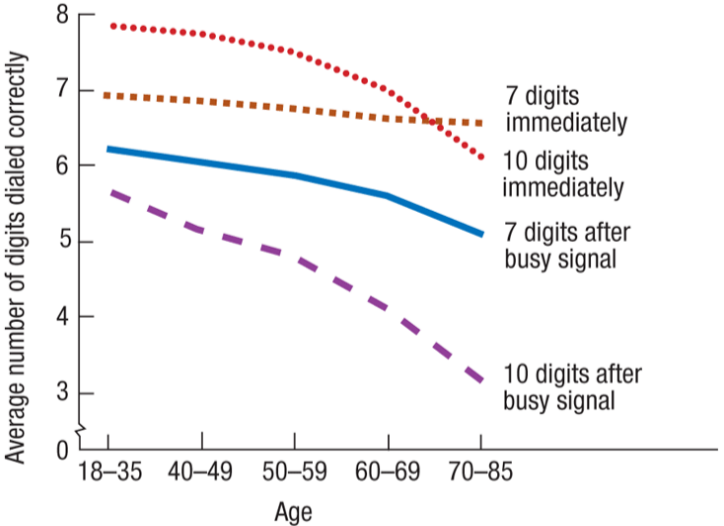
What aspects of memory are seen to be stronger in different stages of adulthood?
Young adults → retrospective memory
Older adults → prospective memory
What is retrospective memory?
Recalling something that happened in the recent past
What is prospective memory?
Remembering to do something in the near future
What is autobiographical memory?
Memories about one’s own life
Why does memory change?
Direct biological factors = loss of connections + information processing deficits
Environmental factors
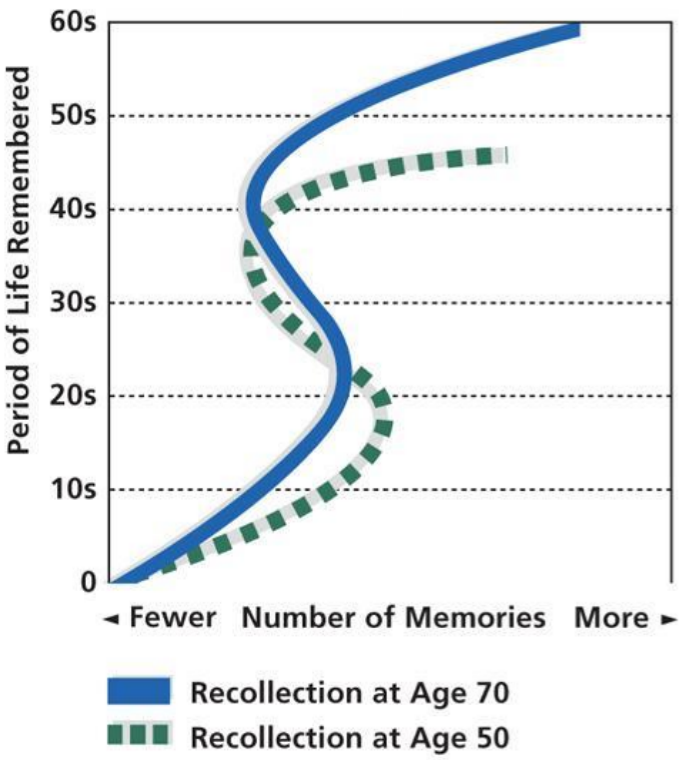
What is the Pollyanna principle?
Elderly people could remember pleasant autobiographical memories better than unpleasant ones
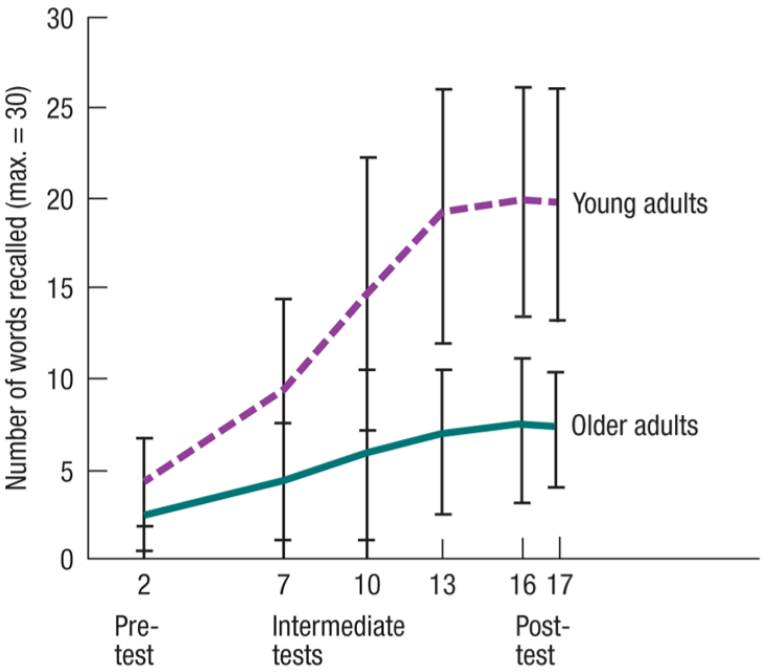
What did Kliegl and Blates study suggest about learning in late adulthood?
Learning process takes longer for older adults - less efficient
Participants were asked to create associations between pictures to remember them
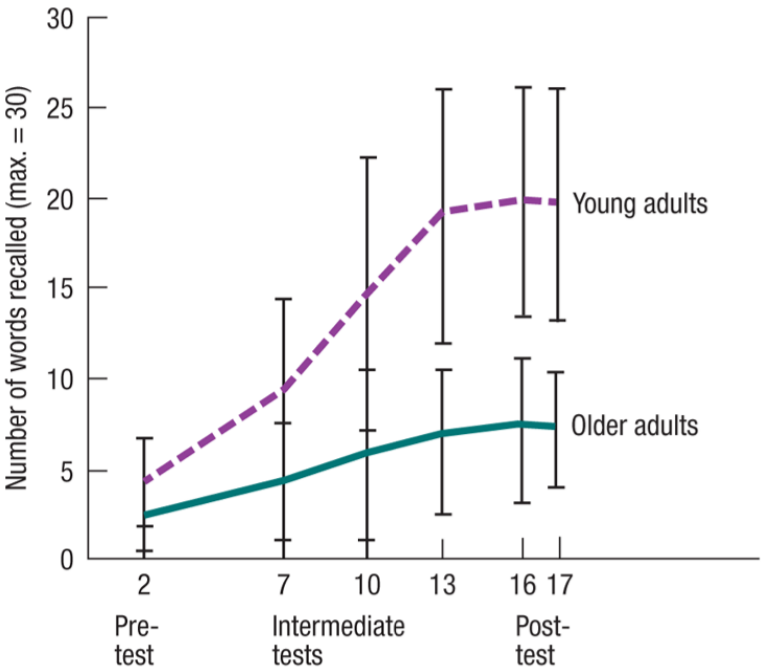
Why is there a change in strategizing learning in late adulthood?
Decline in fluid intelligence
Might be less motivated to learn
What is wisdom?
Expert knowledge in the practical aspects of life
What is the scope of wisdom?
Wider scope than intelligence:
Factual knowledge
Procedural knowledge
Understanding of the relevance of context
Understanding of the relevance of values
Recognition that it i impossible to know in advance how many decision will ultimately affect one’s life
What did Baltes and Straudinger determine regarding wisdom?
Their dilemma task found that wisdom does not decline with age
Older people might have had greater experience with varied life situations
What is Gene Cohen’s theory of late-life creativity?
Re-evaluation phase (~50 years) - reflect on past accomplishments
Liberation phase (~60 years) - Become free to create and take risks
Summing-up phase (~70 years) - wish to compile their accomplishments
Encore phase (80+ years) - desire to complete unfinished work
Which of Erikson’s psychosocial stages occurs during late adulthood?
Ego-integrity vs despair - characterized by looking back at one’ s life, evaluating it and accepting it
What does achievement of Erikson’s ego-integrity vs despair stage look like?
People feel they have fulfilled their goals and are happy with the events of their life
What does lack of achievement of Erikson’s ego-integrity vs despair stage look like?
People might regret on missed opportunities, wrong steps taken and incomplete goals
Dissatisfaction regarding past life can lead to ruminating negative thoughts
What are Peck’s developmental tasks?
Redefinition of self vs preoccupation with work role
Body transcendence vs bod preoccupation
Ego transcendence vs ego preoccupation
What is Peck’s first developmental task?
Redefinition of self vs preoccupation with work role:
Need to learn not to lay emphasis on themselves as professionals or workers
What is Peck’s second developmental tasks?
Body transcendence vs body preoccupation:
Need to learn to move beyond concerns of physical appearance and changes
What is Peck’s third developmental task?
Ego transcendence vs ego preoccupation:
Need to accept their lives and the inevitability of death
What is Levinson’s final season?
Struggle with entering late adulthood, involving:
Loss of power and control over one’s life
Societal stereotypes about old people
Cultures that provide reverence to older adults might be more accepting of their age
What are some different personality types seen regarding coping with aging?
Disintegrated and disorganized
Passive-dependent
Defended
Integrated
How do disintegrated and disorganized personality types tend to cope with aging?
Unable to accept aging and face despair
How do passive-dependent personality types tend to cope with aging?
Fear the consequences of aging
How do defended personality types tend to cope with aging?
Attempt to stop or undo signs of aging
How do integrated personality types tend to cope with aging?
Accept the signs and consequences of aging
What is life review?
Examining and evaluating one’s life:
Reminiscing
What are the components of life review?
Attempt to resolve conflicts
Source of social interactions and interconnectedness
Obsess over unpleasant memories
Provide continuity between past and present
What are age stratification theories?
Unequal distribution of economic resources, power and privilege exists among people at different stages life
How is age stratification seen in late adulthood?
Financial limitations increases dependence on others
Rapid advances in technology and trends might be hard to keep up with
Societies where greater age helps prestige views aging more positively
Cultural differences exist in treatment of the elderly
What are some theories of successful aging?
Disengagement theory
Activity theory
Continuity theory
Selective optimization with compensation
What is disengagemetn theory?
Proposes that late adulthood marks a gradual withdrawal from the world on physical, social and psychological levels:
Lower energy
Society withdraws too
Reflect upon life
What is activity theory?
Proposes that successful aging happens when people maintain their interests and level of activity from middle adulthood:
Involvement with teh world
Replacement activities
Any kind of activity
What is continuity theory?
Suggests that people need to maintain their desired level of activity in society to maximize their sense of well being:
Regulate activity level
Accounts for changing preferences
Related to ‘socio-emotional selectivity’, emphasizing emotional satisfaction in old age
What is selective optimization with compensation?
The process by which people focus on certain areas to make up for the loss in other areas due to aging:
Improve chosen areas only
Make up for loss and decline
What are some different living arrangements that can be seen in late adulthood?
Living at home
Continuing community care
Adult day-care facilities
Skilled nursing facilities
What can living at home look like in late adulthood?
Could be a different experience based on relationship with family
Multi-generational families might face additional conflict
What can continuing community care look like in late adulthood?
Environment for residents nearing retirement age or older
Different level of care provided on need basis
Eg. Assisted living
What is assisted living?
Independent housing supported by medical help
What can adult-day care facilities look like in late adulthood?
Receive care only during the day and return home during nights and weekends
Interactions with younger individuals can be nourishing
What can skilled nursing facilities look like in late adulthood?
Full time nursing care for people with or recovering from chronic ailments
Level of adjustment might vary between individuals
What is institutionalism?
A psychological state in which people in nursing homes develop apathy, indifference, and a lack of caring about themselves
What is learned helplessness?
A belief that one has no control over one’s environment
How are learned helplessness and institutionalism related?
Learned helplessness over an extended period of time can cause institutionalism
What did Langer and Janis research suggest about institutionalism?
Giving late-aged adults choice is healthier
Lack of choice shows higher incidences of early death
What can finances look like in late adulthood?
Social and economic inequalities may get amplified
Women (especially widowed) might face greater economic difficulties
Reliance on a fixed income and rising living costs creates financial vulnerability
What is workplace discrimination in late adulthood?
Employers might seek to replace older employees with younger employees with lower salaries