ap world unit 1
 Call Kai
 Learn
 Practice Test
 Spaced Repetition
 Match
 Flashcards
 Knowt Play
1/83

There's no tags or description
Looks like no tags are added yet.
84 Terms
song dynasty
first emerged was northern song dynasty (960-1127)
jurchen people pushed song dynasty out of north by capturing their capital & created jin dynasty in the north
song dynasty was rebuilt in the south (1127-1297)
took heavy inspo from earlier dynasties (tang)
revived confucianism principles (neo-confucianism) & blended it w/ buddhism and daoist ideas
golden age of arts and literature
elaborate bureaucratic state structure w/ central censorate
used confucian ideas to justify rule
confucianism
created by confucius (551-479 bce), an itinerant philosopher
believed man is inherently good, peaceful, & kind
to show goodness of man, one has to realize the natural hierarchy based on age, social class, & sex (ex. son obeys father, subject obeys ruler)
believed those lower should submit to higher, & higher should treat lower w/ concern & benevolence; people should know & act their place in the hierarchy
if society followed natural rule and natural placement, society would be at peace & harmony
exam system
used to staff song bureaucracy
students spent whole lives to study; schools increased to help them study
a way for social mobility; commoners could become nobles/officials
privileged nobles were still given advantage bc they had time/resources for education
sometimes villages sponsored one young boy’s education in hopes of him becoming an official and bringing back wealth & pride to village/sponsor
mostly privileged took the seats of bureaucracy even if they didnt pass & exam system grew faster than the seats; some passed but could not get a seat
established by han dynasty & revived
made more elaborate by the ability to print for first time
china’s economic revolution
made song dynasty the richest & most urbanized country
through 4 ways: commercialization of economy, iron & steel production, agricultural innovation, & transportation innovation
had rapid population doubling; through champa rice from vietname; gave high yields & was drought resistant
song technology
high industrial production
increased metal/steel/iron production; created armor & weaponds for government + created coins
industrial growth fueled by coal; could be used for heating/cooking; gave air pollution
created first printed books; quickly allowed china to be filled with cheap books
navigational (magnetic compass) & shipbuilding tech
chinese invented gunpowder
all goods for market connected by a network of internal waterways (from yellow to yangzi river)
trade facilitated by cheap movement of goods, paper money + credit/promissary notes
women in song dynasty
lost legal rights; could not remarry; property given to men
subordinized bc of confucian ideas; women thought to be lower than men
bc of econ rev; men took over women’s role in weaving textiles in factories
elites practiced footbinding; viewed as high status symbol & beauty symbol bc women couldn’t move; meant they did not have to work & couldn’t run from their husbands
china influence on korea
tributary relationship w/ china; could be invaded bc of close proximity
gave goods & gifts, performed submissive rituals; in turn received gifts from china & confirmation of peaceful political & trade relationships
politically + culturally independent bc they had their own alphabet (hangul)
court used similar exam system to staff bureaucracy
followed confucian ideas; marginalized women even further than china in elite society
sought source of chinese wealth & power
china influence on vietnam
borrowed heavily from china; confucianism, buddhism, civil exam system, literary & artistic styles, daoism
own popular culture remained distinct; political independence while in tributary relationship even after securing independence
liked chinese governments; used chinese court rituals, claimed mandate of heaven, used exam system
had distinctive language + did not marginalize women’s roles (still had women deities & female buddha)
developed variation of chinese writing system (chu nom)
mandate of heaven
predates warring states
ancient idea to justify the ruling of a dynasty
claimed the god of heaven (tian) approved of an emperor’s rule if he treated ppl w/ benevolence & lived upright life
if emperor rules unjustly; he risks losing mandate of heaven & tian gives signs of disapproval through natural disasters
people pointed out natural disasters to overthrow an emperor’s rule
warring states period (475-221)
when zhou dynasty lost power & fragmented china, creating many different states at conflict
due to pressure of conflicts, it created many advancements in agriculture, government, military innovations, better weapons & armies
conflicts caused philosophers to reflect and stimulate more thinking —> created itinerant philosophers that traveled among warring states & offered advice to kings & rulers
legalism
biggest promoter was han feizi (280-233)
believed man are self-interested & natural states is like a ‘dog’
prevent man from natural impulses through laws that govern their lives in order to achieve peace
anyone who broke the laws would be severely punished; gave absolute power to king/ruler so rulers liked legalism bc they had control
competed w/ confucianism
kingdom of qin’s ruler adopted legalism; conquered all warring states & unified china in 221 bce —> ended warring states period
qin dynasty (221-206) heavily hated due to their oppressive legalist ideas
daoism
originates as folk religion, predating warring states
an ethnic religion w/ no founder
most important figure is laotzi (6th cent); wrote most important daoist text (dao de jing) that expressed basic daoist ideas
argues legalism & confucianism is artificial bc their ideas are permanent structures that contradict changing nature of reality; believed reality is dynamic & always changing
argued people should accommodate to reality (dao/way)
highly influential in chinese world views
han dynasty (206-209 ce)
overthrows qin dynasty
declared confucian dynasty
created exam system (wanted confucians in government for confucian ideas)
rise & spread of islam
started by muhammad ibn abdullah (570-632);
a trader who lived in mecca w/ mostly nomadic arabs
claimed to have been spoken to by allah (god) & had revelations for rest of his life (last of mankind)
introduced monotheistic faith to the polytheistic arab majority
non illiterate & dictated revelations to literate; revelations were written in book of quran
linked christianity, judaism, islam as abrahamic faiths
spread through arabian peninsula & military conquest over older empires territory
arab army conquered sasanian empire of persia, byzantine, & roman empire in the east
did not force islam on the conquered bc quran states they should protect non-muslims in muslim states
non-muslims however had to pay tax for protection (jizya)
people voluntarily converted to islam for faith, human equality, & community + traders liked islam so it was easy to trade w/ other muslims + if converted, there was no jizya tax
spain & persia kept own languages while in middle easy ppl adopted arabic as common tongue; spain still had lots of christians & jewish in muslim dominated spaces
5 pillars of islam
shahada; declaration of faith (one is monotheistic & believes in allah)
salah; turn towards mecca & pray 5 times a day
zakat; regular charity, expected to donate 2.5% of earnings to poor
ramadan; ritual fasting one month in islamic calendar to empathize w/ poor
hajj; pilgrimage to mecca (birthplace of muhammad)
- once arrived, one takes of all belongings & clothes to be put in white robe; setting aside class, race, etc & making all muslims equal
sunni-shia split
death of muhammad (632 ce) sets off conflict on who can succeed him in arabia
majority arabs/arab tribal chiefs believed abu bakr should be appointed as caliph (leader of islam)
minority believed successor should be a blood relative of muhammad; so they supported ali (cousin of muhammad) —> ali was killed in sunni-shia war
sunni (majority) won & took over; shia (minority) developed different beliefs (80/20 split)
sunni has no leaders; only ulama (scholars of quran who passed on core teachings of the faith
shia has leaders; imams (blood relatives) —> 12th imam (the young son) was hidden away for protection & called the hidden imam; believed he would come back in eschatollogy (end of world)
sufism
represented islam’s mystical dimension
sought direct experience of divine + spiritual union with allah
sufis believed ulama were corrupted & teachings of quran only taught correct behavior but did not bring the believer into presence of god
most muslims were sufis from 1100-1800
em
abbasid caliphate
muslim arab empire that ruled islamic world (751-1258)
built new capital (baghdad) in mesopotamia; replacing ummayad caliphate
cosmopolitan/diverse city as cultural center of dar al-islam bc of diverse intellectuals in the city (called golden age of islamic faith bc of new discoveries found in baghdad)
leaders collected books; built house of wisdom & translated collected texts to arab
had ghulams; slave turkic soldiers abducted from central asia by abbasid caliphs to middle east
set off voluntary migration by turkish asians —> creating large group of turkics in middle east who converted & created large islamic population
turks start to rebel against the caliphate & the slaves break away —> created independent turkic states & empires in the caliphate (ex. seljuk)
power slipped in mid 9th century & was finally put to an end by mongol invasion in 13th century
seljuk turks
created seljuk sultanate ruled by the sultan (turkish ruler) over turkish muslim state
ottoman empire
one of the turkic warrior groups who migrated to anatolia
brought long term political unity to islamic middle east & north africa
conquered anatolian peninsula, southeast europe, constantinople, eastern europe, middle east, egypt, coastal north africa & black sea
lasted 14th to 20th century
one of the great empires in 15th century (with ming & incas)
represented emergence of turks in islamic world over arabs & united islamic world
al-andalus
muslim name for modern-day spain; created by muslims invading spain in 711 & est. muslim state
had a mix of muslims, christians, jews
first conquered by arab forces in 8th century in 1st wave of islamic expansion
most prosperous agricultural economy in europe by 900s; first to plant citrus plants + had muslim agricultural techniques
cordoba became the largest & greatest city in europe at the time
all 3 faiths contributed to high culture of arts, lit, architecture, astronomy, medicine
by 1000, 75% of population converted to islam
remaining christians lived by islam traditions & learned arabic
freedom of worship declared during reign of abd al-rahman lll (912-961)
religious intolerance began in 10th century & warfare w/ christian kingdoms in northern spain
policy changed to persecution against christians under al-mansur (981-1002)
christians reconquest spain in 1200 & outlawed islam in start of 16th century
muslims & jews who refused to convert were forced to emigrate
but christian churches & palaces incorporated islamic art features & islamic texts were still translated
swahili civilization
emerged in 8th century ce as a set of commercial city states along east african coast
growth stimulated by commercial life of western indian ocean after rise of islam
east africa traded gold, ivory, and slaves with muslim traders
took gold from great zimbabwe & traded it with the rest of indian ocean
diasporic communities of muslim traders spread islam in east africa through the political elite on the coasts (interior africa did not convert)
mainly communities of arabs + persians
made a new language that was a mix of african & arab (adopted from muslim traders) with some persian
main three cities are kilwa, mombasa, zanzibar
each city was politically independent & governed by own king; had no larger imperial power to unify the cities
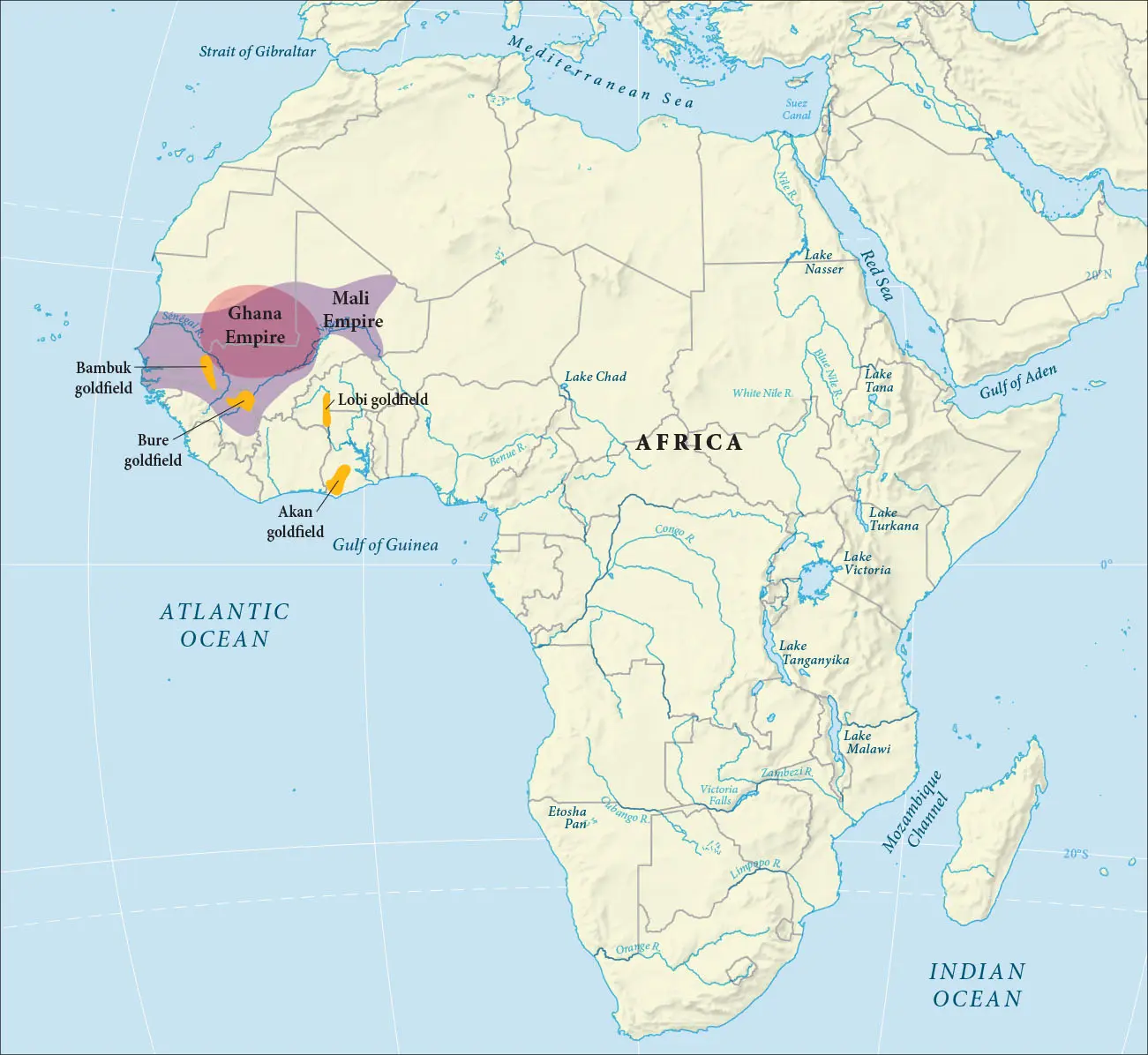
malian empire
part of dar al islam; built on connection w/ trans saharan trade; connecting mali people/west africa w/ dar al islam
muslim traders came for gold, ivory, slaves
mali elites got rich from trade & built the malian state & army
west africans converted to strengthen the government; converting to islam required them to learn arab —> making more literate people in the government
islam doesnt spread to common people; african form of islam is adopted by elites —> they still participated in native rituals & west african women had more freedom
malian kings created library & college in timbuktu (assisted by mansa musa)
mansa musa
most famous king of malian empire from 1312-1337
west african muslim; promoted islam throughout the empire
helped build libraries & mosques in timbuktu
most famous for making the hajj through sahara desert to mecca in 1324 & his wealth
dies the year the yuan dynasty fails
malacca
city states located on southeastern edge of malay peninsula; part of dar al islam
became capital of a malay muslim sultanate
had central role in trade of indian ocean bc of location on straits of malacca
foreign merchants settled attracted by stable government, low customs, & openness to merchants; hailed from east asia, southeast asia, east africa, & elsehwere
foreign communities had own neighborhoods & sultan appoints 4 merchants from major settlements to govern & act as intermediaries between government & foreign communities + served as officials
very globalized & cosmopolitan city; had own distinctive malay ethnic identity
tributary relationship w/ china
elites converted to islam to facilitate trade; muslim diasporic communities settle
islam of malacca blended w/ local (animism) & hindu/buddhist traditions
became a center for islamic learning where students from southeast asia came & studied
srivijaya empire
buddhist empire that existed in the same place as malacca but earlier
dominated chokepoint of indian ocean trade (670-1025)
built on trade; elites got rich from sea-based trade (large supply of gold, rare spices, & tax on passing ships); allowed them to fund bureaucracy & build military/navy
capital city of Palembang was very cosmopolitan
grew into major center of buddhist teaching; attracted monks + students
caste system
emerged in india 500-1000 bce
a form of social organization; put people into 5 social groups
brahmins: priests
kshatriya: rulers, military leaders, landowners
vaishya: merchants, traders, farmers
shudra: artisans, laborers, servants
dalit/untouchables: low-status people outside of caste system
no social mobility among castes
adhere to caste rules = soul could be reborn into higher caste
do not adhere = soul could be reborn to lower caste or animals, insects, etc
ultimate goal was for soul to be reborn & return to the original source: brahman
theravada buddhism
conservative; remained close to original teachings
emphasized monks & nuns as leaders
believed nirvana can only be reached through regular/sustained practices (meditation)
originated from india to south (sri lanka)
saw buddha as a teacher
mahayana buddhism
more dominant branch of buddhism; more flexible & allowed reaching nirvana to be more accessible
spreads from india to north (china, japan, korea)
absorbed local ideas; incorporated worships of local gods bc of flexibility
created boddhisatva; someone who reached nirvana but stayed behind to assist others to reach nirvana
saw buddha as figure of worship
created pure land school: popular expression in china bc of its emphasis on salvation by faith instead of study/meditation
showing faith by repeating name of an earlier buddha (amitabha) to ensure rebirth in a heavenly land (pure land)
siddhartha gautama
founder of buddhism; lived in 5th century bce
father was a leader/prince of northern indian kingdom
left royal household to the forest to seek own spiritual enlightenment
spent years meditating nature of life & reached nirvana
realized nature of human sufferring was desires; created eightfold path (most important = meditation) to end suffering & reach nirvana
4 noble truths
all humans suffer
suffering is caused by desires
reach nirvana/end suffering by ending desires
follow eightfold path to end desires
delhi sultanate
part of dar al islam; turkic muslim kingdom (1206-1523 ce) in northern india
a muslim minority that ruled over a hindu majority; islam only spread to ~20% of indian population; rest remains hindu
incorporates hindus into government to create stable government
indianization
spread of indian culture outside of india (esp into southeast asia)
spread of hinduism & caste system
results in southeast asians adopting hinduism as primary religious faith
hinduism
originated in india
no historical founder; ethnic, polytheistic religion; not universalizing
assertion that human soul is part of brahman

khmer empire
largest territorial empire in southeast asia (located in cambodia); est. ~800 ce & lasts to 15th century
capital city in angkor
adopted hinduisn & caste system to legitimize rule
khmer kings associated themselves w/ the gods to legitimize rule
later converted to buddhism
angkor wat
hindu temple complex built by khmer kingdom during 12th century
largest religious structure in premodern world
architectural expression of hindu cosmology on mount meru (home of gods)
later used by buddhists as khmer empire converted but still kept hindu elements
vijayanagara empire
hindu empire dominating south india (1336-1646)
originally missionaries from delhi sultanate sent south to conquer land but converted back to hinduism & created hindu empire
organized according to caste system & resisted muslims in the north
essentially counterpart of delhi sultanate but hindu
linked by indian ocean trade
aztec empire
created by mexica people; migrated from north mexico & est. in lake texcoco
last & largest mesoamerican state before spanish conquistadors
authorities claimed descent from earlier mesoamericans
had polytheistic religious system w human sacrifice to appease gods
believed sun gods needed blood of sacrifices for life-giving force
sacrifices were usually prisoners of war & ppl from conquered tribes
sacrifices would live like luxury/king for a year before sacrifice (acted as if the sacrifice were the god they were sacrificing to)
agriculturally productive empire (had maize, squash, beans)
facilitated by chinampas; floating agricultural fields w/ year round crops
controlled conquered tribes through military (had no bureaucracy)
demanded tribute from conquered tribes; used military to enforce rules
tenochtitlan
largest city in 14th century/western hemisphere located in middle of lake texcoco
housed aztec rulers & elites
one of the 3 city states to create an alliance & form aztec empire (w/ texcoco & tlacopan)
political capital of aztec state
inca empire
empire in west south america around chile along andes mountains 91438=1533)
much larger than the aztecs
a bureaucratic state created through military conquest with emperor at the top & regarded as divine ruler (descendent & son of god)
each 80 provinces has an inca governor
inca roads
thousands of miles of roads throughout the inca empire
created due to transport & communication difficulties; allowed centralized bureaucracy to project power quickly
had stations for messengers to rest & record on quipu
mita system
inca demands on conquered people for labor service, not tribute
labor tax that demanded all subjects to spend time on state projects/infrastructure
some women were chosen & removed to be trained in inca ideology
state arranged feasts in return; also provided food & necessities when disasters struck
gender parallelism
belief in inca & aztec empire
men & women have different roles/jobs in society but they were all equal
women’s roles w childbirth, cooking, & cleaning were not considered below male jobs
in inca empire however, women had positions as governors & administrators
quipu
inca system for communication
knotted cords for accounting because inca were not literate
recorded births, deaths, & marriages
american web
loose trade network spanning north to south america (western hemisphere)
had 4 nodes of commercial activity
cahokia
chaco canyon
aztec empire (mesoamerica)
inca empire
didn’t develop enough transport for large scale trade
african islam
much less strict & had more freedom on women
found in srivijaya empire
scandalized ibn battuta when he witnessed the freedom of women in swahili civilization
brought by muslim traders to mali
elites converted to islam (ex. mansa musa) but also practiced animist african religions
literate faith; had to learn arab —> strengthened empires governments bc of literate admins
timbuktu
important trading city in malian empire
had schools, mosques, libraries built by malian kings eg mansa musa; attracted scholars in dar al islam
african center of islamic scholarship & intellectual site
ibn battuta
greatest traveler in the era (1304-1368); was an islamic scholar (part of ulama)
traveled across afroeurasia from morroco & came back
wrote a book (rillah) describing his travels
the best source of dar al islam at the time
byzantine empire
continuation of roman empire; had most of eastern roman empire & sought to preserve it (roads, churches, etc)
promoted orthodox christianity & spread orthodox into eastern europe (converted russians)
its capital city; constantinople; was called a new rome —> turned into muslim capital of ottoman empire when conquered
was also sacked by crusaders during 4th crusade & the library holding 80% of orthodox teachings was destroyed
people called themselves romans
controlled greece & balkans until 1200
declined starting 1200; seized by muslim ottoman sultan in 1453
caesaropapism
political & religious authority (applied to byzantine empire)
system where emperor took role of caesar as head of state & as pope; the head of church
started with constantine in 330 ce; put himself as head of orthodox christian church & viewed the church as a wing of his government
the pope
bishop of rome & victor of christ
inherited power of peter
infallible; could do nothing wrong as supreme religious authority
power sometimes exceeded the king; had the power to:
crown the king
call the crusades & start war
great schism
split of western & eastern roman empire; official split of christian church into two separate branches
roman catholic church (west)
eastern orthodox church (east)
had multiple reasons for split
christological controversies: disagreements over nature of christ (if he was fully man or fully god)
linguistic divide (west spoke latin; east spoke greek)
the crusades
called by the pope for everyone in the church (west)
seven crusades lasting a total of 300 years
march to middle east (holy lands, ex. jerusalem) to fight muslims to win back holy lands for christianity
massacred civilian populations
only won the 4th crusade
resulted in creation of 4 short lived crusader states
adopted practices of muslim culture
feudalism
politics & military system in europe from 9th-15th century found in france & england
process where king/lord gave lands/estates called fiefs to supporters (vassals/nobility) in return for support in war
vassal’s obligations in exchange for use of land: submit to lord, remain loyal, provide during war & accommodations, pay ransom
nobility organizes land into manors
decentralized government; prevented europe from developing into large centralized state; now has over 50 sovereign states
manorialism
base for feudalism
manors: estates of feudal lords & vassals
lord was usually a prominent political/military figure; had control of land & everything on it
manor lands divided into 3 sections (created self-sufficient villages)
forest lands (hunting)
common lands (grazing)
agricultural lands
people living on manors; had to provide labor, services to lord
lord in return provided protection & safety; trained sons to be knights to prepare for war
peasants had to give lord a share of their crops + pay taxes; provide labor; never left the manor
serfdom
legal & economic system in western europe; basis of labor system developed during early middle ages until 19th century
status of many peasants under feudalism/manorialism
serfs could be bought, sold, traded, abused
could not leave bounded land
serfs occupying the land required to work on lord’s fields, mines, forests, roads
could never be evicted; obligated to the manor unlike free peasants
given protection & justice of lord in return
lords & serfs bounded legally by taxation
declined in western europe bc of black death in 1347; fewer serfs so serfs demanded more freedom
technological breakthroughs in agriculture
tech in agriculture replenishes the population of europe after the black death; created population boom
reasons included
new land was opened up after plague for cultivation
wheeled plows that could dig deeper into the ground
started to shoe horses
created collar to pull more effectively
created three field system
one crop planted in one field; another crop in second field; third field is left to fallow
rotated each year; so each field has replenished nutrients
black death
erupted in northeastern china in 1331; reached middle east & west europe by 1347
killed half of europe’s population at the time
brought to europe by rodents with yersinia pestis
people turned to religion to cope & used medieval cures/medicines (ex. bloodletting)
caused extreme social change
labor shortages due to death of peasants; started a resistance (eg. english peasants revolt of 1381 for better wages & freedom)
disbands feudalism because of lack of peasants/serfs
jewish people were blamed; thought to have poisoned waterwells
the renaissance
intellectual & artistic movement in europe beginning in italy between 1350-1500
stemmed from belief of elites that they were in a new era removed from confined religions
sought inspiration from art/lit of ancient greece & rome
emphasized humanity & faith in potential of humans, not god
first step in europe of secularization: stepping away from religion
artists patronized included: shakespeare, leonardo, raphael
silk roads
linked china & europe (eurasia) from east to west
carried vast array of goods in camel caravans through harsh steppes, deserts, & oases of central asia
had stops at caravanserai; centers of cultural exchange for merchants to trade & rest —> some developed into major cities like sarai
used bactrian camel; had 2 humps & had fur so it could travel in cold weather; could travel long distances & store heavy loads
traded mostly luxury goods because of high cost of transportation (eg. silk, jade, wood)
did not carry perishables
flourished under mongol rule
goods were resold for higher prices each time (segmented trade) & was very expensive by the time it got to europe
facilitated spread of buddhism into central asia & china + islam
sea roads
world’s largest sea based network stretching from china to east africa
grew out of environmental diversity; people desired goods exclusive to one region
ex. porcelain (china), spices (SE asia), cotton + pepper (india), ivory + gold (east africa), incense (arabia)
carried bulk goods for mass markets because:
ships could carry heavier cargo
cheaper transport since ships could carry so much
bulk goods included: textiles; paper; timber; rice; sugar; wheat
introduced buddhism, hinduism, islam to southeast asia
facilitated spread of islam into east africa
made possible by:
the understanding of monsoons
tech innovations (see tech flashcard)
diasporic communities
use of banking systems(checks)/paper money/flying money
monsoon winds
alternating wind currents blowing predictably northeast in summer months; southwest in winter
understanding of the winds & tech innovations facilitated start of sea roads
technological innovations of sea roads
came from chinese. malays, indians, arabs, persians, swahilis
facilitated indian ocean trade
improvements in sails
new kinds of ships
junks; chinese ships
dhows; arab ships
had triangular sail for sailing into the wind
could carry large amount of goods
used by arab & indian merchants
astrolabe: new means of calculating latitude
evolving versions of magnetic needle/compass
great zimbabwe
traditional african kingdom in southern central africa
primary currency/resource were cattle
in peak (1250-1350); had resources & power to construct huge stone enclosures 32 ft tall
had rich sources of gold; trading it with swahili coast & allowing it to connect them with larger indian ocean
sand roads
linked north africa & mediterranean w/ interior west africa across the sahara desert
enriched west african civilization
rooted in environmental variation;
north african coastal regions: generated cloth, glassware, weapons, books, manufactured goods
great sahara: deposits of copper & salt, oases produced sweet dates
farther south: agricultural ppl grew crops, produced textiles & metals, mined gold
sub saharan africa
savanna grasslands south of sahara: produced grain crops (millet, sorgum)
forest areas farther south: produced root & tree crops (yams & kola nuts)
arabian camel
major turning point in african commercial life
brought to north africa & sahara in early centuries of common era
could go 10 days without water (stored water in its one hump); making trek across sahara possible
trans-saharan slave trade
mostly female & some male enter slave trade 1100-1400; making trek across desert to work in homes of wealthy in islamic north africa
from non-islamic & stateless societies
zheng he’s expeditions
7 great naval expeditions ordered by emperor yongle of ming dynasty in 1405 to 1433
visited all of southeast asia to east africa
not expeditions of conquest but for creation of tributary relationships
eventually shut down in 1433 & fleets were dismantled; elites thought expeditions were a waste of time & money
zheng he was muslim eunuch; considered unworthy of the power & control he had
diasporic communities
communities where merchants from one place settled into another
married locals & spread their culture
steppe environment
found in central asia
steppe environment
area of fairly high elevation (above sea level)
makes it cold and dry
has grassy flat plains in elevated mountains
not good for settled agriculture; environment makes it hard to plant/farm
good for domesticating animals & grazing
had the lowest population density due to inability to farm
people living on steppes were constantly on the move; non-sedentary people
pastoral nomads
often people living in environments that made it hard to farm crops (eg. steppes); so lived off animals they raised
raised/domesticated herds
ate the meat & milk
used hides for shelter & clothing
created weapons off bones
genghis khan
named temujin; lived 1167-1229 born into minor mongol tribe
father was khan of tribe & killed
caused temujin & his family to be thrown out of tribe; later adopted by another tribe
temujin grew up & was appointed khan as the tribe; very successful
brought all of mongol tribes under his control
kuriltai approves him as genghis khan: universal khan in 1206
compelled mongols to start conquering because they couldn’t raid e/o anymore
claimed his “great work” was uniting the world under a single empire
mongol military effectiveness
mongols had natural abilities;
cavalry; mongols had to hunt in steppes; so they had cavalry skills while riding horses
developed composite bow: made from yak horns
genghis khan had to develop tactics against conventional armies on foot;
feigned retreat: fought front lines & pretended to retreat —> then turned back & attacked from all sides after army spread out
had advantage of speed: mongols did not have to carry baggage trains like infantry armies on foot
mongols carried all weapons, food, lodging themselves (ex. meat was cured & put under saddles)
could dictate area of fighting because they always arrived first
developed tactic to minimize losses of army; employing terrorism
sent people to threaten cities they were attacking beforehand —> gave two choices: surrender & have peace or disobey & be massacred
after massacre; mongols would leave a few people to march onto the next city & warn them of the horrors they witnessed
most people submitted & gave mongols a savage reputation
khwarazm empire
turkic empire from seljuk empire
3rd & final empire genghis attacks in 1219 ce
mongols sent ambassadors to empire; empire kills the ambassadors
genghis takes half his force to attack khwarazm empire (had a larger army)
because they were against a larger army; genghis employed his terrorism tactics
conquered khwarazm empire in 4 years
pax mongolica
era of peace in eurasia/central asia created by mongol rule in 13th-14th century
mongol support for commerce
after conquering all of eurasia & extracting all the wealth they could; mongols realized the best way to extract wealth was to control trade
started to control silk road by regulating & taxing the trade; encouraged trade on silk roads by:
put an end to brigandage (people who robbed traders on trade routes) by having armies accompany traders on the journey; making the silk roads the safest trade route
encouraged use of paper money & gave credits/loads to traders
gained wealth through taxing selling at markets (segmented trade)
segmented trade: when traders would sell something from (ex. china) in a nearby market; buyers would then sell it in another nearby market; continued until it reached from east to west
meant each good was resold repeatedly for more each time (mongols gained through taxing each time a good was sold)
allowed ortughs: state-approved associations of merchants that pool resources to limit losses
mongol religious policies
extremely high religious tolerance
had cultural mixing from china, middle east, india
religions like islam, buddhism, christianity, judaism assimilated into mongol culture
did not impose religion of people in tribes
the yuan dynasty
conquest of song dynasty took mongols decades until 1279 ce led by khubilai khan
also tried to conquer vietnam, korea, & japan but was defeated
one of the most difficult conquests bc environment didnt suit mongol lifestyle
tropical lands up south prevented use of cavalry
china also had power of gunpowder
created new khanate, yuan dynasty, ruled china (1279-1368)
mongols were not sinicized (foreigns that came to china who became culturally chinese)
did not adopt chinese culture & forbid intermarriage w/ chinese
remained nomads & alienated chinese agriculture; let chinese canals/water system die down —> led to revolts
didn’t trust confucian rule; brought in persians + europeans to govern china; let exam system die down
chinese elites viewed mongols as barbarians
revolts eventually chased mongols back to central asia
the il-khanate
created under grandson of genghis khan (hulegu) after fall of khwarazm empire
put an end to abbasid caliphate (severely weakened); killing last abbasid caliph, sacking baghdad, & destroying house of wisdom
goes further west to egypt ruled by turks (mamluks)
mamluks fought & won in ain jalat (1260) since they were also from central asia & skilled at cavalry
mongols retreated to persian plateau & established il-khanate (1256-1335 ce)
majority of the population were persians; very little mongols
persians dominated the officials positions in il-khanate; stimulating the rise of persian culture
mongols patronize persian culture; building capital in maragha, persia
maragha replaces baghdad for persian islamic learning of culture
mongols were interested in persian astronomy because they used stars to navigate
persians developed very separate persian muslim identity
mongol world history
the first world history was written in il-khanate by rashid al-din (1247-1315)
described everything about the mongols since they had control over the world at the time
mongols
lived in northeastern part of central asia
mongol tribes always fought & invaded e/o before genghis khan united all tribes
organization:
tribes led by tribal chief (khan)
tribal chief was to protect the tribe (be a good military leader + ensure tribe had all necessities to survive (through raids/invasions to extract material); if not effective, they were killed & replaced
genghis khan was decided by kuriltai: meeting of tribal chiefs to select most capable person for the next genghis khan
believed in shamanism
an animistic religion; belief that natural world has supernaturals
shaman: someone believed to have special access to the supernatural forces
invaded xia dynasty (1209) and jin dynasty (1211)
khanate of golden horde
after genghis khan’s death; mongols’ first conquest was in eastern europe in 1240, led by batu (genghis khan’s grandson)
kievan russia; created by rus (880-1240 ce) who were polytheistic & converted to orthodox christianity from missionaries
was already weakened due to civil war; so mongols won easily & burned/took capital in 2 years
batu & his army continue to central europe & hungary to edge of germany; terrified europe
turns south to balkans but successor of genghis khan dies so they head back to mongolia to decide next successor; saving europe from the mongols
creates khanate of golden horde (1242-1502 ce); lead by batu
little mongols lived in the khanate; only place was sarai; a caravanserai converted to city; where the little mongols set up tents & lived
population in the east was mostly turks; wests was mostly russians
mongols had russians & turks rule over themselves
mongols impoverished russians (mongol yoke) by extracting wealth & cutting off russians from developments elsewhere in europe; setting russian development back 200 years
had no cultural impact on russians since they didn’t live there
mongols in sarai converted to islam in 1257 but it didn’t affect the russians
strengthened russians orthodox christianity due to their severe oppression
called moscow the third rome (center of christianity)
consequences of mongol rule
effects were long term & indirect
didn’t change/affect any conquered peoples’ culture; instead strengthened them
ex. ming dynasty emerged in 1368 after mongol rule & sought to emphasize older chinese confucian ideas in order to erase mongol rule; shown through zheng he’s expeditions to assert chinese power again
linked western & eastern parts of eurasia
people met in mongol capital; karakorum; becoming a mixing center for exchange of info
european & chinese knowledge of e/o changes
facilitates exchanges of tech & gunpowder tech
spread disease; facilitated spread of black death through silk roads under mongol rule
caused mongol control on silk roads to lessen after black death making it dangerous to travel on it
marco polo
(1254-1324 ce)
traveled to china & lived & governed for 17 years
wrote book about travels describing china
book became widely popular in europe but it heavily exaggerated wealth of china
europeans start to want to go to china; but can’t due to disintegration of silk roads; instead tries to get there by sea (christopher colombus!)