Alkenes & Alkyne Rxns
 Call Kai
 Learn
 Practice Test
 Spaced Repetition
 Match
 Flashcards
 Knowt Play
1/103

There's no tags or description
Looks like no tags are added yet.
104 Terms

Identify the rxn: 1
Hydrohalogenation
Do hydrohalogenations follow markov or anti markov?
Markovnikov

Identify the rxn: 2
Hydrohalogenation
Identify the rxn: 3
Hydrohalogenation in Presence of Peroxide

Does 3 follow anti markovnikov or markov?
Markov

Identify the rxn: 4
Oxymercuraiton-demurcuration

Does 4 follow markov or anti markov?
Markov

Identify the rxn: 5
Hydroboration Oxidation

Does 5 follow markov or anti markov?
Anti markov

Identify the rxn: 6
Oxymercuration-Demurcuration

Is rxn 6 anti markov?
No, Markov

Identify the rxn: 7
Hydrobromination in Presence of Peroxides

Is 7 markov or anti markov?
Anti markov
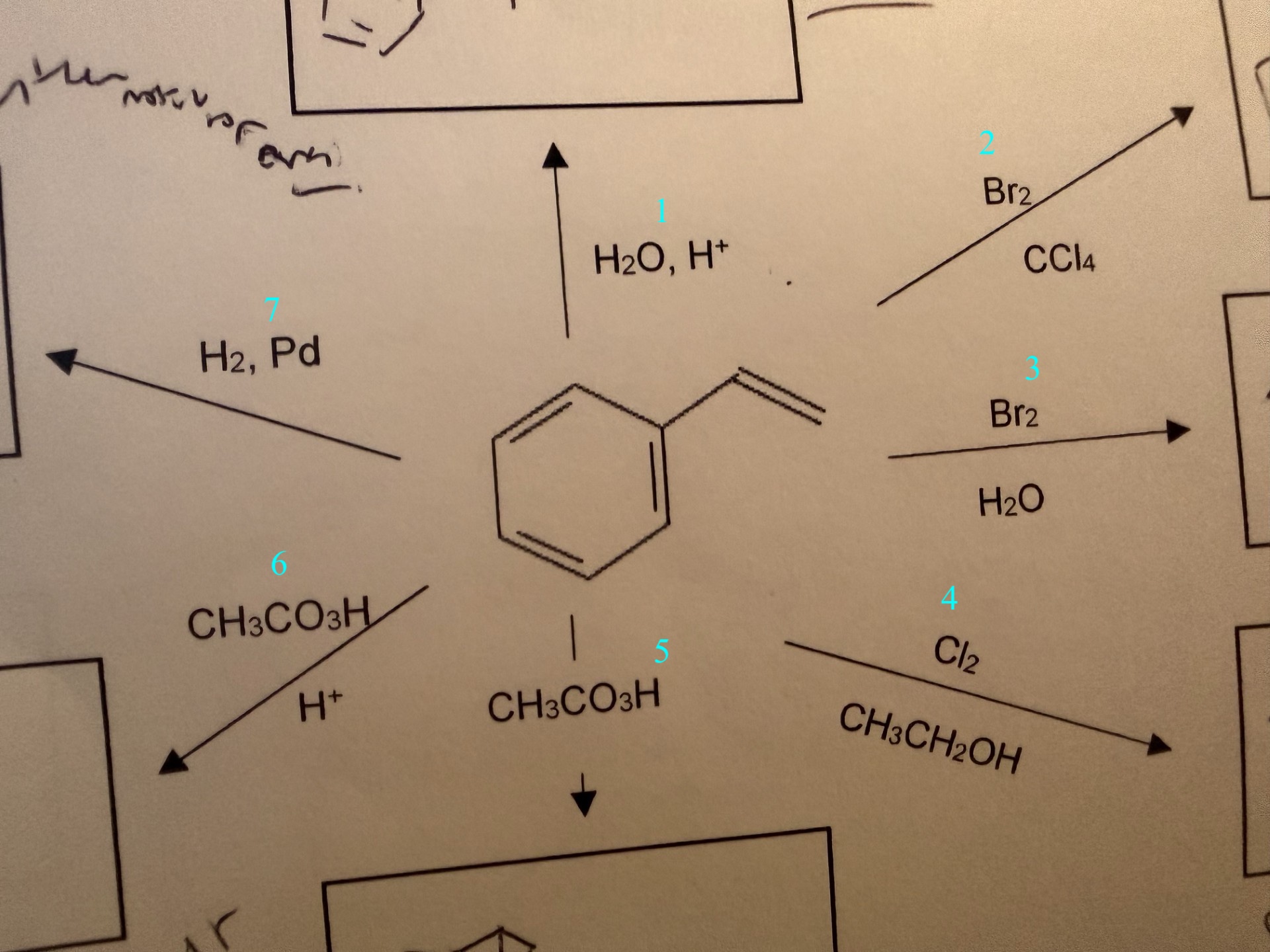
Identify the rxn: 1
Hydration

Is rxn 1 markov or anti markov?
Markov

Identify the rxn: 2
Halogenation

Does rxn 2 add anti or syn (on dash and wedge, or both dash or both wedge?
Anti

Identify the rxn: 3
Halohydrin formation

Does rxn 3 follow markov or anti markov (Br will be added terminally in markov)?
Markov

Identify the rxn: 4
Haloether

Is rxn 4 the same type as 3?
Yes

Do rxns 3 and 4 add anti or syn?
Anti

Identify the rxn: 5
Epoxide formation

Identify the rxn: 6
Epoxide Opening

Identify the rxn: 7
Hydrogenation (catalyst)

Does rxn 7 add syn or anti?
Syn

Identify the rxn: 1
Dihydroxylation

Does rxn 1 add syn or anti?
Syn

Identify the rxn: 2
Syn Dihydroxylation (same as OsO4/H2o2)

Identify the rxn: 3
Oxidative Cleavage

Rxn 3 initially forms “blank”, than tautomerizes into '“blank” due to the unstable conditions.
Aldehyde, Carboxyllic Acid

Identify the ozonolysis rxn: 4
Oxidative Cleavage (forms COOH)

Identify the ozonolysis rxn: 5
Oxidative cleavage (forms Aldehyde)

Why does Rxn 4 form a COOH and rxn 5 forms an aldehyde?
rxn 4 is under strong conditions, while rxn 5 is under mild conditions

Identify the rxn: 6
Ozonlysis

Does rxn 6 oxidatively cleave?
Yes, forms aldehyde

Identify the rxn: 7
Oxidative Cleavage (forms aldehyde)

How do rxn 1 and 7 differ?
1 does not cleave (forms syn diol), while 7 does (forms aldehyde)

Identify the rxn: 1
Catalytic Hydrogenation

Rxn 1 transforms an alkane into an?
Alkyne

Rxn 2 is a partical hydrogenation, meaning it forms an…
Alkene

For rxn 2, it has to be in what form for addition of hydrogens?
Cis
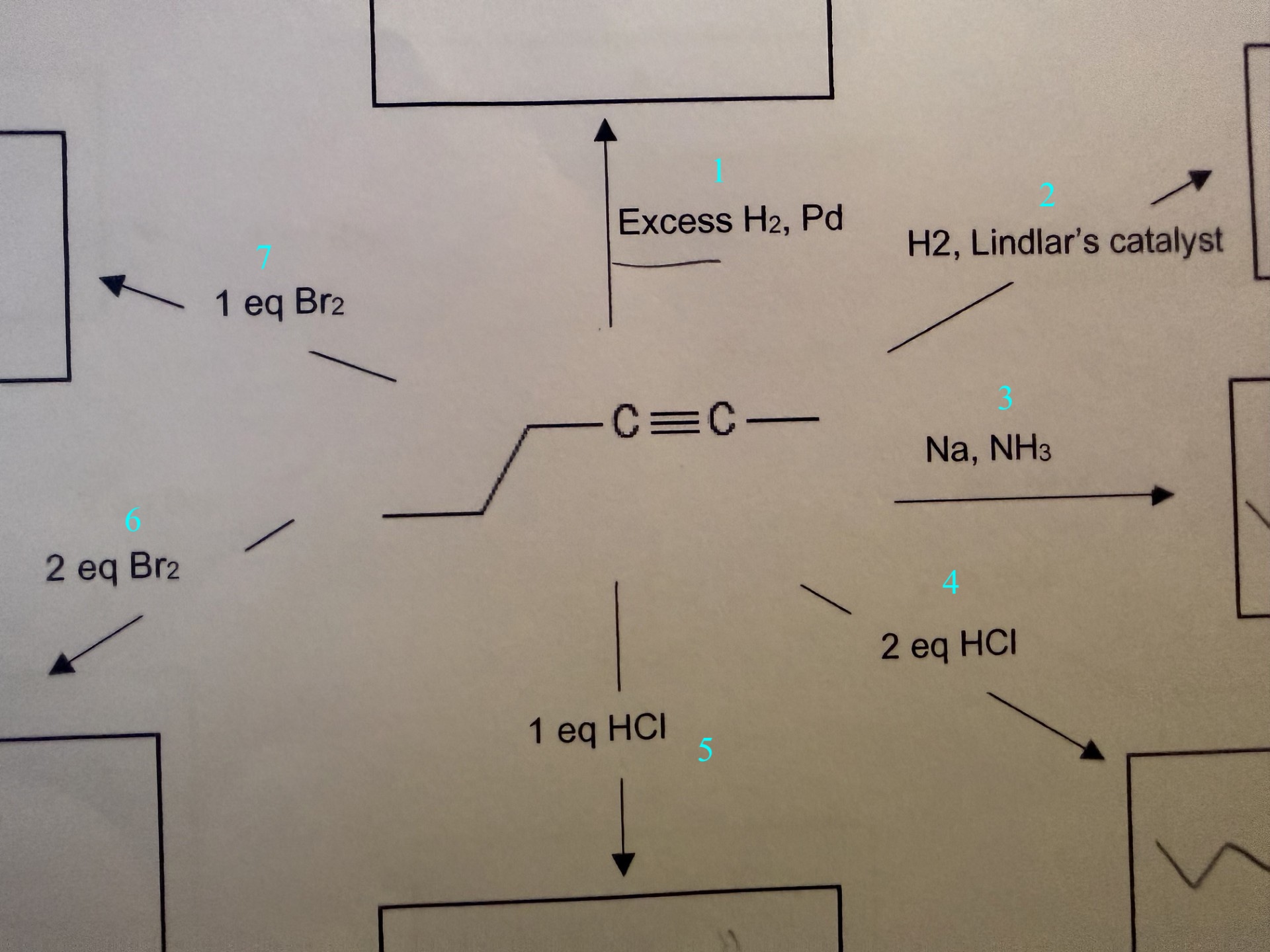
Identify the rxn: 3
Metal Ammonia Reduction

Rxn 3 forms an alkene in what form of hydrogenation?
Trans

Rxn 4 forms?
Geminal Halide (Cl adds to same carbon twice)
Identify the rxn: 5
Hydrohalogenation
Is rxn 5 markov or anti?
Markov

What does rxn 6 form?
Halogen addition (two adjacent geminal dihalides)

Identify the rxn: 7
Anti additional of halogens (halogenation)

Identify the rxn: 1
Hydration of Alkynes

Is rxn 1 markov or anti markov?
Markov

What is the final product of rxn 1?
Ketone

Identify the rxn: 2
Hydroboration Oxidation

Is rxn 2 markov or anti?
Anti

What is the final product of rxn 2?
Ketone

Identify the rxn: 3
Oxidative Cleavage

What will rxn 3 form (internal alkyne)?
Two COOH

What will rxn 4 form?
Di-ketones

Identify the rxn: 1
Catalytic Hydrogenation

What does rxn 1 form?
Alkane

What does rxn 2 form? In terms of hydrogenaiton
Cis Alkene

What does rxn 3 form?
Trans add of hydrogens

What does rxn 4 form?
Geminal dihalide (2 Cl on same carbon)

Identify the rxn: 5
Hydrohalogenation

Is rxn 5 markov or anti?
Markov

What will rxn of two eq of Br2 form?
Adjacent geminal dihalides

What will rxn of 1 eq of Br2 form?
Anti Addition Halogenation

Identify the rxn: 1
Hydration

What will the final product of rxn 1 be?
Ketone

Is rxn 1 markov or anti?
Markov

Identify the rxn: 2
Hydroboration Oxidation

What will the final product of rxn 2 be?
terminal ketone

Is rxn 2 markov or anti?
Anti

Identify the rxn: 3
Oxidative Cleavage

What will the main product of rxn 3 be?
COOH

What will the minor product of rxn 3?
Formic Acid

What will the cold KMnO4 form?
Di-ketone
Large molecule composed of many monomers (repeating units) bonded.
Polymer
What are commonly served as monomers?
Alkenes
What are common examples of polymers?
DNA/Plastic
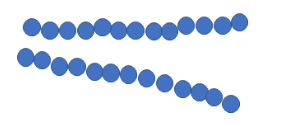
Identify type of polymer
Linear

Identify type of polymer
Branched
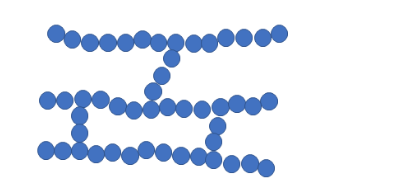
Identify the type of polymer
Crosslinked

Identify the type of polymer
Dendrimer (star)
Polymerization process in which a reactive center (ion or radical) sequentially adds monomers. One at a time.
Chain growth
Polymerization in which monomer sor larger chains with REACTIVE functional groups react with eachother to form large molecules. NO ACTIVE CENTER.
Step Growth
What is chain growth also known as?
Additional Polymerization
What is step growth also known as?
Condensation polymerization
Addition: Cationic
Carbocation intermediate
Addition: Free radical
Presence of peroxide, free radical polymer occurs
Addition: Anionic
CarbANION intermediate
What type of addition polymerization is most rare?
Carbanion Intermediate

Identify the polymerization process
Chain growth (addition)

Identify the polymerization process
Step Growth (condensation)
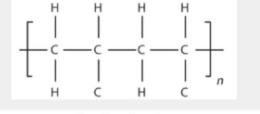
Addition or Condensation?
Addition

Addition or Condensation?
Addition

Addition or Condensation?
Condensation

Addition or Condensation
Condensation

Chemical (covalent bonds) or physical (van der waals, hydrogen bonding) cross bridge?
Chemical
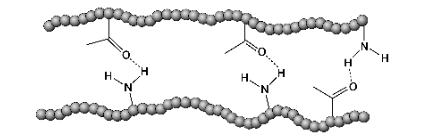
Chemical (covalent bonds) or physical (van der waals, hydrogen bonding) cross bridge?
Physical