dementia/alzheimer's
 Call Kai
 Learn
 Practice Test
 Spaced Repetition
 Match
 Flashcards
 Knowt Play
1/30

There's no tags or description
Looks like no tags are added yet.
31 Terms
allen cognitive levels
scale for cognition, with the simplest cognitive capabilities and functional abilities at cognitive level 1 and the most complex at cognitive level 6, and gives suggestions for intervention;
“Allen, the Studly GROOM LeaPs for CO CO”
Stimulation
Gross motor
Repetitive
Object use
One-step
Multi-step
LEArning
COncrete
Planning
COnceptual

allen cognitive levels: level 1
awareness— “HP: The Troll”
1.0: withdrawing from noxious stimuli
1.2: responding to stimulation
1.4: locating stimulation
1.6: rolling in bed
1.8: raising body parts
cognition: profoundly impaired, requiring 24/7 total assistance just to elicit or produce automatic actions (i.e., swallowing, locating stimuli, rolling in bed, or raising body parts to feed or bathe)
only seconds' worth of awareness
treatment/interventions: sensory stimulation

allen cognitive levels: level 2
gross body movements— “HP: Quidditch”
2.0: overcoming gravity
2.2: righting reactions
2.4: aimless walking
2.6: directed walking
2.8: grabbing
cognition: severely impaired, with only about 3 minutes' worth of awareness— attention also limited to postural actions or gross body movements
requires 24/7 max assistance to elicit postural actions (e.g., moving body in space, overcoming gravity, and righting reactions)
transfers
ADLs
treatment/interventions: prevent the patient from engaging in unsafe activities + creating multi-sensory/sensory-rich, but also calm, environments and activities
e.g., moving/walking to a favorite song
e.g., prevent climbing over bed
e.g., prevent patient attempts at independent transfers
e.g., prevent patient walking on uneven surfaces
e.g., prevent patient wandering
e.g., prevent patient from getting lost

allen cognitive levels: level 3
manual, repetitive actions— “HP: Using the Marauder’s Map and Time-Turner”
3.0: grasping objects
3.2: distinguishing objects
3.4: sustaining actions on objects
3.6: noting effects on objects
3.8: using all objects
cognition: attention span is a little bit better, but it’s still severely impaired 2/2 short/fleeting attention (max: 30 mins before distraction)
requires mod assistance to re-focus attention and complete simple and repetitive actions safely, BUT can perform spontaneous manual actions in response to tactile cues
simple, repetitive, familiar tasks
self-care
treatment/interventions: can complete tasks when…
everything is set up in front of them
they are given tactile cues
they are given demonstrations of an activity
assess performance, remove dangerous objects, and check results
***actions are still unpredictable, and supervision is needed to prevent unsafe actions

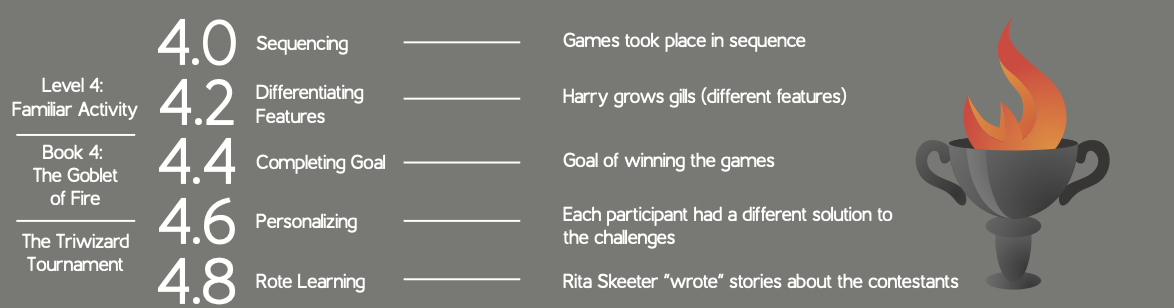
allen cognitive levels: level 4
familiar activity— “HP: The Triwizard Tournament”
4.0: sequencing
4.2: differentiating features
4.4: completing goal
4.6: personalizing
4.8: rote learning
cognition: moderately impaired; attention lasts up to an hour
supervision-min assistance 2/2 safety, but can technically live alone (at 4.4)
can: walk to familiar places, fix themself a cold mea/snack, take a short route
but: patients do not recognize errors unless errors are clearly visible
there is no new independent learning at this level and no generalization of learned techniques
treatment/interventions:
requires VISUAL (not tactile) CUES
set up goal-directed activities
provide assistance to correct mistakes and solve problems
requires reminders e.g., for chores
allen cognitive levels: level 5
learning new activity— “HP: Dumbledore’s Army”
5.0: continuous neuromuscular adjustments
5.2: discriminating between parts of an activity
5.4: self-directed learning
5.6: considering social standards of context
5.8: consulting with others
cognition: mildly impaired; only requires stand-by assistance 2/2 attention lasting for weeks
new learning possible with trial and error problem solving
learning is generalized
can: live alone with weekly checks!
but still…
poor judgment
impulsivity
treatment:
provide memory and planning aids if necessary
provide assistance in future planning 2/2 patients may make hasty, impulsive decisions without anticipating potential mistakes

allen cognitive levels: level 6
planning new activity— “HP: The Half-Blood Prince’s Textbook”
6.0: planning without objects
cognition: independent; essentially, a normal person without any cognitive issues at all
anticipates errors and prevents mistakes
good judgement
ability to imagine and reflect on possibilities
can plan actions based on desires and priorities

stages of alzheimer’s
“Routine Reminder for a Reality Check— a 33-year-old Overlean Camel can Get a Stud”
ACL
Stimulation —> (stage of alzheimer’s): 5. Stud— Stim
Gross motor —> (stage of alzheimer’s): 4. Get— Gross motor
—> (stage of alzheimer’s): 3. Overlean Camel— Overlearning, Camouflaging
Repetitive
Object use
One-step
Multi-step —> (stage of alzheimer’s): 2. Reality Check— Reality orientation, Checklists (photo albums)
—> (stage of alzheimer’s): 1. Routine Reminder
LEArning
COncrete
Planning
COnceptual
stages of alzheimer’s explained:
Routine Reminder
can still follow routine; just may need to be reinforced with reminders
Reality Check— Reality orientation, Checklists (photo albums)
memory might start to struggle here; help orient to reality
checklists and photos are helpful!
still capable of doing most tasks, even multi-step ones
Overlean Camel— Overlearning, Camouflaging
stage with a lot of repetitive practice— practice doing the tasks the patient struggles with over and over again
help with maintenance of what they can still do
may also need to ~camoflage some parts of the environment to prevent patient from wandering/exploring (e.g., putting a sheet over the door)
Get— Gross motor
help maintain any gross-motor functions they have
Stud— Stim
patient is almost completely incapacitated— they are totally dependent (e.g., bed-bound)
priority: help them be comfortable, alert and awake, stimulated, etc.
maintain ROM!

stages of alzheimer’s: stage 1
Routine Reminder: individuals may function largely independently and engage in many ADLs without assistance— though they may be aware of having memory lapses or forgetting words
very mild - mild cognitive decline: “is there a problem?”
mild memory problems
perceived loss of control
—> anxious and fearful
but socially and physically intact
can do: ADLs/IADLs
task: new task learning possible w/ grading activity for success
benefits from environmental aids (e.g., Post-it notes, calendars, appointment books, notebooks, reinforce engagement)

stages of alzheimer’s: stage 2
Reality Check— Reality orientation, Checklists (photo albums): individuals experience frequent forgetfulness; mood changes, especially when socially or mentally challenged; poor decision-making when selecting clothing appropriate for the weather or situation; personality changes
mild - moderate decline: “i just want to be left alone.”
moderate memory loss
—> denial, moody, paranoia
difficulty with learning new tasks
lose valued objects
can do: ADLs
can partially do: IADLs (e.g., cooking, shopping)
task: no new tasks; needs simple and clear instructions
benefits from structure, routine, and environmental supports, especially those for reality orientation (e.g., pictures of family members)
benefits from exercise (e.g., stretching, walking, balancing activities)
may start to need caretakers/babysitters

stages of alzheimer’s: stage 3
Overlean Camel— Overlearning, Camouflaging: disorientation and risk of wandering and/or becoming lost
moderate - moderate-severe cognitive decline: “go away! who are you?”
disoriented to time and place
sleep disturbance
repetitive behavior
wandering behavior
impaired visual and spatial orientation
can’t do: ADLs/IADLs
task: only doing overlearned tasks w/ less than 2-3 steps
ensure safety (e.g., remove sharp objects, get identification bracelets, visual camouflaging, good lighting, pictorial representation for cueing)
caregiver instruction/education becomes very important 2/2 we must learn to identify triggers to negative behaviors

stages of alzheimer’s: stage 4/5
(4) Get— Gross motor; (5) Stud— Stim: individuals are unable to engage with teh environment, cannot carry on conversations, and require signifciant levels of assistance for dailiy activities
severe cognitive and physical decline: “err no her”
generalized motor slowing —> eventually bedridden
incontinent
unable to communicate —> 1 word
can’t do: ADLs/IADLs
task: maintain proper positioning


C— mild~ dementia is more related to forgetfulness; other options are for more moderate~ dementia

A

B
^ is a ***repetitive, one-step tangible activity
i.e., just putting objects out on the table
this patient is not going to be able to follow visual components, so A and C will not be applicable
i.e., will be able to put objects out on the table; will NOT be able to copy a visual model on top of that
***Allen Cognitive Level 3:
Repetitive
Object use
One-step
AD clinical features
progressive impairment of memory, executive function, attention, language, visual processing, and praxis; commonly, also behavioral disturbance

AD course and prognosis
slow and progressive until death; will lead to
behavior and personality changes
a decline in cognitive abilities, such as decision making and language skills
problems recognizing family and friends
AD medical management
supportive care for the client and caregiver
medications to slow progression
symptom treatment that targets cognitive decline, psychiatric symptoms, and behavior disturbances
pharmacotherapy to manage symptoms such as reduced cognition, depression, delusions, and hallucinations, and agitation and aggression
behavioral and environmental management to restore the balance between challenges presented and the client’s current level of function
types of dementia:
vascular dementia
pathology
clinical features
course and prognosis
medical management
pathology
cerebrovascular disease (often a series of small strokes) that leads to focal lesions in the brain and neurotransmitter disruption
clinical features
cognitive decline similar to AD but often with less severe memory involvement
commonly, gait disturbance
abrupt or stepwise (rather than continuous) decline
course and prognosis
sudden appearance of symptoms, with a stepwise pattern of increased symptoms
may also progress slowly, similar to AD
medical management
immediate emergency medical treatment necessary
treatment of cardiovascular factors (e.g., management of diabetes, high cholesterol, and heart disease)
pharmacotherapy to prevent future blood clots
in some cases, surgery to remove blockages in blood vessels
types of dementia:
frontotemporal dementia
pathology
clinical features
course and prognosis
medical management
pathology
neuronal, intranuclear inclusions
clinical features
progressive aphasia, corticobasal syndrome, or symptoms similar to AD or parkinson’s disease
course and prognosis
immediate, distinct onset
progressive
varied symptom patterns among individuals
medical management
future research needed; medications currently in development
treatment of some disinhibited behaviors with selective serotonin reuptake inhibitors
types of dementia:
lewy body dementia
pathology
clinical features
course and prognosis
medical management
pathology
Lewy body proteins are present in the brain, usually predominant in the limbic or neocortical areas; overall decline in acetylcholine and dopamine levels
clinical features
progressive deficits in attention and executive function, memory impairment, fluctuating cognition, visual hallucinations, parkinsonism, autonomic dysfunction, and falls;
rapid eye movement sleep behavior disorder as a possible prodromal symptom
course and prognosis
gradual and insidious
early disease symptoms:
problems in executive function, visuospatial abilities, attention, and memory
symptoms over time:
aphasia, apraxia, and spatial disorientation
medical management
similar to that for AD
increased family involvement
safety assessment
cholinesterase inhibitors: some evidence available of effectiveness
dementia: primary signs and symptoms
A. memory impairment: deficits in short-term, procedural, episodic, and semantic memory
B. cognitive deficits
expressive and/or receptive aphasia
apraxia: loss of skilled, purposeful movements; can affect ideation and concept formation, as well as programming and planning of movement
agnosia: auditory, visual, and tactile agnosias (inability to recognize)
disturbance in executive functioning: disruption of the broad band of skills that enable a client to engage in independent, self-directed behavior, including volition, planning, purposeful action, and self-awareness
C. other cognitive or personality symptoms
difficulty with topographic orientation (i.e., orientation of the self within the environment; can cause the person to get lost easily)
difficulty with spatial tasks
poor judgment
anxiety and defensiveness
disinhibited behavior
psychotic symptoms
D. motor deficits: gait disturbances, hyperreflexia, paratonia, and dysphagia
E. symptom severity: sufficient to affect occupational performance and represent a decline from previous functional level
dementia on occupational performance:
early stage
middle stage
late stage
early stage
ADLs intact
first signs of memory loss manifest in IADLs, including financial management, shopping, meal preparation, driving, reading, health management, and sexual activity; leisure activities; and social participation
affects orientation to place, which impairs community mobility
work performance is often impaired, and relationships with coworkers and supervisors can be negatively affected
communication is impaired because of language problems
the person clings to old habits and repetitive routines
cultural and spiritual context remain intact, but participation declines
middle stage
impairments occur in all areas of occupation
person can no longer live alone and may no longer attend to ADLs
IADLs are totally neglected or performed out of sequence; the person may be completely dependent on others for IADLs
eating problems and weight loss occur
simple home management tasks are difficult but can be completed with assistance
safety is a major concern; risks include wandering, letting a stranger into the house, or causing a fire
leisure and social participation is very limited, and work is likely not possible; general roles continue to be lost
orientation is diminished
late stage
all areas of occupation are lost
the person is dependent in all ADLs
the person can no longer ambulate safely
communication is lost
the person has no understanding of cultural, social, or spiritual contexts
assessing a client with dementia
in addition to using standardized assessments, the OT should use clinical observation to better understand the cognitive functioning of the client
e.g., ability to stay on task during the assessment process, ability to remember the instructions, and ability to follow multiple-step commands
OT interventions for dementia:
general
goal with OT: emphasize remaining strengths, maintain physical and mental activity for as long as possible, reduce caregiver stress, and keep the individual in the least restrictive setting for as long as possible
key features of interventions addressing cognition include metacognitive and domain-specific strategy instructions, task-specific training, and environmental modifications
there is no single approach to dementia, and practitioners should evaluate current research while prioritizing valued occupations to enhance participation and meaningful engagement
OT interventions for dementia:
behavior management
communication
avoid reasoning with the client
listen
maintain a trusting relationship
offer choices when possible
decrease demanding social situations
provide visual cues
sundowning behaviors: an increase in activity and often agitation that begins in the late afternoon and extends into the evening or night; simplify interactions and the environment during sundowning
use adequate lighting; shadows can create confusion
provide a safe area for physical activity during the day
provide reassurance in a calm and caring manner
provide the client with fluids during the day to reduce the cognitive changes brought on by dehydration
reduce noise and clutter
anger
anticipate problems and stressors
rephrase negatives and positives
ensure the client isn’t hungry, tired, thirsty, or experiencing pain
simplify tasks and allow time for response; reduce stimuli in the environment
wandering
assess and address the reason for wandering
provide signs in the environment for cueing (e.g., stop sign)
use distraction techniques to interrupt pacing (e.g., familiar pictures on the wall)
provide opportunities for activities and movement, walk with client, and keep areas uncluttered and safe
monitor fatigue and fluid intake
monitor the client’s feet for wounds, including cuts, lacerations, and bruises
use a Medic Alert identity wristband
provide reassurance, attentiveness, and acceptance
pillaging, rummaging, and hoarding
learn the client’s favorite hiding places
give the client a familiar item to hold
involve the client in valued occupations that involve sorting items
provide the client with rummaging closets or areas
do not scold, tease, or punish the client or respond with anger
modify the environment to be more engaging (e.g., fish tank)
activities and occupations
focus activity on the client’s interests and abilities, not limitations
provide the client with a sense of belonging
promote appropriate verbal and nonverbal communication and positive behaviors
provide activities that are meaningful, safe, modifiable and adaptable, routine, pleasurable, and dignified
OT interventions for dementia:
affective functioning
teach relaxation activities
educate caregiver on appropriate medication intake
refer to structured and planned socialization (e.g., adult day care center)
encourage structured activities (e.g., leisure interests with family or caregivers)
facilitate movement and exercise, and intergenerational activities
facilitate spiritual expression activities
OT interventions for dementia:
sensory—perceptual functioning
assess and integrate sensory functioning and processing abilities
ensure the client has appropriate physical aids (e.g., hearing aids, glasses)
OT interventions for dementia:
social functioning
refer to structured socialization
encourage intergenerational activities
use structured verbal and nonverbal communication techniques
use reminiscence therapy
OT interventions for dementia:
sleep functioning
promote physical activity during the day, and encourage the client to be outdoors in the sun, as appropriate, to maintain their internal clock
reinforce appropriate sleep patterns through good sleep hygiene and routines
OT interventions for dementia:
environmental interventions, used in conjunction with other approaches
sensory—perceptual modifications:
appropriate lighting; high-contrast coloring or textured surfaces; objects for stimulation; varied, safe, and tactile objects; visual blocks
memory enhancement:
large-print calendars, daily schedules, seasonal decorations, use familiar furniture, photographs, favorite music, notices of current events
structured common areas
a consistent and calm environment
inconspicuous locks on cabinets and doors, doorways covered with curtains
safe indoor walking space or garden
monitoring systems