Disease - MT2
 Call Kai
 Learn
 Practice Test
 Spaced Repetition
 Match
 Flashcards
 Knowt Play
1/164

There's no tags or description
Looks like no tags are added yet.
165 Terms
What are the Big 3 Diagnoses for Red/Pink Eyes
Acute Angle-Closure Glaucoma
Uvetitis
Conjunctivitis
What are signs/symptoms of Acute Angle-Closure Glaucoma?
Significant Pain
Pupil: Mid-dilated High IOP
Your patient has significant pain and the pupil is mid-dilated with a high IOP. What does this indicate?
Acute Angle-closure glaucoma
What are the signs/symptoms of Uveitis?
Photophobia
Pupil: Miotic, Anterior Chamber Cell
Is pupil size affected or unaffected by conjunctivitis?
Unaffected
Is anterior chamber affected or unaffected by conjunctivitis?
Unaffected
Is IOP affected or unaffected by conjunctivitis alone?
Unaffected
During a slit lamp assessment, ____ is most commonly unaffected by conjunctivitis
Cornea
A subconjunctival hermorrhage is associated with
Epidemic Keratoconjunctivitis (EKC)
What is Conjunctivitis
Inflammation of the conjunctiva (bulbar and palpebral) —> Eye appears red / pink
If the conjunctivitis is unilateral, what can the etiology be?
Adult bacterial
Herpes simplex keratitis
Herpes zoster ophthalmicus
Adenoviral at starts
If the conjunctivitis is bilateral, what is the most likely etiologies?
Ophthalmia neonatorum
Toxic
Allergy
Adenoviral infectious
What is TORCH complex (may result in conjunctivitis)
Toxoplasmosis
Others (Syphilis, Varicella Zoster Virus)
Rubella
Cytomegalovirus (CMV)
Herpes
At what age is H. flu most common
4 years old
What are the epidemic conditions for children?
Epidemic Keratoconjunctivitis (viral)
Pharynogoconjunctival fever
What is the most common causative bacterial organism in the US?
Staph Aureus
What are other frequent organisms (but less common than S. aureus)
Staph. epidermidis (Gram-positive)
Strep. pneumoniae
H. flu
What does Staph. epidermidis usually cause
Lid disease
What is Strep. pneumoniae (Gram - positive)
Respiratory spread
Often with URI history
What is H. flu (gram-negative)
Easily spread
Possibly accompanied by URI, ottis, media lymphadenopathy
What is conjunctivitis-otitis syndrome
H. influenzae conjunctivitis spreads easily in schools and households
Concurrent systemic findings of: URI and ottis media
What are are unusual organisms with conjunctivitis presentation?
Moraxella (Gram-negative)
E.coli (Gram-negative)
Proteus Species (Gram-negative)
What does Moraxella cause
Chronic conjunctivitis and angular blepharitis
Where is E.coli found?
Normal in lower GI tract
Possible in parents of diapered kids or caregivers
What is the mechanism of spread of conjunctivitis
Fomite spread
Epidemic spread (Among children)
Staphylococcal conjunctivitis
May occur as an exacerbation of staphylococcal blepharitis and colonization of microbes in meibomian glands
E.coli possible when handling dirty diapers
Occult causes: Otitis media, pneumonia, and meningitis
What are Acute Bacterial conjunctivitis: Classic Signs
Hyperemi conjunctiva
Beefy, engorged vessels
Small and large caliber, irregular, and radiating
Rang of presentations from mild to very red
Strep. pneumoniae tends to be epidemic in the _____
Cold weather
(With concurrent URIs)
Hemophius tends to be epidemic in
Warm weather (Summer / Early Fall
What are Gram + bugs
Staph species
Strep species
What is a gram - bug
Neisseries
Enteric E coli
Moraxella
Haemophilius
Pseudomonas
What is a gram positive bug treatments
Neomycin
Erythromycin
Bacitracin
What is a gram negative bug treatment
Polymyxin B
Gentamycin
Tobramycin
How long is duraiton for treatment of Acute Bacterial Conjunctivitis?
7 days
What is the first choice of drops treatment for Staph. conjunctivitis
Topical fluoroquinolone (3rd/4th gen):
Moxiflocin TID
What is first choice of ointment for treatment of staph. conjunctivitis?
Bacitracin ointment
At least QHS (or QID for kids when using ointment only for Tx)
What is a good alternative to bacitracin
Erythromycin
(Although increasing resistance to Staph)
Trimethoprim
Not bactericidal but decreased resistance even to MERSA with Polytrim
Why is Sulfacetamide NOT recommended to treat Acute Bacterial Conjunctivitis?
Significant resistance of Staph
Why is chloramphenicol, tetracycline, and neomycin not first choice treatment of Acute Bacterial Conjunctivitis?
Resistance of Staph
What are signs to suspect/suggest Streph for Acute Bacterial Conjunctivitis
Petechial sub-conjunctival hemorrhages
Epidemic/concurrent URI
What are the best choices of treatment for Acute Bacterial Conjunctivitis (Streph)
Fluoroquinolone drops (Moxifloxicin) TID/QID to q2-3H
Bacitracin ointment
Erythromycin ointment
Polytrim drops Q 2-3 H to QID
Sulfacetamide drops Q 2-3 H to QID
Why are chloraphenicol drops generally NOT used in the US
Risk for aplastic anemia
What are signs/symptoms of Hemophilius conjunctivitis
Organism suggested by florid presentation, heavy mucopurulence
What are the best choices of therapy for Hemophilius conjunctivitis?
Oral amoxicillin / clavulanate (Augmentin)
Why is sulfacetamide not used to treat Haemophilus
Neutralized by PABA in potentially heavy purulence
What are the adjunctive bacterial conjunctivitis adjunctive therapyies?
Frequent hand washing
Warm compresses if Lid (Cool compress if redness)
Artifical Tears (AT)
Careful hygiene and prevention of spread of infection
What are the careful considerations for Acute Bacterial Conjunctivitis
Never patch (Bacteria love dark, warm, damp environments)
Ointments often work better for young children
Reservoir technique with Rx or OTC
Don’t reuse medications after 6-8 weeks
What are the two causative organisms of Hyperacute Bacterial Infection
Neisseria gonorrhoeae - More common
Neisseria meningitidis - Less common
N. gonorrhoeae transfer during Neonate
In utero or during childbirth - through birth canal of infected mother
N. gonorrhoeae transfer during Adolescent
Fomite spread from infected adult
N. Gonorrhoeae transfer as an adult
Inoculation from infected genitalia
How can you prevent Ophthalmia Neonatorum?
Erythromycin 0.5% eye ointment
Tetraccycline hydrochloride 1% eye ointment
Povidone iodine 2.5% solution (water-based)
Silver Nitrate 1% solution or
Chloramphenicol 1% eye ointment
How does N. Meningitidis spread?
From healthy carrier or person who has recovered from disease
Nasophrynx is a major portal and harbo4
Systemic Manifestation of Neisseriaceae
N. Gonorrhea: Urethritis, prostatis, epididymitis, pelvic inflammatory disease, vaginitis, cervicitis, proctitis
N. meningitids: Meningitis, septicemia, primary pneumonia
What are the urgent/emergent condiitons for Neisseria
Can penetrate intact corneal epithelium
Ulceration, perforation, endophthalmitis
What are the organisms capable of penetrating the intact epithlium: CHANNLS
C - Corynenacterium diphteriae
H - Haemophilus influenza
A - Acanthamoeba (Protozoan)
N - Neisseries gonorrhea
N - Neisseria meningitidis
L - Listeria species
S - Shigella
What are hyperacute bacterial conjunctivitis - Neisseria: Signs
Copious overflowing discharge
Usually bilateral by time of exam
Swollen pre-auricular nodes
What is the onset for Hyperacute Bacterial Conjunctivitis - Neisseria
Neonate 36-72 hours after birth
If gram stain shows gram (negative) intracellular diplococci suspicion of Gonococcal conjunctivitis, what should you do
Plating = Blood and Chocolate
Thayer - Martin culture recommend for Gonococcal conjunctivitis along with blood and chocolate
Serology = Nucleic Acid Amplication Test (NAAT)
Preferred over cultures —> Detects genetic material of pathogen
What are the treatment options for Gonococcal conjunctivitis (GC)
Ceftriaxone 50 mg/kg (max of 150 mg)
Kanamycin 25 mg/kg (max of 75 mg)
Spectinomycin 25 mg/kg (max of 75 mg)
What is Chronic Bacterial Conjunctivitis
Red eye and ocular irritation > 4 weeks duration
Often, vague, uncertain onset of conjunctivitis (weeks to months, not hours to days)
What is the ocular history of a patient with Chronic Bacterial Conjunctivitis
History of blepharitis and/or conjunctivitis treated without complete success
Possibly frequent hordeola and chalazia
Chronic Bacterial Conjunctivitis review of systems?
Pain on urination, rashes
What are the symptoms of Bacterial conjunctivtis
Matting of lids, worse, when waking up
Complaints of: Stinging, Burning, Irritation
Associated: PEK
How does chronic bacterial conjunctivitis compare to acute conjunctivitis?
Hyperemia, chemosis, and discharge
Minimal compared to acute conjunctivitis
What are common slit lamp findings for Chronic Bacterial Conjunctivitis
Slit Lamp Findings:
Common: Lid inflammation / Chronic blepharitis (flakes, debris, red margin)
Often due to Overgrowth of normal Bacterial flora
Pink/Red conjunctiva
Disrupted tear film
Punctate keratitis (PEK)
What is the most common eitology for Chronic Bacterial Conjunctivitis?
Staph. epidermidis or Staph. aueus
What are signs of Staphylococcal Blepharitis
Fibrinous sclaing (cornflake)
Ulcerative scaling (yellow, hard, bound down)
Lid ulceration
Marginal infiltrates
Punctate staining, inferior third of cornea
What are the signs of staphyloccal related Meibomian gland dysfunction
Significant impaction of secretion
Focal swelling of orifices —> Serration
Lids swollen and diffusely red
Signs of Hypersensitivity to Exotoxins
Marginal corneal infiltrates
Phlyctenule
What is the treatment of Chronic Bacterial Conjunctivitis
Complete eradication of Staph. is impossible
Goal: Kill enough microbes to allow lids and conjunctiva to function normally
Must be aggressive initially - Resistance to many antibiotics is likely
Control colonization
Chronic Conjunctivitis with lid involvement - Rx Medicaiton considerations
Azasite drops (topical azithromycin): BID x 2 days then 1 drop 1x/day (qhs) x 12 days combined with warm compresses
Combination AB/steroid (Tobradex ST) used QID for 2 weeks then lid hygiene techniques mentioned preivous
How long does chronic follicular conjunctivitis last for
>16-28 days
If mother is positive for Chlamydia, there is a ___ chance of developing neonatal inclusion conjunctivitis
50%
How is adult inclusion conjunctivitis often diagnosed
Non-responsive with traditional antibiotic treatment
Most viral eye infections are treated _____ rather than directly
Supportively
What is Adenovirus associated with
Upper Respiratory Infections (URI)
For Adenovirus, patients are generally highly contagious for ____ days after onset
10-12 days
What is the most frequent cause of Infectious conjunctivitis?
Adenoviral Conjunctivitis
The most common causes of acute conjunctivitis are related to the following serotypes:
3, 4, 8, 11, 19, 37
What serotypes are most responsible for Epidemic Keratoconjunctivitis (EKC)
8, 19 (Higher risk)
4, 37 (Less common)
What serotypes are most responsible for Pharyngeal-Conjunctival Fever (PCF)
2, 3 (Most common)
4, 5, 7
What serotype(s) is associated with Acute Hemorrhagic Conjunctivitis?
11
What serotypes are responsible for nonspecific follicular conjunctivitis?
1-11
19
Up to 65-90% of viral conjuncitivitis is related to ____
Adenovirus
What are differential diagnoses for Adeoviral Conjucntivitis
Herpes related follicular infections
Bacterial conjunctivitis
Allergic conjunctivitis
Symptoms of Simple Adenoviral Conjunctivitis
Acute onset of pink eye
Redness
Discharge (Thick and clear)
Sensitvity to light
Starts in one eye —> May spread to both eyes
What are the signs of Simpel Adenoviral Conjunctivitis
Follicles in lower fornix
Serous / thick tear discharge
Conjunctival chemosis
Conjunctival injection
Swollen, red eyelid possible
Pan Likely (but not 100%)
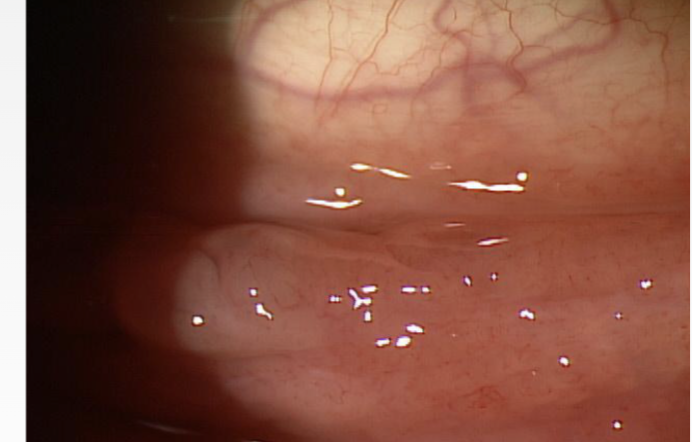
What disease is this
Simple Adenoviral Conjunctivitis
What is the management for Simple Adenoviral Conjunctivitis
Limit Spread of Infection:
Wash hands frequently
Don’t share bedding
DIscard cosmetics
Supportive (Pallative) Treatment:
Artifical Tears (AT), vasoconstrictors, cool compresses, NSAIDs
If secondary corneal invovlement, cover with prophylactic antibiotics
Polytrim
What are the off label treatments for Simple Adenoviral Conjunctivitis
Betadine Povidone-Iodine (PVI) regimen:
1 drop proparacaie + 2-3 drops Betadine 5% ophthalmic prep
Hypochlorous acid
Off label antiviral: Zirgan
Why is Zirgan used off=label for Adenoviral treatment
Shorts duration of the ocular disease HSV
What is the testing/assessment options for Adenovirus?
Conjunctival cytology studies
Viral Cultures
PCR
RPS?Adenodector/QuickVUe Adenoviral conjunctivitis test
Detects presences of adenovirus in the pt’s tears (Not differentiated and not for HSV)
AdenoPlus detects
All KNOWN serotypes of adenoviral conjunctivitis
What are the adenoviral types of presentations
Epidermic Keratoconjunctivitis (EKC)
Pharyngo-conjunctival fever (PCF)
Acute Hemorrhagic Conjunctivitis (Adenoviral possible)
What is Epidemic Keratoconjunctivtis (EKC)
HIGHLY contagious
More extreme signs and symptoms compared to simple adenoviral conjunctivitis
What the timelines of Epidemic Keratoconjunctivitis (EKC)
Rule of 8:
Day of 1-7: Incubation / Asymptomatic but infectious
Day of 8-16: Active Infection/Conjunctivitis (still infectious)
Day 16+: Corneal Involvement = Subepithelial infiltrates (SEIs) appear, no longer contagious
Vision gets worse
Pseudomembranes start to increase FBS symptoms
Less than 5% of the population has developed _____ against EKC. EKC is a disease of ___
Neutralizing antibodies
Re-infection and no immunity
Type ___ is implicated in iatrogenically caused epidemics (EKC)
8
Type ___ is more common among families and co-workers (EKC)
19