Medical Interventions Unit 1.2 and 1.3
 Call Kai
 Learn
 Practice Test
 Spaced Repetition
 Match
 Flashcards
 Knowt Play
1/63

There's no tags or description
Looks like no tags are added yet.
64 Terms
What is an antibiotic?
A drug that prevents growth of strains of bacteria
What is a Gram-Negative Bacterium and what is its stain
A bacterium characterized by a thin peptidoglycan cell wall surrounded by an outer membrane containing lipopolysaccharides, which stains pink or red during Gram staining. (safranin)
What is a gram positive Bactierium and what is its stain
A bacterium with a thick peptidoglycan cell wall that retains the crystal violet stain, appearing blue or purple during Gram staining. It is typically more susceptible to certain antibiotics due to its cell wall structure, lacking an outer membrane. (violet)
What is a Nucleoid
The irregularly shaped region within a bacterial cell that contains the genetic material (DNA) and is not enclosed by a membrane.
Plasmid
A small, circular piece of DNA that exists independently of the chromosomal DNA in bacterial cells, often carrying genes that provide advantageous traits such as antibiotic resistance.
Ribosomes
Cellular structures responsible for protein synthesis, composed of rRNA and proteins, found in all living cells.
Cell Wall (peptidoglycan)
A rigid layer surrounding the cell membrane of bacteria, providing structural support and protection. It is primarily composed of peptidoglycan, which consists of sugar chains cross-linked by amino acids.
Plasma Membrane/Cell Membrane
The permeable membrane, which provides shape and controls the substances that enter and leave preventing cell from bursting
Capsule
Protective outer layer that helps bacteria avoid drying out and can help rvade the inner system
Flagellum
Long whip-like structure to help move itself
pili
short hair-like structures that help the bacteria to attach to surfaces, some pili help transfer DNA between bactieria
Endotoxins
toxins in the outer membrane of Gram-negative bacteria that trigger inflammation and contribute to illness when released
(beta)B-Lactams and an example of one
They block the enzymes needed to build the peptidoglycan layer of the cell wall(forming a rigid mesh-like structure), the cytoplasmic membrane, and all the bacteria
Tetracyclines
bind to ribosomes to stop protein synthesis
Fluoroquinolones
block the enzymes needed for DNA replication
(Sulfa antibiotics) Sulfonamids
block the enzymes needed that the bacteria needs to create DNA
Why are penicillins often more effective against Gram-positive bacteria than Gram-negative bacteria?
Penicillins are often more effective against Gram-positive bacteria than Gram-negative bacteria because gram-negative bacteria has LPS neighboring it's cell walls which prevents the entry of antibiotics into the cell.
Why is it important to understand the structure of a bacterial cell when developing an antibiotic?
It is important to understand the structure of a bacterial cell when developing an antibiotic because it tells us which enzymes and proteins the cell has, and which enzymes and proteins to target with the antibiotic to destroy the bacteria.
How do antibiotics work without harming the surrounding human cells?
Antibiotics work without harming the surrounding human cells by targeting the cell walls of cells to prevent the growth of bacteria. This works because many bacteria cells have cell walls while human cells do not.
Why are antibiotics NOT effective against viruses?
Antibiotics are not effective against viruses because antibiotics cannot kill viruses. This is because bacteria and viruses work in different ways.
aseptic technique
The practice and/or process of preventing contamination.
Standard Aseptic Guidelines
Thoroughly disinfect all work surfaces before and after a lab, using a disinfectant. Thoroughly wash your hands with soap and water before and after you work with any samples.Never place nonsterile inoculating loops into a sample, as this will contaminate the sample. Hold the caps of test tubes or tops of petri dishes during the entire procedure and never place them on the work surface, or contamination will result.
Always use sterile loops to make transfers of bacterial cultures. If you’re using plastic sterile loops, you must use a new one each time.
If you’re using metal inoculating loops, you must sterilize the inoculating loops before and after each use, using the proper technique to flame the loop.
zone of inhibition
measure of diameter in the circle on 0 bacterial growth to find what is most effective
Which antibiotic would be the most effective treatment for an infection with the E. coli? Explain your response
chloroamphenicol, largest zones of inhibition in both 24 and 48 hours
Which antibiotic would be the most effective treatment for an infection with the B. cereus? Explain your response.
tetracycline, largest zone of inhibition
Which antibiotic would be the most effective treatment for a person with an infection with both B. cereus and E. coli? Explain your response.
Tetracycline, cured both bacteria as shown with the zone of inhibition
How were the results after 48 hours different from the results after 24 hours?
results were fairly similar after 24-48 hours
limited spectrum vs broad spectrum.
Broad-spectrum antibiotics act against a wide variety of bacteria, including both Gram-positive and Gram-negative groups. Narrow-spectrum antibiotics act against a specific, limited group of bacteria (either only Gram-positive or only Gram-negative, or a single strain).
Propose reasons why an antibiotic may not be as effective at inhibiting E. coli as it is against B. cereus.
E. coli is a Gram-negative bacterium that has an outer lipid membrane containing lipopolysaccharides. This outer layer acts as a selective barrier that can block or slow down the entry of certain drug molecules. B. cereus is a Gram-positive bacterium. While it possesses a thick peptidoglycan cell wall, it lacks the protective outer phospholipid membrane found in E. coli, leaving certain targets more accessible depending on the drug's size and polarity.
What was the purpose of culturing bacteria on these four plates?
The purpose of the two with just one antibody was to find which strains of bacteria was immune to the one type of antibodies. Then the other two were like control groups the one with no antibodies to make sure the bacteria was growing correctly, and the one with both antibodies to make sure nothing could grow.
How did your predicted results compare to your observed results?
My predicted result were correct only one strain of bacteria could grow on the the plates with one antibody, none could grow on the plate with both, and they both grew on the plate with none.
Why did the E. coli I strain grow on both the LB agar plate and the LB agar plate with streptomycin but not grow on the LB agar plate with ampicillin?
Because the bacteria is only immune to the streptomycin and not the ampicillin so it was able to grow there fine but not with the streptomycin since it was killing it then on the one plate with nothing it grew fine because nothing was stopping it.
Why did neither strain grow on the plate containing both streptomycin and ampicillin?
Because neither of the bacteria were immune to both the antibodies they only had immunity to one of the antibodies so whichever one they weren't immune too they died.
Explain what the results indicate about the new strain of bacteria produced when both strains of E. coli were mixed together.
The results indicate that the new strain of bacteria should now instead of being immune to one type of antibody be immune to both.
Based on the results of the experiment as well as what you learned about the mechanism of gene transfer between bacterial cells, was the streptomycin resistant gene transferred from Strain I to Strain II, or was the ampicillin resistant gene transferred from Strain II to Strain I? How do you know?
The ampicillin resistant gene was transferred from strain II to strain I. We know this because the resistance for ampicillin is found on the plasmid instead of the chromosomal DNA, and the most common form of gene transfer done by bacteria in nature is conjunction, and conjunction occurs when one bacteria shares a strain of its plasmid with another bacteria giving that bacteria some if its DNA.
What mechanism of gene transfer do you think was responsible for transferring the antibiotic resistant gene between these two strains of bacteria? Explain your answer.
I think it was conjugation, because conjugation is the most common type of gene transfer for bacteria, and it requires one of the bacteria to have a plasmid, which we know the one with ampicillin has that gene on a plasmid
transduction
the transfer of genetic material from one organism (such as a bacterium) to another by a genetic vector
transformation
the uptake and expression of foreign DNA (naked dna) by a cell
conjugation
the one-way transfer of DNA between bacteria in cellular contact
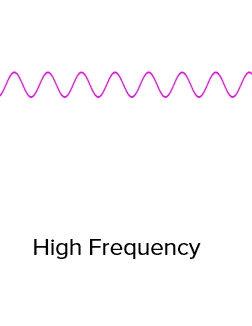
Pitch is determined by a sound’s frequency
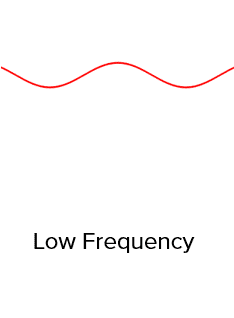
Pitch is determined by a sound’s frequency
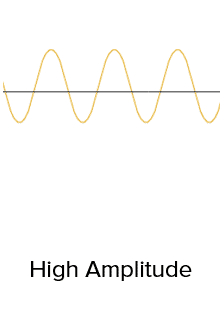
Frequency is measured in vibrations per second,
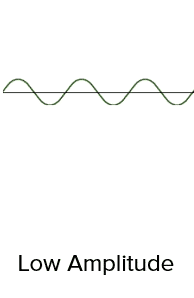
Frequency is measured in vibrations per second,
Pinna
Collects sound waves and directs them into the auditory canal.
Auditory canal
Carries sound waves to the eardrum.
Eustachian tube
Equalizes air pressure on both sides of the eardrum.
Ossicles (malleus, incus, and stapes)
Three tiny bones that amplify and transmit vibrations to the oval window
Tympanic membrane (eardrum)
Vibrates when sound waves hit it.
Cochlea
A spiral-shaped, fluid-filled structure that converts vibrations into electrical signals.
Sensory hair cells
Detect movement in the cochlear fluid and convert it into electrical signals.
Cochlear nerve
Carries electrical signals from the cochlea to the brain for hearing.
Oval window
Transfers vibrations from the stapes into the fluid of the cochlea.
Vestibule
Part of the inner ear that helps detect head position and linear acceleration for balance.
Vestibular nerve
Carries balance information from the inner ear to the brain.
pathway of sound
Pinna: Picks up sound.
Eardrum: Vibrates.
Ossicles: Amplify vibrations.
Cochlea: Converts vibrations into electrical signals.
Cochlear nerve: Hearing.
Vestibule and vestibular nerve: Balance.
Eustachian tube: Equalizes pressure.
Pinna → Auditory canal → Eardrum → Ossicles → Oval window → Cochlea → Sensory hair cells → Cochlear nerve → Brain
mastoid bone
No Hearing Loss
0–20 dB
Mild Hearing Loss
21–40 dB
Moderate Hearing Loss
41–55 dB
Moderate to Severe Hearing Loss
56–70 dB
Severe Hearing Loss
71–90 dB
Profound Hearing Loss
>90 dB
conductive hearing loss
hearing loss due to physical damage of areas in ear like ossicles
sensorineural hearing loss
hearing loss due to hair cells in the cochlea and nerves connected to the brain tissue