final mod contemp chin art
 Call Kai
 Learn
 Practice Test
 Spaced Repetition
 Match
 Flashcards
 Knowt Play
1/45

There's no tags or description
Looks like no tags are added yet.
46 Terms

The Red Electromagnetic Wave Brings Good News is a 1974 Chinese propaganda poster showing construction workers gathered around a radio listening to a communist broadcast. The red flags, nighttime lighting, and ongoing construction emphasize unity, hard work, and dedication to communism. It connects to the Cultural Revolution and Mao’s use of propaganda to spread communist ideology, promote collective labor, and encourage to the loyalty to the Party.

This Political Pop artwork critiques Chairman Mao by presenting him in a more humorous and less powerful way. Created after Mao’s death, it reflects a time when artists could begin questioning his authority. The flower draws attention to Mao’s face, feminizing him and making his traditionally powerful image seem silly, while the shadow recalls traditional imperial portraits. It connects to Political Pop, which borrowed from American consumer culture and reused familiar images, but here uses Mao’s image to critique political authority and propaganda.
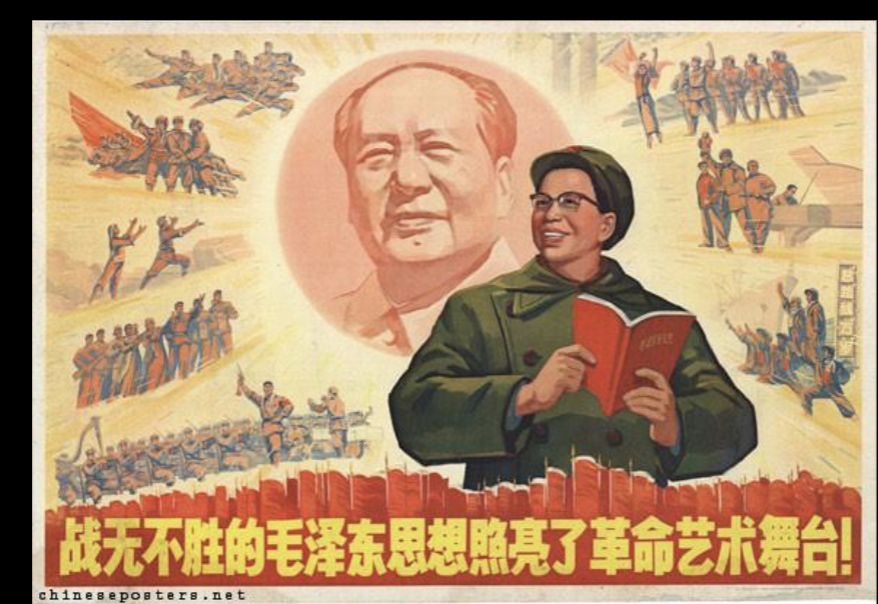
shes off to the side, madam mao, the red sun of mao has like the modelscenes emenating form him, layout/design, sea of red flags, provides the backdrop, height of the red gaurd terror, china is in chaos almost at civil war,

Future Home uses Soviet socialist realism to depict sent-down youth working alongside peasants and herdspeople in the countryside. These were urban young people sent to rural areas during the Cultural Revolution to live and work. The dramatic weather and heroic portrayal of workers emphasize their determination and the glory of socialism. It connects to Mao’s sent-down youth movement and the use of socialist realist art to glorify collective labor, sacrifice, and the triumph of the working class.

Fighting in Northern Shaanxi (1959) by Shi Lu is an ink and color painting showing Mao standing with his back to the viewer, overlooking a dramatic red landscape. This was unusual because Mao was typically portrayed facing the viewer in a heroic position. The painting was controversial because of this unconventional depiction. It connects to traditional Chinese landscape painting and Mao’s identity as a poet and calligrapher, while also showing how ink painting could be used as revolutionary history painting to celebrate communist leadership.

Old city walls and tower, Beijing, early 1900s. City walls reached 15wu hung: Beijing’s old city was a display of the concealment of power

side-by-side portrits of mao zedong and general Zhu De, 1949, kinda facing each other
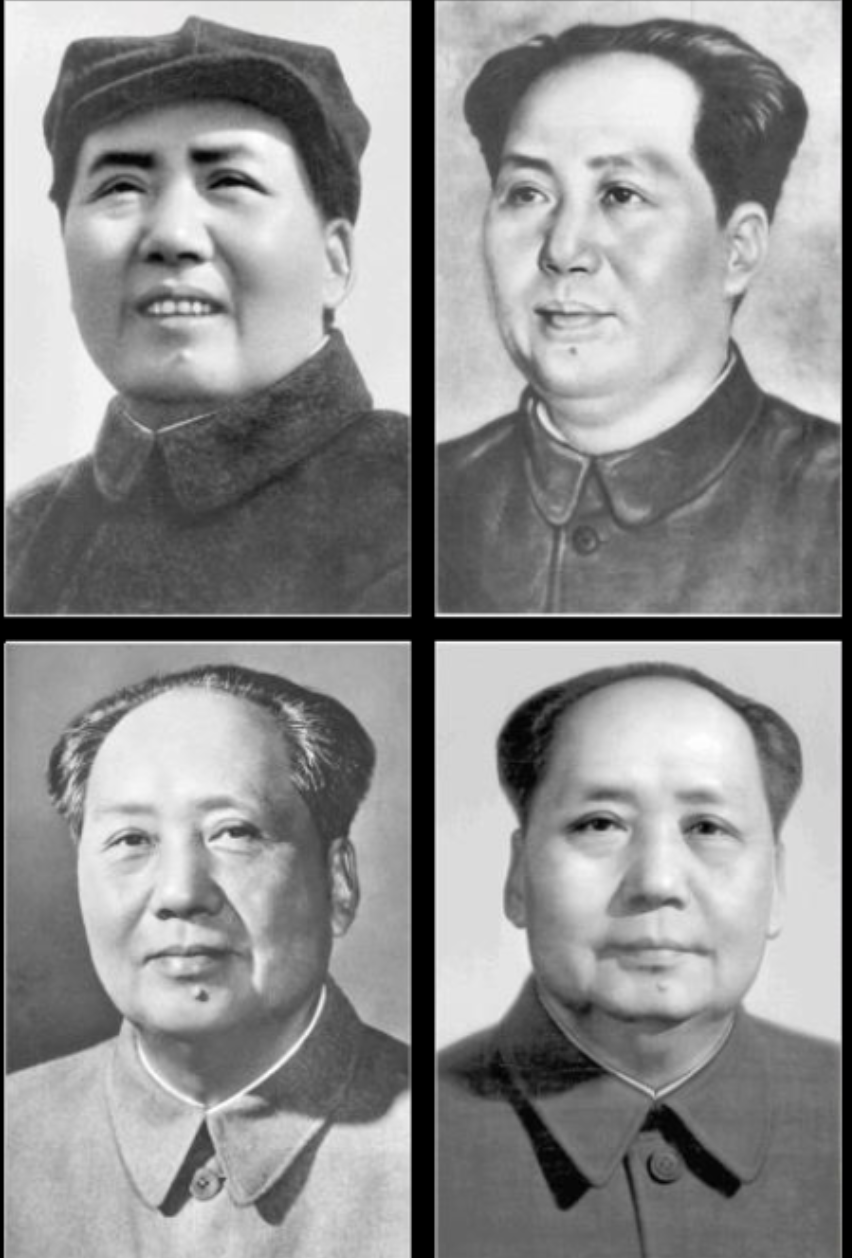
Source images for different
eras of Mao’s Tian’anmen
portrait, shift in gaze, sometimes twice a year

Pro-democracy
movement in 1989,
portrait splattered with
ink-filled eggs, color
photograph

Unnamed artist(s), recent version of Mao’s portrait at Tian’anmen, oil painting, smooth, heavenly background, immortal
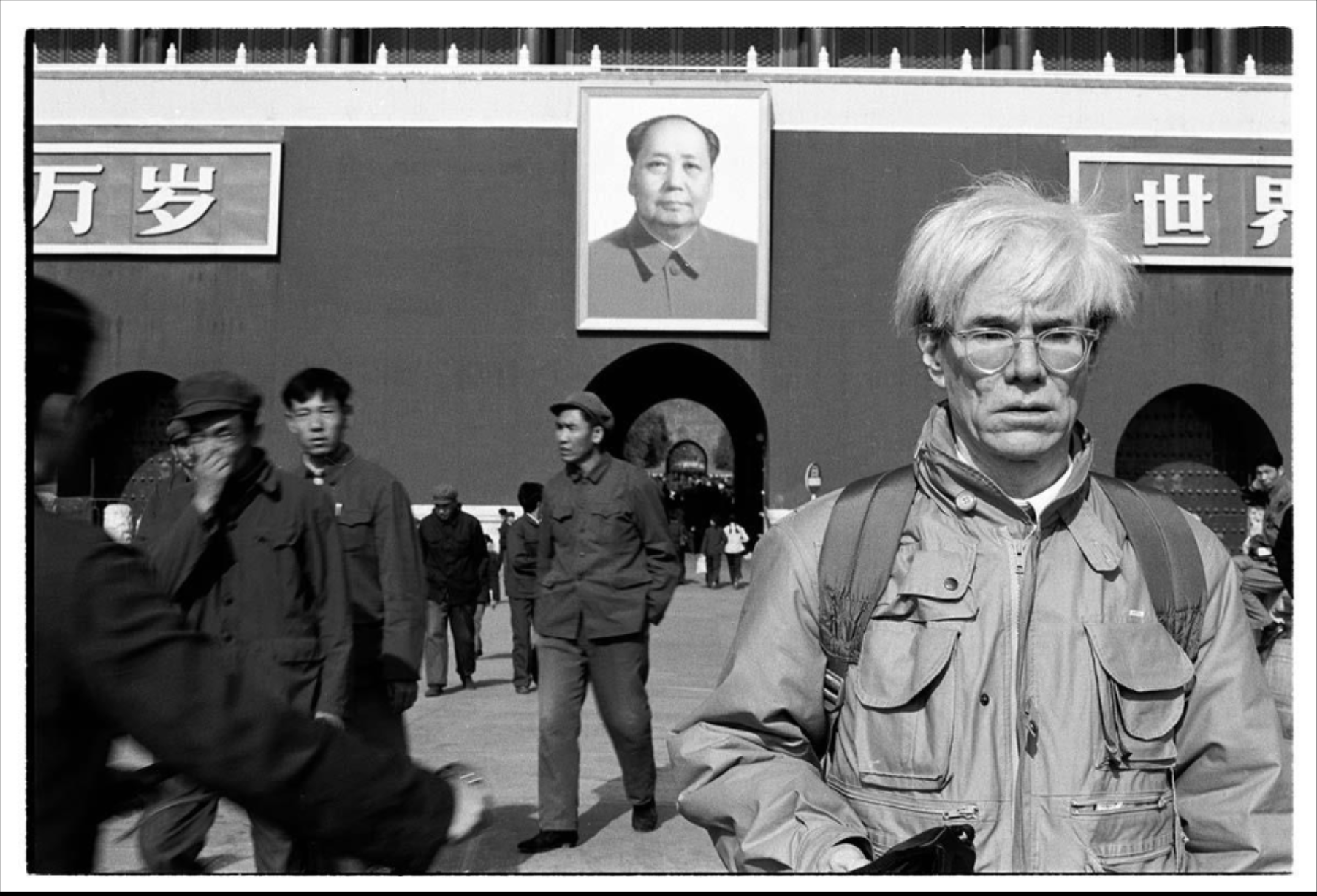
Christopher Makos, Andy Warhol at the Gate of Heavenly Peace (Tian’anmen), photograph,
Beijing, 1982.

Mao’s portraitists identified: Mr. Wang, left, with a protégé, Ge
Xiaoguang, in 1983, in front of the painting at Tian’anmen. Photograph
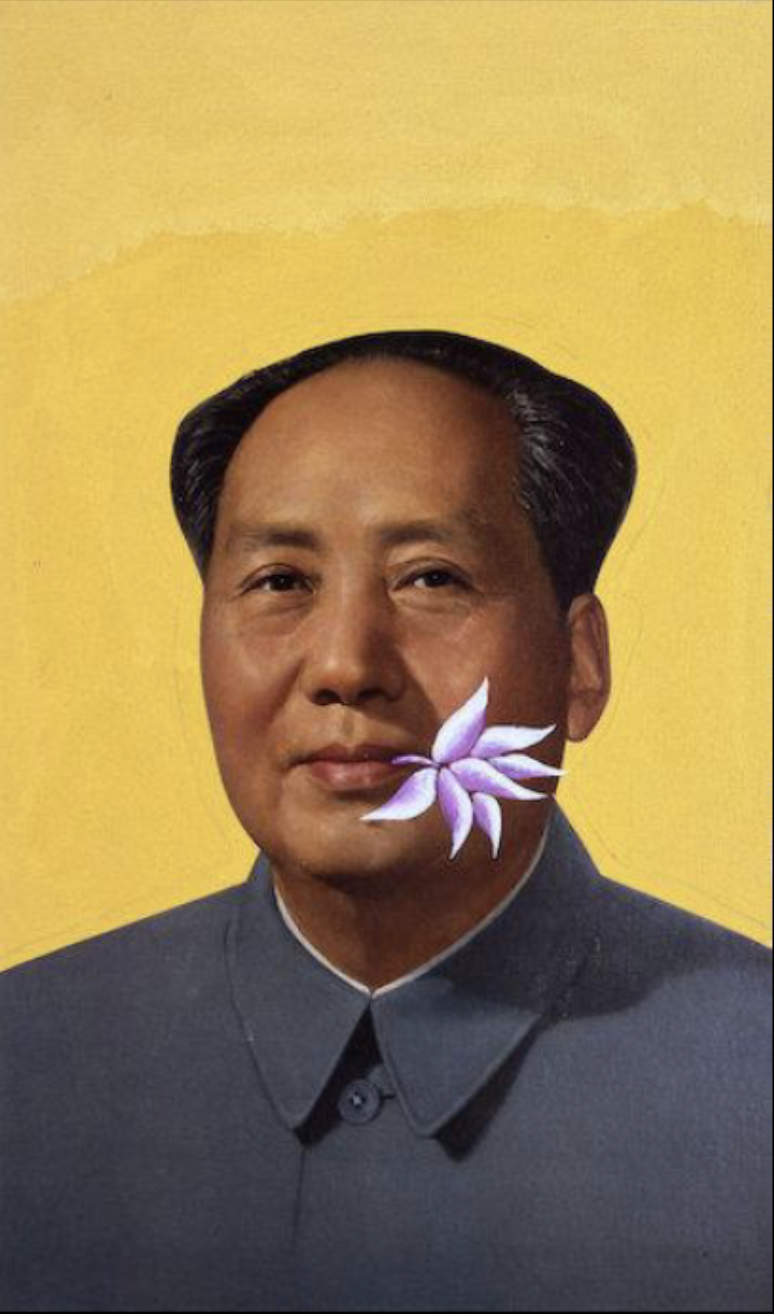
chinese political pop, unserious, the medium is unique, brings attention to his face, Li Shan, Mao, 1995, acrylic and
paper collage on canvas, 22 1/2
by 13 3/8 inches
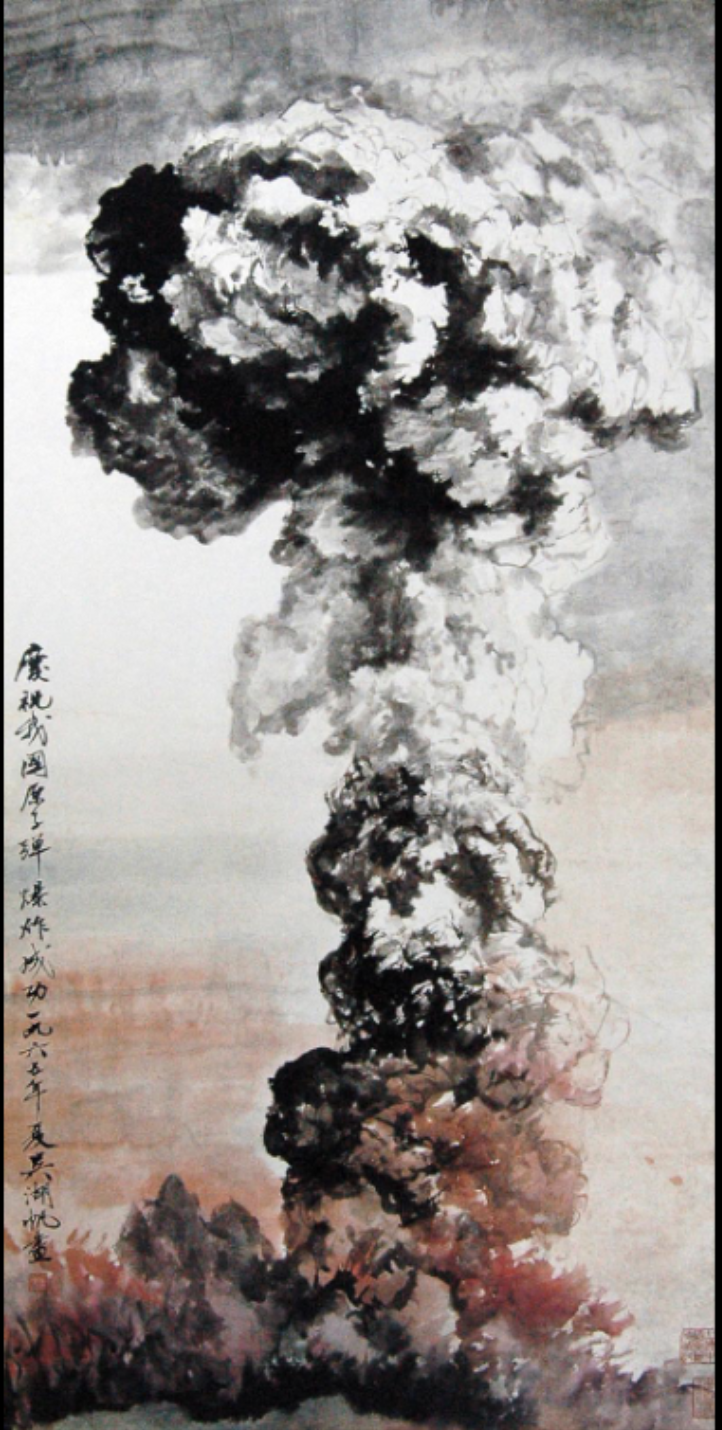
Wu Hufan (1894 – 1968), Celebrate the
Success of Our Atomic Bomb Explosion, 1965,
ink and color on paper, approx. 110 × 60 cm,
Shanghai Institute of Chinese Painting
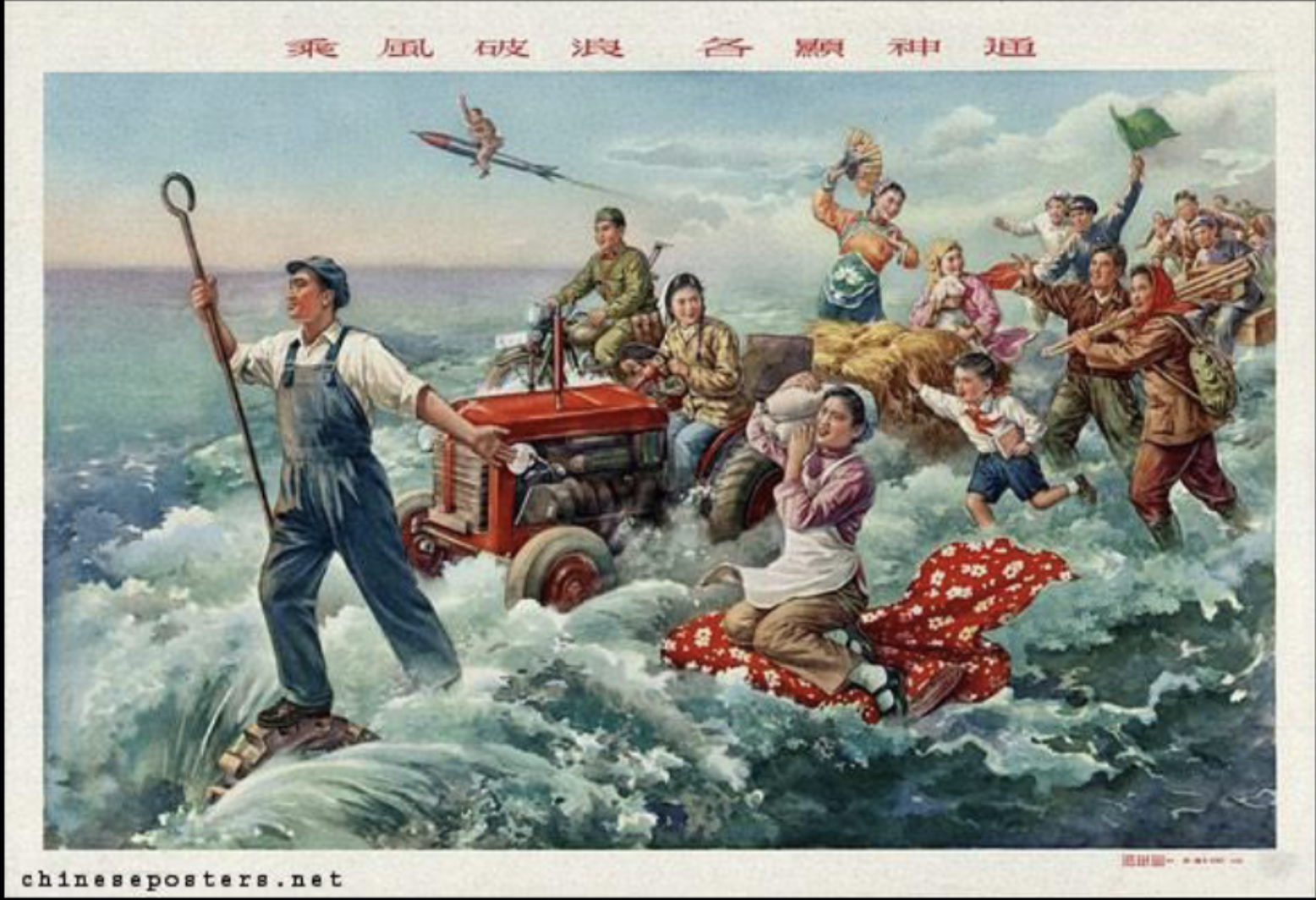
Brave the wind and the waves—everything has remarkable
abilities, poster, 1958, propaganda poster, arrest of gang of 4 scapegoated, optimism, rebel tae over instutions shut down education
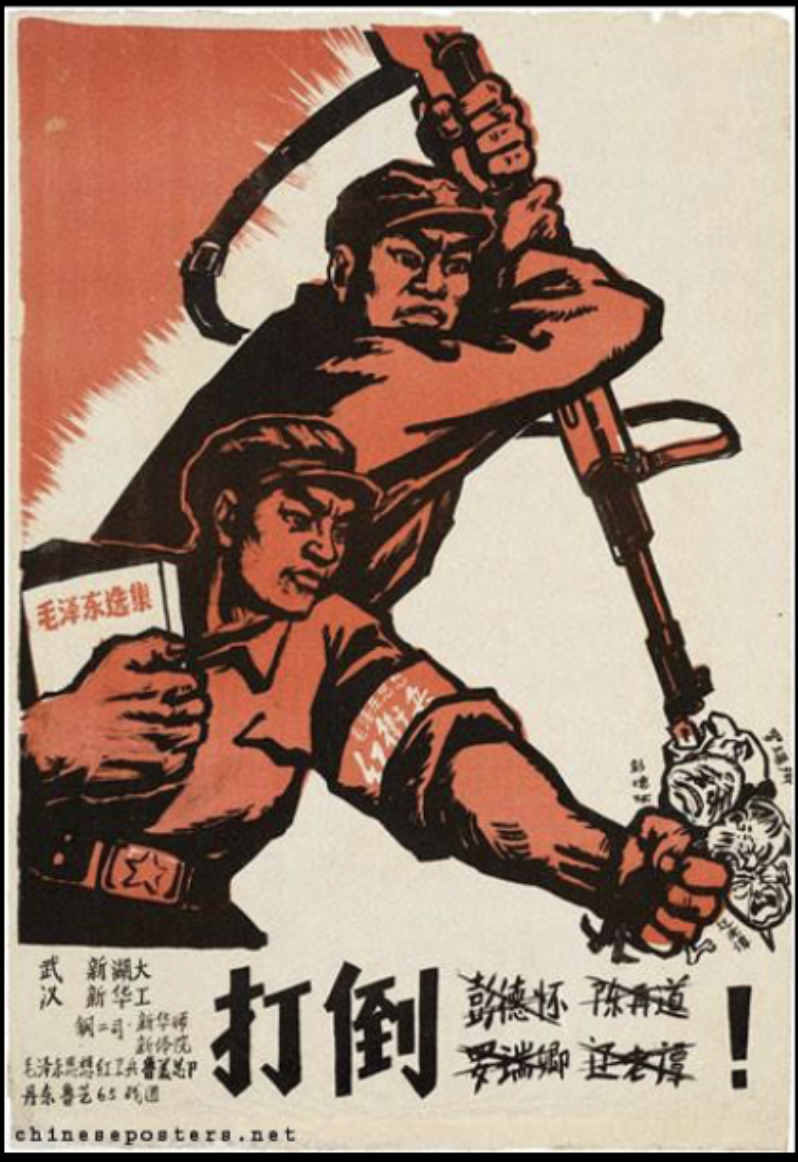
visual language, propaganda poster, woodcut made into these mass distrubution, red gaurd art, Overthrow Peng Dehuai, Luo Ruiqing,
Chen Zaidao, Liao Laotan! Poster,
1967

Designer unknown, Bombard the headquarters -- My first big-
character poster, poster, late 1960s.

Jiang Shaowu, Posters by Shenyang Red Guards in Tiananmen Square,
Beijing, 1966. From “Red: China’s Cultural Revolution,” Jiang Jiehong,
Jonathan Cape Press, London, 2010, p.190
, bigger greater number, engoing in cultural revolution, anti-british, political imagery
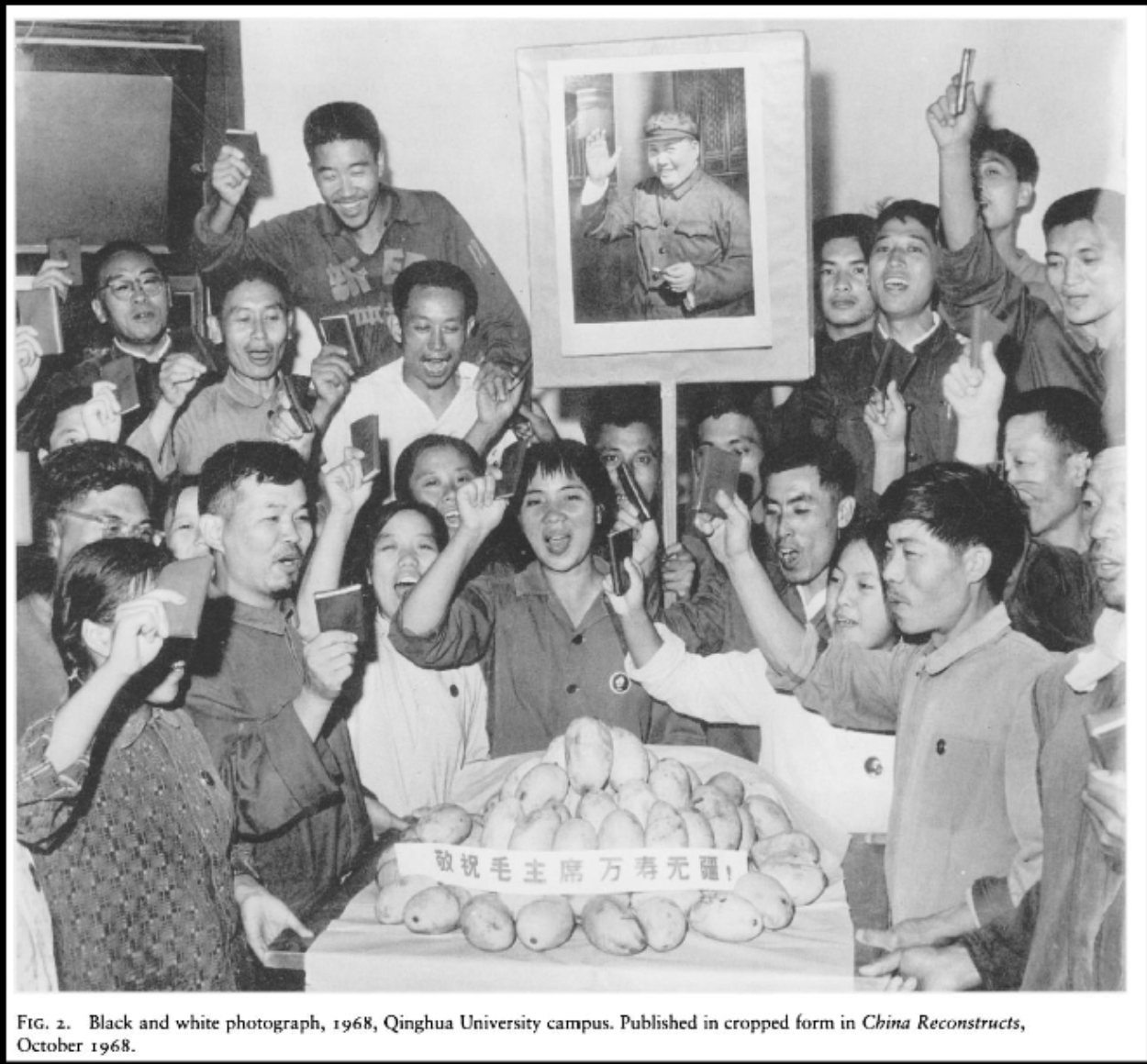
crate of mangoes as a gripe, Mao gave them to the worker/peasant prop teams, engaged in stand-off with the red guards, a crisis among rival factions, little red book, stages, benevolence on the party chairman Mao, wishing on los yes of life no limit, kinda like after arranged fake

3 different classes of people, shows clay sculptures, wealthy and poor, caring for feet and such
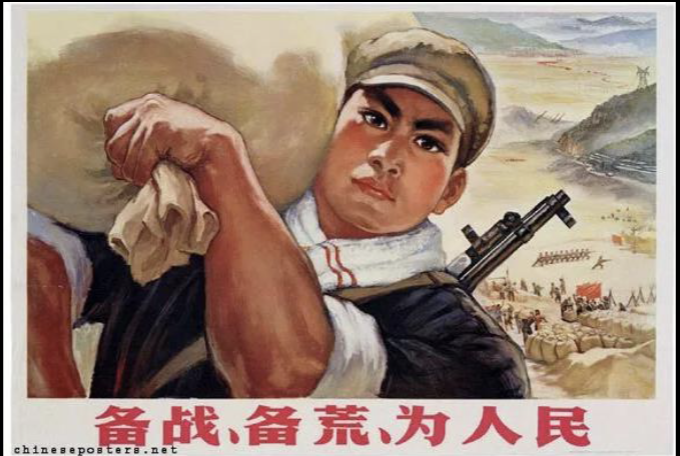
Revolutionary Group of the Second Liaison office of the Fifth
Battalion of the Shanghai Cultural System, “Prepare for Struggle,
Prepare for Famine, For the People,” 1970, 53 x 77 cm (IISH
collection) flushed with health, no problems

Luis Chan (Chen Fushan; 1905–1995), Untitled, 1980, ink and acrylic on paper, 136
× 209 cm, Courtesy of Hanart TZ Gallery, Hong Kong, original for Hong Kong Art Scene, Moved from Panama people come and go, no horizon line, Nature, notion of literati painting, self-taught, -recognized a lot in different places, only took one class, “dreamlike” surrealist, original -weird?
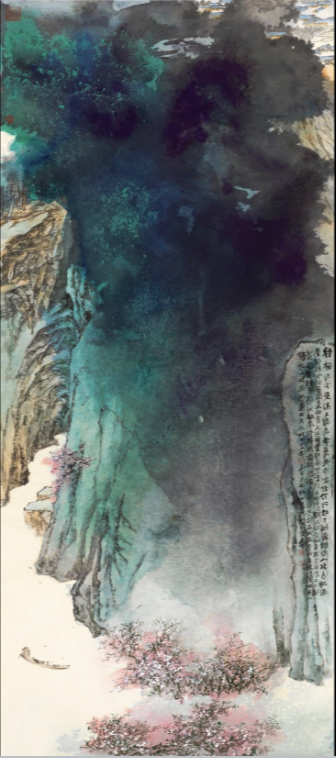
Zhang Daqian (Chang Dai-
chien; 1899 – 1983), Peach-
Blossom Spring, 1983, hanging
scroll, ink and color on paper,
209.1 × 92.4 cm, Collection of
Cemac, Ltd, traditional theme, utopia - magical waterways, most famous work is forgeries

C. C. Wang (Wang Jiqian, 1907-2003), Village in the Mountains, hanging
scroll, ink and color on paper, signed Zhenze Jiqian, with one artist's seal
Jiqian changshou, folding paper before painting it, studied at Art Student’s League, New ink movement

Van Lau (1933 – ), Bamboo in the wind, 1988, brass, H 25.5 cm L 45.6 cm W 28.2 cm, bamboo - loyalty + fidelity, abstract sculpture, hong kong, lacking stems, what is hard + soft, leaves + stock


Chairman Mao Memorial Hall, Tian’anmen
Square, completed 1977,

Resolutely overthrow the
anti-Party clique of Wang
(Hongwen), Zhang
(Chunqiao), Jiang (Qing)
and Yao (Wenyuan),
poster, 1976, gang of 4

ambiguous for if they are putting up the flag or taking it down,

same techniques as Guohua, europeanhistory painting, very different effect, amiguous gender wise, not gaurs/older people in between, supposed to identify teh girl, everyoen si injures
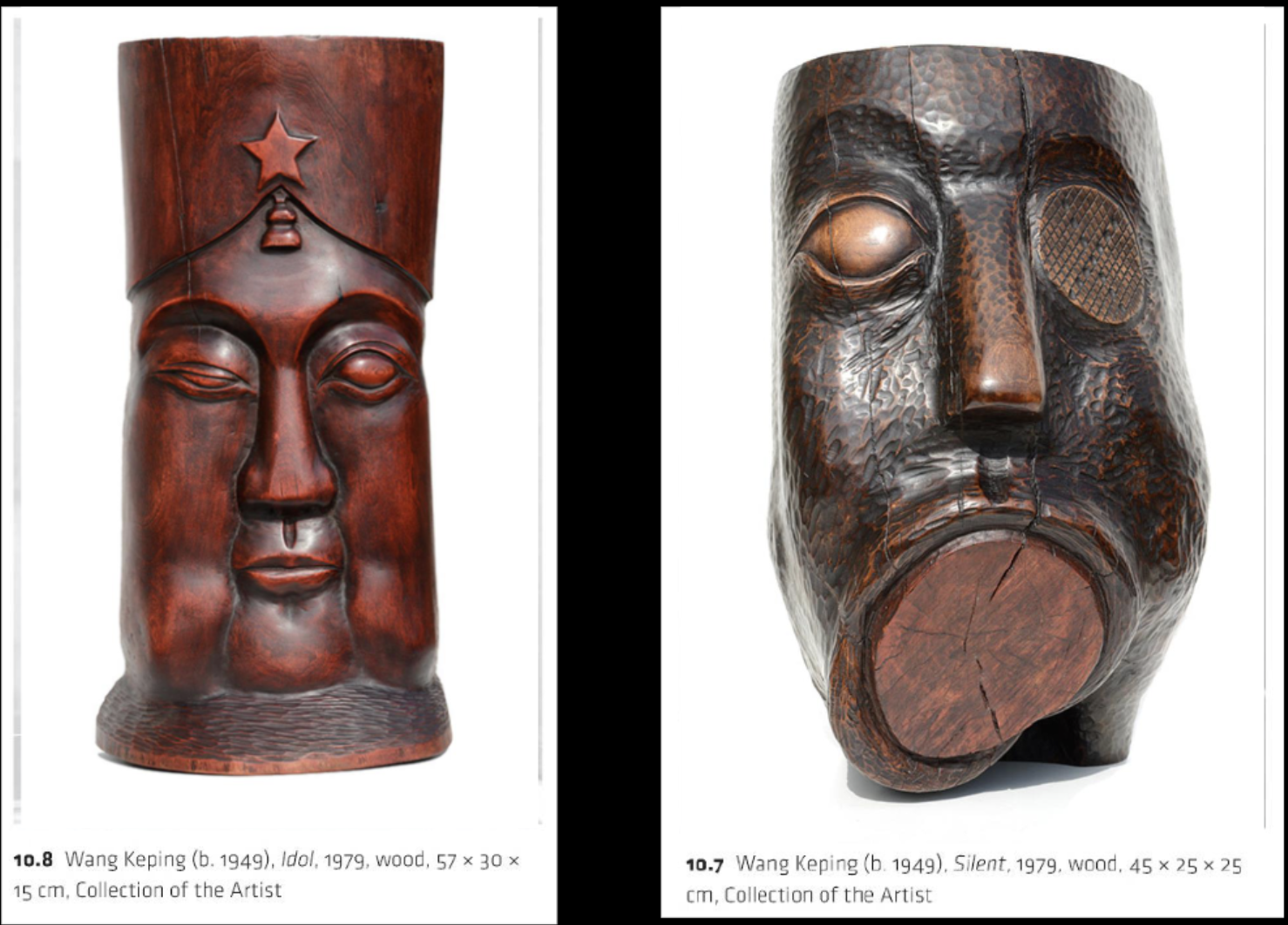
same material being shoved as himself, how can he see?, royal manner, deskilling, primitivism, CCP star on teh other one, the eye,
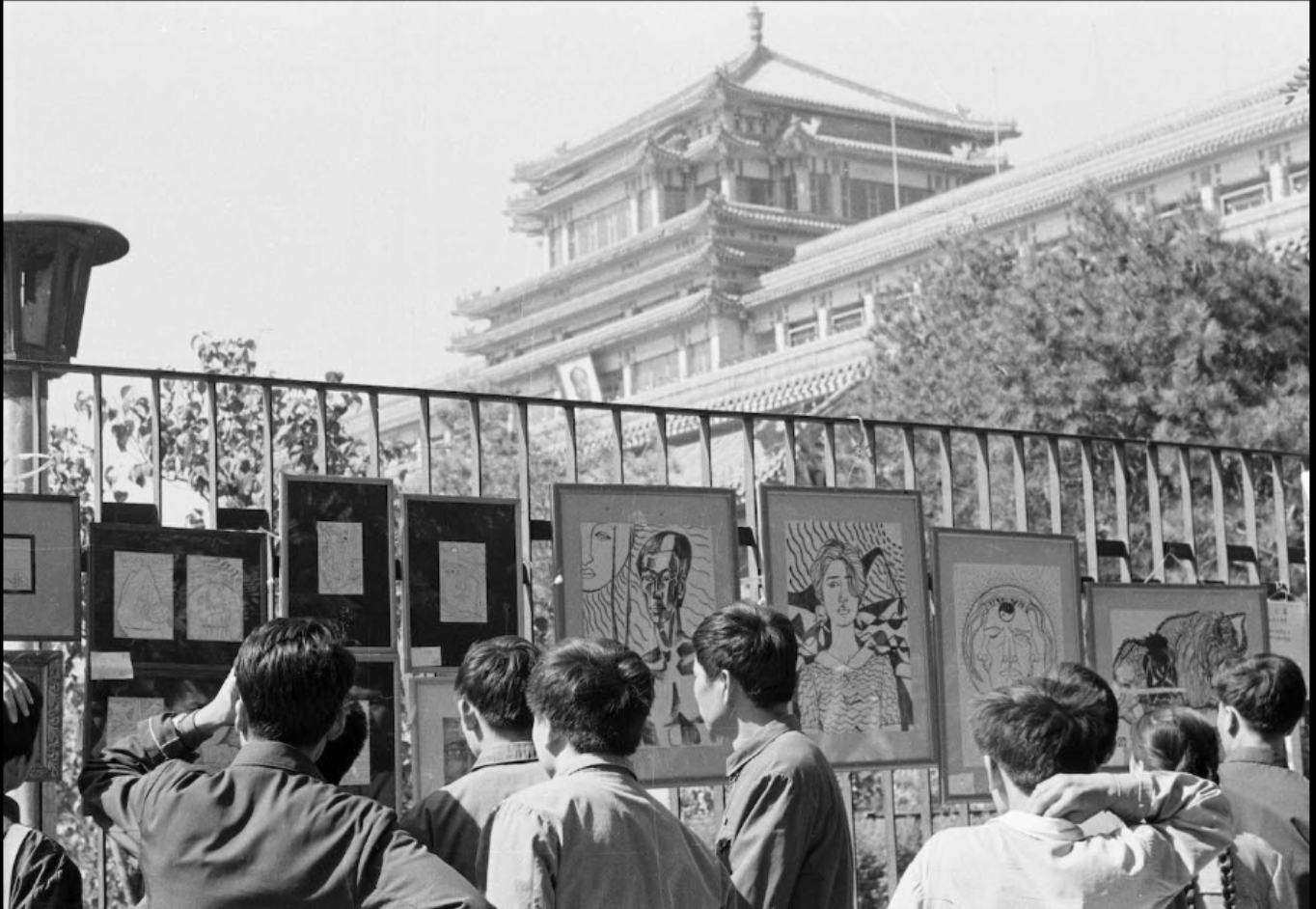
Stars Art Exhibition, Li Xiaobin, "Visitors in front of Qu Leilei's drawings,” September
1979, experimental art - unofficial, hung on fence

Yuan Yunsheng (b. 1937), Water Splashing Festival (detail), 1979, Beijing International
Airport commission, acrylic on canvas, 340 x 2100 cm, east people are mystic, erotic, orientalism, primitive stuff valorization, multicultural harmony, women partially dressed, detailed, ress green, diethnic group, lots of ethnic groups - han majority

Luo Zhongli, Father, oil
on canvas, 1980, 215 x
150 cm (National Art
Museum, Beijing, China), porcelian bowl, added the pen to it later to make sur epeopel knew he was educated, wrinked hands from working, hard labor, skin color from the sun, tea from a cracked bowl, hyperrealistic

ink,

coffin like, artwork is to be treated liek trash

Wang Guangyi, Mao Zedong No.1, 1987. machine vision numbers, in a grid/jail, contreversial

Zhang Nian, Hatching Eggs, 1989., performance art,

Xiao Lu, Dialogue, installation and performance work, 1989., got the exibit shut down first time and then bomb threat second time,
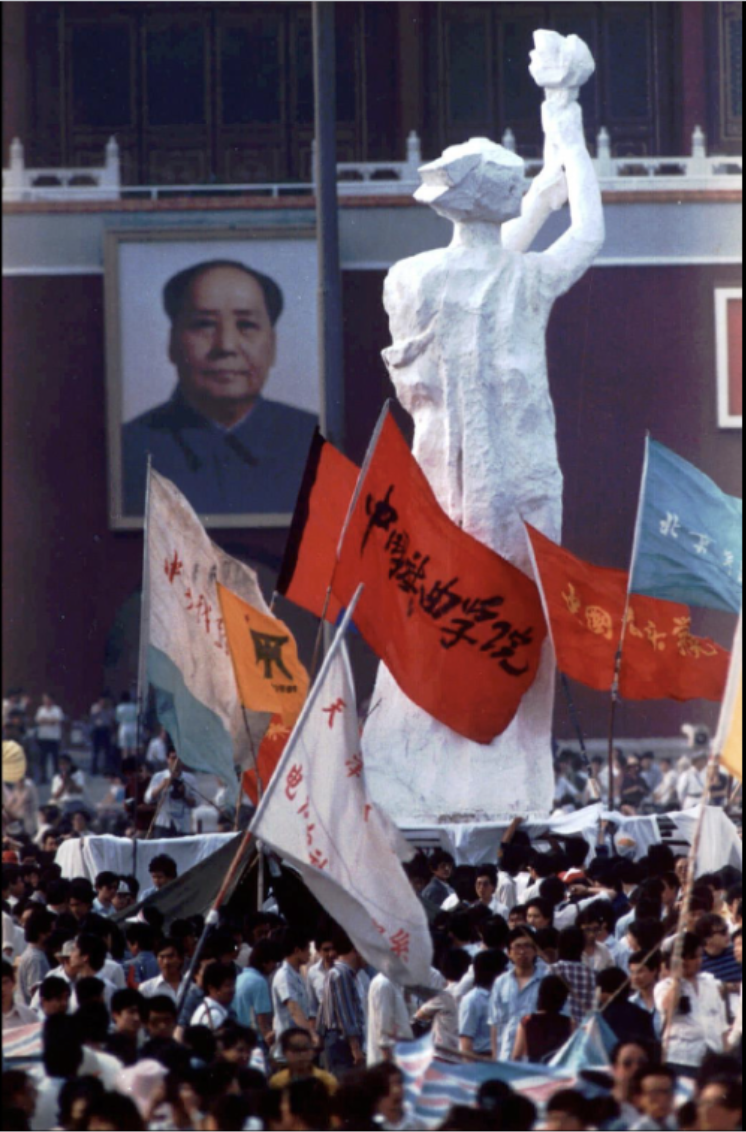
This is a 1989 photograph of the Goddess of Democracy, a statue created by student protesters in Tiananmen Square during China’s pro-democracy movement. The statue stands directly across from Mao’s portrait, symbolizing the protesters’ demands for democracy and political reform in opposition to the Communist government’s authority. It connects to the 1989 Tiananmen Square protests and shows how public art could be used as a form of political resistance.
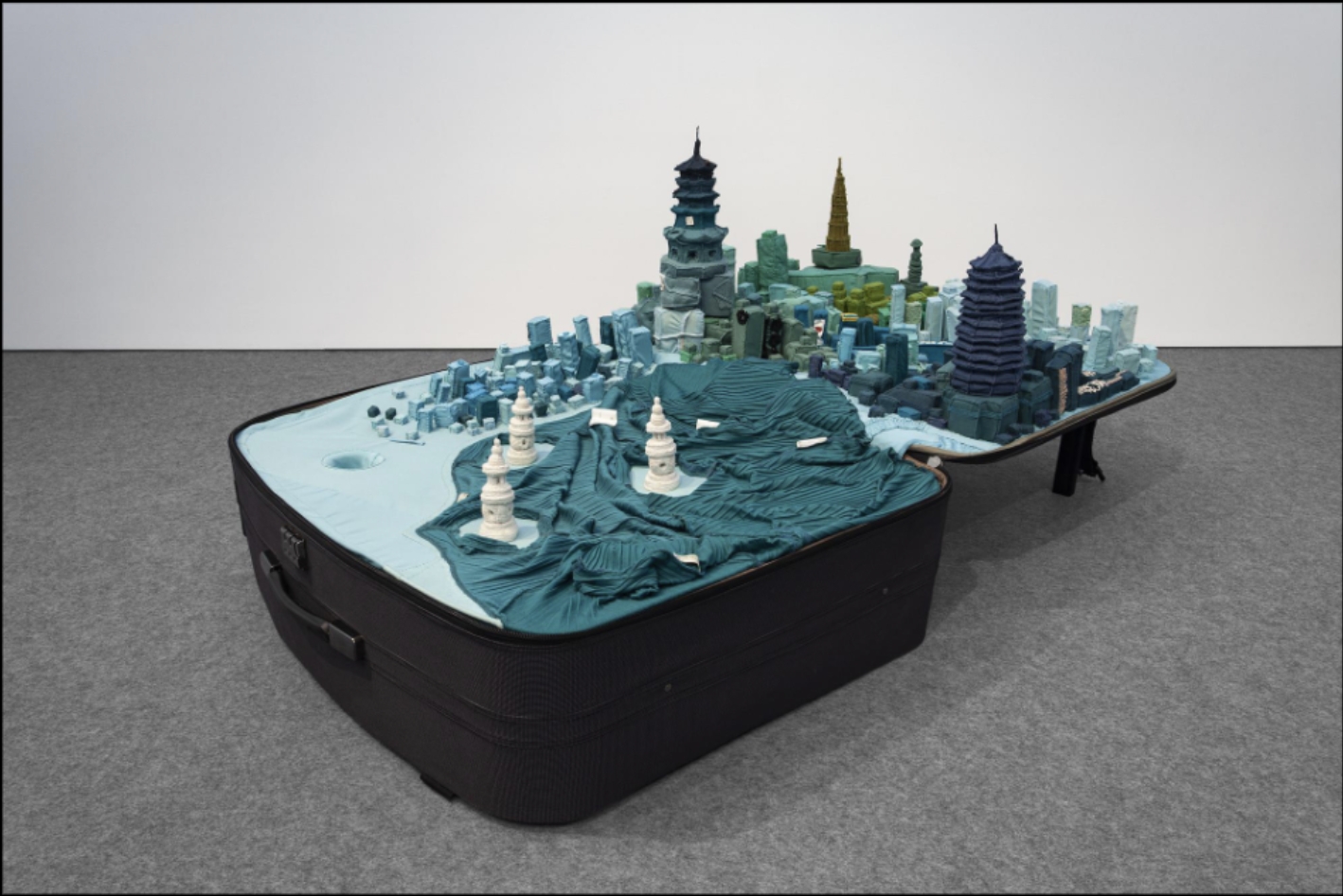
Yin Xiuzhen, Portable City: Hangzhou, 2011, suitcase, clothes, magnifying glass, map, 64 cm ×
150 cm × 88 cm (25-3/16" × 59-1/16" × 34-5/8") installed 80 cm × 28 cm × 88 cm (31-1/2" ×
11" × 34-5/8") closed, Cities created from old clothing and packed into suitcases, inspired by baggage claim at airports. Explores what makes up a city's identity and how memories of places can travel with people.
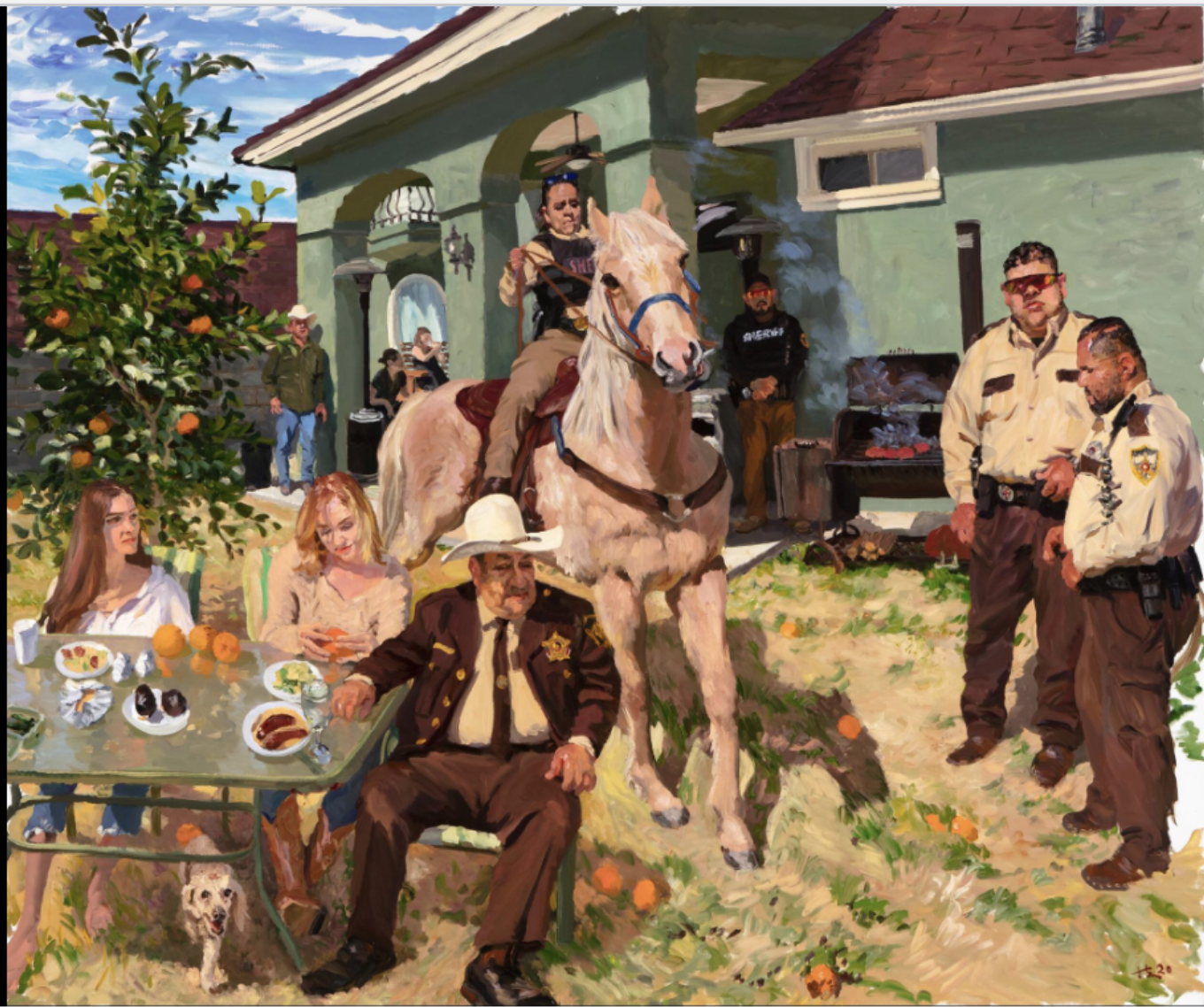
Liu Xiaodong,
Tom, his Family,
and his Friends,
2020 Oil on
canvas, 250 x
300 cm / 118 x
98 1/2 inchesCreates large paintings of ordinary people and their everyday lives. Often paints outdoors while directly observing people and the places around him. Chooses locations and subjects that cannot be easily judged using one value system. His artwork focuses on real experiences and the relationship between people and their surroundings. this one was liek same place but changing up who walked by at different times, texas, thougth this was hwo america is

Xu Bing (born 1955), Book from
the Sky (detail), ca. 1987–1991.
Installation of hand-printed
books and ceiling and wall scrolls
printed from wood letterpress
type; ink on paper. Created fake Chinese characters that looked real. The writing appeared very detailed and authentic, but when people tried to read it, they realized it was meaningless. This made viewers question what was wrong with themselves

Xu Bing, The Song of
Wandering Aengus by
William Butler Yeats
(detail). Ink on paper, 1999.Square Word Calligraphy – Looks like traditional Chinese calligraphy but actually uses English words. Calligraphy is very specific, and handwriting can reveal personal characteristics. Training often begins at a young age.

Lam Qua, Portrait 38, showing a man with
an ulcerous tumor on his left cheek, 1834–
1855 Oil on board. Yale University.This painting depicts a Chinese man with a large tumor on his cheek, combining portraiture with medical documentation. It is important because Lam Qua used Western-style realism to record patients' physical conditions for medical purposes. It connects to Western medical influence in China and the blending of artistic and scientific practices.
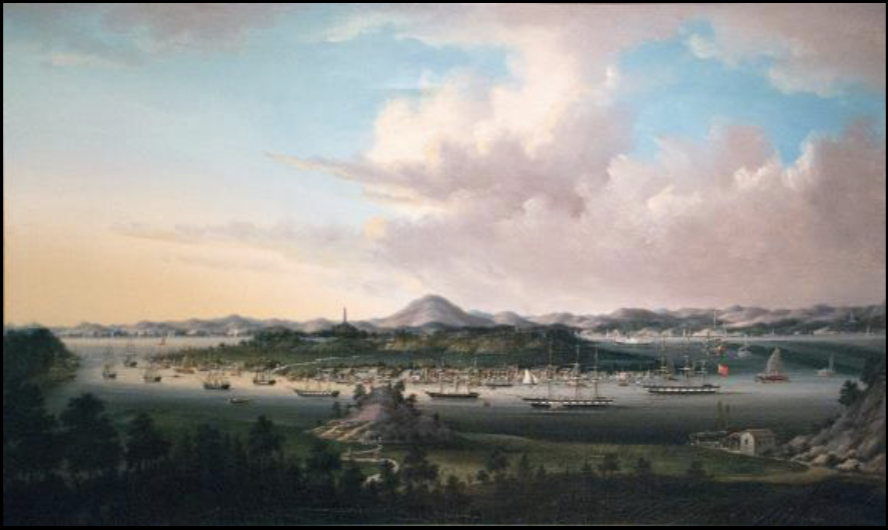
Attributed to Youqua (active 1840 – 1880s), Whampoa (Guangzhou), ca. 1850, oil on
canvas, 78.3 × 144.3 cm, Peabody Essex Museum, SalemThis oil painting shows the port of Whampoa, a major center of trade between China and foreign merchants. Its Western painting techniques and Chinese subject matter reflect the growth of export art made for international audiences. It connects to cross-cultural exchange and the influence of foreign trade on Chinese art.

hen Chin (Chen Jin; 1907 – 1998),
Instrumental Ensemble, 1934, folding
screen, color on silk, 200 × 177 cm,
selected for the Fifteenth Teiten, Japan,
Collection of the Artist’s family., modernity from the heels - jewelery, traditional instruments tho, connects to japanese colonial influence, mostly conforming to japanese beauty standard,