Unit 3.1. Analytic Techniques: Spectrophotometry & Electrochemistry
 Call Kai
 Learn
Learn Practice Test
 Spaced Repetition
 Match
Match Flashcards
 Knowt Play
1/118

There's no tags or description
Looks like no tags are added yet.
Name | Mastery | Learn | Test | Matching | Spaced | Call with Kai | Chat |
|---|
No analytics yet
Send a link to your students to track their progress
119 Terms
spectrometry
luminescence
electroanalytic methods
chromatography
ENUMERATE
4 basic disciplines within the field of analytic chemistry
ELECTROMAGNETIC RADIATION
Is described as photons of energy traveling in waves.
equate it with light and radiant energy
WAVELENGTH
linear distance between any two equivalent points on a successive wave
nanometer (nm)
unit used for wavelength in visible spectrum
Planck’s formula
relationship between wavelength (λ) and energy (E) is described by
6.62 ×10^-27 erg sec
value of Planck’s constant
wavelength (λ)
distance between two equivalent points on successive waves
visible region: 400-700 nm
ultraviolet region: < 400 nm
infrared region: > 700 nm
WAVELENGTH
visible region: __________
ultraviolet region: __________
infrared region: __________
violet
blue
green
yellow
orange
red
ENUMERATE
colors seen in visible light (chronological order from 400 nm to 700 nm)
inversely proportional
frequency of a wave is ____________ to the wavelength
lower
the longer the wavelength the _________ the energy level
higher
the shorter the wavelength the _________ the energy level
cosmic
gamma rays
X-rays
ultra-violet
visible light
infrared
microwaves
[Cool Girls eXercise Under Very Intense Moonlight]
ENUMERATE
other types of wavelengths
beer-lambert law
beer’s law aka?
more (conc.) analyte = more absorbance
principle of BEER’S LAW
↑ concentration = ↑ light absorbance
↓ concentration = ↓ light absorbance
[directly proportional]
relationship of CONCENTRATION and ABSORBANCE in beer’s law
↑ concentration = ↓ log of transmitted light
↓ concentration = ↑ log of transmitted light
[inversely proportional - more light is absorbed = less light reaches the detector.]
relationship of CONCENTRATION and TRANSMITTED LIGHT in beer’s law
absorbance
capacity of molecule to absorb light from light source
transmittance
refers to the remaining light that reaches the photodetector
0 %
if ALL LIGHT is blocked or absorbed by the molecule in the cuvette then the % transmittance = ________?
100 %
if NO LIGHT is blocked or absorbed by the molecule in the curvette then the % transmittance = ________?
SPECTROPHOTOMETER
measure the light transmitted by a solution to determine the concentration of the light- absorbing substance in the solution.
light source
monochromators
sample cell / cuvette
photodetector
meter / read out device
ENUMERATE
components of spectrophotometer
Evelyn and Malloy method (560 nm)
Jendrassik-Gróf method (600 nm)
BILIRUBIN can be read using what methods
Incandescent tungsten or tungsten-iodide lamp
lamp used for VISIBLE & NEAR-INFRARED REGIONS
Deuterium lamp
mercury arc lamp
lamp used for UV REGION
Continuum
Which type of light source emits many wavelengths, only emits limited number of discrete lines or bandsof radiation?
tungsten = visible region
deuterium = UV region
xenon arc lamp = visible and UV regions
ENUMERATE
example of continuum light source
line
type of light source that emits only selective wavelength, thus it emits a few discrete lines or bands of radiation
Mercury and sodium vapor lamps –UV and visible regions
Hollow cathode lamp - atomic absorption spectroscopy/spectrophotometry
ENUMERATE
example of line light source
MONOCHROMATOR
COMPONENT OF SPECTROPHOTOMETER
selects/isolates a certain wavelength of light coming from the light source
Filters
TYPES OF MONOCHROMATOR
A simple, inexpensive, and useful type of monochromator that isolates only one specific wavelength of light
interference filter
absorption filter
give example of monochromator filter
Prism
TYPES OF MONOCHROMATOR
Can be mechanically rotated, allowing only the desired wavelength to pass through an exit slit.
Diffraction Gratings
TYPES OF MONOCHROMATOR
Most commonly used; contain parallel grooves
Spectral Bandwidth (or FWHM) Full Width at Half Peak Maximum
Range wavelength is about ½ peak transmittance.
bandwidth
Total wavelengths seen in monochromator charts
1 cm
size of sample cell/cuvette
fused silica or quartz
alumina-silicate glass
plastic cuvette
ENUMERATE
types of cuvette
fused silica or quartz = UV region
alumina-silicate glass = 350 - 2000 nm
plastic cuvette = visible light
TYPES OF CUVETTE
fused silica or quartz = _________
alumina-silicate glass = _________
plastic cuvette = _________
False
should be optically match for more accurate results
T or F
using two cuvettes with different material type can be utilized
PHOTODETECTOR
COMPONENT OF SPECTROPHOTOMETER
Converts the transmitted radiant energy into an equivalent amount of electrical energy
barrier-layer cell or photocell
phototube
photomultiplier tube (PMT)
photodiode
ENUMERATE
types of photodetector
Barrier-layer cell or photocell
TYPES OF PHOTODETECTOR
▪ Least expensive ; temperature sensitive
▪ Composed of selenium on a plate of iron
▪ Used mainly in filter photometers
Phototube
TYPES OF PHOTODETECTOR
▪ Contains cathode and anode enclosed in a glass tube
▪ Has photo-sensitive material that gives off electrons when light energy strikes it
Photomultiplier tube (PMT)
TYPES OF PHOTODETECTOR
▪ Most common type
▪ 200 times more sensitive than the phototube
▪ Highly sensitive to UV and visible radiation
Photodiode
TYPES OF PHOTODETECTOR
▪ Not as sensitive as PM tube but with excellent linearity and speed
METER OR READ OUT DEVICE
COMPONENTS OF SPECTROPHOTOMETER
shows the final result after the detector processes the light.
SINGLE-BEAM SPECTOPHOTOMETER
● This the simplest type of absorption spectrophotometer
● Designed to make one measurement at a time at one specified wavelength
Chopper
is a rotating device that alternates the light beam between the sample and the reference cuvette.
Double-Beam in Space
2 detectors, 2 light paths, simultaneous measurement.
Double-beam in time
1 detector, 1 light path, uses a chopper to alternate between the sample and the reference.
didymium glass
holmium oxide
ENUMERATE
special glass-type optical filter used for QA of Wavelength or photometric accuracy
didymium glass = 600 nm
holmium oxide = 300 nm
QA FOR PHOTOMETRIC ACCURACY
didymium glass = __________
holmium oxide = __________
Wavelength or photometric accuracy
This QA checks whether the spectrophotometer is using/measuring the correct wavelength that you selected.
Absorbance check
This QA checks whether the instrument gives the correct absorbance value.
Linearity
this QA checks whether the absorbance measured by the analyzer is proportional to the concentration of the analyte that we measure.
stary light
refers to the unwanted light that enters the detector
special cutoff filter
instrument used to check the presence of stray light
cuvette
most common cause of STRAY LIGHT
colorimeter
measures the intensity of light absorbed by a colored solution
spectrometer
an optical instrument used for visual identification if atomic emission lines; separate light into its component wavelengths
spectrometer
provides information about the intensity of radiation as a function of wavelength or frequency
ATOMIC ABSORPTION SPECTROPHOTOMETRY (AAS)
Measures concentration by detecting the absorption of electromagnetic radiation by atoms rather than by molecule
hollow-cathode lamp;
electrodeless discharge lamp
light source used in AAS
trace metals
(i.e. lead, mercury, cadmium, manganese, cobalt)
AAS is used to measure what?
flame
in AAS the chopper comes in the form of _________
FLAMELESS ASS
type of AAS that uses an electric furnace to break chemical bonds (electrothermal atomization)
tiny graphite cylinder
in AAS what is used to hold the sample. thus when an electric current passes this material, its wall causes evaporation of the solvent.
False
large droplets = drained ; fine droplets = atoms (processed)
T or F
small droplets are automatically drained in the draining chamber of AAS
FLUOROMETRY
this is intended for substances with fluorescing property
attenuator
In FLUOROMETRY, what controls the light intensity as it passes through the light filter. same as chopper
the amount of fluorescence production by certain analyte is directly proportional to the concentration of analyte of interest
working principle of FLUOROMETRY
mercury(filter fluorometers)
xenon arc
light source used in FLUOROMETRY
prism
grater
monochromator used in FLUOROMETRY
High degree of Specificity
(1000× more sensitive than ordinary spectrophotometry.)
ADVANTAGE of fluorometry
Sensitive to environmental changes
DISADVANTAGE of fluorometry
Quenching phenomenon
terminology used to describe the decrease in fluorescence due to the changes
CHEMILUMINESCENE
emission of light from a chemical reaction
luminol ; acridinium esters ; dioxetanes
Chemiluminescence reactions are oxidation reactions of _______, ________, and ________ characterized by a rapid increase in intensity of emitted light followed by a gradual breakdown/decay
Impurities can degrade sensitivity and specificity
DISADVANTAGE of chemiluminescence
fast and easy to use
ADVANTAGE of chemiluminescence
TURBIDITY AND NEPHELOMETRY
the measurement of the amount of light that is blocked
Nephelometry
the measurement of the light scattered by a particulate solution.
Rayleigh theory
Mie theory
Rayleigh–Debye theory
ENUMERATE
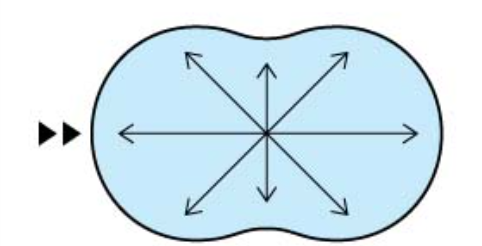
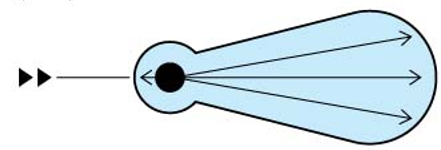
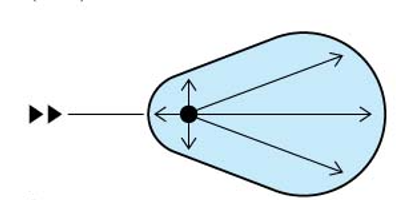
three types of light scatters
rayleigh theory
iden the type of light scatter
mie thoery
iden the type of light scatter
rayleigh-debye theory
iden the type of light scatter
Mercury arc lamp
Tungsten lamp
LED
Laser
light source for NEPHELOMETER
microbiology analyzers (AST)
coagulation analyzers
protein conc quantification in biologic fluids
applications of TURBIDITY
light amplification by stimulated emission of radiation
LASER means?
LASER APPLICATIONS
Based on the interaction of radiant energy with excited atoms or molecules.
hematology
flow cytometer
(differential analysis of WBC)
applications of LASER
reflectometer
a filter photometer that measure the quantity of light reflected by a liquid sample
specular (polished surface)
diffuse (non-polished surface)
ENUMERATE
2 types of reflectance
urine dipstick
dry slide chemical analysis (vitros analyzer)
applications of REFLECTOMETRY
POTENTIOMETRY
measures voltage (electrical potential) between two electrodes.
ELECTROCHEMISTRY
Involves measurement of the current or voltage generated by the activity of specific ions
reference electrode
2 ELECTRODE IN POTENTIOMETRY
Electrode with a constant voltage
indicator electrode
measuring electrode