Major Bones (anaphy)

0.0(0)
Studied by 0 people
call kaiCall Kai
learnLearn
examPractice Test
spaced repetitionSpaced Repetition
heart puzzleMatch
flashcardsFlashcards
GameKnowt Play
full-widthPodcast
1
Card Sorting

1/23

flashcard set

Earn XP

Description and Tags

Last updated 6:24 AM on 10/8/26
Name
Mastery
Learn
Test
Matching
Spaced
Call with Kai
Chat

No analytics yet

Send a link to your students to track their progress

24 Terms
1
New cards
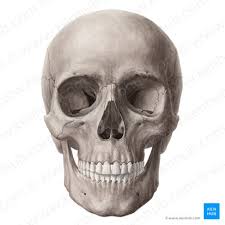
<p>Protects the brain and houses sensory organs. It consists of the cranium and facial bones, with the cranium being a rigid, enclosed structure.</p>

Protects the brain and houses sensory organs. It consists of the cranium and facial bones, with the cranium being a rigid, enclosed structure.

Skull
2
New cards
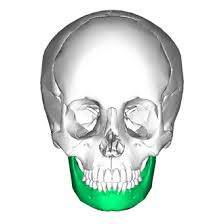
<p>The lower jawbone. It is the only movable bone in the skull and forms the chin.</p>

The lower jawbone. It is the only movable bone in the skull and forms the chin.

Mandible

3
New cards
<p><span>small, U-shaped bone located at the front of the neck</span></p>

small, U-shaped bone located at the front of the neck

hyoid bone
4
New cards
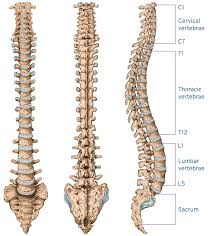
<p>Individual bones that form the vertebral column (spine). They protect the spinal cord and support the head and trunk. Each typically features a vertebral body, vertebral arch, and several processes for muscle attachment and articulation.</p>

Individual bones that form the vertebral column (spine). They protect the spinal cord and support the head and trunk. Each typically features a vertebral body, vertebral arch, and several processes for muscle attachment and articulation.

Vertebral column
5
New cards
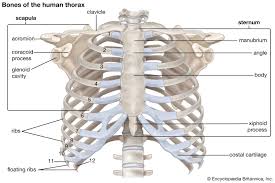
<p>Twelve pairs of curved bones that form the thoracic cage, articulating with the thoracic vertebrae posteriorly and the sternum (directly or indirectly) anteriorly. They protect internal organs like the heart and lungs.</p>

Twelve pairs of curved bones that form the thoracic cage, articulating with the thoracic vertebrae posteriorly and the sternum (directly or indirectly) anteriorly. They protect internal organs like the heart and lungs.

Ribs
6
New cards
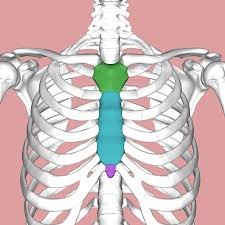
<p>The breastbone, a flat bone located in the central part of the chest. It connects to the ribs via cartilage, forming the anterior part of the rib cage.</p>

The breastbone, a flat bone located in the central part of the chest. It connects to the ribs via cartilage, forming the anterior part of the rib cage.

Sternum
7
New cards
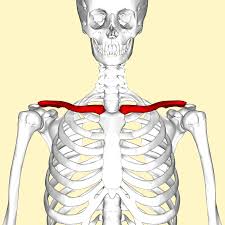
<p>The collarbone, an S-shaped long bone connecting the sternum to the scapula. It forms part of the pectoral girdle, providing support for the shoulder.</p>

The collarbone, an S-shaped long bone connecting the sternum to the scapula. It forms part of the pectoral girdle, providing support for the shoulder.

Clavicle
8
New cards
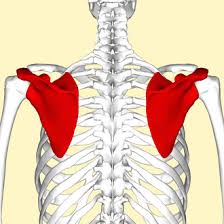
<p>The shoulder blade, a large triangular flat bone located on the posterior side of the rib cage. It articulates with the humerus and clavicle, forming part of the pectoral girdle.</p>

The shoulder blade, a large triangular flat bone located on the posterior side of the rib cage. It articulates with the humerus and clavicle, forming part of the pectoral girdle.

Scapula
9
New cards
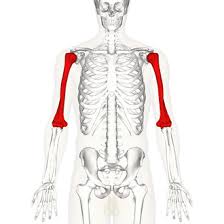
<p>The long bone of the upper arm. It articulates proximally with the scapula at the shoulder joint and distally with the ulna and radius at the elbow joint.</p>

The long bone of the upper arm. It articulates proximally with the scapula at the shoulder joint and distally with the ulna and radius at the elbow joint.

Humerus
10
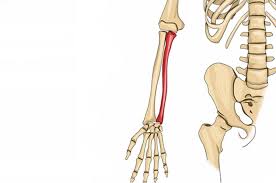
New cards
<p>One of the two long bones in the forearm, located on the medial side (pinky finger side). It forms a major part of the elbow joint with the humerus.</p>

One of the two long bones in the forearm, located on the medial side (pinky finger side). It forms a major part of the elbow joint with the humerus.

Ulna
11
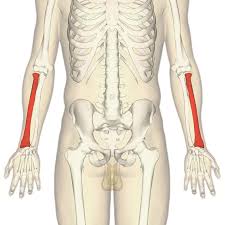
New cards
<p>One of the two long bones in the forearm, located on the lateral side (thumb side). It allows for rotation of the forearm and hand at the wrist joint.</p>

One of the two long bones in the forearm, located on the lateral side (thumb side). It allows for rotation of the forearm and hand at the wrist joint.

Radius
12
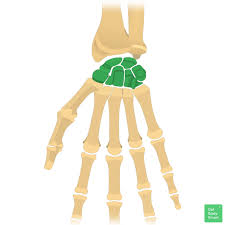
New cards
<p>Eight small, irregularly shaped bones of the wrist, arranged in two rows. They provide flexibility and movement to the hand.</p>

Eight small, irregularly shaped bones of the wrist, arranged in two rows. They provide flexibility and movement to the hand.

Carpals

13
New cards
<p>The five long bones that form the palm of the hand. They connect the carpals to the phalanges of the fingers.</p>

The five long bones that form the palm of the hand. They connect the carpals to the phalanges of the fingers.

Metacarpals

14
New cards
<p>The bones of the fingers. There are two phalanges in the thumb (proximal and distal) and three in each of the other four fingers (proximal, middle, and distal).</p>

The bones of the fingers. There are two phalanges in the thumb (proximal and distal) and three in each of the other four fingers (proximal, middle, and distal).

Phalanges (Hand)
15
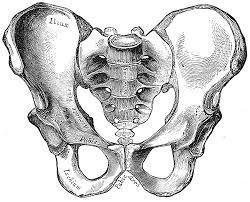
New cards
<p>A large, irregular bone forming the hip bone. It is composed of three fused bones: the ilium, ischium, and pubis. It connects the axial skeleton to the lower limbs.</p>

A large, irregular bone forming the hip bone. It is composed of three fused bones: the ilium, ischium, and pubis. It connects the axial skeleton to the lower limbs.

hip bone

16
New cards
<p><span>large, triangular bone located at the base of the spine that forms the back wall of the pelvic cavity</span></p>

large, triangular bone located at the base of the spine that forms the back wall of the pelvic cavity

sacrum

17
New cards
<p>the small, triangular-shaped final segment of the vertebral column located just below the sacrum</p>

the small, triangular-shaped final segment of the vertebral column located just below the sacrum

coccyx
18
New cards
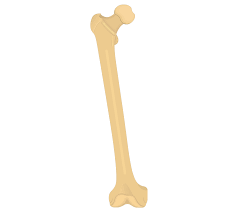
<p>The thigh bone, which is the longest and strongest bone in the human body. It articulates proximally with the hip bone and distally with the patella and tibia.</p>

The thigh bone, which is the longest and strongest bone in the human body. It articulates proximally with the hip bone and distally with the patella and tibia.

Femur

19
New cards
<p>The kneecap, a sesamoid bone embedded within the quadriceps tendon. It protects the knee joint and improves the leverage of the quadriceps muscle.</p>

The kneecap, a sesamoid bone embedded within the quadriceps tendon. It protects the knee joint and improves the leverage of the quadriceps muscle.

Patella
20
New cards
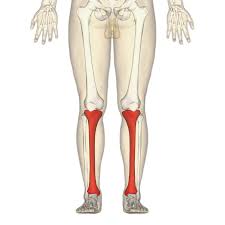
<p>The shin bone, which is the larger and medial bone of the lower leg. It bears most of the body's weight from the femur down to the ankle.</p>

The shin bone, which is the larger and medial bone of the lower leg. It bears most of the body's weight from the femur down to the ankle.

Tibia
21
New cards
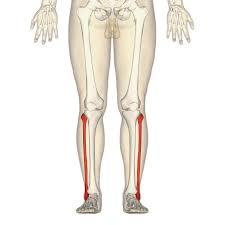
<p>The calf bone, a slender bone located on the lateral side of the tibia in the lower leg. It provides muscle attachment sites and helps stabilize the ankle joint.</p>

The calf bone, a slender bone located on the lateral side of the tibia in the lower leg. It provides muscle attachment sites and helps stabilize the ankle joint.

Fibula

22
New cards
<p>Seven bones that make up the ankle and upper foot. Key bones include the talus (which articulates with the tibia and fibula) and the calcaneus (heel bone).</p>

Seven bones that make up the ankle and upper foot. Key bones include the talus (which articulates with the tibia and fibula) and the calcaneus (heel bone).

Tarsals

23
New cards
<p>The five long bones that form the midfoot. They connect the tarsals to the phalanges of the toes.</p>

The five long bones that form the midfoot. They connect the tarsals to the phalanges of the toes.

Metatarsals

24
New cards
<p>The bones of the toes. There are two phalanges in the big toe (proximal and distal) and three in each of the other four toes (proximal, middle, and distal).</p>

The bones of the toes. There are two phalanges in the big toe (proximal and distal) and three in each of the other four toes (proximal, middle, and distal).

Phalanges (Foot)



