Marketing Chapter 2 & 3
 Call Kai
 Learn
 Practice Test
 Spaced Repetition
 Match
 Flashcards
 Knowt Play
1/15

There's no tags or description
Looks like no tags are added yet.
16 Terms
External Marketing Environment
external factors that can impact the target audience
key external force is evolution of target mix
handles decisions, not controllable, positive trends are opportunities
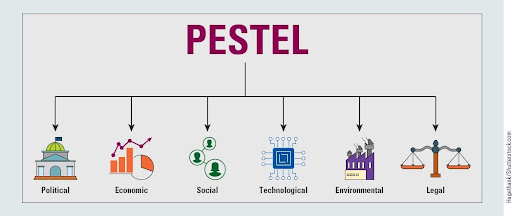
PESTEL System
Political → government policies, trade regulators, political risks, labour issues
Economic → consumer’s income, purchasing power, inflation, recession
Social → market-oriented values, lifestyles, demographics, needs
Technological → research, tech & future of business
Environmental → climate change, natural resources, sustainability/conservation, regulations
Legal → federal legislation, provincial/territorial laws
Demographic → Gen Z, Y, X, Baby boomers (age, income, location)
Competitive Forces in External Environment
direct competitors
substitutes
new entrants
suppliers
buyers
Strategic Planning is important because..
limited time, money
making choices, establish objectives and how to achieve
internal resources and the environment
Levels
Corporate (direction/scope, resource allocation, opportunities)
Business (strategic business unit (SBU), competitive advantage)
Marketing (target market, marketing mix)
Mission Statement
statement of business’s value based on
analysis of benefits by present/potential customers
analysis of existing/anticipated environmental conditions
focus on
a) market rather than goods/services
b) be short = define by goods/services than benefits
c) be broad
d) be clear what it provides, what it promises
Corporate, SBU, Marketing Diagran

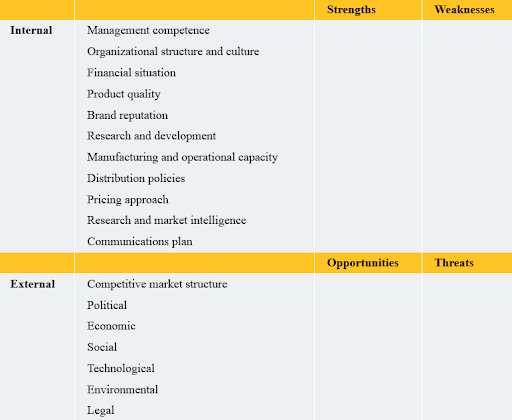
SWOT Analysis (Strengths, Weaknesses, External Opportunities, Threats)
Strengths & Weaknesses (Internal)
External Opportunities & Threats (External)
Strategic Alternatives

Competitive Advantage
unique features of company and its products, perceived by target market as superior to competition
Cost Competitive Advantage: low-cost competitor in industry, maintain good profit margins
Product/Service Differentiation: unique benefit + value of customer
e.g. Aritizia, invests in training, good customer service, building
Niche: company seeks target, effectively services single segment of market
Sustainable: cannot be copied by competition (e.g. Rolex)

Marketing Objectives
statement of what is to be accomplished through activities
SMART(er)
e → exact (dates/times for start/end dates, avoid interpretation)
r → relative (objective includes growth, compared to when/what?)

Market Opportunity Analysis (MOA)
analyzes market segments sales potential
estimates size of market segments (of interest to business)
assessment of key competitors in market segments
Marketing Audit
strong one is → comprehensive, systematic, independent , periodic

Implementation → Evaluation → Control
Implement - marketing plan into action assignments
do what you say you were going to do
detailed job assignments, timelines/budgets, lots of communication
Evaluate - extent to which marketing objectives achieved in specific period
common reasons for failing: poor implementations, unrealistic objectives, changes in environment
Control - provide mechanisms for results, correct actions within budget guidelines
Strategic vs Tactical Decisions
Strategic
made at all three levels, wider in scope
longer in orientation
affects long run course of business, alloc. of resources, financial success
Tactical
made at operational/marketing level, narrow in scope
short term
Ansoff’s Strategic Opportunity Matrix

Product, Price, Place, Promotion
Product: heart of marketing mix
physical (package, brand, image, value, warranty, etc)
Price: what a buyer must give up in the exchange
“value” in mind of consumer, quickest element to change
Place: making products avail. when and where customers wants em
physical distribution (storing/transporting)
Promotion: introduce, facilitate, sustain between company and customer
advertising, direct marketing, public relations, personal selling
digital marketing, sales promotions