Topic 5 (Alkene mechanisms and Polymers)
 Call Kai
 Learn
Learn Practice Test
 Spaced Repetition
 Match
Match Flashcards
 Knowt Play
1/6

There's no tags or description
Looks like no tags are added yet.
Name | Mastery | Learn | Test | Matching | Spaced | Call with Kai | Chat |
|---|
No analytics yet
Send a link to your students to track their progress
7 Terms
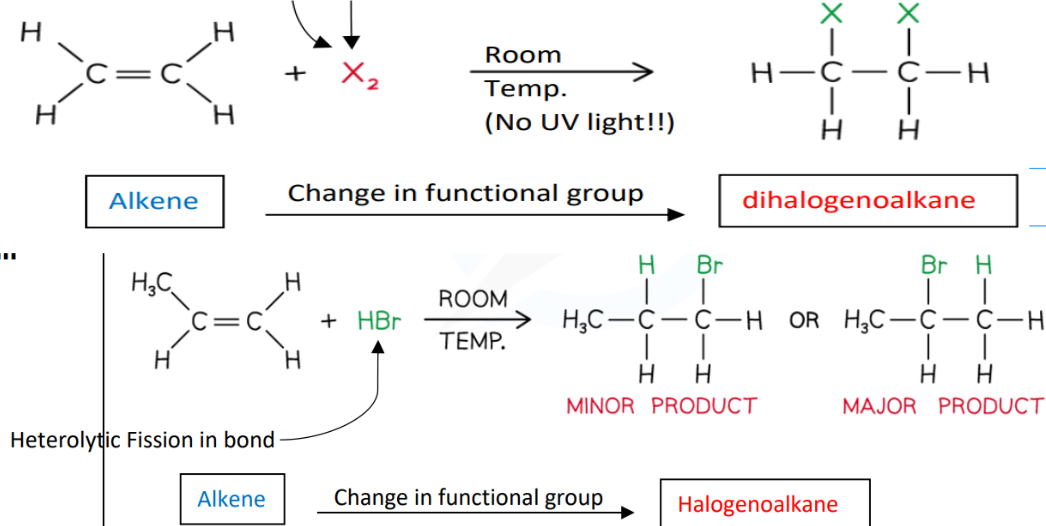
for mechanism of (asymmetric) alkene reacting with HBr/HCl, where does H attack to form major product?
- Hydrogen adds/attacks to the carbon atom with more hydrogen atoms
(Markovnikov's law)
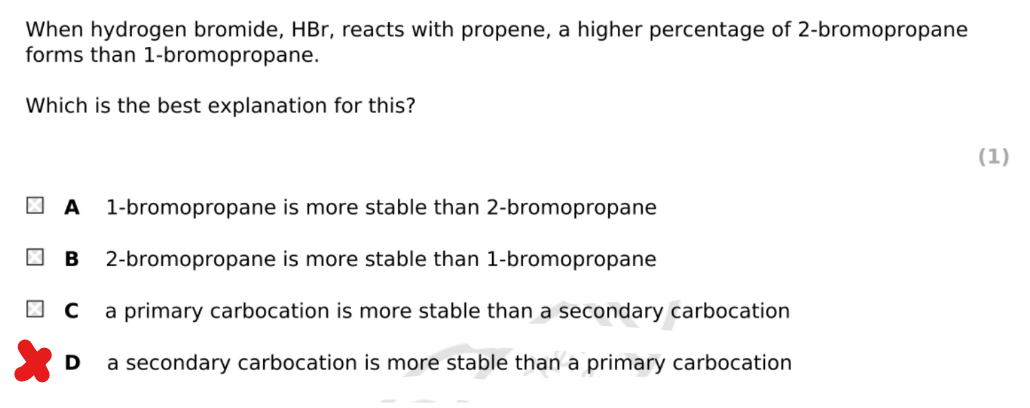
(because adding H to the carbon with more hydrogens forms a more stable carbocation, leading to the formation major product)
alkyl groups are _____
alkyl groups are electron giving groups, always gives electron to carbocation
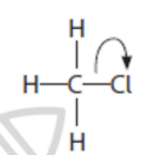
What does the curly arrows shown represent ?
movement of pair of electron from a bond to an atom, forming ion
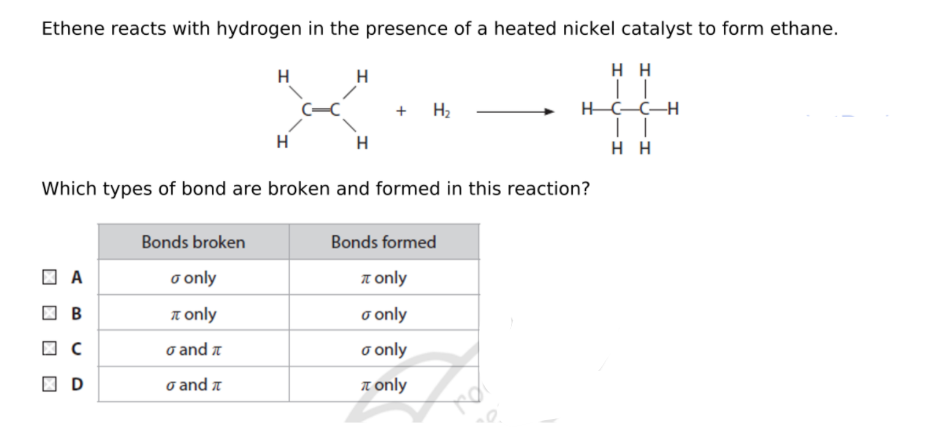
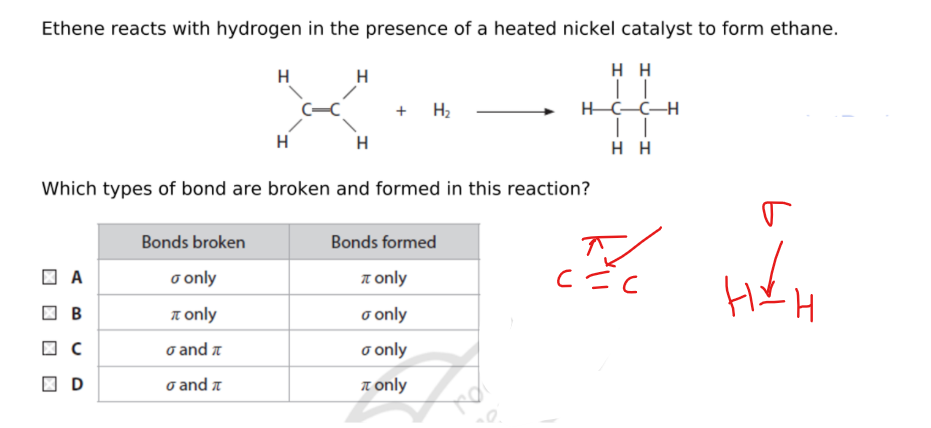
pi bond from C=C broken and sigma bond from H-H is broken
sigma bond formed between C-H
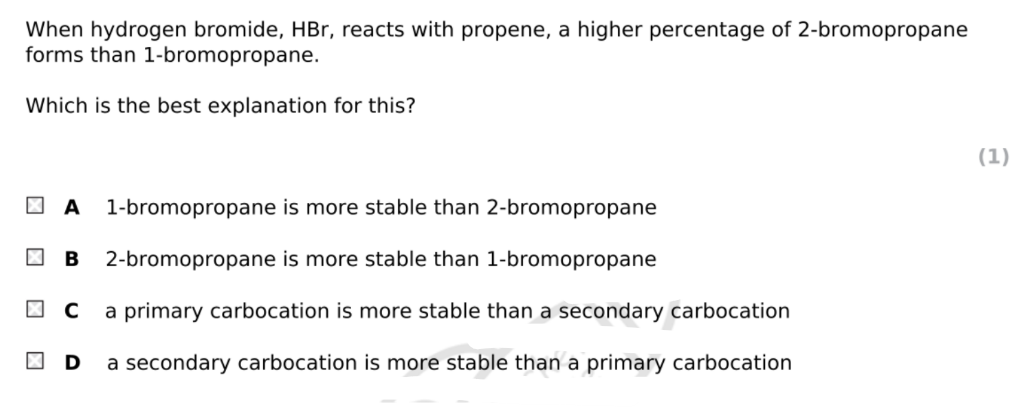
NOTE:
stability of compound does not determine which product is formed, rather it is the stabitlity of carbocation
what is an electrophile?
a species that can accept a pair of electrons to form covalent bond
The mechanisms shown of ther reaction is an example of what?
electrophilic addition