AP Gov Required Supreme Court Cases and Fondational Documents
 Call Kai
 Learn
Learn Practice Test
 Spaced Repetition
 Match
Match Flashcards
 Knowt Play
1/24

There's no tags or description
Looks like no tags are added yet.
Name | Mastery | Learn | Test | Matching | Spaced | Call with Kai | Chat |
|---|
No analytics yet
Send a link to your students to track their progress
25 Terms

Focuses on Judicial Review. The Court declared a congressional law unconstitutional, establishing the judiciary as an equal branch of government with the power to check other branches.
Marbury v. Madison (1803)
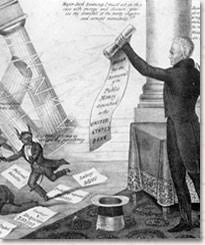
Focuses on Federalism and the Elastic Clause. Ruled that Congress has the implied power to create a national bank, and states cannot tax federal institutions because federal law is supreme.
McCulloch v. Maryland (1819)

Focuses on Federal Overreach & The Commerce Clause. Ruled that possessing a gun in a school zone is a non-economic activity, marking the first time in decades that the Court limited Congress's power under the commerce clause.
United States v. Lopez (1995)

Focuses on the 14th Amendment’s Equal Protection Clause. Ruled that legislative mal apportionment challenges can be reviewed by federal courts, creating the “one person, one vote” standard for equal district populations.
Baker v. Carr (1962)

Focuses on Racial Gerrymandering. Ruled that although states can consider race to comply with the Voting Rights Act, they cannot make race the predominant factor when drawing bizarrely shaped district lines.
Shaw v. Reno (1993)
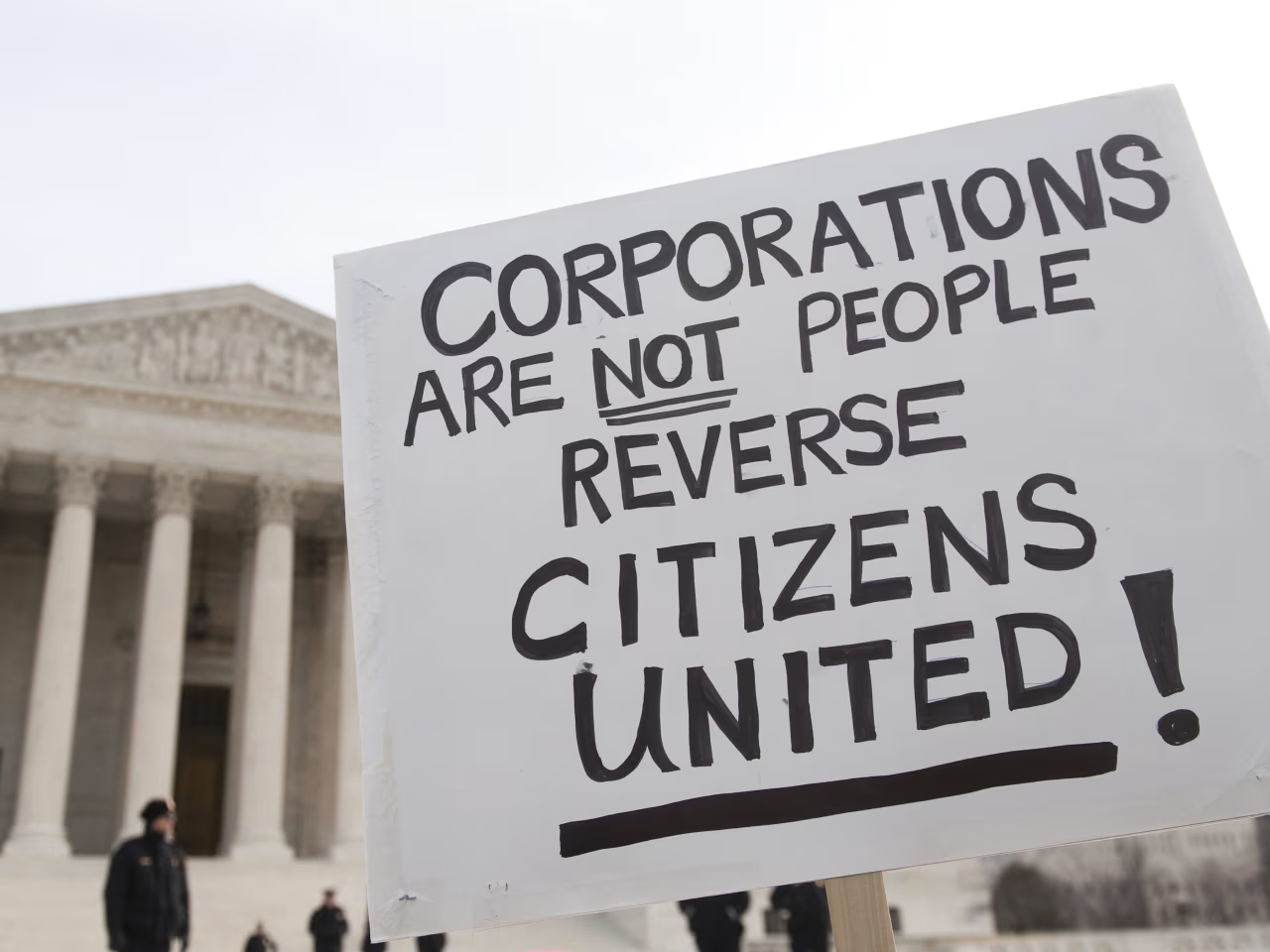
Focuses on First Amendment Free Speech. Ruled that political spending by corporations and unions is protected speech, allowing for unlimited independent political expenditures and giving rise to Super PACs.
Citizens United v. FEC (2010)

Focuses on the Establishment Clause. Ruled that school-sponsored, non-denominational prayer in public schools is unconstitutional because the government must remain neutral in matters of religion.
Engel v. Vitale (1962)

Focuses on the Free Exercise Clause. Ruled that a state's interest in compulsory high school education is outweighed by a community's right to freely practice its deeply rooted religious beliefs.
Wisconsin v. Yoder (1972)
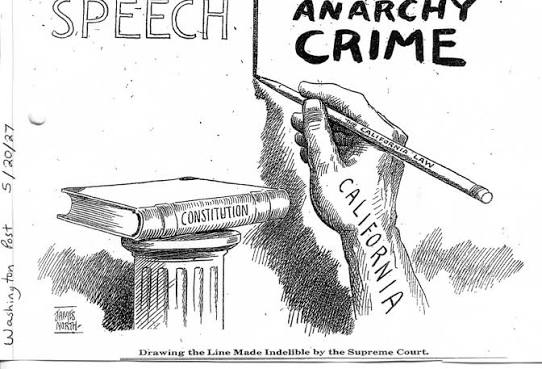
Focuses on Wartime Speech Restrctions. Established the “clear and present danger” test, ruling that speech can be limited if it poses a direct threat to national security or public safety.
Schenck v. United States (1919)

Focuses on Symbolic Speech. Ruled that students do not lose their free speech rights at the schoolhouse gate; silent protests (like wearing armbands) are protected if they do not substantially disrupt school operations.
Tinker v. Des Moines (1969)
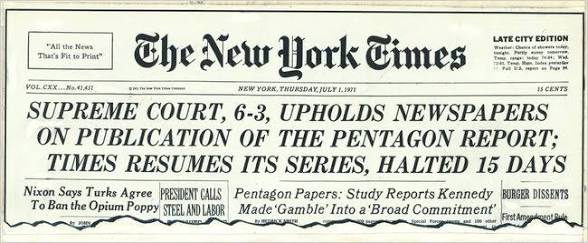
Focuses on the Freedom of the Press. Struck down the government's attempt at prior restraint (censorship before publication), ruling that the government failed to prove publishing the classified papers threatened national security.
New York Times Co. v. United States (1971)

Focuses on the Second Amendment & Incorporation. Ruled that the individual right to keep and bear arms for self-defense applies to state and local governments through the 14th Amendment’s Due Process Clause.
McDonald v. Chicago (2010)

Focuses on the Equal Protection Clause. Overturned Plessy v. Ferguson, ruling that state-sanctioned racial segregation in public schools is inherently unequal and unconstitutional.
Brown v. Board of Education (1954)

Focuses on the Sixth Amendment Right to Counsel. Ruled that state courts must provide a free lawyer to any criminal defendant who cannot afford one, incorporating this right via the 14th Amendment’s Due Process Clause.
Gideon v. Wainwright (1963)

Focuses on Same-Sex Marriage. Ruled that the fundamental right to marry is guaranteed to same-sex couples under both the Due Process Clause and the Equal Protection Clause.
Obergefell v. Hodges (2015)
Outlines natural rights and the social contract to explain why the colonies are breaking away from a tyrannical king.
The Declaration of Independence

The first U.S. government framework that failed completely because the central government was too weak to tax or raise an army.
The Articles of Confederation

Written by James Madison; argues that a large republic is the best way to keep powerful political factions (interest groups) from taking over.
Federalist No. 10

Written by James Madison; argues that separation of powers and checks and balances are necessary to keep the government from becoming tyrannical.
Federalist No. 51
Written by Anti-Federalists; argues that a large central government will use the Elastic Clause to destroy state powers and trample individual liberties.
Brutus No. 1
The first 10 amendments added to the Constitution to explicitly protect individual freedoms from federal government overreach.
The Bill of Rights
Written by Martin Luther King Jr.; argues that citizens have a moral duty to use nonviolent direct action to fight unjust, segregationist laws.
Letter from Birmingham Jail
Written by Alexander Hamilton; argues for a single, energetic executive (one President) who can make decisions with speed, secrecy, and accountability.
Federalist No. 70
Written by Alexander Hamilton; argues that the judiciary needs lifetime tenure to maintain its independence and exercise judicial review.
Federalist No. 78
Establishes our current supreme law and three-branch government framework built on compromises and federalism (shared power with states).
The Constitution of the United States