SL22105-Lec LV-5 Glutathione -S transferases and conjugation
 Call Kai
 Learn
Learn Practice Test
 Spaced Repetition
 Match
Match Flashcards
 Knowt Play
1/24

There's no tags or description
Looks like no tags are added yet.
Name | Mastery | Learn | Test | Matching | Spaced | Call with Kai | Chat |
|---|
No analytics yet
Send a link to your students to track their progress
25 Terms
Lecture LV5: Glutathione-S-Transferases And Glutathione Conjugation

Detoxifies electrophilic drugs and toxic metabolites
By reacting with electrophile e.g. UDP-glucuonic acid with nucleophiles
Structure of glutathione
Disulphide bond results from oxidation
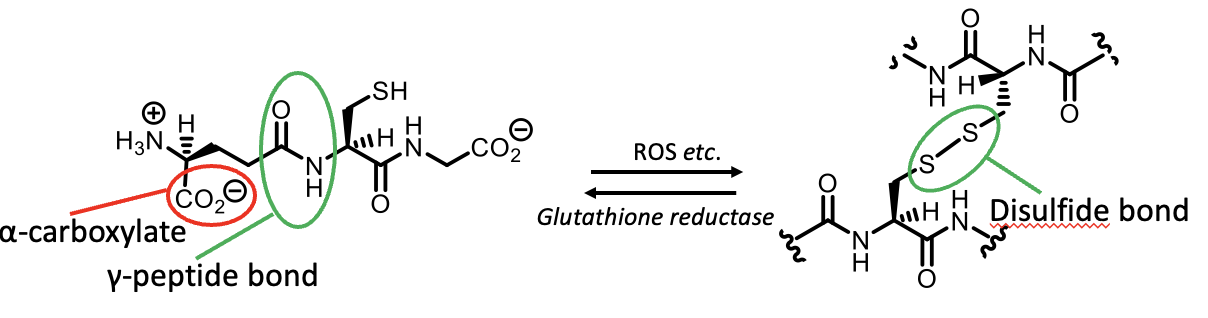
Purpose of glutathione
Reducing agent
protects against radicals, reactive oxygen species
What enzyme catalyses this reduction
NADPH-dependent reductase
Glutathione-S-Transferases super families
Cytosolic, microsomal, mitochondria enzymes
for drug metabolism
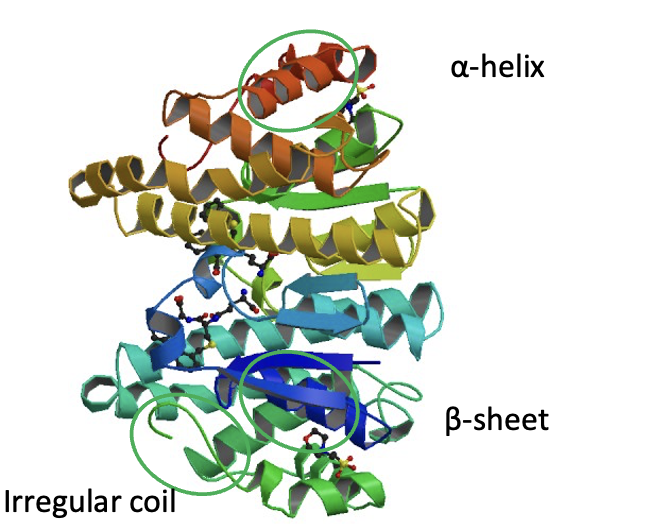
Cystolic vs microsomal structure
Cytosolic enzymes are dimers (2 sub-units).
Microsomal enzymes are trimers (3 sub-units) and mostly metabolise arachidonic acid (inflammatory mediators)
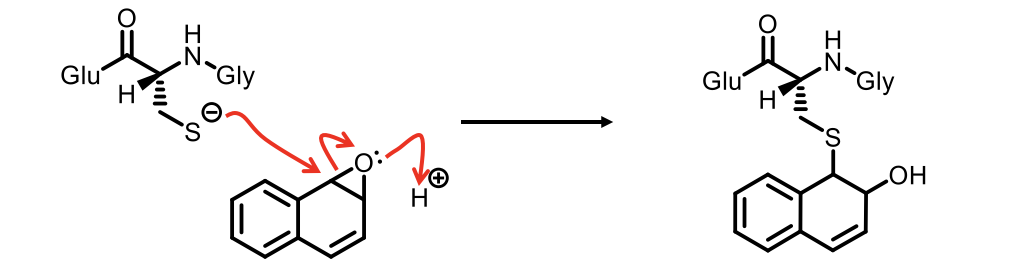
Reaction of Glutathione with Epoxides
Remember detoxifies electrophiles (electron deficiency)
SH is deprotonated by enzyme
Increases activity
Protonates O which is a bad leaving group to form OH
Important for metabolism of polycyclic aromatic compounds
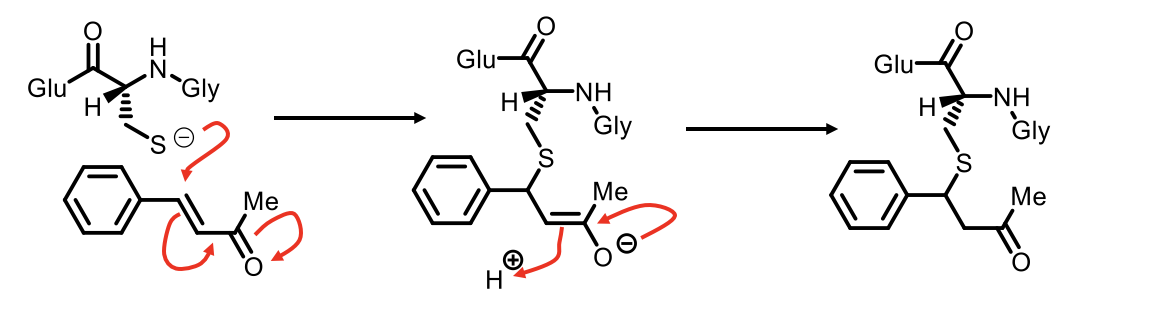
Reaction of Glutathione by 1,4-Conjugate Addition

Double bond next to EWG (amide)
Conjugate addition (a.k.a. Michael addition) occurs with electron-deficient double bonds.
Requires electron-withdrawing (usually carbonyl) group.
Reaction proceeds via an enolate intermediate.

disulphide bond broken to increase reactivity
electrons move to area of low electron density, double bond
breaks double bond
breaks C=O
Form unstable O-
O- resonates
transfers electron
protonate double bond
Reaction of Glutathione in Paracetamol Metabolism
Reactive intermediate produced by cytochrome P450 enzyme followed by dehydration.
Reaction with glutathione is a 1,4-conjugate addition.

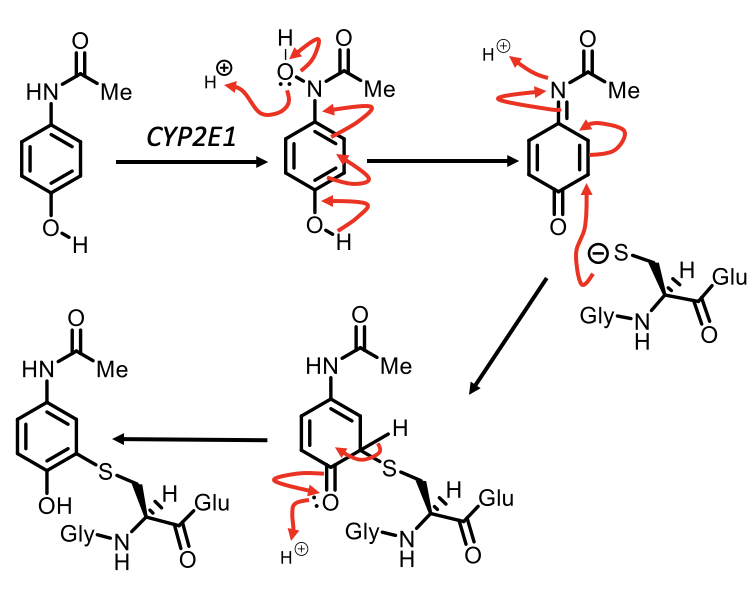
overdosing on paracetamol
depletes glutathione
results in liver failure as it cannot process the oxidative species
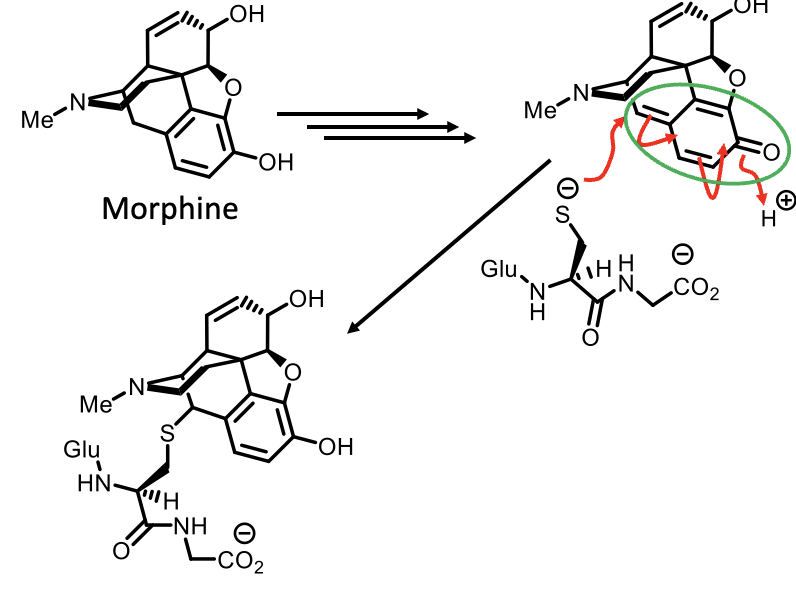
Reaction Of Glutathione In 1,6-Conjugate Addition
Oxidation by cytochrome P450 enzyme produces quinone intermediate.
Glutathione reacts with 1,6-conjugate addition.
Reaction restores aromaticity (shifts double bonds).

mercapturates
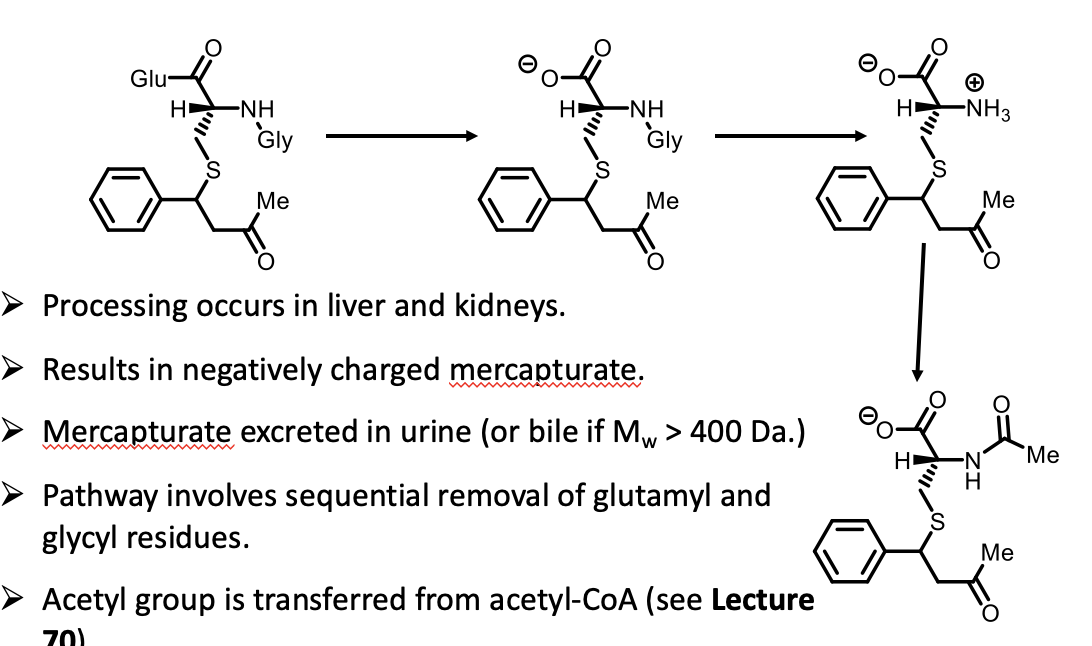
Conversion of Conjugates to Mercapturates
Processing occurs in the liver and kidneys, resulting in negatively charged mercapturate which is excreted in urine (or bile if Mw > 400 Da). The pathway involves sequential removal of glutamyl and glycyl residues, and an acetyl group is transferred from acetyl-CoA.
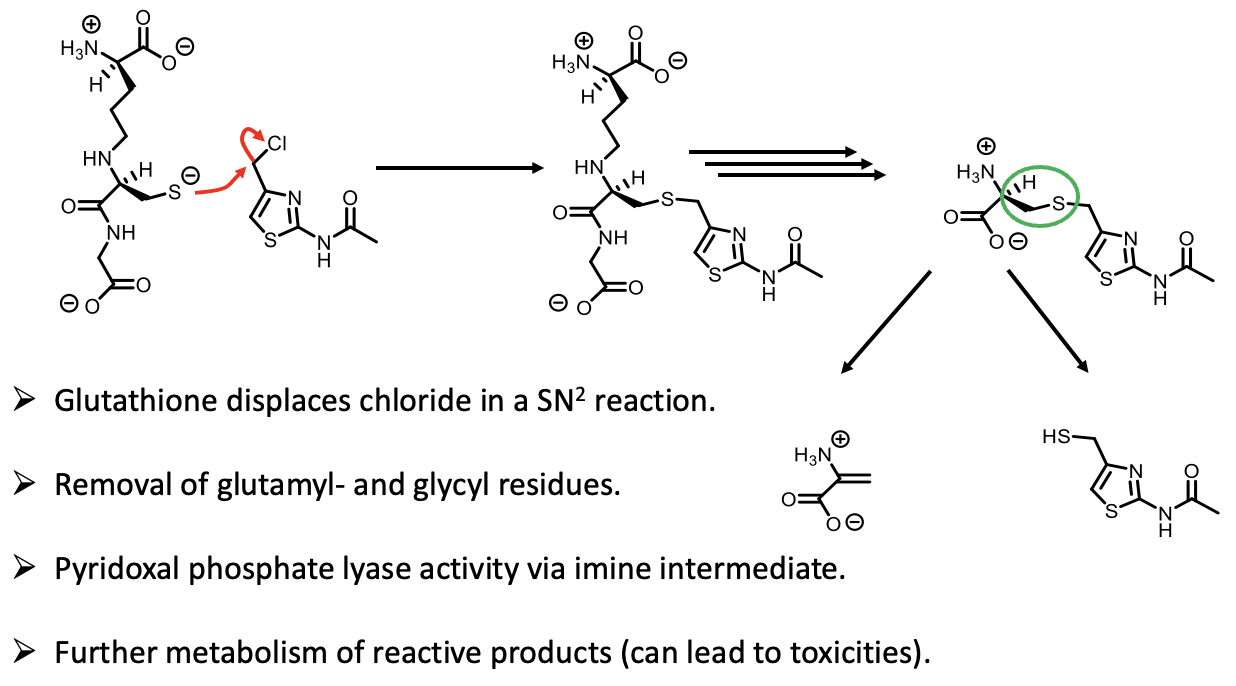
Conversion of Mercapturates by Cysteine Lyases
Cysteine lyases catalyze the conversion of mercapturates into cysteine derivatives, facilitating detoxification processes.
Conversion of Mercapturates by Cysteine Lyases

How do enzymes exist
As non-covalent dimers
Can be homo or hetero dimers with monomer subunits of 20-25 kDa
Subfamilies
20 isomers of GST creates subfamilies due to different combinations of monomers
e.g. alpha, mu, pi, sigma, tay, zeta, omega, kappa, GSTA1-1
Induction of GST enzymes
Induction of cytosolic and microsomal enzymes by physiological (oxidative) stress and xenobiotics (including drugs) can occur
What is specific and what is variable
Expression is tissue is specific
basal levels of enzymes are variable
Clinical implications of GST enzymes
Many drugs stimulate receptors that regulate fatty acid metabolism e.g. peroxisomal proliferation activating receptor
leads to higher rate of metabolism due to higher enzyme levels and activity
over expression of enzymes also associated with treatment resistance in cancers
Polymorphisms of GST
Occurs in the protein sequence but sometimes promoter region
reduces protein levels
effect of GST polymorphism
Polymorphisms can have difference levels of effect e.g., GST M1 polymorphisms are found in >20 different types of cancer, whilst polymorphisms in GSTA1 are only associated with colorectal cancer.
Decreased expression of GSTM1 due to polymorphisms is associated with decreased risk of prostate cancer.

Cytotoxics
Highly electrophilic
Polymorphisms of GST and cancer chemotherapy
Often uses cytotoxic drugs as therapeutic agents
these are usually electrophilic
ØCancer drugs often react with DNA but are also reactive with other nucleophiles.
ØMetabolism of these drugs is via the GST enzymes.
ØPolymorphisms in GSTA1 and P1 predict survival following chemotherapy – likely due different metabolic rates of the drugs.
