urinary & repro exam 1
 Call Kai
 Learn
 Practice Test
 Spaced Repetition
 Match
 Flashcards
 Knowt Play
1/107

There's no tags or description
Looks like no tags are added yet.
108 Terms
oligo anuric
minimal to no urine output
non-oligo anuric
some but less than normal urine output
polyuric
increased urine output
pollakiuria
small volume of urine
strangnuria
straining to urinate
dysuria
difficulty urinating
periuria
inappropriate urination
nocturia
urination at night
incontinence
unconscious urination
azotemia
increased non-protein nitrogenous compounds in the blood, increase in serum urea nitrogen and//or creatinine concentration and/or SDMA, reflective of GFR
Use USG to differentiate between pre/rena//post
urea nitrogen
liver, prerenal/renal/postrenal, GI bleed or high protein diet, poor sensitivity for kidney impairment, decrease from liver dysfunction, low protein diets
creatinine
from muscle (but not indicative of muscle damage), increase due to prerenal/renal/post renal, better sensitivity compared to BUN, decrease from muscle wasting
SDMA
from nucleated cells, increase due to pre-renal/renal/postrenal, most sensitive, not commonly decreased
hyperthenuria
highly.adequately concentrated urine
isosthenuria
urinary osmolality=plasma osmolality
Tubules didn’t dilute or concentrate (USG 1.008-1.012)
hyposthenuria
diluted urine
prerenal azotemia
reduced renal blood flow due to hypovolemia from dehydration or shock
Decreased BUN and creatinine clearance
Increased urea production: upper GI hemorrhage. high protein diet, mildly increased UN and normal creatinine USG variable
renal azotemia
any renal disease that decreases GFR below 25%
post renal azotemia
excretion challenge such as urinary tract blockage or rupture
USG variable, hyperkalemia often present
hematuria
intact RBCs, after centrifugation RBCs found in sediment but urine supernatant is clear
hemoglobinuria, myoglobinuria
after centrifugation red/brown color persists throughout, red or pink plasma if hemoglobin and clear plasma if myoglobin
squamous epithelial cells in UA microanalysis
contamination (urethra, vagina, skin), most common in catheterized and voided samples
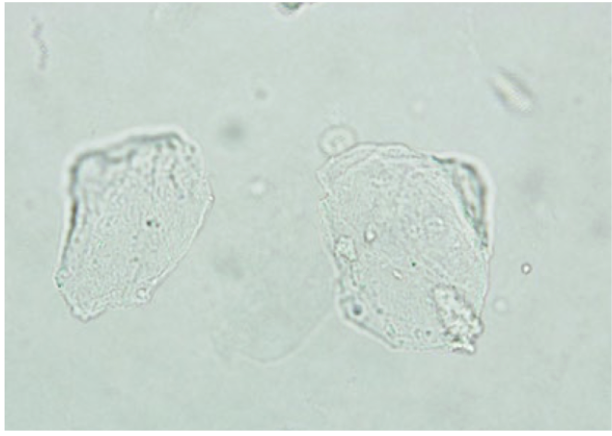
transitional epithelial from UA microanalysis
low numbers can be normal, from catheterization, UTIs and neoplasia, visible round nucleus

casts (cylindruria)
form in renal tubules, may not be flushed into urine, may intermittently shower, absence doesn’t rule out active tubular disease
Few hyaline or granular casts can be found in healthy animals related to normal cell turnover or entrapped proteins -> more abundant in animals with glomerular proteinuria
Deteriorate in urine quickly
Cellular casts are abnormal

struvite crystals
magnesium ammonium phosphate, shaped like gold bars, can be found in healthy and unhealthy dogs/cats

calcium carbonate crystals
common finding in normal horses and rabbits, identified as spheres with radiating lines, ovals, and/or dog bone shaped

ammonium biurate crystals
thorn apple shaped, often associated with liver disease, can be normal in dalmatians and english bulldogs

bilirubin crystals
gold needles, seen with bilirubinuria, particularly with highly concentrated dog urine

calcium oxalate monohydrate crystals
fence pickets, associated with ethylene glycol

calcium oxalate dihyedrate crystals
can see in low numbers in health but can indicate increased calcium and/or oxalates

urine protein:creatinine ratio
further assess degree of proteinuria to confirm urine dipstick; clinically useful substitute for 24hr excretion study
Interpretation: >0.5 in dogs=overt proteinuria; > 0.4 in cats =overt proteinuria; > 2.0 suggestive for glomerular disease
uroabdomen
leakage of urine from the urinary tract into the peritoneal space, usually from the bladder from trauma
CS: +/- urination, +/- abdominal swelling, +/- hematuria, vomiting, inappetance, malaise, +/- painful
DX: blood chemistry abnormalities (BUN, creatinine, potassium), abdominal fluid (BUN, creatinine, potassium), creatinine or potassium ratio around 2:1 abdominal fluid, cytology
Diagnostic imaging defines the source of the leaking: abdominal radiographs, US, urethrocystogram, intravenous pyelogram
TX: acute stabilization, remove urine from peritoneal space (abdominocentesis, bladder catheter, peritoneal catheter, IV fluids, correct electrolyte disturbances), then correct primary problem
Primary surgical repair: advantage is rapid resolution, disadvantage is anesthesia and abdominal surgery, caudal abdominal approach debride and close bladder
Long term urinary catheter: advantage is avoid general anesthesia and surgery, disadvantage is long term hospitalization, ascending infection, may still require surgery
ureteronephrectomy
Indications: severe infection, traumatic injury, hydronephrosis
Steps: ventral midline incision, free retroperitoneal attachments and flip kidney medially to expose artery, ligate artery ligate vein, ligate ureter near UVJ
Problems: bleeding, leakage of urine, chronic infection (remove all of ureter), renal failure
function of kidneys
gulation of water/electrolyte balance, extracellular fluid volume and systemic BP, acid-based balance; excretion of metabolic waste and foreign substances, regulation of RBC production, regulation of vitamin D produce and calcium and phosphate balance, gluconeogenesis
chronic kidney disease
abnormality of kidney structure or function that has been present for > 3m with implications for health
Permanent reduction of number of functioning nephrons -> decreased glomerular filtration rate and other issues
Slow progression
Prevalence increases with age
HX/PE: polyuria/polydipsia for > 3m, weight loss for > 3m, chronic/intermittent GI signs, reduced appetite for >3m, poor haircoat, small, irregular kidneys, +/- chronic uremic breath, osteodystrophy, signs related to proteinuria/hypertension
CS mild relative to level of azotemia, non regenerative anemia as disease progress
Fibrosis is an indicator
Causes: AKI, amyloidosis, renal dysplasia, polycystic kidney disease, congenital, pyelonephritis, chronic infection with FIV/FeLV/FIP, idiopathetic, neoplasia, glomerulosclerosis, immune complex glomerulonephritis, nephro- and ureterolithiais
Primary lesions within glomerulus common in dogs and within the tubulointerstitial compartment common in cats
acute kidney injury
an abrupt decrease in kidney function, encompassing both injury (structural damage) and impairment
Sudden change in kidney structure, function, or both -> decreased GFR and other issues , may detect azotemia beforehand
Potentially reversible, Predisposition to CKD
HX/PE: recent change in urination, no change in weight/BCS, acute onset of GI signs, recent reduction in appetite, health hair coat, normal to enlarged kidneys
More severe clinical signs for the same level of azotemia, hematocrit often normal to increased
effects of hypertension on eye
retinopathy, choroidopathy, optic neuropathy, retinal hemorrhage or edema, vitriol hemorrhage, partial or complete bullous detachment
effects of hypertension on heart
ventricular hypertrophy, arrhythmias, murmur vasculopathy
effects of hypertension on brain
hypertensive encephalopathy, stroke, lethargy, seizure, altered mentation or behavior
effects of hypertension on kidneys
proteinuria, progression of CKD
pregnancy diagnosis
Transabdominal palpation
Advantages: cheap, no equipment needed, 2ccm swellings by d30
disadvantages: small window accuracy (30-45 and over 45), inaccurate, iatrogenic fetal death?
Relaxin: can get false negatives <28d or abortion or whelping, not an assessment of fetal health or number
US: preferred
Early diagnosis: vesicles 18-20 d, HB @25 d
Late pregnancy: fetal viability and maturity
Assess stress, age, placental disease, fetal maturation, puppy count (miscount, resorption)
Rads: mineralization >45d (>38 in the queen), assess: gestational age, fetal death, feo-maternal disproportional, best method for puppy count
Tips: defecate first, ~55-60d for easier images
Acute phase proteins
stage 1 labor dogs
6-12 h, uterine contractions, pelvic ligament and cervix relaxation, placental separation (if green to black vulvar discharge early with no puppy needs to be evaluated)
Signs: obsessive nesting, anorexia, restlessness, panting, shivering
stage 2 &3 labor dogs
fetal and placental expulsion, 30-60 min between pups, complete in 6h, fetal membranes should pass w/ pup, or within 5-15min, lochia (uterine discharge) normal up to 3w post partum, uterine involution takes up to 3m
causes of dystocia
Breed predisposition (brachycephalics), Primary uterine inertia, Feto-maternal disproportion, Singletons, Maternal abnormalities, Vaginal strictures, pelvic fractures, neoplasia , Secondary uterine inertia (large litters)
neonatal development
Neurologic maturation 21d
Eyes open 9-16d
Ear canals open 10-14d
Adult parameters
Thermoregulation 28d
Solid food
Postural control 3-5wk
neonatal vitals
Temp 96-97
HR: >200 bpm
RR: 15-30 bpm
7-10 adgar score for goof viability
reasons for no weight gain
Inadequate lactation: domperidone, oxytocin, treat maternal health
Dam rejection: acepromazine, placenta, oxytocin
Illness: antibiotics anti parasitic
Large litter: supplement 240-260 kcal/kg, bottle, tube, sponge
septicemia in neonates
failure of passive transfer of IgG +/- exposure to pathogens
Risk factors: dam endometritis/agalactia, dystocia, milk replacer
TX: ceftiofur, amoxiclav, trimethoprim/sulfonamides, cephalexin, penicillin, macrolides, amikacin (DONNOT give enrofloxacin or ciprofloxacin)
proestrus dog
~9d,
increased LH pulses @ end anestrus -> follicular growth -> increased plasma estrogen
Estrogen peaks at end
PE: vulvar swelling seroanguinous vulvar discharge
Behavior: attracts for males but wont stand for mating
Cytology: starts < 10% cornified at onset, >90% cornified by end of proestrus
estrus dog
~9d, increasing progesterone , 2d after LH surge
PE: less vulvar swelling, vulvar discharge more serous
Behavior: attracts males and stands for mating
Cytology: >90% cornified, most nuclear
diestrus
~60d,
Sharp decrease to <50% cornified on day 1, can use for retrospective calculation of fertile period, whelp 57 +/- 2d from d1,
Cytology: some nondegenerative PMNs, no RBCs, some neutrophils
anestrus
90-150d, basal progesterone and estradiol
PE: no detectable changes
Behavior: doesn’t attract males or stand to be mater
Cytology: parabasal cells, some neutrophils, no RBC
Most variable stage in length
pseudopregnancy
Behavioral changes (nesting, aggression, variable appetite), mammary gland development (lactation), weight gain
Non-pregnant bitches, diestrus, physiologic process, can also occur if spayed during later estrus/diestrus, withdrawal of progesterone
Treatment: diagnosed via clinical signs, resolve with time, but if medical management is needed (megestrol acetate, mibolerone, bromocriptine, cabergoline)
megesterol acetate
only approved progestagen
Estrus prevents: must start >1w prior to proestrus, treat for 32 days, 92% effective
Estrus suppression: must start in first 3 days of proestrus, tx for 8 days, onset suppression in 3-8d 97% effective, will return to estrus in 4-6 months
Side effects: pyometra, weight gain, lethargy,
don’t use if mammary neoplasia, diabetes mellitus, liver or uterine disease
Not recommended if first estrus or for more than 2 consecutive estrus cycles
mibolerone
only approved androgen, start >30s prior to proestrus, can prevent estrus for up to 2 years, return to estrus in 70d after withdrawal, check hepatic and renal function before initiating treatment
Side effects: clitoral hypertrophy, vulvar discharge, male behavior, obesity, improved hair coat
Contraindications: estrus, pregnancy, renal or hepatic disease, prepuberty, uterine disease
GnRH agonists
Leuprolide acetate: reversible azoospermia
Suprelorin implants: used in zoo populations, not approved in domestic cat/dogs, used in Europe
First stimulate pituitary-> then regulate FSH and LH -> decreased estradiol or testosterone
pregnancy termination treatment
spay, prostaglandin F2a, dexamethasone, dopamine agonist, progesterone antagonist, estrogenic compounds
prostaglandin F2a
must have a mature responsive CL, induces luteolysis and uterine contractions
Dinoprost or cloprostenol
90% abort in <9d, must monitor fetal heart beats and progesterone to ensure complete evacuation
Side effects: vomiting, diarrhea, trembling, panting, tachycardia, rarely circulatory collapse, effects dose dependent, see within 5 min of drug admin and last up to 1 hr, shortens interstitial interval by ~70d
Best if combined with a dopamine agonist
dexamethasone
start > 35d of gestation, abortion in 7-15d in 97% of dogs
Side effects: PU/PD, pass fetuses
dopamine agonist
bromocriptine, cabergoline (fewer side effects)
Start >30d of gestion, abort in 4-7 days
Suppresses prolactin secretion -> premature luteolysis
Side effects: vomit, diarrhea, anorexia,
Not FDA approved usually used in combination with PGF2alpha
progesterone antagonist
not available in US, synthetic steroids that bind uterine progesterone receptors and prevent progesterone’s biologic action
Aglepristone 15-25 days have resorption 100%, 25-55days abortion in 7days for 96%
estrogenic compounds
tamoxifen citrate, estradiol cypionate
Speeds us oocyte transport and prevents fertilization -> only effective if given in estrus
Side effects: pyometra or aplastic anemia (bone marrow suppression) never administer in diestrus
ovarian remnant syndrome
recurrent estrus after OHE due to surgeon error
DX: vaginal cytology, BW (estradiol, progesterone, AMH< LH), +/- US
TX: surgical removal of all pedicle scar tissue and histology, hormonal therapy,
ovariohysterectomy (OVH)
removal of ovaries and uterine horns
increase risk or ureteral ligation, ovarian remnants, risk of hemorrhage, uterine stump complications, fistulas, granulomas, urinary incontinence
ovariectomy
removal of ovaries
common in rest of world, decreased surgery and anesthesia time, smaller incision, decreased abdominal trauma, no pyometras, low risk of uterine tumor, risk of ovarian remnants
ovary sparing spay (OSS)
entire uterus is removed but ovaries stay
no pyometra, risk of mammary tumors, increased risk of pseudopregnancy, ovarian cysts, tumors or fibrosis
castration
removal of both testes
gold standard, permanent, improves male behavior, prevent testicular, epididymal and androgen dependent diseases
epididymectomy
bilateral removal portion of epididymis, no change in steroidogeneous//male behavior/andregen dependent disease
vasectomy
bilateral removal or occlusion deferent ducts, prevents sperm passage, may develop sperm granulomas or spermatoceles, no change in steroidogeneous/make behavior/ androgen dependent disease
sclerosing agents
Zinc gluconate/arginine: FEDA approved for 3-10m of age, intratesticular, azoospermia within 90d, still some testosterone secretion and male behavior
Chlorahexidine
Formalin in pBS
Side effects: swelling, pain for up to 2w, ulceration, dermatitis, vomiting/diarrhea, incomplete sclerosis and infertility,
immunocontraception
cell mediated destruction of reproductive proteins or tissues
Hard to generate antigens against many reproductive proteins,
targets= GnRH, LH, FSH, oocyte zona pellucida,
GnRH porcine vaccine doesn’t work well in dogs,
ZP vaccines in dogs get short term infertility but also irregular estrus and ovarian cysts
cystic endometral hyperplasia
abnormal endometrial gland proliferation and hypersecretion, development of endometrial cysts, endometrial hyperplasia, accumulation of intraluminal fluid
Progressive degenerative condition
Consequences: sub or infertility, predisposition to pyometra
Pathogenesis: CEH allows bacteria colonize endometrium and uterus can’t clear bacteria and develop cystic changes
progesterone: increases glandular secretion, decreases uterine contraction, increases cervix tone, and dampens immune response leading to a predisposition to infection
pyometra
disease of bacterial infection in uterus under the influence of progesterone, estrogen exposure also considered significant, pregnancy may be mildly protective
CS: anorexia, depression/lethargy, vomiting, diarrhea, PU/PD, vulvar discharge, enlarged uterus, hindlimb lameness, septic shock, hx of being in heat in the past 2 months
Clinical pathology: leukocytosis/leukopenia, neutrophilia, azotemia, hyperproteinemia, hyperglobulinemia, progresses to endotoxemia/septicemia
DX: US preferred to rads
US: uteromegaly, thickened uterine walls, cystic endometrial changes, anechoic to hyperechoic luminal fluid
Tx: ovariohysterectomy, medical management (prostaglandin F2a, broad spectrum therapy, mibolerone)
remove progesterone source, evacuate uterus and eliminate infection
prostaglandin F2a for pyometra
remove progesterone and maintain cervical patency, aid with fluid evacuation; must give low frequent doses higher doses could rupture uterus; continue until progesterone and uterus is normal size with no fluid; if no improvement within 6d you must spay; better resolution combined with dopamine agonists
vaginitis
vaginal inflammation (bacterial or viral infection, chemical irritation, tumors or foreign bodies, anatomical abnormalities)
Juvenile vs adult is self-limiting vs chronic battle
Vaginal defense mechanism: squamous epithelium, flow of fluids, normal bacterial flora, dogs with vaginitis often have atrophy of vaginal epithelium, UTIs, diabetes, or anatomical abnormalities
DX: vaginal cytology +/- culture, vaginoscopy, serology (brucella and herpes), rule out pyometra and diabetes
Normal vaginal flora include E. coli, beta-hemolytic streptococci, staphylococcus aureus and intermedius
TX: rule out brucella, eliminate underlying problems, antibiotics for 4w, vaginal douching (acetic acid or probiotic), treat potential urinary incontinence (oral estrogens if spayed, proin)
vaginal hyperplasia
adult intact females, estrogen mediated (vaginal edema during proestrus and estrus)
TX: keep moist, clean, and prevent trauma, will resolve in diestrus, will recur in future cycles; permanent treatment = OHE
Ddx: vaginal tumors or polyps
causes of anestrus
silent heat, ovarian sensecence, previous OHE, ovarian aplasia, exogenous steroids, luteal cysts, diet
silent heat
ovarian activity w/o external signs; dx: monthly serum progesterone or weekly vaginal cytologies; tx: timed artificial insemination, no estrus detect consider estrus induction GnRH implants, cabergoline
ovarian senescence
fertility declines starting around 5y, may stop cycling by 8 years, lower fertility/decreased litter size, longer inter-estrus interval, increase risk dystocia, higher neonatal death
causes of persistent estrus
follicular cyst, granulosa cell tumors, coagulopathy, pyometra, brucellosis, neoplasia
follicular cysts
anovulatory follicle, risk in large breed and nulliparous bitches
Tx: OV or OVH, often concurrent uterine disease
indications for spay
elective sterilization, prevention of mammary neoplasia, prevention or treatment of uterine or ovarian disease, hormone level modification
postpartum metritis
CS: malodorous red to brown vulvar discharge, fever, dehydration, depression, endotoxemia, can turn toxic/septic metritis, septicemia, shock
Cause: retained fetal membranes, macerated or decomposed pups, dystocia and uterine compromise
DX: CS, clinical pathology, vaginal cytology (degenerate or toxic PMNS, endometrial cells, muscle fibers), bacterial culture, US/rads (enlarged/fluid filled uterus)
TX: stabilize with IV fluids, control bacterial growth, evacuate uterine contents
mastitis
usually first 2w laction,
Acute: fever, depression, anorexia, can be life threatening, hot, painful mammary glands
Chronic: asymptomatic, puppy failure to thrive
Mammary gland secretions: macroscopic (normal, purulent, reddish brown), cytology (degenerate neutrophils, bacteria), culture (staph. strep)
TX: culture and sensitivity, must penetrate milk:blood barrier, must be safe for nursing pup ( no fluoroquinolones)

subinvolution of placental sites (SIPS)
Hemorrhagic vulvar discharge > 3 weeks post partum
Occurs when fetal trophoblastic cells don’t degenerate and continue to invade endometrium and myometrium (damage to blood vessels, endometrial ulceration, uterine perforation)
DX: rad or US, vaginal cytology (with trophoblast like cells)
TX: spontaneous resolution, transfusions if severe, OVH, antibiotics if concurrent infection
puerperal tetany
eclampsia, post parturient hypocalcemia; common in small breeds first 4w lactation; decreased extracellular ionized calcium , increased membrane permeability, spontaneous muscle depolarization
CS: hyperthermia, restlessness, poor mothering, panting, tremors, stiffness, seizures, death
DX: CS, total blood calcium
TX: 10% calcium gluconate slowly IV, may benefit from 1 dose dextrose, remove pups from nursing for at least 24 h, supplement oral calcium ( 1g TUMS tablet=400 mg , 10-30mg/kf TID) and vitamin D until weaning
uterine torsion
rare, often see rupture at same time, oxytocin contraindicated
Resolution: c-section +/- OVH, urethral obstruction rare sequelae to dystocia or torsion
pregnancy toxemia
rare, associated with inadequate carbohydrate intake, large litter size, and poor body condition
Dx: ketonuria in absence of glucosuria
Life threatening
TX: nutritional support as long as possible, c-section when no longer able to stabilize, best to intervene early
orchitis
usually ascending infection, acute or chronic
DX:
Enlarged, painful, hot swelling one or both tests, may be febrile/lethargic/lame if acute, preputial discharge or pyospermia
US: heterogenous tissue +/- obvious abscess
Cytology: neutrophilic inflammation
atrophy/fibrosis if chronic
TX: culture and sensitivity to select antibiotic for minimum of 4 weeks, NSAIDs, cold packing, sexual rest, hemicastration or castration, poor prognosis (at least 60d to improve semen quality)
sperm granuloma
chronic inflammatory condition with cysts containing sperm in duct system
Cause: trauma, infection and congenital abnormalities, secondary to vasectomies
DX: biopsy, US, castration
TX: surgery, usually hemi or bilateral castration
sertoli cell tumor
most common testicular tumor in retained testicles, can be endocrinologically active (paraneoplastic syndrome, contralateral testis often atrophied,), scrotal or retained testis, white to pale yellow, firm mass, metastasis has be reported
feminizing syndrome
common with estrogenic tumors, due to increase in estrogen:
CS: bilateral alopecia of trunk and neck, hyperpigmentation of inguinal area and abdomen, pendulous prepuce, gynecomastia, estrogen induced bone marrow toxicity with anemia and epistaxis
seminomas
tumors of germ cells within the testis, german shepherds predisposed, retained or scrotal testis, homogeneous or lobulated, pink to gray, soft, malignancy is low
interstitial (leydig) cell tumor
interstitial cell adenoma or leydigoma, tumor of scrotal testes, yellow to brown, almost never malignant, usually found incidentally after castration, rarely causes paraneoplastic syndrome, either increased testosterone or estrogen
testicular torsion
spermatic cord
May present as acute abdomen, other CS include lameness, anorexia, vomiting, scrotal enlargement, can occur in retained or neoplastic testis due to enlargement
DX: US with testicular enlargement with decreased echogenicity, spermatic cord enlargement, decrease or absent BF with color doppler; surgical explore
TX: castration
scrotal dermatitis
Increased scrotal temperature will impair spermatogenesis
Infectious causes: brucellosis, rocky mountain spotted fever (rickettsia rickettsi)
Autoimmune disorders: pemphigus erythematosus, vogt-koyanagi-harada-like syndrome
Other: mycotoxin, frost bite, self mutilation secondary, localized erythematous drug eruptions, cell mediated hypersensitivity, irritant contact dermatitis,
hydrocele
secondary to compromised lymphatic drainage= lymphosarcoma, inguinal hernia, orchitis, trauma, testicular torsion, idiopathic, ascites
TX: dependent on inciting cause, may resolve following treatment of primary condition, +/- drainage via percutaneous aspiration, castration
testicular degeneration
decrease in size and softening of the testis, increase in abnormalities, increasing incidence with age
Causes: canine brucellosis, non-inflammatory testicular disorders, testicular neoplasia, thermoregulation problems, systemic illness, trauma, idiopathic
TX: fix primary problem to slow process, no reversal
phimosis
inability to protrude penis from prepuce,
paraphimosis
inability to retract erect or non erect protruded penis into the sheath
Cause: rolling inward, edema of penis with balanitis or balanoposthitis, hair rings, IVDD, thromboembolism, trauma
TX: lubrication and elevation of penis, sedation or anesthesia, wrap penis with cool flat compress, +/- temporary enlargement of preputial orifice,