Comprehensive Pharmacology: Principles, Systems, and Therapeutics
 Call Kai
 Learn
Learn Practice Test
 Spaced Repetition
 Match
Match Flashcards
 Knowt Play
1/113

Earn XP
Description and Tags
Comprehensive vocabulary review flashcards covering essential concepts in pharmacodynamics, pharmacokinetics, autonomic pharmacology, cardiovascular and renal therapeutics, neuro- and psychopharmacology, endocrinology, and chemotherapeutics.
Name | Mastery | Learn | Test | Matching | Spaced | Call with Kai | Chat |
|---|
No analytics yet
Send a link to your students to track their progress
114 Terms
EC50
The concentration of a drug that produces 50% of its maximal effect; a measure of drug potency.
Emax
The maximal biological effect that a drug can elicit; a measure of drug efficacy.
Receptor Reserve (Spare Receptors)
A phenomenon where maximal biological response (Emax) is achieved without requiring full occupancy of all available receptors due to downstream signal amplification, shifting the effect curve to the left of the binding curve.
Partial Agonist
A ligand that binds to a receptor (possesses affinity) but has reduced intrinsic activity compared to a full agonist, eliciting a submaximal response even at 100% receptor occupancy and acting as a functional antagonist in the presence of a full agonist.
Competitive Antagonist
An agent that reversibly competes with agonists for the identical binding site on the receptor, shifting the agonist dose-response curve to the right (increasing EC50) without reducing Emax.
Non-Competitive Antagonist
An agent that binds allosterically to a distinct site on the receptor or blocks downstream signaling pathways, preventing full receptor activation regardless of agonist concentration and resulting in a reduced Emax.
Tachyphylaxis (Desensitization)
A rapid decrease in responsiveness to a drug following repeated or continuous exposure occurring over minutes to hours, driven by receptor phosphorylation, receptor internalisation (endocytosis), or depletion of intracellular mediators.
Tolerance
A gradual reduction in drug effect developing over days to weeks with repeated exposure, mediated by receptor down-regulation, altered gene expression of signaling components, or accelerated drug metabolism.
Number Needed to Treat (NNT)
The number of patients required to be treated with a specific therapy for one additional patient to achieve a positive outcome compared to control, calculated as NNT=Absolute Risk Reduction1.
Therapeutic Index (TI)
A ratio indicating a drug's margin of safety, calculated as TI=ED50TD50 (or ED50LD50), where a lower value signifies a narrow safety window requiring strict clinical monitoring.
Ligand-Gated Ion Channels (Ionotropic Receptors)
Cell-surface receptor proteins that form transmembrane ion channels opening directly upon ligand binding, mediating rapid millisecond-scale signaling that alters membrane potential.
G-Protein Coupled Receptors (GPCRs / Metabotropic Receptors)
Seven-transmembrane domain proteins that exchange GDP for GTP on an associated heterotrimeric G-protein upon ligand activation, dissociating into α and βγ subunits to trigger secondary messenger cascades.
Receptor Tyrosine Kinases (RTKs)
Enzyme-linked cell-surface receptors that undergo dimerization and autophosphorylation on intracellular tyrosine residues upon ligand binding, activating downstream cascades such as the Ras/MAP kinase pathway.
Intracellular (Nuclear) Receptors
Cytoplasmic or nuclear receptors that bind lipophilic ligands (such as steroid hormones, thyroid hormone, and vitamin D) and translocate to the nucleus to act as transcription factors at hormone response elements on DNA.
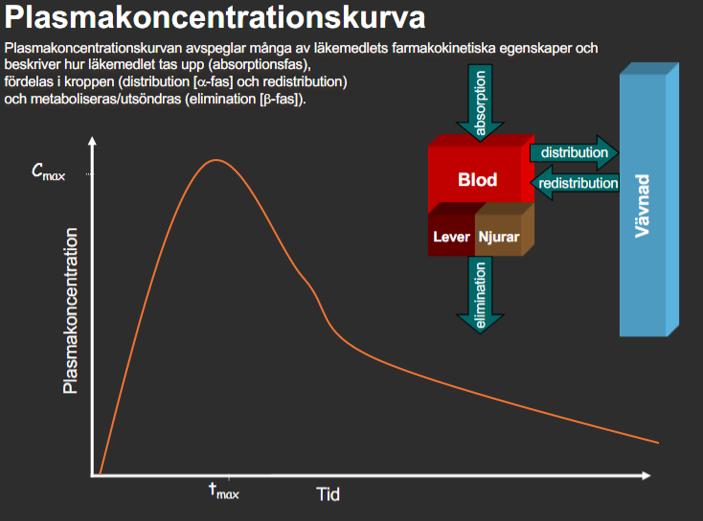
Plasma Concentration Curve
A graphic plot of drug plasma concentration over time that displays pharmacokinetic parameters including Cmax, Tmax, the absorption phase, the distribution phase (α-phase), and the elimination phase (β-phase) within the therapeutic window.
Bioavailability (F)
The fraction of an administered dose that reaches systemic circulation in unchanged active form, defined as 100% (1.0) for intravenous administration and calculated via the ratio of oral to intravenous area under the curve (AUC).
Apparent Volume of Distribution (Vd)
The theoretical fluid volume into which a drug appears to distribute based on total body amount relative to plasma concentration, calculated as Vd=Plasma concentrationAmount of drug in body.
Phase 1 Metabolism Reactions
Non-synthetic enzymatic modifications involving oxidation, reduction, or hydrolysis, predominantly catalyzed by cytochrome P450 (CYP450) enzymes in the liver to expose or add functional reactive groups.
Phase 2 Metabolism Reactions
Synthetic conjugation reactions that attach endogenous polar groups (such as glucuronic acid, sulfate, or glutathione) to a drug or metabolite, yielding hydrophilic products easily excreted by the kidneys or bile.
Enterohepatic Circulation
The process where a drug or its conjugate is excreted in bile into the small intestine, cleaved back to its active free form by gut microbiota, and reabsorbed into systemic blood, prolonging drug half-life and duration.
Clearance (Cl)
The volume of plasma completely cleared of a drug per unit time across all eliminating organs (liver, kidneys), calculated as Cl=Plasma concentrationElimination rate.
Elimination Half-Life (t1/2)
The time required for the plasma concentration of a drug to decrease by half, determined mathematically by t1/2=Cl0.693×Vd.
Zero-Order Kinetics (Saturation Kinetics)
Elimination kinetics characterized by the removal of a constant amount of drug per unit time due to enzyme saturation, causing disproportionately large concentration surges with minor dose increments (seen with ethanol, phenytoin, and high-dose salicylates).
Steady-State Concentration (Css)
The equilibrium state during regular dosing where the rate of drug administration equals the rate of drug elimination, with approximately 90% reached after 3.3 half-lives and ~97% reached after 5 half-lives.
Type A Adverse Drug Reaction
A dose-dependent, predictable adverse effect representing an exaggerated manifestation of the known primary pharmacology of the drug (e.g., bleeding caused by anticoagulants).
Type B Adverse Drug Reaction
An idiosyncratic, unpredictable, non-dose-dependent adverse drug reaction not directly explained by the known pharmacological target, such as an immune-mediated or allergic response.
Choline Acetyltransferase (ChAT)
The presynaptic enzyme that synthesizes acetylcholine (ACh) from choline and Acetyl-CoA within cholinergic nerve terminals.

Acetylcholinesterase (AChE)
The synaptic cleft enzyme responsible for the rapid degradation of acetylcholine into choline and acetate, terminating cholinergic synaptic signaling.
Botulinum Toxin
An irreversible neurotoxin that cleaves presynaptic SNARE proteins, preventing synaptic vesicle fusion and blocking acetylcholine release at the neuromuscular junction.
Depolarizing Neuromuscular Blockade
Paralysis triggered by persistent agonist stimulation of nicotinic Nm receptors (e.g., suxamethonium), inducing initial muscle fasciculations followed by voltage-gated sodium channel inactivation; this block is not reversed by AChE inhibitors.
Non-Depolarizing Neuromuscular Blockade
Paralysis caused by competitive antagonism at nicotinic Nm receptors (e.g., rocuronium, vecuronium), blocking acetylcholine binding without causing initial depolarization; reversible with AChE inhibitors like neostigmine.
Tyrosine Hydroxylase
The rate-limiting enzyme in catecholamine biosynthesis that converts L-tyrosine into L-DOPA.
Norepinephrine Transporter (NET / Uptake 1)
The primary high-affinity, low-capacity neuronal reuptake transporter that clears norepinephrine from the synaptic cleft into the presynaptic terminal.
α1-Adrenoceptor
A Gq-protein-coupled receptor localized primarily in vascular smooth muscle that mediates vasoconstriction upon adrenergic stimulation.
α2-Adrenoceptor
A Gi-protein-coupled presynaptic autoreceptor in the central and autonomic nervous system that exerts negative feedback inhibition on norepinephrine release.
β1-Adrenoceptor
A Gs-protein-coupled receptor located primarily in the heart that increases heart rate (positive chronotropy) and myocardial contractile force (positive inotropy).
β2-Adrenoceptor
A Gs-protein-coupled receptor located in bronchial smooth muscle and skeletal muscle vasculature that stimulates bronchodilation and vasodilation via increased cAMP.
β3-Adrenoceptor
A Gs-protein-coupled receptor located in the urinary bladder that mediates detrusor smooth muscle relaxation upon activation.
Triptans
Migraine therapeutics that act as agonists at 5-HT1B/1D receptors, inducing cranial vasoconstriction and inhibiting the presynaptic release of vasoactive neuropeptides such as CGRP.
Gepants
Small-molecule calcitonin gene-related peptide (CGRP) receptor antagonists utilized for both the acute treatment and prophylaxis of migraine.
Cyclooxygenase-1 (COX-1)
A constitutively expressed enzyme that converts arachidonic acid to protective prostaglandins in gastric mucosa, supports renal perfusion, and generates pro-thrombotic thromboxane A2 (TXA2) in platelets.
Cyclooxygenase-2 (COX-2)
An inducible enzyme upregulated by inflammatory stimuli that produces prostaglandins responsible for pain, fever, and inflammation, as well as endothelial prostacyclin (PGI2) that inhibits platelet aggregation.
Acetylsalicylic Acid (ASA)
An NSAID that irreversibly inhibits COX-1 and COX-2 via covalent acetylation; at low doses, it provides antiplatelet effects lasting the lifetime of the platelet (7--10 days) by blocking TXA2 synthesis.
Paracetamol (Acetaminophen)
A central analgesic and antipyretic lacking peripheral anti-inflammatory efficacy; carries a risk of acute hepatic necrosis in overdose when glutathione stores are depleted and the reactive metabolite NAPQI accumulates.
First-Generation H1-Antihistamines
Lipophilic H1-receptor antagonists (e.g., promethazine) that cross the blood-brain barrier to cause sedation and cross-react with muscarinic, α-adrenergic, and serotonergic receptors to produce anticholinergic side effects.
Second-Generation H1-Antihistamines
Peripherally selective H1-receptor antagonists (e.g., loratadine) designed with poor blood-brain barrier penetration, minimizing sedation and anticholinergic side effects.
Angiotensin-Converting Enzyme Inhibitors (ACEI)
Antihypertensive and heart failure medications (e.g., captopril, enalapril) that block the conversion of Angiotensin I to Angiotensin II, reducing aldosterone secretion, afterload, and cardiac remodeling.
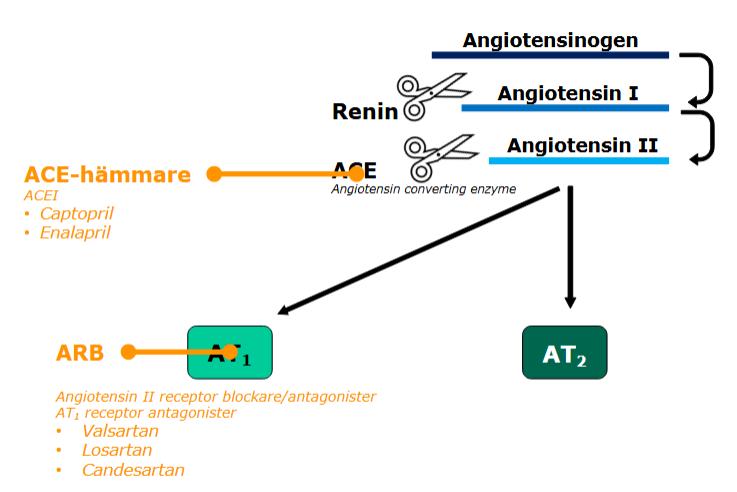
Angiotensin II Receptor Blockers (ARBs)
Antihypertensive agents (e.g., losartan, valsartan, candesartan) that selectively block the AT1 receptor, leaving the vasodilatory AT2 receptor uninhibited while reducing afterload and aldosterone release.
Loop Diuretics
Potent natriuretic agents (e.g., furosemide) that inhibit the Na+-K+-2Cl− cotransporter (NKCC2) in the thick ascending limb of Henle's loop, providing symptom relief in acute heart failure and volume overload.
Mineralocorticoid Receptor Antagonists (MRAs)
Potassium-sparing agents (e.g., spironolactone, eplerenone) that block intracellular aldosterone receptors in the renal collecting tubules, reducing myocardial fibrosis and providing mortality benefit in heart failure.
Digoxin
A cardiac glycoside that inhibits myocardial Na+/K+-ATPase, increasing intracellular Ca2+ to exert a positive inotropic effect while enhancing vagal tone to decrease AV node conduction in atrial fibrillation.
Sacubitril
A neprilysin inhibitor combined with an ARB (forming an ARNI) that prevents the enzymatic breakdown of natriuretic peptides (ANP/BNP), leading to increased natriuresis, diuresis, and systemic vasodilation.
Ivabradine
A heart rate-reducing medication that selectively blocks hyperpolarization-activated cyclic nucleotide-gated (If / 'funny') channels in the SA node without exerting negative inotropic effects.
Class III Antiarrhythmics
Potassium channel blockers (e.g., amiodarone, sotalol) that prolong phase 3 repolarization and action potential duration, carrying a risk of QT prolongation and torsades de pointes.
Organic Nitrates (Alkyl Nitrates)
Anti-anginal agents (e.g., nitroglycerin) that are metabolized to nitric oxide (NO), stimulating guanylyl cyclase to increase cGMP and dilate systemic veins, thereby decreasing cardiac preload.
Dihydropyridines
Vascular-selective L-type calcium channel blockers (e.g., amlodipine, nifedipine) that produce peripheral vasodilation and afterload reduction, commonly causing peripheral edema and reflex tachycardia.
Non-Dihydropyridines
Cardioselective L-type calcium channel blockers (e.g., verapamil, diltiazem) displaying use-dependence that decrease heart rate and AV nodal conduction; should not be combined with beta-blockers.
Alteplase (tPA)
A recombinant tissue plasminogen activator that converts plasminogen into plasmin to enzymatically digest fibrin clots during acute ischemic stroke and severe thrombosis.
Statins
Competitive inhibitors of HMG-CoA reductase (the rate-limiting enzyme in cholesterol synthesis) that lower hepatocyte cholesterol, upregulate cell-surface LDL receptors, and stabilize atherosclerotic plaques.
PCSK9 Inhibitors
Monoclonal antibodies (e.g., evolocumab, alirocumab) that inhibit proprotein convertase subtilisin/kexin type 9, preventing the lysosomal degradation of LDL receptors and drastically reducing circulating LDL.
Warfarin
An oral anticoagulant that inhibits vitamin K epoxide reductase (VKORC1), preventing the γ-carboxylation and activation of clotting factors II, VII, IX, and X, as well as proteins C and S.
P2Y12 Receptor Antagonists
Antiplatelet drugs (e.g., clopidogrel, ticagrelor) that block ADP-mediated activation of the platelet P2Y12 purinergic receptor, preventing platelet aggregation.
Tranexamic Acid
An antifibrinolytic drug that competitively inhibits plasminogen activation to plasmin, preventing fibrin clot dissolution and reducing active bleeding.
Proton Pump Inhibitors (PPIs)
Gastric antisecretory prodrugs (e.g., omeprazole) that irreversibly inhibit active H+/K+-ATPase pumps in gastric parietal cells, providing maximal acid suppression.
Chemoreceptor Trigger Zone (CTZ)
A brainstem emetic region located in the area postrema lacking an intact blood-brain barrier, allowing circulating drugs and toxins to trigger vomiting via D2, 5-HT3, and NK1 receptors.

5-HT3 Receptor Antagonists (Setrons)
Antiemetic agents (e.g., ondansetron) that block ligand-gated cation channels in the CTZ and on gastrointestinal vagal afferents, widely used for chemotherapy-induced nausea and vomiting.
Loperamide
A peripherally acting μ-opioid receptor agonist that slows gut peristalsis and increases anal sphincter tone to treat diarrhea without entering the central nervous system.
Metformin
A first-line biguanide for type 2 diabetes that activates AMPK, suppresses hepatic gluconeogenesis, and enhances peripheral insulin sensitivity without causing hypoglycemia.
SGLT2 Inhibitors
Oral antidiabetic agents (e.g., dapagliflozin, empagliflozin) that inhibit the sodium-glucose cotransporter 2 in renal proximal tubules, inducing glucosuria and providing cardiovascular and renal protection.
GLP-1 Receptor Agonists
Incretin mimetics (e.g., semaglutide, liraglutide) that stimulate glucose-dependent insulin secretion, suppress glucagon release, delay gastric emptying, and promote satiety and weight loss.
Sulfonylureas
Insulin secretagogues (e.g., glibenclamide) that close ATP-sensitive K+ channels in pancreatic beta-cell membranes, causing depolarization, Ca2+ influx, and glucose-independent insulin secretion with risks of hypoglycemia and weight gain.
Bisphosphonates
Antiresorptive bone agents (e.g., alendronate) that bind to hydroxyapatite, undergo uptake by active osteoclasts, and inhibit osteoclast-mediated bone breakdown; can cause esophagitis if not ingested upright with water.
Denosumab
A fully human monoclonal antibody directed against receptor activator of nuclear factor kappa-B ligand (RANKL), preventing osteoclast formation and bone resorption in osteoporosis.
Teriparatide
A recombinant human parathyroid hormone (PTH) analog given in intermittent pulses to preferentially stimulate osteoblasts over osteoclasts, producing net anabolic bone formation.
NMDA Receptor
An ionotropic glutamate receptor permeable to Ca2+, Na+, and K+ requiring simultaneous binding of glutamate and glycine/D-serine alongside membrane depolarization to relieve an internal Mg2+ block.
GABAA Receptor
A pentameric ligand-gated chloride channel mediating fast synaptic inhibition, allosterically modulated by benzodiazepines (which increase opening frequency) and barbiturates (which increase open duration).
GABAB Receptor
A Gi/o-protein-coupled receptor that inhibits adenylyl cyclase, enhances K+ conductance, and reduces presynaptic Ca2+ influx, targeted selectively by the spasmolytic agonist baclofen.
Buprenorphine
A high-affinity partial μ-opioid agonist and κ-antagonist with a ceiling effect on respiratory depression, utilized in maintenance therapy for opioid dependence.
Naloxone
A short-acting competitive pure opioid receptor antagonist (μ, δ, κ) with an elimination half-life of 30--90 minutes, used to reverse opioid overdose.
Local Anesthetic Ion Trapping
The clinical consequence of local anesthetics being weak bases: the uncharged form (B) penetrates lipid nerve sheaths, while the charged conjugate acid (HB+) binds the intracellular channel pore; acidic, inflamed tissue diminishes efficacy by ionizing the drug outside the cell.

Use-Dependence (Local Anesthetics)
The property where local anesthetics preferentially bind to voltage-gated sodium channels in their open or inactivated states, rendering rapidly firing sensory or arrhythmic fibers more susceptible to block.
Minimum Alveolar Concentration (MAC)
The alveolar concentration of an inhaled anesthetic at 1 atmosphere that prevents movement in 50% of patients exposed to a noxious surgical incision; lower values correspond to higher anesthetic potency.
Blood/Gas Partition Coefficient
A measure of inhaled anesthetic solubility in blood; agents with low coefficients (e.g., nitrous oxide, sevoflurane) equilibrate rapidly between lungs and brain, resulting in rapid induction and recovery.
Propofol
An intravenous anesthetic that potentiates GABAA transmission, providing rapid induction and recovery with antiemetic properties, but often causing hypotension, respiratory depression, and injection-site pain.
Ketamine
A non-competitive NMDA receptor antagonist that produces dissociative anesthesia, intense analgesia, bronchodilation, and sympathetic stimulation (maintaining airway reflexes and raising blood pressure), with emergence emergence delirium and hallucinations.
Amphetamine
A central nervous system stimulant that promotes reverse transport through DAT and NET, exhausts vesicular stores via VMAT2, and weakly inhibits MAO, releasing dopamine and norepinephrine into synapses.
Cocaine
A central stimulant that blocks monoamine reuptake transporters (DAT, NET, SERT) to produce euphoria and sympathomimetic effects, while also blocking voltage-gated sodium channels to produce local anesthesia.
MDMA (Ecstasy)
An amphetamine derivative that preferentially reverses SERT to release massive amounts of serotonin (5-HT), conferring risk for acute hyperthermia, hyponatremia, and serotonin syndrome.
Methylphenidate
A CNS stimulant used in ADHD that blocks the presynaptic transporters DAT and NET to elevate synaptic dopamine and norepinephrine in the prefrontal cortex.
Atomoxetine
A non-stimulant selective norepinephrine reuptake inhibitor (selective NET blocker) used in ADHD that increases norepinephrine and dopamine in the prefrontal cortex with a delayed onset of weeks.
Donepezil
A reversible acetylcholinesterase inhibitor used to augment central cholinergic neurotransmission in mild-to-moderate Alzheimer's disease.
Memantine
A low-affinity, uncompetitive NMDA receptor open-channel antagonist that protects neurons from chronic glutamate-mediated excitotoxicity in moderate-to-severe Alzheimer's disease.
Levodopa (L-DOPA) + Carbidopa
A dopamine precursor that crosses the blood-brain barrier co-administered with a peripheral DOPA decarboxylase inhibitor that does not cross the barrier, ensuring central dopamine delivery while mitigating nausea and cardiovascular side effects.
Entacapone
A peripheral catechol-O-methyltransferase (COMT) inhibitor that prevents the peripheral breakdown of levodopa to 3-O-methyldopa, smoothing out motor fluctuations and wearing-off phenomena in Parkinson's disease.
Flumazenil
A competitive antagonist at the benzodiazepine allosteric binding site on the GABAA receptor, used clinically to reverse benzodiazepine-induced sedation and overdose.
Clozapine
An atypical second-generation antipsychotic with weak D2 antagonism and potent 5-HT2A blockade effective in treatment-resistant schizophrenia, carrying serious risks of agranulocytosis, myocarditis, and seizures.
Selective Serotonin Reuptake Inhibitors (SSRIs)
Antidepressants (e.g., citalopram, sertraline, fluoxetine) that selectively block SERT, initially elevating synaptic serotonin and gradually normalizing mood and anxiety via neurogenesis and down-regulation of inhibitory autoreceptors.
Mirtazapine
A noradrenergic and specific serotonergic antidepressant (NaSSA) that antagonizes presynaptic α2-autoreceptors to increase monoamine release, while blocking 5-HT2, 5-HT3, and H1 receptors (causing sedation and appetite stimulation).
Lithium
A mood stabilizer used for bipolar disorder that inhibits inositol monophosphatase (depleting IP3 signaling) and GSK-3, characterized by a narrow therapeutic window and renal excretion.
Carbamazepine
An antiepileptic drug that blocks voltage-gated sodium channels in a use-dependent fashion; it is a strong inducer of CYP enzymes and autoinduces its own clearance.