Supply Chain and Inventory Management
 Call Kai
 Learn
 Practice Test
 Spaced Repetition
 Match
 Flashcards
 Knowt Play
1/65

There's no tags or description
Looks like no tags are added yet.
Name | Mastery | Learn | Test | Matching | Spaced | Call with Kai | Chat |
|---|
No analytics yet
Send a link to your students to track their progress
66 Terms
supply chain perspectives
1. financial
2. operational
Effective supply chain management ___________ the cost of goods sold and operational expenses, resulting in ______________ gross margins and net profits
decreases; increased
This creates more available cash on-hand to
1. pay expenses
2. increase salaries
3. invest in pharmacy related services
Effective supply chain management is important in meeting consumer _____________ for both goods and services
demands
If a patient is unable to get a needed medication this can lead to ________________________________ because of delay in receiving timely treatment.
customer dissatisfaction or even worse potential harm
supply chain management functions
1. Demand Management
2. Inventory Management
3. Procurement - Sourcing and Purchasing
methodology used to generate, revise, and improve a demand forecast of the products and services that the organization will provide to customers.
demand management
methodology used to control inventory and stock, including controlling inventory levels and overseeing ordering and storage of inventory. The objective is to meet sales and customer service levels at the optimal cost.
inventory management
the functions of buying products and services for a specific business purpose.
Procurement
methodology used to identify and manage the right product suppliers, considering vendor capabilities, pricing, and service levels
Sourcing
the process used to finalize order quantities, order and receive the products
Purchasing
forecast the items the pharmacy expects to dispense to patients and sell to customers
demand management
demand forcast considers
1. what products will be needed
2. in which amount
3. when they will be needed
what different factors influence the specific variety of different products needed or wanted at a particular pharmacy
1. Pharmacy mission or specialization
2. Patient population demographics/consumer demand
3. Sales history
4. Drug formularies
5. Industry data
6. Patent expiries
7. Drug shortages/substitutions
stock of products to meet future demand
inventory
Value of inventory rises as prices _____________ and new products are acquired
increase
goals of inventory management
1. minimize the financial investment inventory
2. keep procurement and carrying costs as low as possible
costs associated with inventory
1. acquisition
2. procurement
3. carrying cost
4. stock-out cost (shortage cost)
Price the pharmacy pays for the product
acquisition cost
Costs associated with purchasing the product (e.g. ordering, shipping, paying invoices)
procurement cost
Storage, handling, insurance, cost to finance the inventory, opportunity costs, loss or damaged product, theft (shrinkage)
carrying cost
Cost of not having the product on the shelf when a patient needs or wants it
stock-out cost (shortage costs)
Measures efficiency with which the pharmacy uses its inventory (how quickly inventory is sold)
inventory turnover ratio/rate
ITOR =
COGS/Average Inventory (average=initial+ending/2)
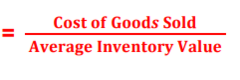
goal ITOR
Goal > 10 - 18
Low ITOR
too much cash tied up with inventory
High ITOR
risk of shortages
# days of inventory on hand =
365 ÷ ITOR
inventory management considerations
1. Choosing generic products, when possible
2. Inventory size
3. Unclaimed prescriptions inventory
4. Shrinkage
5. Use of a formulary
inventory management methods
1. visual
2. periodic
3. perceptual
Look at the number of units on the shelf and compare to what is expected
visual
Someone counts the stock on hand at predetermined intervals (e.g. weekly, monthly, annually). Compares stock to minimum desired on-hand levels
Periodic
Common, Electronic inventory management systems, Entire inventory is entered in electronically and subtracted with the filling of prescriptions/orders, Can help with re-ordering medications
perceptual
role of technology in inventory management
1. manage inventory faster and more accurately
2. availability of purchase reports
Microchips or "tags" attached to drug products
radiofrequency identification (RFID)
characteristics of radiofrequency idenification
1. Greater storage capability than bar-codes
2. Track movement and location of drug products within the supply chain
3. help deter shrinkage
includes the functions of buying products and services for a specific business purpose
Procurement
the process used to determine the right order quantities, place orders, and receive the products
Purchasing
the methodology used to identify and manage the right product suppliers, considering vendor capabilities, pricing, and service levels.
Sourcing
overall goal of Procurement, Purchasing, Sourcing
obtain the right products, in the right quantity, at the right time, at the right price
types of stock for purchasing
1. cycle stock
2. buffer or safety stock
3. anticipatory or speculative stock
regular inventory (day-to-day) needed to fill orders
Cycle stock
additional stock on-hand in case of supply or demand fluctuation (e.g. life-saving drugs, shortages)
Buffer or safety stock
expected future demand increase or price increase (e.g. flu vaccine, endof-the year purchases, seasonal purchases)
Anticipatory or speculative stock
the point where it is reasonably certain that the item will be available on demand
Stock depth
both the time before the specified amount of the discount may be taken and the time at which payment becomes due
dating
components concerned with dating
1. prepayment
2. collecting on delivery
3. delayed (future) dating
payment before ordering or delivery
prepayment
where there is no time before discount may be taken and payment is due
Collect on delivery (COD)
invoice is due sometime in the future
Delayed (future) dating
payment due _________ from the last day of the month
10 days
being able to obtain the right product at the right time, at the right price depends on selecting the right vendor or wholesaler
sourcing
Most common type of vendor =
pharmaceutical distributor (wholesaler)
Pool buying power of member pharmacies to obtain lower prices from vendors (manufacturers & wholesalers) and common in hospitals
Group Purchasing Organizations (GPOs)
Group Purchasing Organizations (GPOs) terms must be met by the member to receive the ________________ (e.g. purchasing contract items)
contract price
Pharmacy organization whose purpose is to seek better drug prices for its members based on their collective buying and common with independents
Pharmacy Buying Group
criteria to select a vendor
1. reliable, dependent, accurate
2. should be part of the Drug Supply Chain Security act
3. negotiate price and purchase terms ensuring contract compliance
4. delivery schedule
5. financing and credit
6. good customer relations
7. technology offered
drugs counterfeited
1. Lifestyle drugs (e.g. erectile dysfunction, botulinum toxin)
2. Weight loss agents (e.g. GLP-1s)
3. CNS Agents (e.g. opioids, stimulants of ADHD)
4. Anti-infectives including HIV treatments
5. Hormones & Steroids
6. Oncology agents
drugs counterfeited impact on patients
1. Drugs may be subpotent - lack of benefit
2. Superpotent - leading to adverse effect or serious harm
3. Contain toxic substances (e.g. fentanyl, insulin, corn starch, chalk, lead paint)
efforts to control counterfeit drugs
1. Increase screening and detection at ports of entry
2. Working with foreign governments to track down counterfeit manufacturers, and distribution centers
3. Stiffer penalties for those who sell/distribute counterfeit drugs
4. FDA Drug Supply Chain Security Act (DSCSA)
Drug tracing program utilizing pedigrees & product identifiers for verification from production to the pharmacy
FDA Drug Supply Chain Security Act (DSCSA)
under the FDA Drug Supply Chain Security Act (DSCSA) manufactures required to encode products with _________________________________ of transaction history
unique identifiers (i.e. bar-code) and electronic transmission
Pharmacists have a responsibility to protect ____________ from receiving harmful drug products
patients
goals of a tighter, closed prescription drug supply chain
1. prevent harmful drugs from entering the supply chain
2. detect harmful drugs if they do enter the supply chain
3. respond rapidly and effectively when harmful drugs are found
requirements for pharmacists under the FDA Drug Supply Chain Security Act (DSCSA)
1. confirm the entities they do business with are licensed and registered
2. only accept prescription drugs that are accompanied by product tracing documentation
3. Store the product tracing documentation you receive for six years.
6. Generate and provide all product tracing documentation with the transaction if you sell a prescription drug to a trading partner
7. Must have a process to investigate and handle suspect and illegitimate prescription drugs
steps for detecting counterfeit drugs
1. Inspect packaging
2. Verify labels
3. Inspect visual appearance
4. Authentication
5. Conduct chemical testing
6. Purchase from reliable sources
7. Consult a healthcare professional