ARCH 210 Buddhist and Hindu Architectures

0.0(0)
Studied by 0 people
call kaiCall Kai
learnLearn
examPractice Test
spaced repetitionSpaced Repetition
heart puzzleMatch
flashcardsFlashcards
GameKnowt Play
Card Sorting

1/15

encourage image

There's no tags or description

Looks like no tags are added yet.

16 Terms

1
New cards

Mauryan Dynasty

·       earliest unifying political dynasty of South Asia (India, Pakistan and Afghanistan 329 BCE, Ashoka is the best known leader of this empire)

2
New cards

Caste system

·       rigid, inherited class system

3
New cards

Hinduism

·       henotheistic religion (practitioners believe in and follow one god while accepting the existence of other deities too), prominent in India and Nepal; formed around 500-300 BCE following earlier Vedic period; sacred texts include the Vedas and the Upanishads. Each Hindu sect has a particular god or goddess as its supreme deity (Vishnu, Shiva, Ganesha, Devi, Durga, etc.) Each has different roles

·       Vedic traditions are characterized by samsara—cycle of reincarnation, and karma—ritual actions that generate future effects

·       Hindus worship through Bhakti—devotion, honor, love one has for god, shown through rituals and meditation

·       Darshan: the reciprocal exchange of gazes between the divine and the devotee—one makes pilgrimage to see and be seen by the divine, usually housed in some sculptural form

·       Puja: form of devotion in which the deity is asked to manifest in his or her image so that offerings might be made

4
New cards

Brahman

·       universal spirit which opens possibility of a pantheon of gods but devotion to a single deity within it.

·       Manifests on earth as Trimutri (creator), Vishnu (the preserver), Shiva (the destroyer)

·       Brahmin caste: those devoted to overseeing ritual activities, administered a temple by welcoming the deity to inhabit the temple and the making of offerings to the deities

5
New cards

Main Shrine

·       Elephanta, India, mid 6th century CE, Gupta Dynasty, Indian Hindu Architecture

·       Rock cut shrine

·       Network of sculpted caves off the coast, not far from Mumbai

·       Carved so there is an open flat platform/open space in front of shrine

·       Coming into the shrine from open area, there is a hypostyle hall

·       Beyond the hypostyle hall, is the main shrine—can see into interior of main shrine from exterior—only Brahmin caste would be going into the shrine, everyone else would circumambulate around the shrine

·       Approach the shrine, give offerings, look into the shrine center

·       Linga: means “sign”, aniconic representation of the Hindu god Shiva; a phallic form. The linga is usually placed in a base called a yoni that refers to the feminine (here associated with the goddess Devi). These together, the linga and yoni, reflect the ultimate unity of the male and female, and abstracted, of cosmic harmony

<p><span>·</span><span style="font-family: &quot;Times New Roman&quot;; line-height: normal; font-size: 7pt;">&nbsp;&nbsp;&nbsp;&nbsp;&nbsp;&nbsp; </span>Elephanta, India, mid 6<sup>th</sup> century CE, Gupta Dynasty, Indian Hindu Architecture</p><p class="MsoListBulletCxSpMiddle"><span>·</span><span style="font-family: &quot;Times New Roman&quot;; line-height: normal; font-size: 7pt;">&nbsp;&nbsp;&nbsp;&nbsp;&nbsp;&nbsp; </span>Rock cut shrine</p><p class="MsoListBulletCxSpMiddle"><span>·</span><span style="font-family: &quot;Times New Roman&quot;; line-height: normal; font-size: 7pt;">&nbsp;&nbsp;&nbsp;&nbsp;&nbsp;&nbsp; </span>Network of sculpted caves off the coast, not far from Mumbai</p><p class="MsoListBulletCxSpMiddle"><span>·</span><span style="font-family: &quot;Times New Roman&quot;; line-height: normal; font-size: 7pt;">&nbsp;&nbsp;&nbsp;&nbsp;&nbsp;&nbsp; </span>Carved so there is an open flat platform/open space in front of shrine</p><p class="MsoListBulletCxSpMiddle"><span>·</span><span style="font-family: &quot;Times New Roman&quot;; line-height: normal; font-size: 7pt;">&nbsp;&nbsp;&nbsp;&nbsp;&nbsp;&nbsp; </span>Coming into the shrine from open area, there is a hypostyle hall</p><p class="MsoListBulletCxSpMiddle"><span>·</span><span style="font-family: &quot;Times New Roman&quot;; line-height: normal; font-size: 7pt;">&nbsp;&nbsp;&nbsp;&nbsp;&nbsp;&nbsp; </span>Beyond the hypostyle hall, is the main shrine—can see into interior of main shrine from exterior—only Brahmin caste would be going into the shrine, everyone else would circumambulate around the shrine</p><p class="MsoListBulletCxSpMiddle"><span>·</span><span style="font-family: &quot;Times New Roman&quot;; line-height: normal; font-size: 7pt;">&nbsp;&nbsp;&nbsp;&nbsp;&nbsp;&nbsp; </span>Approach the shrine, give offerings, look into the shrine center</p><p class="MsoListBulletCxSpLast"><span>·</span><span style="font-family: &quot;Times New Roman&quot;; line-height: normal; font-size: 7pt;">&nbsp;&nbsp;&nbsp;&nbsp;&nbsp;&nbsp; </span>Linga: means “sign”, aniconic representation of the Hindu god Shiva; a phallic form. The linga is usually placed in a base called a yoni that refers to the feminine (here associated with the goddess Devi). These together, the linga and yoni, reflect the ultimate unity of the male and female, and abstracted, of cosmic harmony</p>
6
New cards

Nagara (Northern) India’s Hindu temple components

·       Nagara (Northern) India’s Hindu temple sites: Deogarh and Khajuraho

·       Mandapa: one or more halls originally formed by extending a porch-like structure at the entry to the Hindu temple; interior has a hypostyle structure

·       Plinth: to raise it off the ground—shows the place is of great importance

·       Shikhara: beehive tower

·       Amalaka: sacred umbrella that creates stoppage at top of the form—terminus for building

·       Axis mundi: runs through the Shikhara

·       Garbhagriha (womb chamber): sacred shrine

·       Image: the form to which god the temple is dedicated to

<p><span>·</span><span style="font-family: &quot;Times New Roman&quot;; line-height: normal; font-size: 7pt;">&nbsp;&nbsp;&nbsp;&nbsp;&nbsp;&nbsp; </span>Nagara (Northern) India’s Hindu temple sites: Deogarh and Khajuraho</p><p class="MsoListBulletCxSpMiddle"><span>·</span><span style="font-family: &quot;Times New Roman&quot;; line-height: normal; font-size: 7pt;">&nbsp;&nbsp;&nbsp;&nbsp;&nbsp;&nbsp; </span>Mandapa: one or more halls originally formed by extending a porch-like structure at the entry to the Hindu temple; interior has a hypostyle structure</p><p class="MsoListBulletCxSpMiddle"><span>·</span><span style="font-family: &quot;Times New Roman&quot;; line-height: normal; font-size: 7pt;">&nbsp;&nbsp;&nbsp;&nbsp;&nbsp;&nbsp; </span>Plinth: to raise it off the ground—shows the place is of great importance</p><p class="MsoListBulletCxSpMiddle"><span>·</span><span style="font-family: &quot;Times New Roman&quot;; line-height: normal; font-size: 7pt;">&nbsp;&nbsp;&nbsp;&nbsp;&nbsp;&nbsp; </span>Shikhara: beehive tower</p><p class="MsoListBulletCxSpMiddle"><span>·</span><span style="font-family: &quot;Times New Roman&quot;; line-height: normal; font-size: 7pt;">&nbsp;&nbsp;&nbsp;&nbsp;&nbsp;&nbsp; </span>Amalaka: sacred umbrella that creates stoppage at top of the form—terminus for building</p><p class="MsoListBulletCxSpMiddle"><span>·</span><span style="font-family: &quot;Times New Roman&quot;; line-height: normal; font-size: 7pt;">&nbsp;&nbsp;&nbsp;&nbsp;&nbsp;&nbsp; </span>Axis mundi: runs through the Shikhara</p><p class="MsoListBulletCxSpMiddle"><span>·</span><span style="font-family: &quot;Times New Roman&quot;; line-height: normal; font-size: 7pt;">&nbsp;&nbsp;&nbsp;&nbsp;&nbsp;&nbsp; </span>Garbhagriha (womb chamber): sacred shrine</p><p class="MsoListBulletCxSpLast"><span>·</span><span style="font-family: &quot;Times New Roman&quot;; line-height: normal; font-size: 7pt;">&nbsp;&nbsp;&nbsp;&nbsp;&nbsp;&nbsp; </span>Image: the form to which god the temple is dedicated to</p>
7
New cards

Vishnu Temple

Deogarh, (North) India, 530 CE, Gupta Dynasty, North Indian Hindu Architecture

·       Shikhara: North Indian Hindu temple type with a mountain-like temple tower or superstructure

·       Shikhara and mandapas formed with convex curves, almost beehive in shape

·       Has a plinth to raise it off the ground
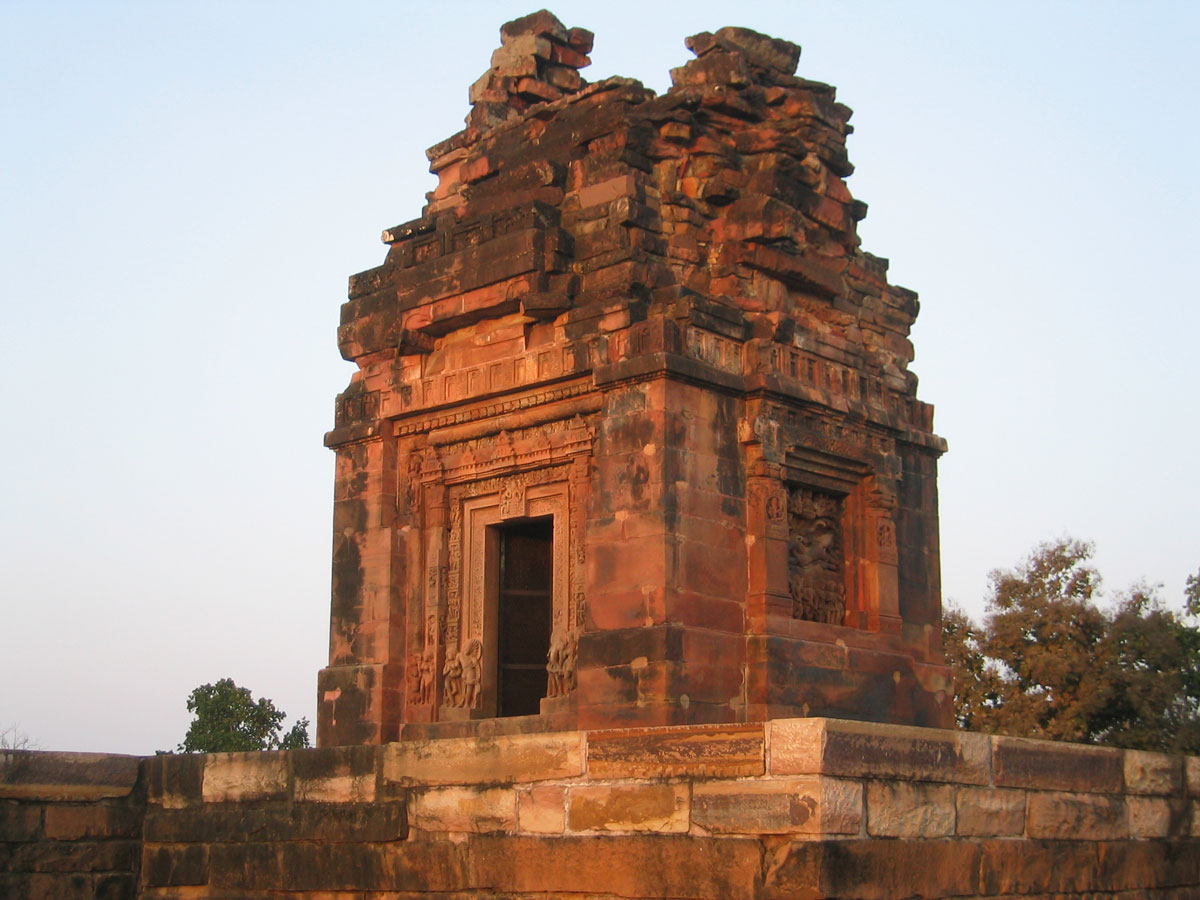
<p>Deogarh, (North) India, 530 CE, Gupta Dynasty, North Indian Hindu Architecture</p><p class="MsoListBulletCxSpMiddle"><span>·</span><span style="font-family: &quot;Times New Roman&quot;; line-height: normal; font-size: 7pt;">&nbsp;&nbsp;&nbsp;&nbsp;&nbsp;&nbsp; </span>Shikhara: North Indian Hindu temple type with a mountain-like temple tower or superstructure</p><p class="MsoListBulletCxSpMiddle"><span>·</span><span style="font-family: &quot;Times New Roman&quot;; line-height: normal; font-size: 7pt;">&nbsp;&nbsp;&nbsp;&nbsp;&nbsp;&nbsp; </span>Shikhara and mandapas formed with convex curves, almost beehive in shape</p><p class="MsoListBulletCxSpLast"><span>·</span><span style="font-family: &quot;Times New Roman&quot;; line-height: normal; font-size: 7pt;">&nbsp;&nbsp;&nbsp;&nbsp;&nbsp;&nbsp; </span>Has a plinth to raise it off the ground</p>
8
New cards
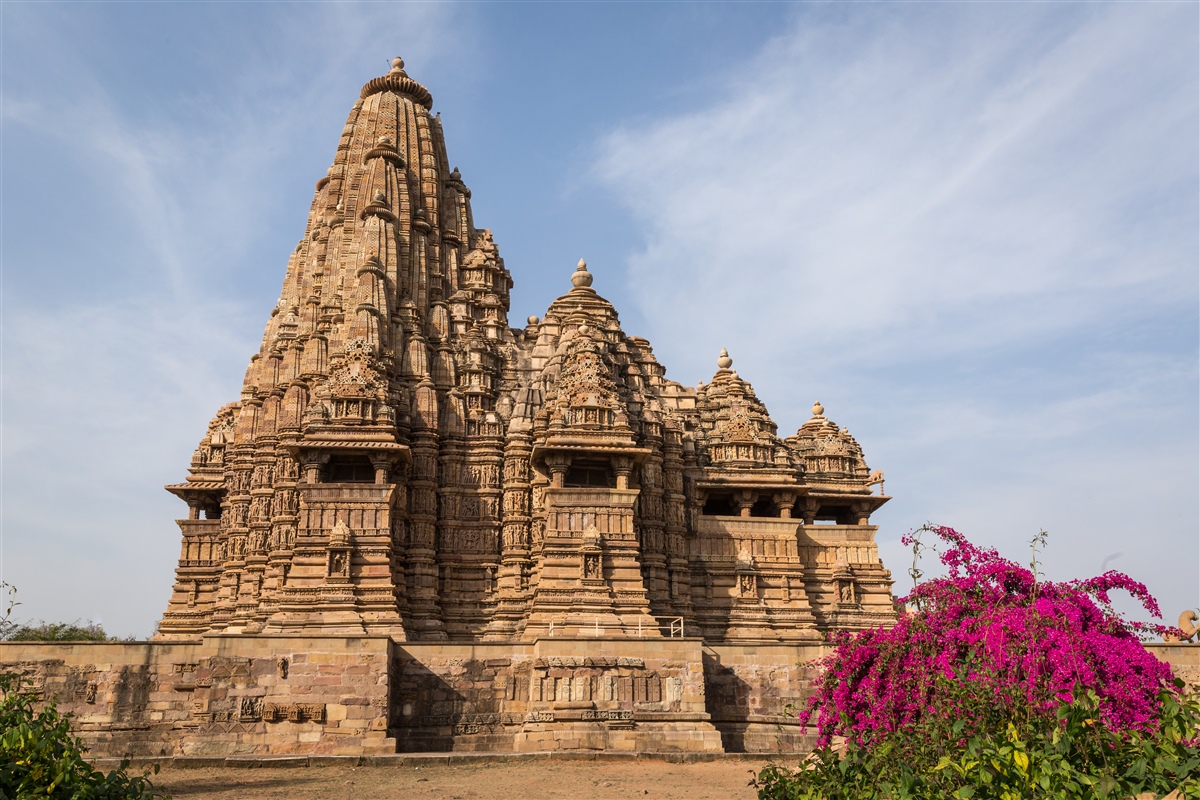
<p><span style="font-family: Aptos, sans-serif; line-height: 115%;">Khandariya Mahadeva Temple</span></p>

Khandariya Mahadeva Temple

·       Khajuraho, India, 1020 CE, Chandela Dynasty, North Indian Hindu Architecture

·       Building itself uses a raised base—built up with battering

·       Approach temple from one axial direction

·       Progress through different Mandapas, come into larger mandapa with side porches, then into the shikhara, where the garbhagriha is

·       Cupola (raised area) with columns surrounding the statue—creates an even more sacred zone within the temple

·       Brahmins can go into the chamber, others circumambulate around the garbhagriha

·       Statues carved into walls of gods and goddesses/attendants

·       Beehive shape is common to Northern Indian temples, like a mountain range that climbs up towards the shikhara—representative of the landscape, where the gods live, creating a holy mountain where the gods reside

·       Whole of the structure is animated by pairs of loving couples—human attendants and deity attendants of the gods

9
New cards

Dravida (Southern) Indian Hindu temple

·       Vimana (shikhara) is in a pyramidal form, and few or no projecting elements at the roof of the mandapas

·       Amalaka is replaced by capstone—rounder in form

<p><span>·</span><span style="font-family: &quot;Times New Roman&quot;; line-height: normal; font-size: 7pt;">&nbsp;&nbsp;&nbsp;&nbsp;&nbsp;&nbsp; </span>Vimana (shikhara) is in a pyramidal form, and few or no projecting elements at the roof of the mandapas</p><p class="MsoListBulletCxSpLast"><span>·</span><span style="font-family: &quot;Times New Roman&quot;; line-height: normal; font-size: 7pt;">&nbsp;&nbsp;&nbsp;&nbsp;&nbsp;&nbsp; </span>Amalaka is replaced by capstone—rounder in form</p>
10
New cards

Temples at Mamallapuram

·       South India, 650-675 CE, Hindu South Asia, Pallava Period, South Indian Hindu Architecture

·       Ratha—“chariot”; small temple made of monolithic stone, likely modeled on wood-build temples

<p><span>·</span><span style="font-family: &quot;Times New Roman&quot;; line-height: normal; font-size: 7pt;">&nbsp;&nbsp;&nbsp;&nbsp;&nbsp;&nbsp; </span>South India, 650-675 CE, Hindu South Asia, Pallava Period, South Indian Hindu Architecture</p><p class="MsoListBulletCxSpLast"><span>·</span><span style="font-family: &quot;Times New Roman&quot;; line-height: normal; font-size: 7pt;">&nbsp;&nbsp;&nbsp;&nbsp;&nbsp;&nbsp; </span>Ratha—“chariot”; small temple made of monolithic stone, likely modeled on wood-build temples</p>
11
New cards

Dharmaraja ratha, Mamallapuram

·       Vimana: South Indian Hindu temples, a pyramid-like tower with niches for imagery, topped with an octagonal capstone

<p><span>·</span><span style="font-family: &quot;Times New Roman&quot;; line-height: normal; font-size: 7pt;">&nbsp;&nbsp;&nbsp;&nbsp;&nbsp;&nbsp; </span>Vimana: South Indian Hindu temples, a pyramid-like tower with niches for imagery, topped with an octagonal capstone</p>
12
New cards

Shore Temple, Mamallapuram

·       One formal Mandapa porch—opened axial entryway—different iterations of shrines on wheels (ratha), sculptures of animals at the sides
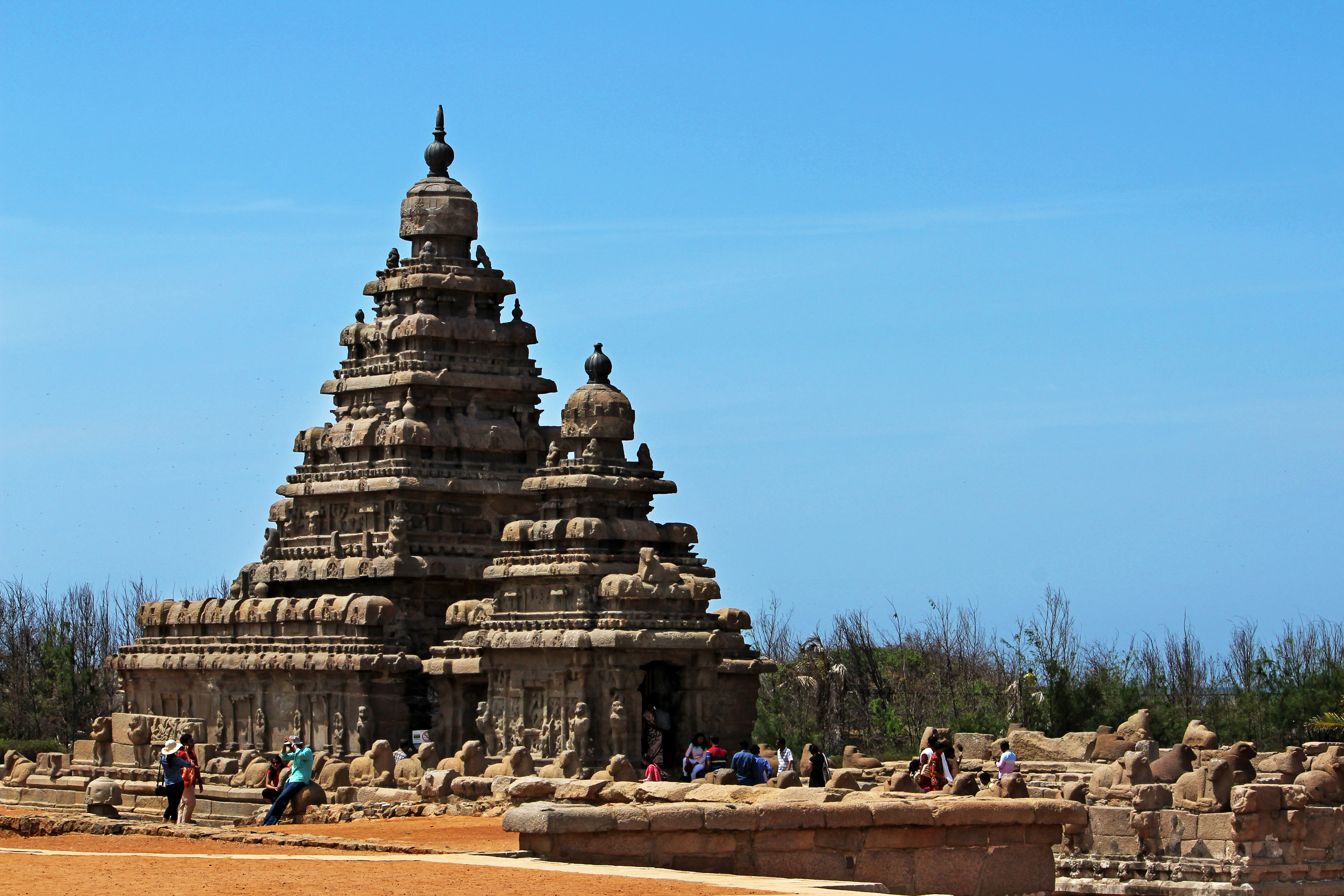
<p><span>·</span><span style="font-family: &quot;Times New Roman&quot;; line-height: normal; font-size: 7pt;">&nbsp;&nbsp;&nbsp;&nbsp;&nbsp;&nbsp; </span>One formal Mandapa porch—opened axial entryway—different iterations of shrines on wheels (ratha), sculptures of animals at the sides</p>
13
New cards

Buddhism

·       Born Siddharta Gautama, reaches enlightenment and renamed the Buddha. The Buddha’s life probably spanned from mid 6th century to mid 5th century BCE. Founder of Buddhism, whose life and teachings form the core of the religious faith and practice, the Four Noble Truths (also known as the dharma and the law), are described in Buddhist texts

·       Becomes an ascetic, gives up luxuries

·       Need to navigate through a middle path

·       Buddha: one who is awake, or, perfectly enlightened one

14
New cards

Sanchi

·       major site for Buddhist South Asia—one of many sites of Buddhist worship, housing several stupas and a monastery. The building of stupas had karmic benefits that could affect a person’s next existence or rebirth

15
New cards

Great Stupa

·       Sanchi, India, begun 250 BCE by Emperor Ashoka and main rail and toranas, mid 1st-2nd century CE, Buddhist Southa Asia

·       No entry point into structure itself, the point is to circumambulate it

·       Before earth is mounded to make the base, a relic (Buddha’s ashes) is buried into the Stupa as a way of consecrating that religious site

·       Ashoka founded many of these monastic sites—ruled over a unified territory from 269-232 BCE

·       Stambha: monumental columns or pillars onto which were inscribed the laws of Ashoka’s territory in several languages

·       Dharma: a code of non-violence

·       Axis mundi: vertical axis believed to connect the earth to the celestial realm, through which cosmic order is imparted to the earth

·       Stupa (heap in Sanskrit): religious monument in Buddhism derived from burial mounds, consisting of a solid, domed mound of earth and stone enclosing a reliquary. A small amount of the Buddha’s ashes were added to the mound of dirt, activating it with the energy of the Buddha himself

·       Torana: monumental, carved stone gate in the railing surrounding the stupa, aligned with cardinal points—highly carved because they are spaces of entry—worshippers have to go through them

·       Stories of people in processions, engaged in the same type of worship as those who pass through the gate—similar to Parthenon frieze

·       On third tier of railings, umbrellas on apex of Stupa, a mast to connect all of them

·       Ground level space for circumambulation

·       Second tier railing not accessible by average worshiper

·       Chattra: “umbrella”; canopies at the top of the stupa, signifying high status

<p><span>·</span><span style="font-family: &quot;Times New Roman&quot;; line-height: normal; font-size: 7pt;">&nbsp;&nbsp;&nbsp;&nbsp;&nbsp;&nbsp; </span>Sanchi, India, begun 250 BCE by Emperor Ashoka and main rail and toranas, mid 1<sup>st</sup>-2<sup>nd</sup> century CE, Buddhist Southa Asia</p><p class="MsoListBulletCxSpMiddle"><span>·</span><span style="font-family: &quot;Times New Roman&quot;; line-height: normal; font-size: 7pt;">&nbsp;&nbsp;&nbsp;&nbsp;&nbsp;&nbsp; </span>No entry point into structure itself, the point is to circumambulate it</p><p class="MsoListBulletCxSpMiddle"><span>·</span><span style="font-family: &quot;Times New Roman&quot;; line-height: normal; font-size: 7pt;">&nbsp;&nbsp;&nbsp;&nbsp;&nbsp;&nbsp; </span>Before earth is mounded to make the base, a relic (Buddha’s ashes) is buried into the Stupa as a way of consecrating that religious site</p><p class="MsoListBulletCxSpMiddle"><span>·</span><span style="font-family: &quot;Times New Roman&quot;; line-height: normal; font-size: 7pt;">&nbsp;&nbsp;&nbsp;&nbsp;&nbsp;&nbsp; </span>Ashoka founded many of these monastic sites—ruled over a unified territory from 269-232 BCE</p><p class="MsoListBulletCxSpMiddle"><span>·</span><span style="font-family: &quot;Times New Roman&quot;; line-height: normal; font-size: 7pt;">&nbsp;&nbsp;&nbsp;&nbsp;&nbsp;&nbsp; </span>Stambha: monumental columns or pillars onto which were inscribed the laws of Ashoka’s territory in several languages</p><p class="MsoListBulletCxSpMiddle"><span>·</span><span style="font-family: &quot;Times New Roman&quot;; line-height: normal; font-size: 7pt;">&nbsp;&nbsp;&nbsp;&nbsp;&nbsp;&nbsp; </span>Dharma: a code of non-violence</p><p class="MsoListBulletCxSpMiddle"><span>·</span><span style="font-family: &quot;Times New Roman&quot;; line-height: normal; font-size: 7pt;">&nbsp;&nbsp;&nbsp;&nbsp;&nbsp;&nbsp; </span>Axis mundi: vertical axis believed to connect the earth to the celestial realm, through which cosmic order is imparted to the earth</p><p class="MsoListBulletCxSpMiddle"><span>·</span><span style="font-family: &quot;Times New Roman&quot;; line-height: normal; font-size: 7pt;">&nbsp;&nbsp;&nbsp;&nbsp;&nbsp;&nbsp; </span>Stupa (heap in Sanskrit): religious monument in Buddhism derived from burial mounds, consisting of a solid, domed mound of earth and stone enclosing a reliquary. A small amount of the Buddha’s ashes were added to the mound of dirt, activating it with the energy of the Buddha himself</p><p class="MsoListBulletCxSpMiddle"><span>·</span><span style="font-family: &quot;Times New Roman&quot;; line-height: normal; font-size: 7pt;">&nbsp;&nbsp;&nbsp;&nbsp;&nbsp;&nbsp; </span>Torana: monumental, carved stone gate in the railing surrounding the stupa, aligned with cardinal points—highly carved because they are spaces of entry—worshippers have to go through them</p><p class="MsoListBulletCxSpMiddle"><span>·</span><span style="font-family: &quot;Times New Roman&quot;; line-height: normal; font-size: 7pt;">&nbsp;&nbsp;&nbsp;&nbsp;&nbsp;&nbsp; </span>Stories of people in processions, engaged in the same type of worship as those who pass through the gate—similar to Parthenon frieze</p><p class="MsoListBulletCxSpMiddle"><span>·</span><span style="font-family: &quot;Times New Roman&quot;; line-height: normal; font-size: 7pt;">&nbsp;&nbsp;&nbsp;&nbsp;&nbsp;&nbsp; </span>On third tier of railings, umbrellas on apex of Stupa, a mast to connect all of them</p><p class="MsoListBulletCxSpMiddle"><span>·</span><span style="font-family: &quot;Times New Roman&quot;; line-height: normal; font-size: 7pt;">&nbsp;&nbsp;&nbsp;&nbsp;&nbsp;&nbsp; </span>Ground level space for circumambulation</p><p class="MsoListBulletCxSpMiddle"><span>·</span><span style="font-family: &quot;Times New Roman&quot;; line-height: normal; font-size: 7pt;">&nbsp;&nbsp;&nbsp;&nbsp;&nbsp;&nbsp; </span>Second tier railing not accessible by average worshiper</p><p class="MsoListBulletCxSpLast"><span>·</span><span style="font-family: &quot;Times New Roman&quot;; line-height: normal; font-size: 7pt;">&nbsp;&nbsp;&nbsp;&nbsp;&nbsp;&nbsp; </span>Chattra: “umbrella”; canopies at the top of the stupa, signifying high status</p>
16
New cards

·       Buddhism spreads northwards and eastwards, connecting the Silk Road

·       Standing Buddha, Bamiyan, Afghanistan, early 5th century CE, Buddhist South Asia—pilgrimage site for Buddhists, is now destroyed

·       Colossal Buddha and Bodhisattva, Cave 20, Yungang, China, 470-480 CE, Northern Wei Dynasty, Chinese Buddhist Architecture

·       Caves and shrines cut into the rock face

·       Painted frescoes inside to tell stories of the life of the Buddha