TEAS biology section smart edition pt.4 respiratory system
 Call Kai
 Learn
Learn Practice Test
 Spaced Repetition
 Match
Match Flashcards
 Knowt Play
1/45

There's no tags or description
Looks like no tags are added yet.
Name | Mastery | Learn | Test | Matching | Spaced | Call with Kai | Chat |
|---|
No analytics yet
Send a link to your students to track their progress
46 Terms
🫁 Respiratory System
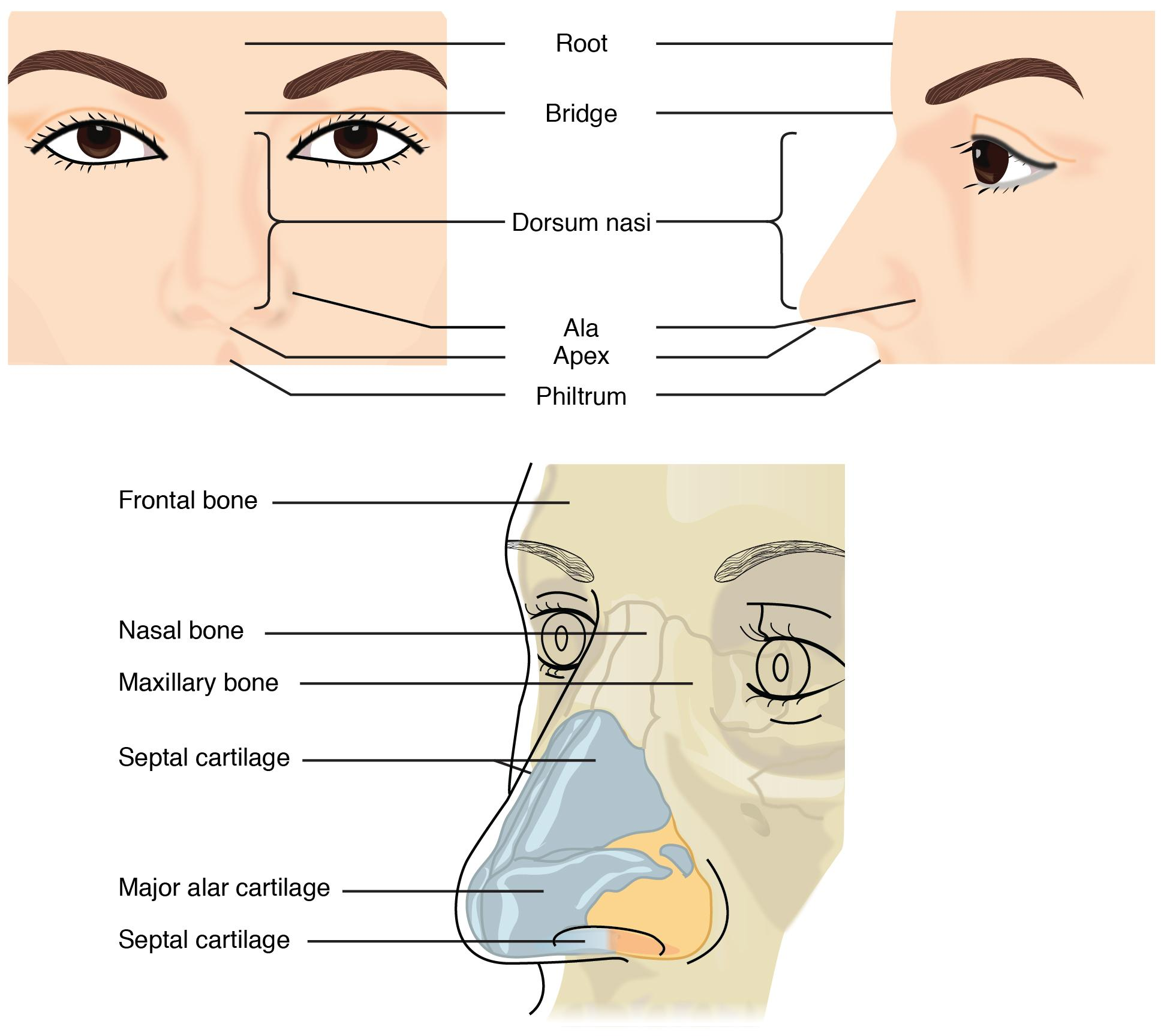
1. Nose 👃
Air travels through your nose or mouth, down your throat, and into your lungs. Your diaphragm helps you breathe!
Filters, warms, and moistens the air.
Memory trick: Nose = cleans the air.

🫁 Respiratory System
2. Nasal cavity
The space inside your nose where air gets warmed, moistened, and filtered.
Memory trick: Nasal cavity = inside the nose.

🫁 Respiratory System
3. Mouth 👄
Another opening where air can enter and leave your body.
Memory trick: Mouth = backup entrance for air.

🫁 Respiratory System
4. Pharynx (throat)
Passageway for air from the nose or mouth toward the larynx.
Also carries food toward the esophagus.
Memory trick: Pharynx = passageway.

5. Larynx (voice box)
Contains your vocal cords, which help you make sounds.
Helps protect the airway when you swallow.
Memory trick: Larynx = lets you talk.

6. Lungs 🫁
Bring oxygen into your blood and remove carbon dioxide.
Memory trick: Lungs = oxygen in, carbon dioxide out.
7. Diaphragm
The muscle below your lungs that helps you breathe.
Contracts and moves down when you breathe in; relaxes and moves up when you breathe out.
Memory trick: Diaphragm = breathing muscle.
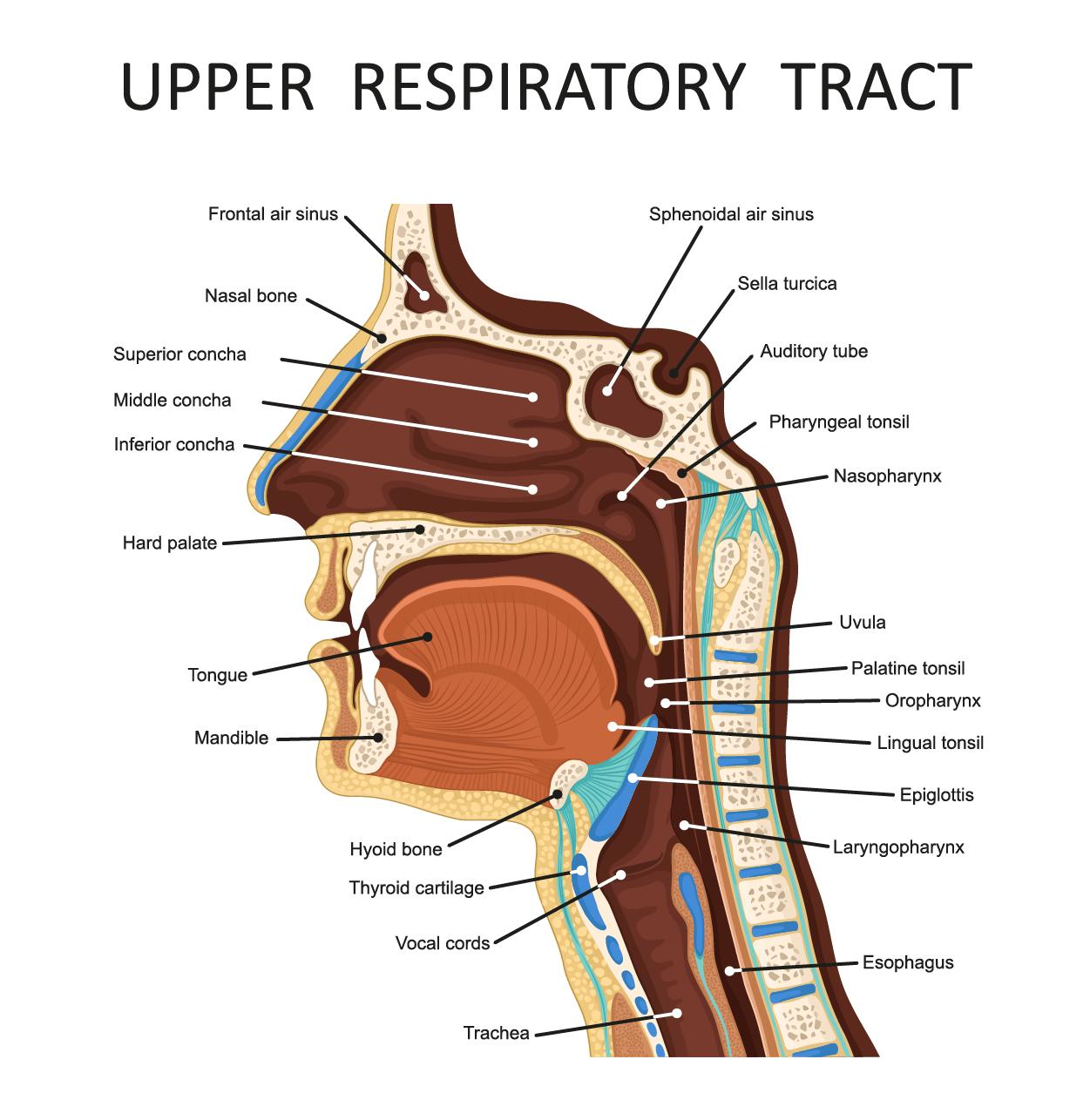
Upper respiratory tract
Includes the nose, nasal cavity, and pharynx .
Filters, warms, and moistens incoming air.
Memory trick: Upper = air's entrance and preparation.
Upper = air enters

Lower respiratory tract
Includes the trachea, bronchi, bronchioles, and alveoli in the lungs. Some classifications also include the larynx.
Moves air into the lungs and allows gas exchange.
Memory trick: Lower = air travels deeper into the lungs.
2. Know these 5 structures!
respiratory system
1. Epiglottis

Flap that helps keep food and liquid out of your airway when swallowing.
Remember: Epiglottis = food protector.

2. Trachea (windpipe)
Tube that carries air toward the lungs.
Remember: Trachea = main air tube.

3. Bronchi
Two main branches from the trachea, one going to each lung.
Remember: Bronchi = two big branches.

4. Bronchioles
Smaller branches that carry air deeper into the lungs.
Remember: Bronchioles = little branches.

5. Alveoli
Tiny air sacs where oxygen enters the blood and carbon dioxide leaves the blood.
Remember: Alveoli = gas exchange!
🧠 Memorize the air pathway
respiratory system
Trachea
Main tube
Bronchi
Two big branches
Bronchioles
Smaller branches
Alveoli
Oxygen enters blood; CO₂ leaves blood
“ T ubes B ranch, B ranches B reak smaller, A ir sacs exchange.”
T = Trachea
B = Bronchi
B = Bronchioles
A = Alveoli
Remember: The epiglottis protects your airway when swallowing , but it is not part of the air pathway in the diagram above.

1. Surfactant
What it does: Keeps the tiny air sacs (alveoli) from collapsing by reducing surface tension.
Memory trick: Surfactant = keeps air sacs OPEN! 🎈
Keeps alveoli open
Alveoli = tiny air sacs inside your lungs where oxygen enters your blood.
Surfactant = a slippery substance inside those air sacs that helps stop them from collapsing.
Think of it like this: 🎈 Imagine tiny balloons inside your lungs. Surfactant helps keep the balloons from sticking shut when you breathe out.
🧠 Memory trick: Surfactant = saves the air sacs from collapsing!
TEAS question: What prevents alveoli from collapsing?
Answer: Surfactant.

2. Pleura
What it is: Two thin layers surrounding the lungs that help them move smoothly during breathing.
Memory trick: Pleura = protective layers around the lungs.
Layers around the lungs
Pleura = two thin layers of tissue surrounding each lung.
They help your lungs slide smoothly against the chest wall when you breathe.
Think of it like this: Imagine your lungs have a thin, slippery covering that helps them move without too much friction.
🧠 Memory trick: Pleura = protective layers around your lungs.

3. Inspiration
What it means: Breathing IN air.
Diaphragm contracts and moves down.
Chest expands and air enters the lungs.
Memory trick: Inspiration = IN!

4. Homeostasis
What it means: Keeping the body's internal conditions stable and balanced.
Examples: keeping body temperature and blood sugar within healthy ranges.
Memory trick: Homeostasis = body's balance! ⚖
What are the thin layers surrounding the lungs called?
pleura
surfactant vs pleura
Term | Think of… | Main job |
|---|---|---|
Surfactant | Tiny balloons 🎈 | Keeps alveoli from collapsing |
Pleura | Slippery covering | Helps lungs move smoothly |
Remember this sentence: Surfactant keeps the tiny air sacs open; pleura surrounds the lungs and helps them slide smoothly.
⭐ Know the difference!
Surfactant | Pleura |
|---|---|
Inside the alveoli | Around the lungs |
Prevents air sacs from collapsing | Reduces friction during breathing |
Keeps sacs open | Helps lungs slide smoothly |
What does pleura help reduce?
Friction during breathing
Where is surfactant found?
Coating the inside of alveoli
External respiration
Lungs ↔ Blood
Happens in the lungs, between the alveoli (tiny air sacs) and the blood.
Oxygen (O₂) moves from the lungs into the blood.
Carbon dioxide (CO₂) moves from the blood into the lungs to be breathed out.
External = exchange at the lungs!
2. Diffusion =
Moves from MORE to LESS
Diffusion is when particles naturally move from an area where there are more of them to an area where there are fewer.
This helps oxygen and carbon dioxide move where they need to go.
Think of spraying perfume: it spreads from where it's concentrated to areas where less perfume is present.

3. Internal respiration
Blood ↔ Body cells
Happens between the blood and your body's cells.
Oxygen moves from the blood into your cells so they can make energy.
Carbon dioxide moves from your cells into the blood to be carried away.
🧠 Memory trick: Internal = inside your body, between blood and cells!
external vs diffusion vs internal
Term | Where? | Easy memory trick |
|---|---|---|
External respiration | Lungs ↔ blood | Lungs exchange gases |
Diffusion | Moves particles from high to low concentration | More → less |
Internal respiration | Blood ↔ body cells | Cells receive oxygen |
The biggest TEAS trick: External = lungs. Internal = body cells. Diffusion = how gases move!
1. Oxygen moves from the alveoli into the blood. What is this?
External respiration
2. Particles move from an area of high concentration to low concentration. What is this?
Diffusion
3. Oxygen moves from the blood into your body cells. What is this?
Internal respiration
Where does external respiration happen?
Between alveoli and blood
1. What is the diaphragm?
is a large muscle underneath your lungs that helps you breathe.
Think of it like an elevator for your lungs!
Breathe IN: The diaphragm contracts and moves DOWN . Your chest space gets bigger, and air enters your lungs.
Breathe OUT: The diaphragm relaxes and moves UP . Your chest space gets smaller, helping air leave your lungs.
🧠 Easy memory trick: IN = DOWN, OUT = UP.
How many lobes do your lungs have?
A lobe is just a section or part of a lung.
Right lung | Left lung |
|---|---|
3 lobes | 2 lobes |
Bigger | Smaller |
Has room on the right side | Makes room for your heart |
🧠 Easy memory trick: Right = 3, Left = 2.
Why? Your heart sits slightly toward the left side of your chest, so the left lung is smaller and has only two lobes.
Total = 5 lung lobes!

3. Quick TEAS review
lungs
Diaphragm: Muscle that helps you breathe.
Breathing in: Diaphragm moves down.
Breathing out: Diaphragm moves up.
Right lung: 3 lobes.
Left lung: 2 lobes.
The diaphragm is your breathing muscle,
3. Quick QUESTIONS TEAS review LUNGS
1. What is the diaphragm?
A muscle that helps you breathe
2. What happens to the diaphragm when you breathe in?
It moves down
3. How many lobes does the right lung have?
3
4. How many lobes does the left lung have?
2
1. Breathing IN =
Inspiration
What's happening?
Your diaphragm contracts (tightens).
It flattens and moves DOWN .
Your chest cavity gets bigger, and your ribs move outward.
Air gets pulled INTO your lungs.
🧠 Memory trick: Breathe IN = diaphragm DOWN.

Breathing OUT =
Expiration
What's happening?
Your diaphragm relaxes .
It returns to its dome shape and moves UP .
Your chest cavity gets smaller, and your rib cage returns toward its resting position.
Air moves out of your lungs.
🧠 Memory trick: Breathe OUT = diaphragm UP.
⭐ Quick comparison
Breathing In | Breathing Out |
|---|---|
Inspiration | Expiration |
Diaphragm contracts | Diaphragm relaxes |
Moves Down | Moves UP |
Chest cavity gets bigger | Chest cavity gets smaller |
Air enters lungs | Air leaves lungs |

📝 TEAS mini-quiz
1. What is the main muscle used for inspiration?
Diaphragm
2. What happens to the diaphragm when you breathe in?
It contracts and moves down
3. When you breathe in, what happens to the chest cavity?
It gets bigger
4. What happens when the diaphragm relaxes during normal breathing out?
It returns to a dome shape and moves up
Last-minute TEAS memory trick: IN = contracts, DOWN, air IN.
OUT = relaxes, UP, air OUT. 💨

The respiratory system has 2 main jobs: MOVE air and EXCHANGE gases. That's the easiest way to remember it!
1. Air-conducting portion =
MOVES air
What does it mean?
This part is like a set of roads or tubes that carries air into and through your lungs.
Larynx: Voice box; air passes through it.
Trachea: Main air tube (windpipe).
Bronchi: Two big branches, one going into each lung.
Bronchioles: Smaller branches inside the lungs.
🧠 Catchy phrase: "Conducting = carrying air!"
Think of it like driving on roads. The roads carry you to your destination, but they aren't the destination itself.
TEAS tip: The conducting portion moves air. It does not perform the main gas exchange.
2. Gas exchange portion =
SWAPS gases
What does it mean?
This is where oxygen and carbon dioxide switch places between the air and the blood.
Alveoli: Tiny air sacs where gas exchange happens.
Capillaries: Tiny blood vessels surrounding the alveoli.
Oxygen (O₂): Moves from the alveoli into the blood.
Carbon dioxide (CO₂): Moves from the blood into the alveoli to be breathed out.
🧠 Catchy phrase: "Alveoli = O₂ IN, CO₂ OUT!"
Think of the alveoli as a little exchange station: oxygen gets delivered to the blood, and carbon dioxide gets picked up to leave the body.
⭐ Know the difference for the TEAS
air conducting vs gas exchnange
Air-conducting portion | Gas exchange portion |
|---|---|
Moves air | Swaps gases |
Larynx, trachea, bronchi, bronchioles | Alveoli and surrounding capillaries |
Like roads or tubes | Like an exchange station |
Delivers air | Oxygen enters blood; CO₂ leaves blood |
One small detail: The lungs contain both the conducting airways and the gas-exchange areas. It's not that the entire lung only does one job.
📝 TEAS practice quiz
air conducting/ gas exchange
1. What is the main job of the air-conducting portion?
. Carry air
2. Where does most gas exchange happen?
Alveoli
3. Which tiny blood vessels surround the alveoli?
Capillaries
During gas exchange, where does oxygen go?
. From alveoli into blood
Which structure belongs to the air-conducting portion?
Trachea

Respiratory system
GETS oxygen
You breathe oxygen into your lungs.
Oxygen moves from the alveoli (tiny air sacs) into the blood.
Carbon dioxide moves into the alveoli so you can breathe it out.
It has 2 main jobs:
Bring oxygen (O₂) IN when you breathe.
Get rid of carbon dioxide (CO₂) when you breathe out.
What actually happens?
1. You breathe IN Air carrying oxygen enters your lungs.
2. Gas exchange happens Oxygen moves from tiny air sacs called alveoli into your blood. Carbon dioxide moves from your blood into the alveoli.
3. You breathe OUT Carbon dioxide leaves your body.
🧠 The easiest way to memorize it
Respiratory = Oxygen IN, carbon dioxide OUT!
Your cardiovascular system (heart and blood) then carries oxygen to the rest of your body.
TEAS tip: If a question asks which system brings oxygen into the body and removes carbon dioxide, the answer is the respiratory system .
Cardiovascular system =
DELIVERS oxygen
Your heart pumps blood.
Blood carries oxygen to your body's cells.
Blood picks up carbon dioxide from your cells and takes it back to the lungs.
🧠 Memory trick: 🫁 Lungs LOAD oxygen. ❤Heart DELIVERS oxygen.

2. Why is carbon dioxide (CO₂) so important?
Your body makes carbon dioxide when your cells use energy. Your blood carries that CO₂ to your lungs, where you breathe it out.
But here's the important part: CO₂ affects your blood's pH.
Too much CO₂ → blood becomes more acidic → pH goes DOWN.
Too little CO₂ → blood becomes more alkaline (basic) → pH goes UP.
🧠 Catchy phrase: CO₂ climbs, pH declines!
Too much CO₂
More acidic • pH decreases
Too little CO₂
More alkaline/basic • pH increases
Why does this happen?
CO₂ combines with water in the blood to form an acid called carbonic acid. More CO₂ generally means more acid.
What is homeostasis? carbon dioxide
keeping the body's internal conditions balanced.
Your body needs blood pH to stay in a very narrow range, normally about 7.35–7.45 .
Your respiratory system helps control CO₂ by adjusting breathing:
If CO₂ gets too high, the body usually increases breathing to remove more CO₂.
If CO₂ gets too low, the body can slow breathing to retain more CO₂.
The nervous system helps control this adjustment.
🧠 Memory trick: Homeostasis = body balance. Breathing helps balance CO₂, which helps balance pH.
If you see this… | Remember… |
|---|---|
Respiratory system | Brings in O₂ and removes CO₂ |
Cardiovascular system | Heart and blood deliver O₂ |
Too much CO₂ | More acidic, pH down |
Too little CO₂ | More alkaline, pH up |
Homeostasis | Keeps the body balanced |
teas quiz
1. Which system delivers oxygen throughout the body?
Cardiovascular system
2. What happens when CO₂ in the blood becomes too high?
Blood becomes more acidic and pH decrease
3. Where does oxygen move from the lungs into the blood?
Alveoli and surrounding capillaries
5. If CO₂ becomes too low, what generally happens to blood pH?
It goes up and becomes more alkaline
Last-minute memory trick: Oxygen gets delivered; CO₂ affects acidity. CO₂ UP = pH DOWN. CO₂ DOWN = pH UP.
🫁 External Respiration
The main idea is: Your lungs give oxygen to your blood, and your blood gives carbon dioxide to your lungs.
1. What happens step by step?

Step 1: You breathe IN
Oxygen enters your lungs and reaches tiny air sacs called alveoli .

Step 2: Gas exchange happens
Oxygen moves from the alveoli into the blood.
Carbon dioxide moves from the blood into the alveoli.
This happens through diffusion .

Step 3: Oxygen-rich blood travels to the heart
The blood returns to the left side of the heart , which pumps it out to the rest of your body.
2. What does diffusion mean?
Diffusion = particles move from where there are MORE to where there are FEWER.
Think of it like this: oxygen is higher in the alveoli than in the blood arriving at the lungs, so oxygen moves into the blood.
🧠 Memory trick: Diffusion = MORE → LESS!
Term | Super easy meaning |
|---|---|
External respiration | Gas exchange between alveoli and blood |
Alveoli | Tiny air sacs in the lungs |
Diffusion | Movement from higher to lower concentration |
Oxygenated blood | Blood carrying oxygen |
Left side of heart | Pumps oxygen-rich blood to the body |
Last-minute memory: External = lungs and blood. Oxygen IN to blood, CO₂ OUT to lungs, left heart sends oxygen to the body.
Internal respiration =
Blood and body cells
Internal respiration happens when oxygen leaves the blood and enters your body cells.
1. Oxygen goes to your cells.
Your blood carries oxygen to tiny blood vessels called capillaries . Oxygen moves from the blood into your body cells.

2. Carbon dioxide enters the blood.
Your cells make carbon dioxide (CO₂) as waste. CO₂ moves from your cells into the blood.
3. Oxygen-poor blood returns to the right side of the heart.
The blood has delivered oxygen to your cells, so it has less oxygen and more CO₂. The right side of the heart sends it to the lungs to release the CO₂ and pick up oxygen again.
The easiest way to memorize it
Internal = IN your body's cells.
O₂: Blood → cells (delivers oxygen)
CO₂: Cells → blood (picks up waste)
Right side of heart: Sends oxygen-poor blood to the lungs.
Remember this phrase:
“Internal deliveries, CO₂ returns!”
Internal vs. external respiration
Internal | External | |
|---|---|---|
Where does it happen? | Blood and body cells | Alveoli and blood in lungs |
Oxygen (O₂) | Blood → cells | Alveoli → blood |
Carbon dioxide (CO₂) | Cells → blood | Blood → alveoli |
Where does internal respiration happen?
Between the blood and body cells
During internal respiration, where does oxygen go?
From blood to body cells
3. Where does carbon dioxide go?
From cells into the blood
Which side of the heart receives oxygen-poor blood returning from the body?
Right side

1. The respiratory system's main job
Bring oxygen (O₂) IN and send carbon dioxide (CO₂) OUT.
Oxygen = what your body cells need.
Carbon dioxide = waste your body needs to get rid of.
🧠 Memory trick: “O₂ IN, CO₂ OUT!”
2. How does your body control blood pH?
pH tells you how acidic or basic your blood is. Your body works to keep it balanced.
Respiratory system: Controls how much CO₂ you breathe out.
Cardiovascular system: Blood carries CO₂ around the body.
Nervous system: Helps control your breathing rate.
🧠 Memory trick: “Breathe, carry, control!”
Respiratory = breathe
Cardiovascular = carry blood
Nervous = control breathing
TEAS tip: Too much CO₂ makes blood more acidic, so CO₂ UP = pH DOWN.
3. Upper vs. lower respiratory tract
Upper tract
Nose, nasal cavity, pharynx, and often the larynx.
Job: Takes in and prepares air.
Lower tract
Trachea, bronchi, bronchioles, and lungs.
Job: Moves air into the lungs, where gas exchange happens.
Memory trick: “Upper takes in, lower leads to the lungs.”
TEAS note: Some textbooks classify the larynx differently, so follow the classification used in your course.
4. What is breathing?
Breathing is the movement of air into and out of your lungs.
Inhale: Breathe in oxygen.
Exhale: Breathe out carbon dioxide.
Your diaphragm helps make this happen.
🧠 Memory trick: “In = oxygen in. Out = CO₂ out.”
5. Internal respiration
Internal = blood and body cells.
Oxygen moves from the blood into your cells. Carbon dioxide moves from your cells into the blood.
🧠 Memory trick: “Internal delivers oxygen to the inner cells.”
6. External respiration
External = lungs and blood.
This happens in the alveoli (tiny air sacs in your lungs).
Oxygen moves from the alveoli into the blood.
Carbon dioxide moves from the blood into the alveoli so you can breathe it out.
🧠 Memory trick: “External = exchange in the lungs.”
Quick Teas cheat sheet
Topic | Remember this! |
|---|---|
Respiratory system | O₂ in, CO₂ out |
Blood pH | CO₂ up = pH down |
Upper tract | Air enters and gets prepared |
Lower tract | Air travels toward the lungs |
Breathing | Inhale in, exhale out |
Internal respiration | Blood ↔ body cells |
External respiration | Alveoli ↔ blood |
1. What is the main job of the respiratory system?
Bring in oxygen and remove carbon dioxide
What happens to blood pH when CO₂ increases?
pH decreases and blood becomes more acidic
Which structure belongs to the lower respiratory tract?
Trachea
Internal respiration happens between…
The blood and body tissues
During external respiration, oxygen moves…
From the alveoli into the blood
Which system helps control your breathing rate?
Nervous system
What is the purpose of the respiratory system?
Supplies oxygen to the body and removes carbon dioxide
External Respiration
Occurs between the lungs and blood
What is the role of the nose and nasal cavity in relation to respiration?
Warm and moisten air; nose hairs and mucus prevent particles from entering the lungs
Trachea
Windpipe that connects the lungs to the mouth
Alveoli
Tiny air sacs in the lung where gas exchange occurs