Case 1: Henry Baker - Chronic Pain
 Call Kai
 Learn
Learn Practice Test
 Spaced Repetition
 Match
Match Flashcards
 Knowt Play
1/55

There's no tags or description
Looks like no tags are added yet.
Name | Mastery | Learn | Test | Matching | Spaced | Call with Kai | Chat |
|---|
No analytics yet
Send a link to your students to track their progress
56 Terms
Hurt
Pain experience + intensity
Harm
Tissue damage + injury
Nociceptors
Primary sensory cells with free nerve endings
React to harmful stimuli = Pain
Proportional sensors = No adaptation to chronic constant pain
Nocicpetors: Classification
Mechanical
Thermal
Polymodal
Mechanical Nociceptors
React to mechanical stimuli
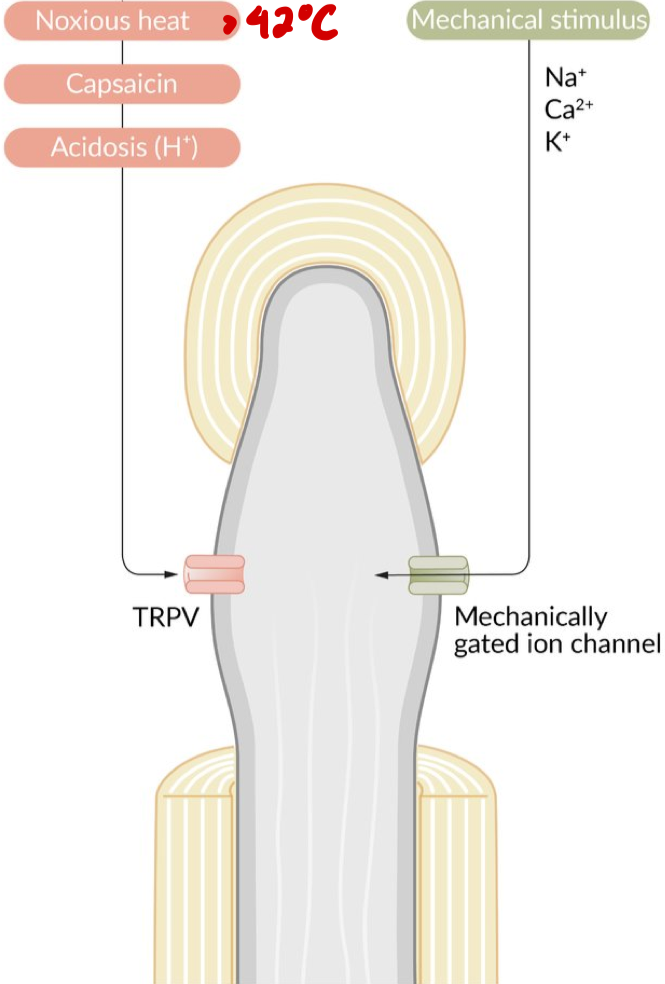
Thermal Nociceptors
React to thermal stimuli
> 45ºC
< 5ºC
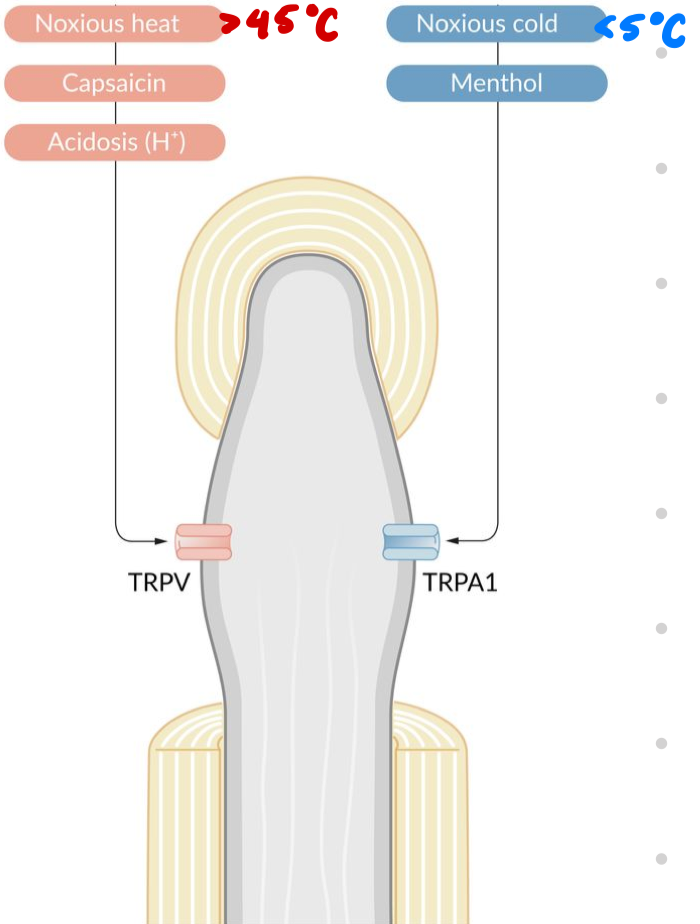
Polymodal Nociceptors
React to thermal, mechanical, + chemical stimuli

Pain Nerve Fibres
Aδ fibre
C fibre
Aβ fibre
Aδ Nerve Fibres
Myelination: Yes
Conduction Speed: Fast
Nociceptor: Mechanical, thermal
Localizability: Localized
Sensation:
Sharp
Pricking
Stinging
Function: Withdrawal response
C Nerve Fibres
Myelination: No
Conduction Speed: Slow
Nociceptor: Polymodal
Localizability: Diffuse
Sensation:
Dull
Aching
Burning
Function: Protect injured area (guarding)
Aβ Nerve Fibres
Transmit non-noxious (tactile) + nociceptive signals
Modulate Aδ + C fibre activity
Pain: Excitatory Neurotransmitters
Receptors: Nociceptors + AMPA
Glutamate
Pain: Inhibitory Neurotransmitters
Receptors: Interneurons + NMDA (closed at rest)
GABA
Glycine
Opioids: Endorphins (endogenous)
Pain Pathway 1
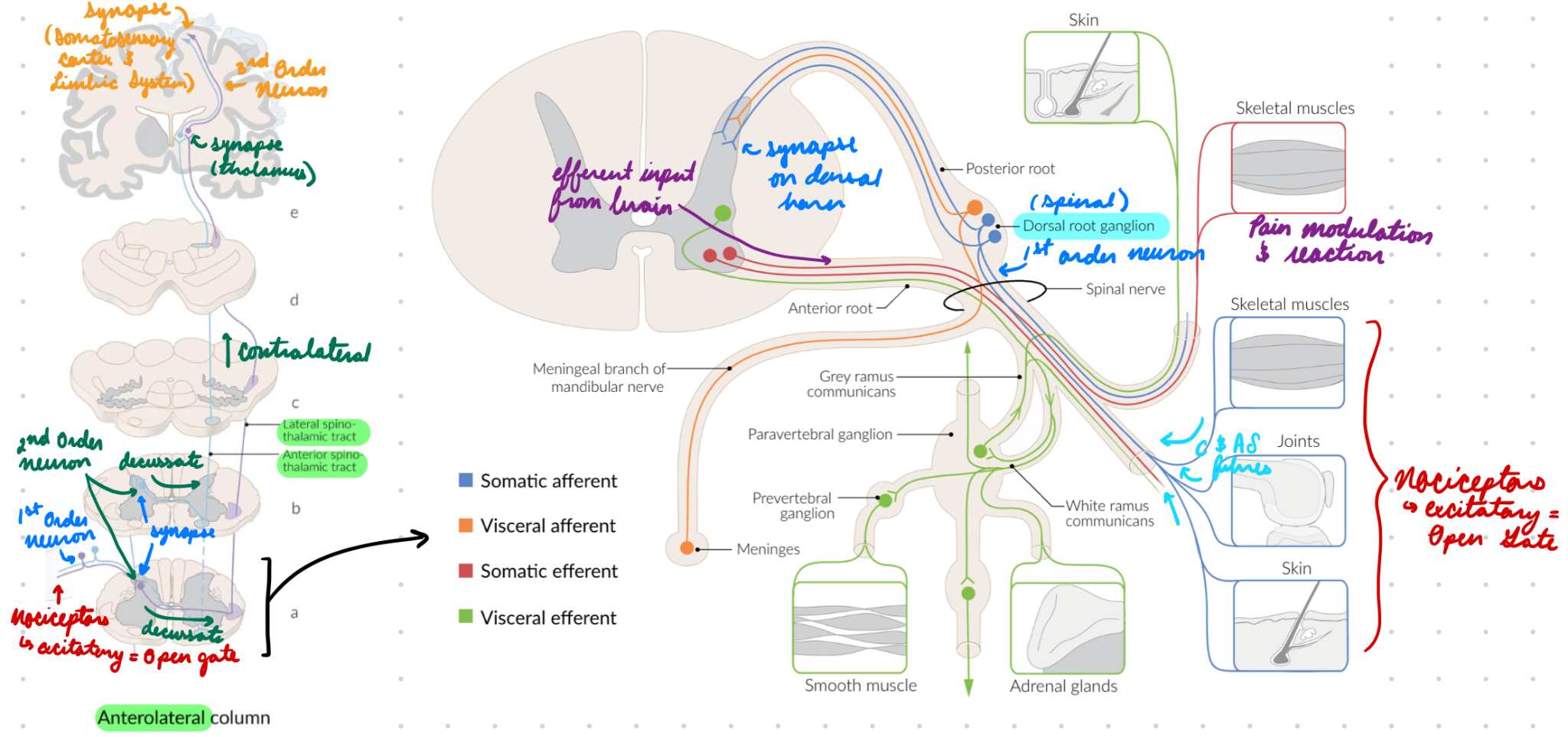
Nociceptors detect noxious stimuli = Convert into electric signal/action potential = C + Aδ fibres depolarize + transmit afferent information to dorsal horn (spinal cord)
Gate-Control Theory: Excitatory nociceptors increase afferent transmission
Increase excitatory signals + decrease interneuron firing = Open gate = Increase pain transmission
1st Order Neuron:
Cell Body:
Spinal ganglion
Trigeminal ganglion
Synapse:
Dorsal horn (spinal cord)
Spinal trigeminal nucleus (brainstem)
Pain Pathway 2
Transmit afferent input up spinothalamic (anterolateral) tract to thalamus
Decussate in spinal cord/brainstem = Ascend contralaterally
Gate-Control Theory: Inhibitory interneurons control afferent transmission
Aβ fibre activation = Increase interneuron firing = Close gate = Decrease pain transmission
2nd Order Neuron:
Cell Body:
Dorsal horn
Spinal trigeminal nucleus
Synapse: Thalamus

Pain Pathway 3
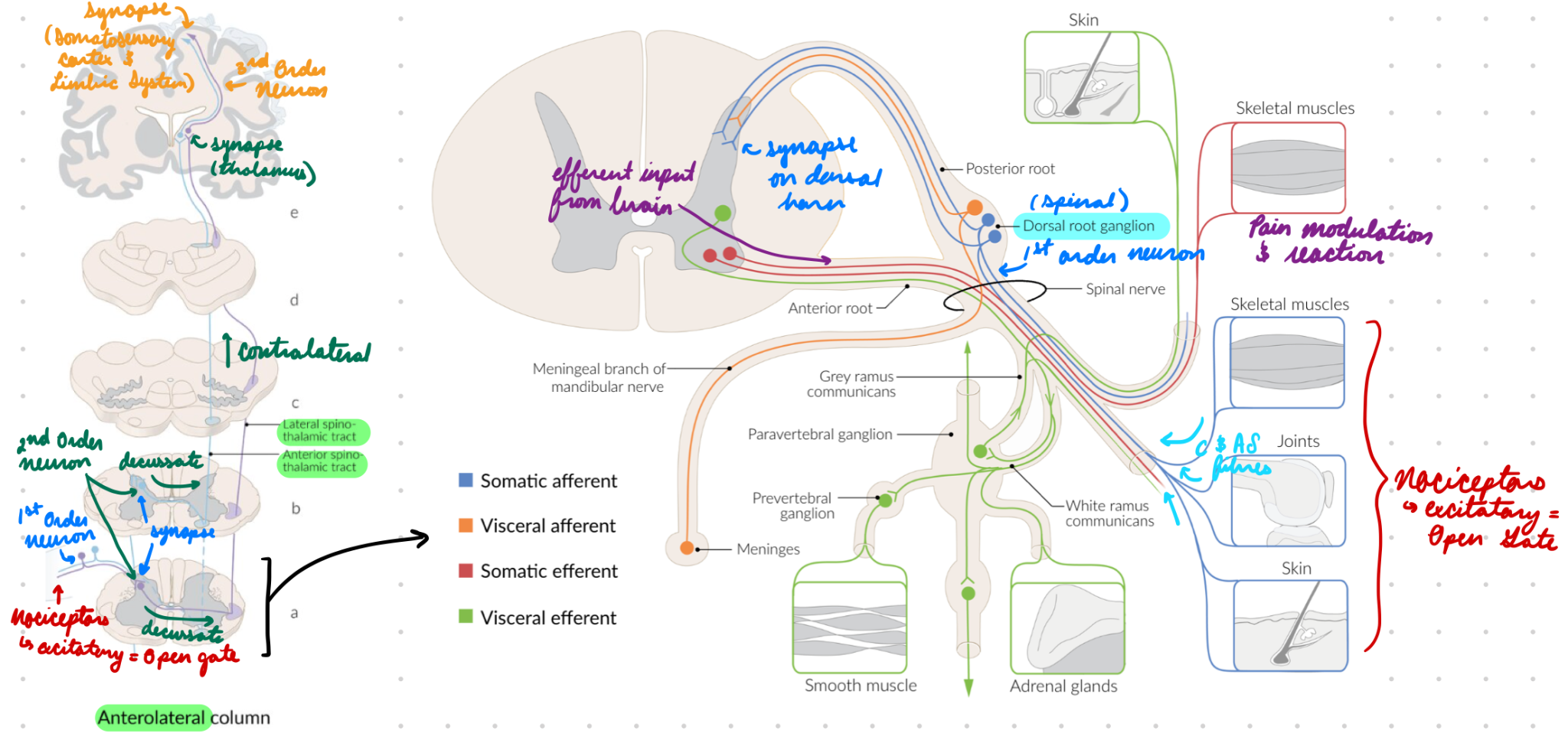
Brain perceives pain
Somatosensory cortex = Conscious pain perception
Limbic system = Emotional pain perception
3rd Order Neuron:
Cell Body: Thalamus (ventral posterolateral nucleus)
Synapse: Somatosensory cortex + limbic system

Pain Pathway 4
Brain sends response down efferent pathways = Pain modulation/reaction
Chronic Pain: Description
Distressing sensory + emotional experience linked/resembling tissue injury
Duration:
Acute: < 1 month
Subacute: 1-3 months
Chronic: > 3 months
Chronic Pain: Types
Nociceptive
Neuropathic
Nociplastic
Chronic Pain: Nociceptive
Triggered by noxious stimuli
Somatic (MSK): Localized + sharp pain
Aδ fibres
Visceral: Diffuse + dull/deep pain
C fibres
Chronic Pain: Neuropathic
Triggered by damage to/dysfunction of somatosensory nervous system (no noxious stimuli)
Central: CNS dysfunction
Poststroke pain syndrome
Phantom limb pain syndrome
Peripheral: Peripheral nerve damage
Diabetic neuropathy
Postherpetic neuralgia
Chronic Pain: Nociplastic
Triggered by altered nociception
No underlying tissue damage
Chronic Pain: Epidemiology
Risk factors…
Older age
Smoking
High ACEs
Foster care
Parental death in childhood
Premature birth
Physical trauma at young age
Chronic Pain: Social Burden
Increased productivity loss
Disability
Missing work
Caregiving responsibilities
Decreased societal participation
Chronic Pain: Economic Burden
Healthcare costs
Leading cause for seeking medical care
Cause disability
Chronic Pain: Etiology
Biopsychosocial model = Modulate pain intensity + impact
Biological:
Tissue injury
Genetics
Psychological:
Pain-related beliefs
Fear-Avoidance Model: Worry about activity worsening pain = Avoiding activity = Worsens pain from lack of use
Coping mechanisms
Catastrophizing
Social:
Social support system
Work
Chronic Nociceptive Pain: Pathophysiology
Nociceptors detect pain = Transmit up spinothalamic tract to brain = Somatosensory cortex + limbic system perceive + response to pain
Chronic Neuropathic Pain: Pathophysiology
Abnormal nerve impulse transmission
Peripheral: After trauma, disease, neurotoxins
Central: After stroke, spinal cord injury, demyelinating condition
Chronic Pain: Pain Signalling Evolution
Persistent injury = Nociceptor changes = Decrease nerve/firing threshold
Enhanced excitatory transmission: Increase nociceptor firing
Peripheral Sensitization: Decreased activation threshold = Weak stimuli trigger neuron firing = Spontaneous firing
Central Sensitization: Repeat noxious stimuli = Signalling pathway + Glutamate receptor changes = Normal stimuli causes pain (allodynia)
Wind-Up: Normally inactive receptors activate = Ca2+ influx = Increase neuron firing frequency + amplitude
Disinhibition: Decrease interneuron inhibiting nociceptor firing
Autonomous firing = Pain persists after insult resolution
Chronic Pain: Clinical Presentation
Primary: No clear underlying condition OR pain disproportionate to cause
Distress
Disability
Ex:
Fibromyalgia
Chronic regional pain syndrome
Abdo pain
MSK pain syndromes
Secondary: From disease
Ex:
Cancer
Nerve injury
RA
Chronic Pain: Yellow Flags
Fear-avoidance beliefs
Catastrophizing
Depression + anxiety
Exaggerated illness response
Prolonged sick leave
Lack of social support
Overprotective family
Chronic Pain: Investigations
Cannot use disease model approach
Treating pain as symptom of disease
Indications:
Red flags for disease
Neurologic deficit
Treatment failure
Blood tests
Imaging
Chronic Pain Investigation: Blood Tests
CBC
Inflammatory markers (ESR, CRP)
Immune markers (HLA B27)
BMP
Chronic Pain Investigation: Imaging
MRI
XR
Chronic Pain: Treatment/Management
Physical
Psychological
Pharmacological
Chronic Pain Management: Physical
PT/OT
Massage
Thermotherapy
Desensitization
Lifestyle changes
Regular exercise
Weight loss
Chronic Pain Management: Psychological
CBT
Hypnosis
Relaxation techniques
Chronic Pain Management: Pharmacological
WHO Analgesic Ladder
Step 1: Mild Pain
Non-opioids
Adjuvants if needed
Step 2: Moderate Pain
Non-opioids
Mild opioids (consider)
Adjuvants if needed
Step 3: Severe Pain
Non-opioids
Mild opioids (consider)
Strong opioids (consider)
Adjuvants if needed
Chronic Pain Pharmacological: Regular Analgesics
Administer at fixed time + dose
By Mouth: Preferred
By Clock: Regular administration at fixed times
By Ladder: Pain persists = Step up
Chronic Pain Pharmacological: PRN Analgesics
Short-acting
≥ 3x/day = Review regular medication
Chronic Pain Pharmacological: Analgesic Drugs
Acetaminophen
NSAID
Selective COX-2 inhibitor
Na+ channel blocker
Opioids
Combination
Analgesic: Acetaminophen
Admin: Oral, suppository
Analgesic: NSAID
Aspirin, indomethicin
Admin: Oral, suppository
Ibuprofen
Admin: Oral, parenteral
Diclofenac
Admin: Oral, parenteral, topical
Naproxen, Meloxicam
Admin: Oral
Ketorolac
Admin: Parenteral
Analgesic: Selective COX-2 Inhibitor
Celecoxib
Admin: Oral
Analgesic: Na+ Channel Blocker
Suzetrigine
Admin: Oral
Lidocaine
Admin: Topical
Analgesic: Opioids
Oxycodone
Admin: Oral
Hydromorphone, Tramadol
Admin: Oral, parenteral
Morphine, Fentanyl, Buprenorphine
Admin: Parenteral
Analgesic: Combination
Codeine/acetaminophen
Hydrocodone/acetaminophen
Hydrocodone/ibuprofen
Oxycodone/acetaminophen
Admin: Oral
Opioids: Indications
Canadian Opioid Guidelines (2025)
First-Line: Non-opioid + non-pharmacological therapies
Opioids: Trial if pain persists
No psychiatric disorders
No SUD
No opioid OD history
Rotate opioids if pain persists or adverse effects
Opioids: Dosing
< 80mg daily
Opioids: Adverse Effects
Hyperalgesia (pain sensitization)
Respiratory depression
Constipation
Hypogonadism
Serotonin syndrome
Seizures
Withdrawal
Dependence
Using others’ prescriptions
Dose escalation
Visiting multiple physicians/prescribers
Early refill
Impacted function
Adjuvant Pain Drugs
Anticonvulsants
Muscle relaxants
Antidepressants
Cannabinoids
Adjuvant Drugs: Anticonvulsants
Indications: Neuropathic pain
Ex:
Gabapentin/pregabalin
Carbamazepine
Adjuvant Drugs: Muscle Relaxants
Indications: Muscle spasticity
Ex: Baclofen
Adjuvant Drugs: Antidepressants
Indications:
Chronic pain syndromes
Neuropathic pain
TCAs:
Amitriptyline
Clomipramine
SNRIs:
Duloxetine
Venlafaxine
Adjuvant Drugs: Cannabinoids
Indications: Neuropathic pain (short-term)
NOT INHALED
CBD: Non-psychoactive
THC: Psychoactive
Binds CB1 + CB2 = Inhibit cAMP synthesis = Analgesia
Chronic Pain: Complications
Financial burden
Poor mental health
Altered family dynamics
Increased stress
Depression
Anxiety