Genotype-Phenotype Meiosis and Mendelian Ratios
 Call Kai
 Learn
Learn Practice Test
 Spaced Repetition
 Match
Match Flashcards
 Knowt Play
1/18

There's no tags or description
Looks like no tags are added yet.
Name | Mastery | Learn | Test | Matching | Spaced | Call with Kai | Chat |
|---|
No analytics yet
Send a link to your students to track their progress
19 Terms
Meiosis
special form of cell division that creates gametes (sex cells), like eggs and sperm
occurs in the nucleus of somatic cells

Life cycles
when meiosis and mitosis occur
adults undergo meiosis to create single sperm/egg which interact to form a zygote,
which in turn undergoes mitosis until it develops into an adult to restart the process
Meiosis is “gametic”
Diplontic
mitosis occurs only in the diploid stage, not the haploid stage (sperm/eggs)
can utilize their extra copy to repair double strand breaks during mitosis
leading to more stable karyotypes and fewer wasted resources due to dead end haploid individuals
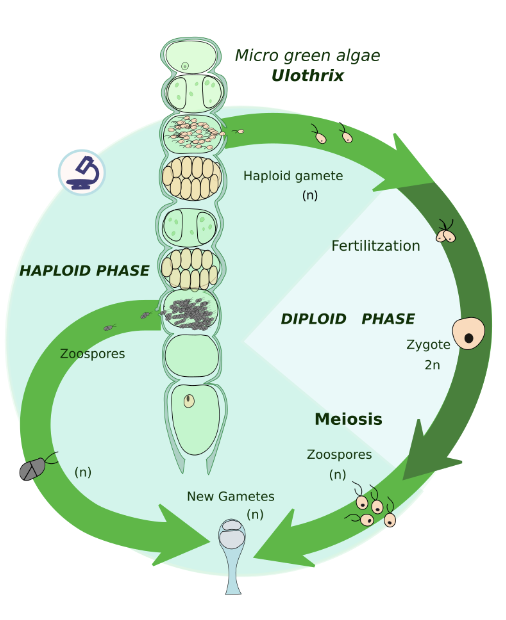
haplontic life cycle
the only diploid cell is the zygote, which immediately undergoes meiosis, and mitosis is only for haploid cells
there are two routes for the generation of novel gametes, either mitosis only, or fertilization + meiosis which generates genetic diversity
Meiosis is “zygotic”

Haplodiplontic organisms
experience mitosis in both haploid and diploid cells
can repair structural mutations only if the majority is their mitosis is in the diploid stage
Haplontic cells
advantage that they do not need to sexually mate
[blank] cells can divide mitotically in the haploid state in the short term, while occasional mating still provides enough genetic diversity to be an advantage
Asexual
Mitosis creates two identical organisms from one individual
Not capable of forming a long, stable life
Sexual
Meiosis in different individuals in a population create gametes which combine to make a new organism
enough genetic diversity to escape diseases
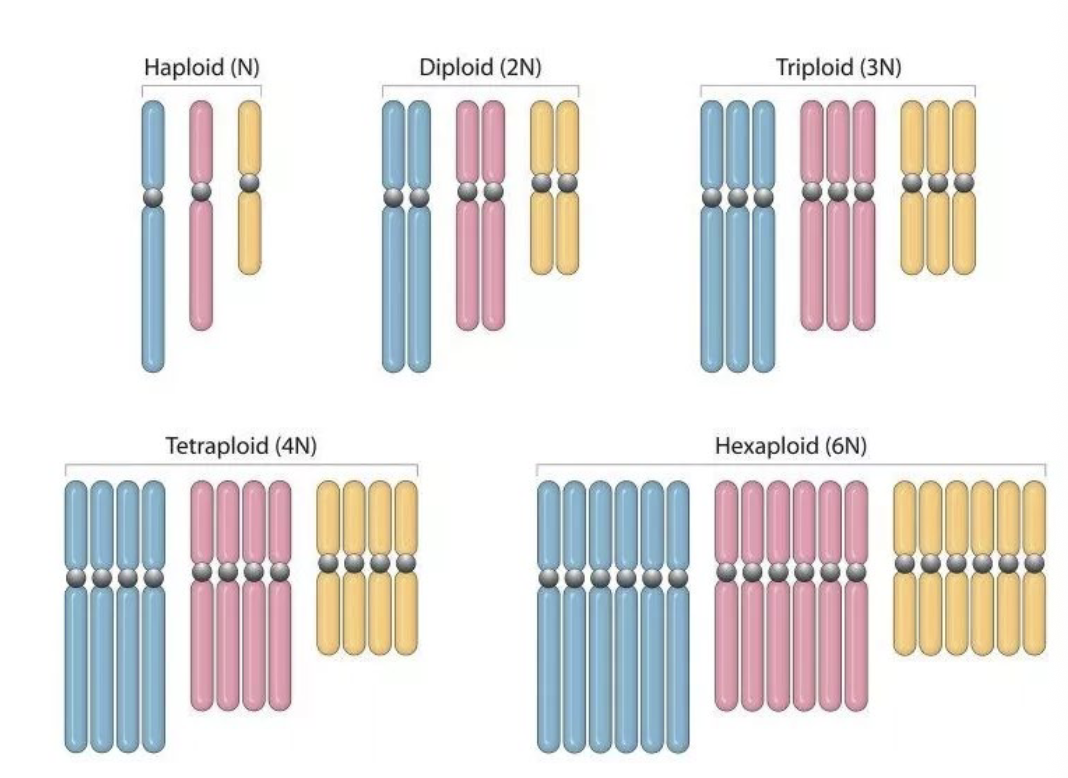
Ploidy
is determined by number of chromosomes of each type a cell has
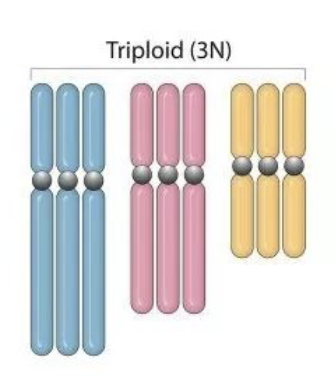
Triploids
are not stable species since they cannot undergo meiosis properly
3 is not divisible by two ( need a stable half ploidy to undergo meiosis)

Diploid
Cells with two copies of each chromosome

Haploid
Cells with one copy of each chromosome
heterozygous genotype
individuals with the [blank] as “carriers” because they “carry” the recessive allele but don’t show that phenotype
homozygous genotype
phenotype that comes from a recessive allele

Prophase 1
Homologous chromosomes are held together with a protein lattice
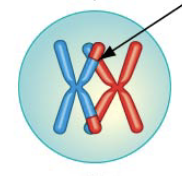
Crossing Over
have similar DNA sequences, homologous chromosomes exchange part of their DNA during Meiosis 1
This process also serves as a checkpoint to make sure each chromosome is paired up before the chromosomes divide
This is when many tumor suppressor genes are active in the cell cycle

Recombinant chromosomes
Chromosomes that experience recombination

Parental chromosomes
Chromosomes that don’t experience recombination
Mendels’s Laws of Heredity
Law of Dominance: some alleles are dominant, others are recessive, a heterozygous individual will display the dominant form
Law of Segregation: only 1 allele is carried in a gamete
Law of Independent Assortment: genes of different traits segregate independently to the gametes