Arthistory quiz 1
 Call Kai
 Learn
Learn Practice Test
 Spaced Repetition
 Match
Match Flashcards
 Knowt Play
1/22

There's no tags or description
Looks like no tags are added yet.
Name | Mastery | Learn | Test | Matching | Spaced | Call with Kai | Chat |
|---|
No analytics yet
Send a link to your students to track their progress
23 Terms
Paleolithic
The period of the Stone Age is associated with the evolution of humans. First of the eras.
Mesolithic
The Middle Stone Age, associated with stone tools, about 12,000 years ago. Between the Paleolithic and the Neolithic ages.
Neolithic
The period of the Stone Age is associated with the ancient Agricultural Revolution. It follows the Paleolithic and Mesolithic period.
Seasonality
serves as a universal theme representing life cycles, time, and human connection to nature (rebirth in spring, the abundance of summer, the harvest of autumn, and the introspection of winter).
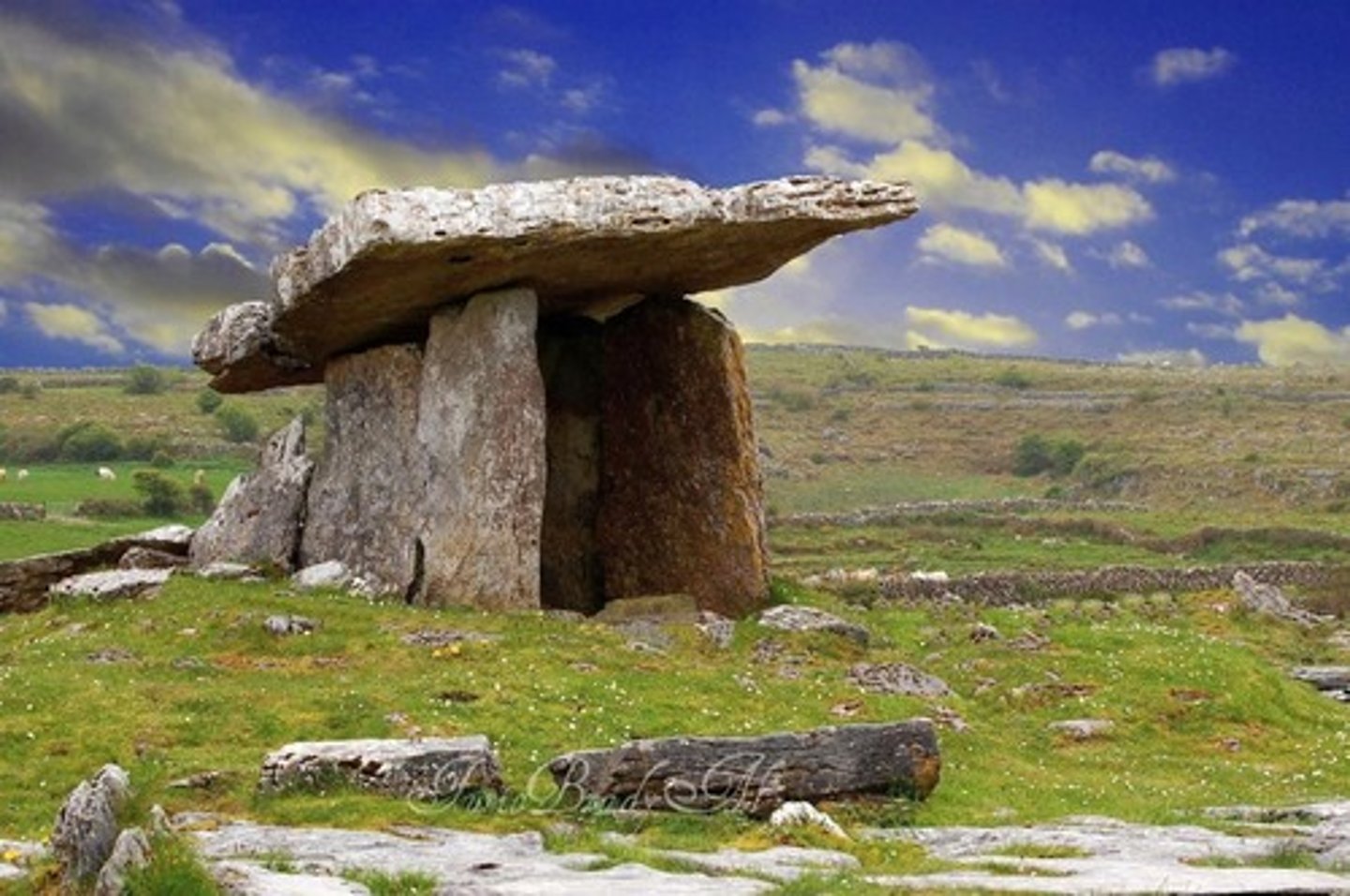
Dolmen
a megalithic tomb with a large flat stone laid on upright ones, found chiefly in Britain and France.
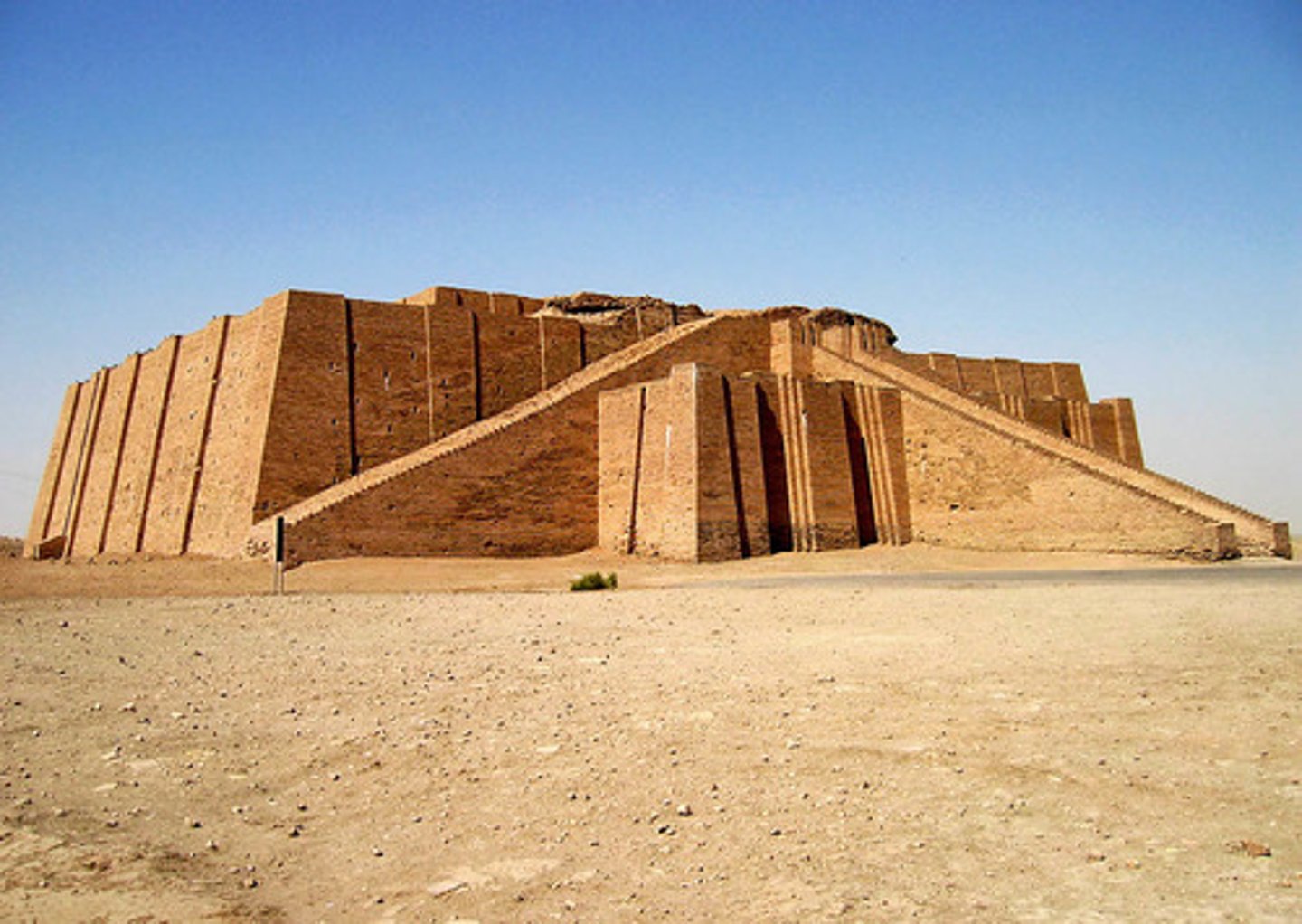
Ziggurat
A rectangular tiered temple or terraced mound erected by the ancient Assyrians and Babylonians
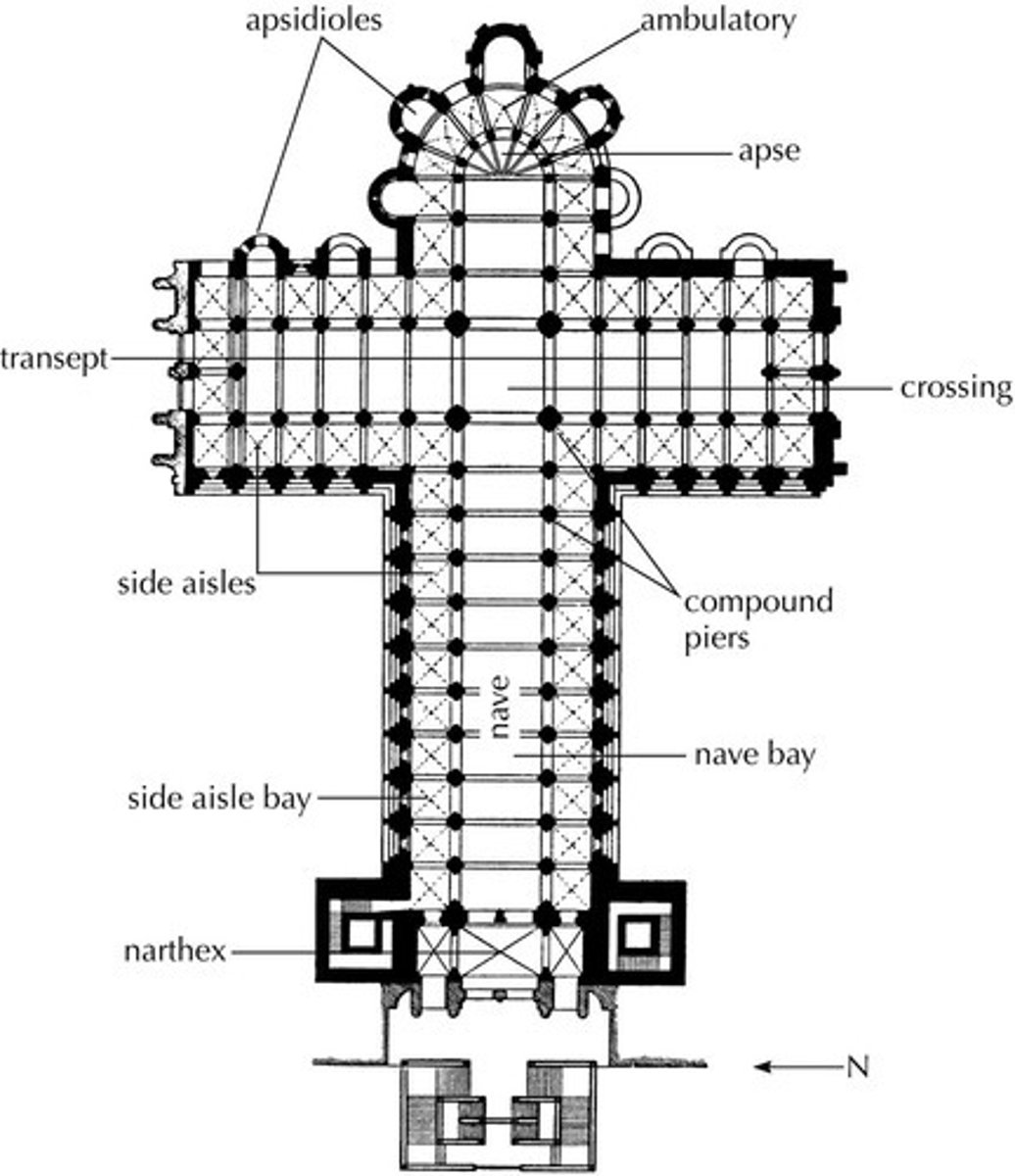
Absidial
Apsidal refers to a semi-circular or polygonal termination to a building, typically covered with a hemispherical dome or vault. This feature, known as an apse, is most commonly found at the eastern end of a church or cathedral, where it houses the altar.
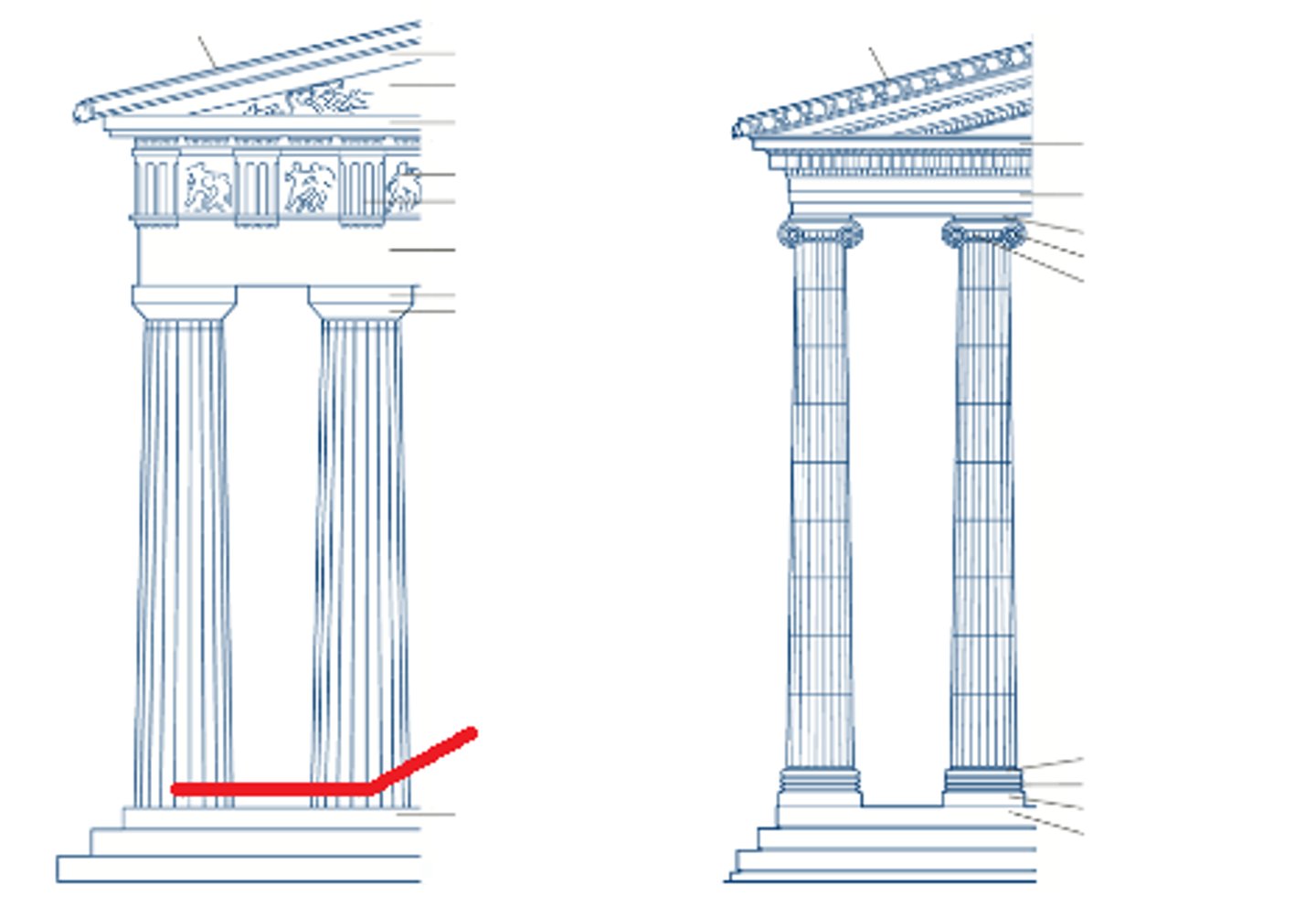
Stylobate
The uppermost course of the platform of a Greek temple, which supports the columns.
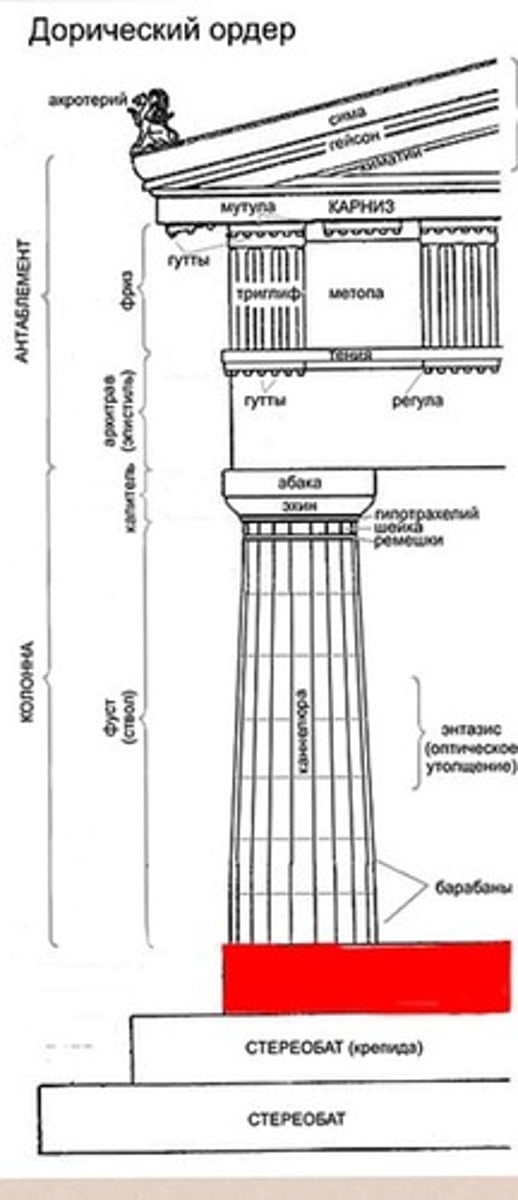
Doric Order
the simplest of the classical Greek architectural styles, featuring unadorned columns with no base
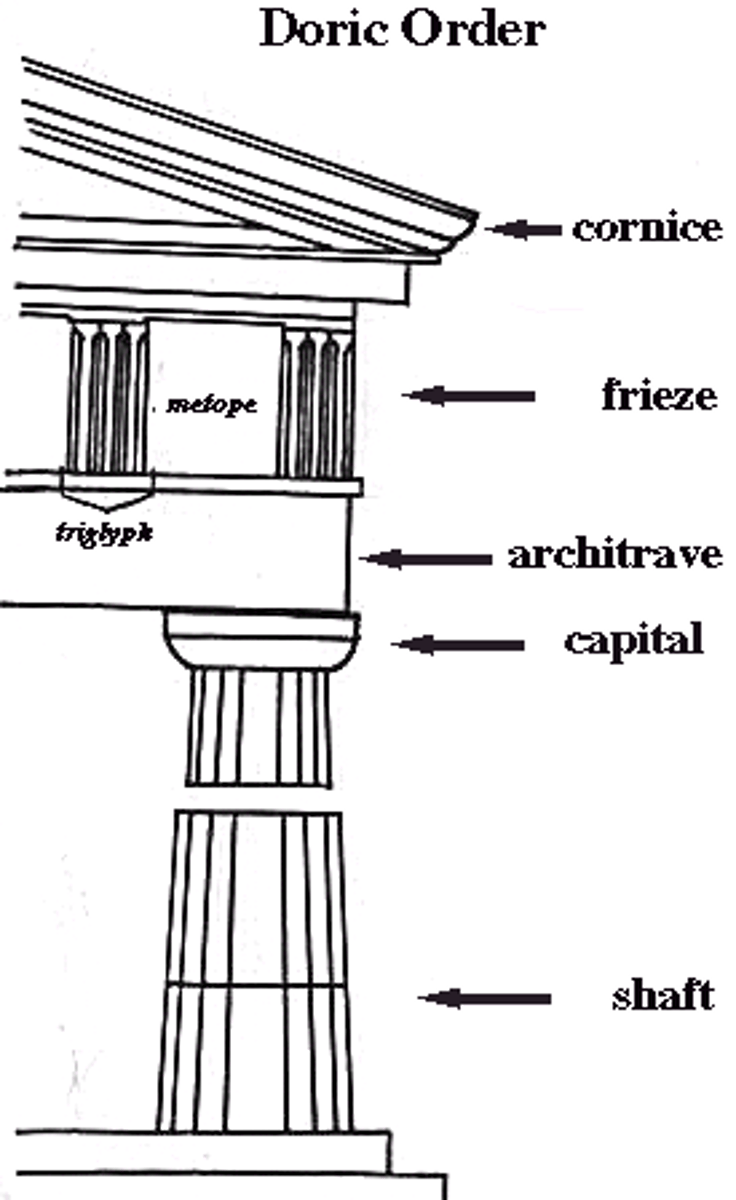
Ionic Order
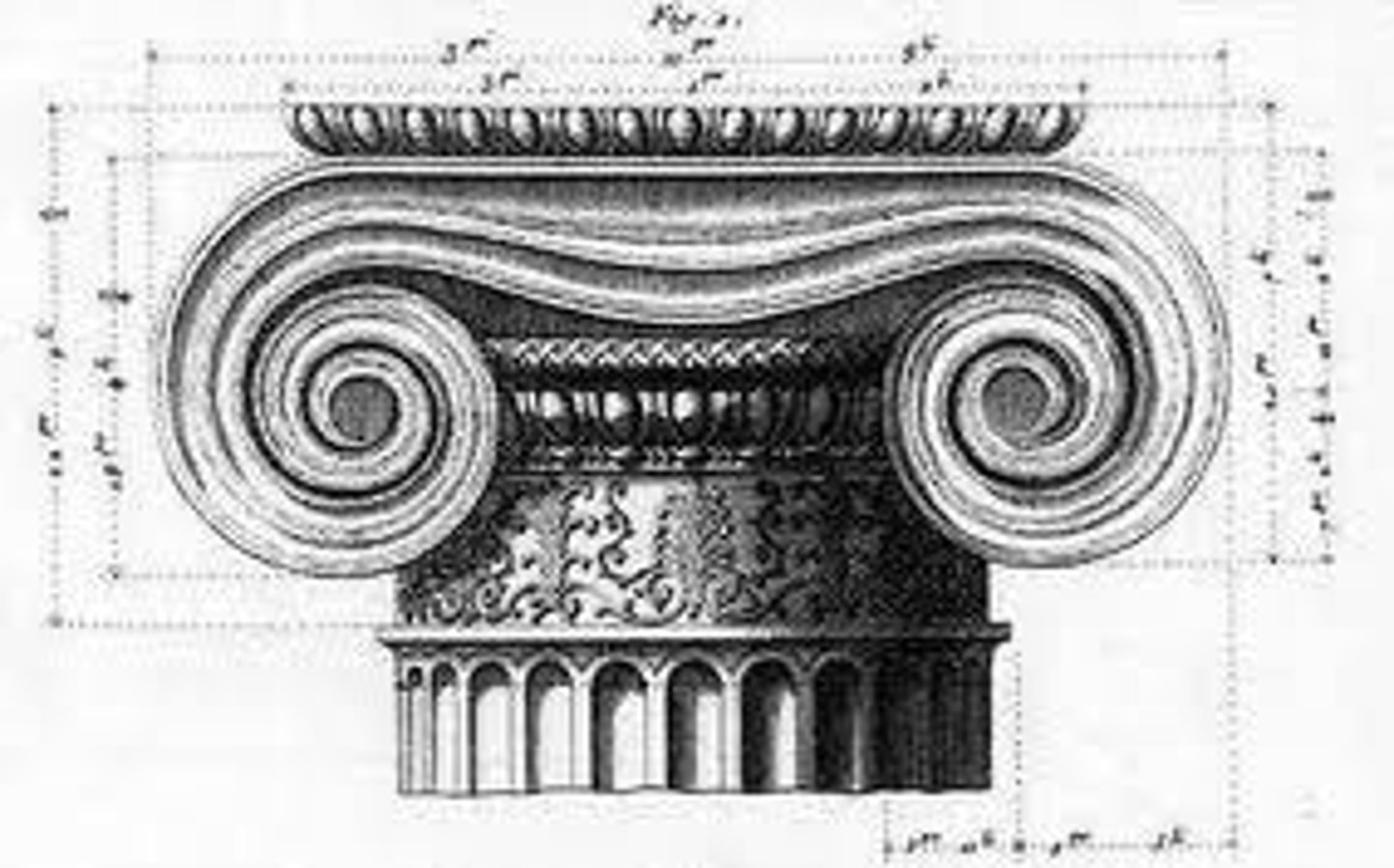
classical Greek architectural style that features a fluted column shaft, capitals with volutes (spiral scroll-like ornaments) and a large base
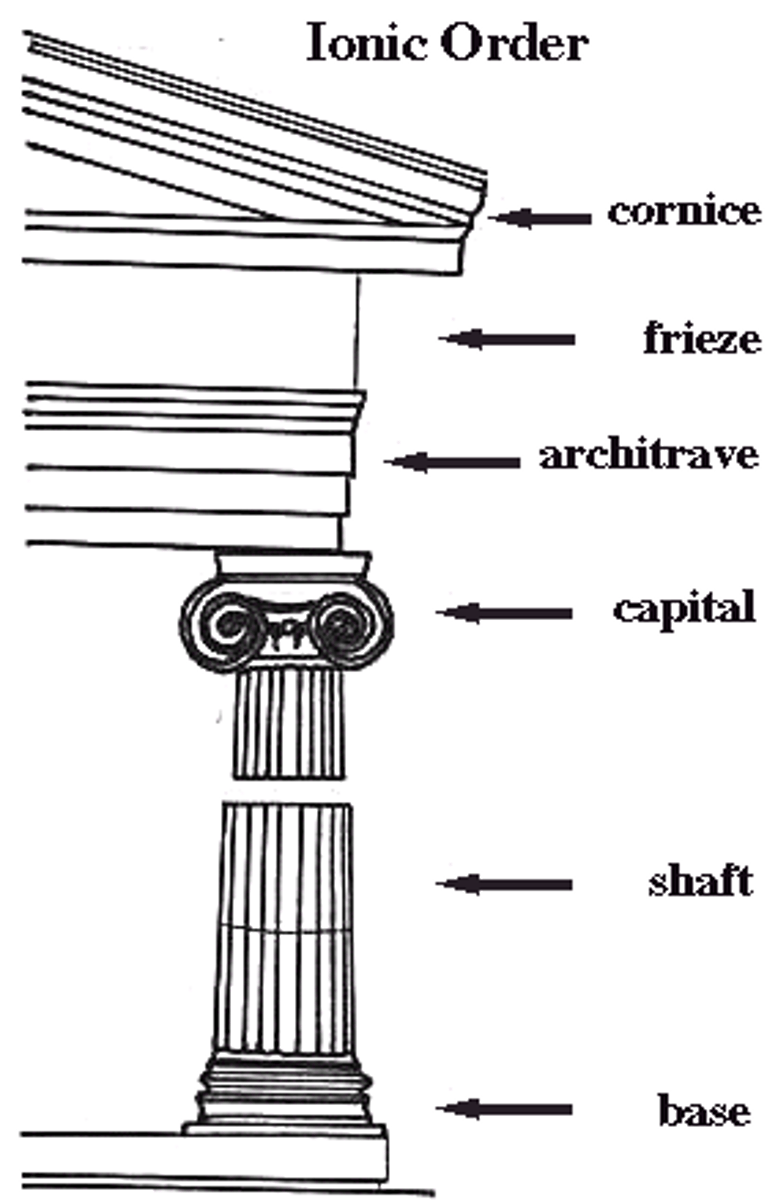
Pediment
In classical architecture, the triangular space (gable) at the end of a building, formed by the ends of the sloping roof above the colonnade; also, an ornamental feature having this shape.

cornice
projecting molding on building (usually above columns or pillars)
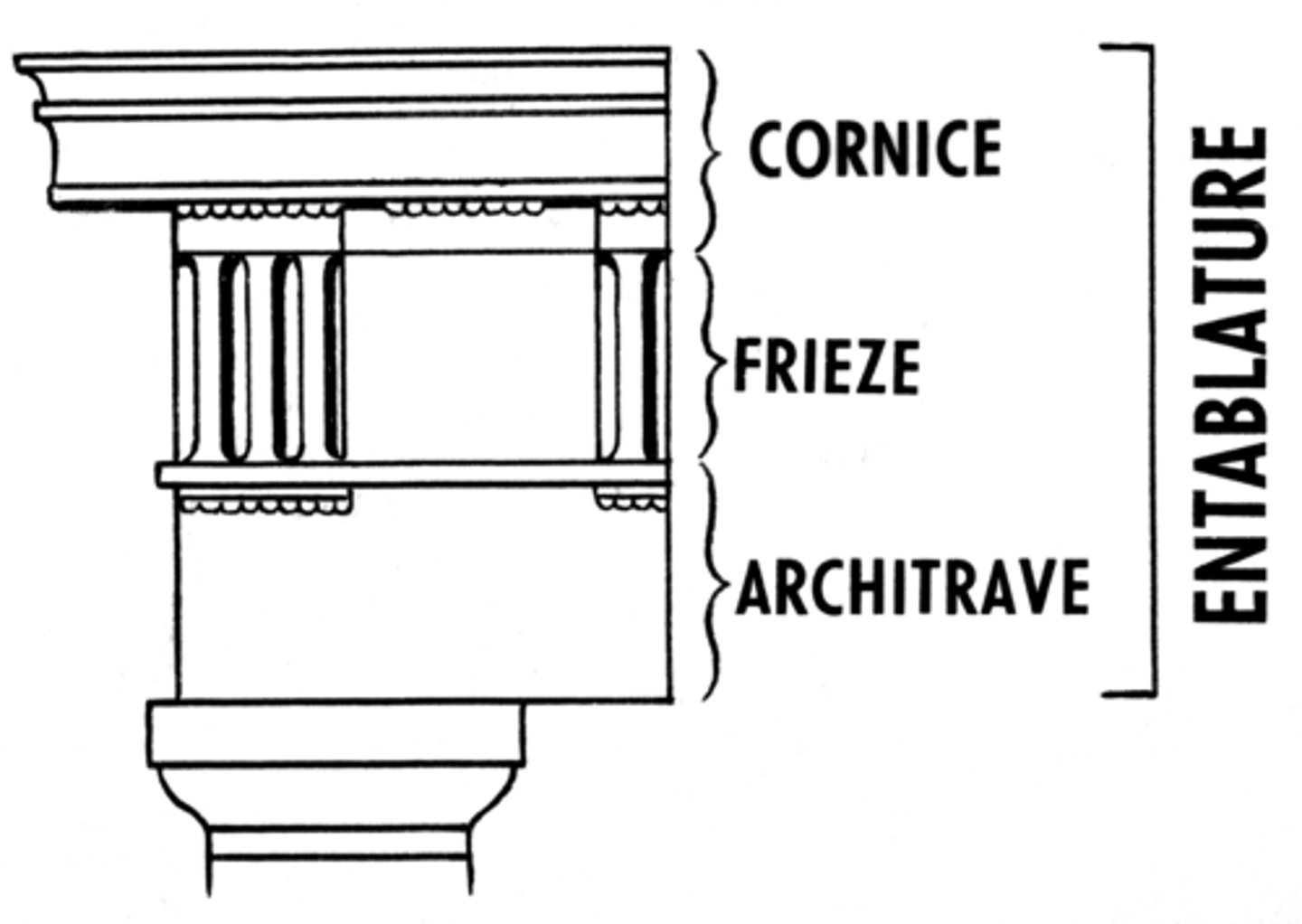
Frieze
a broad horizontal band of sculpted or painted decoration, below the cornice, above the architrave.
Architrave
a plain, unornamented lintel on the entablature
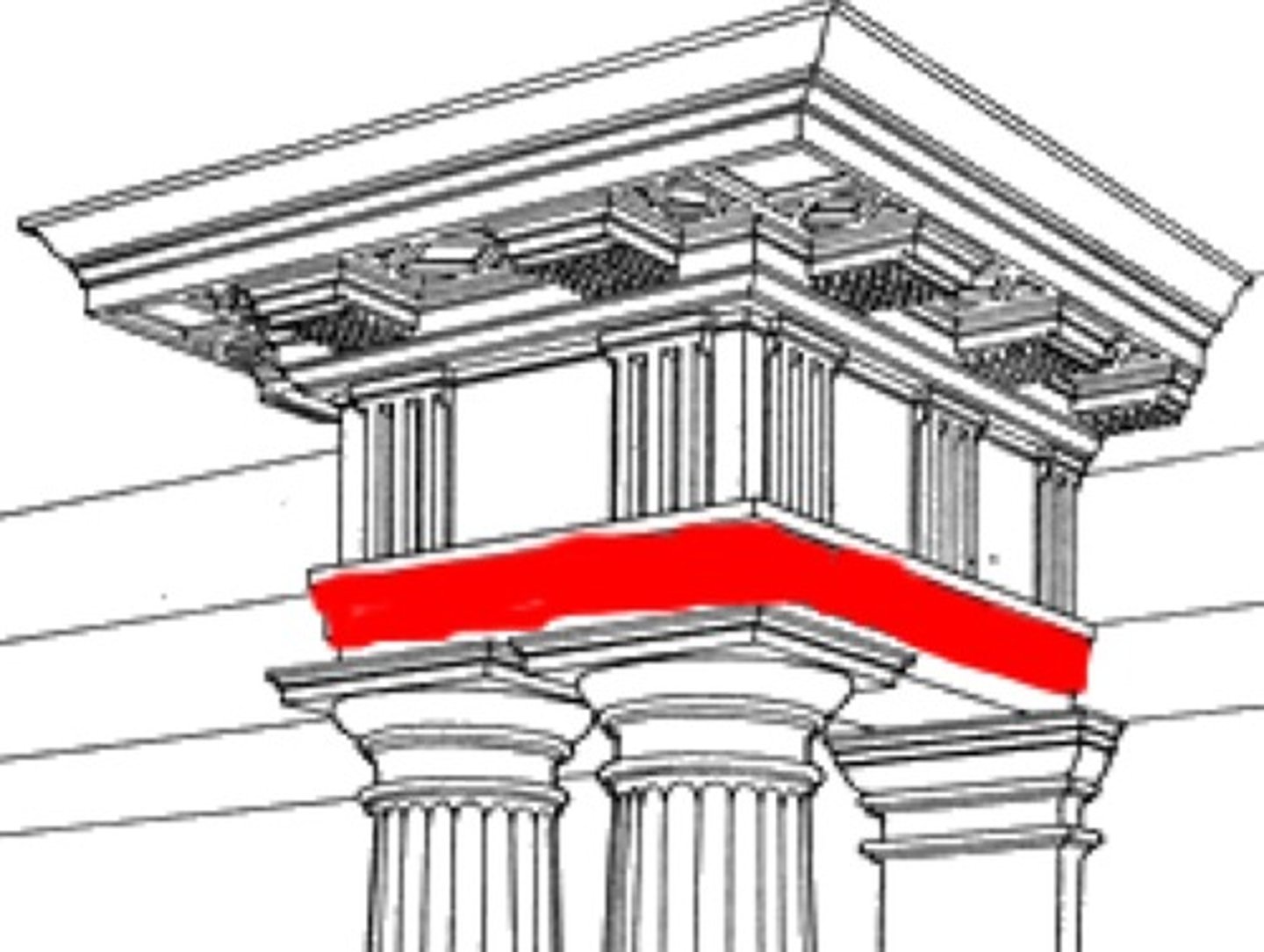
Entablature
a horizontal, continuous lintel on a classical building supported by columns or a wall, comprising the architrave, frieze, and cornice.
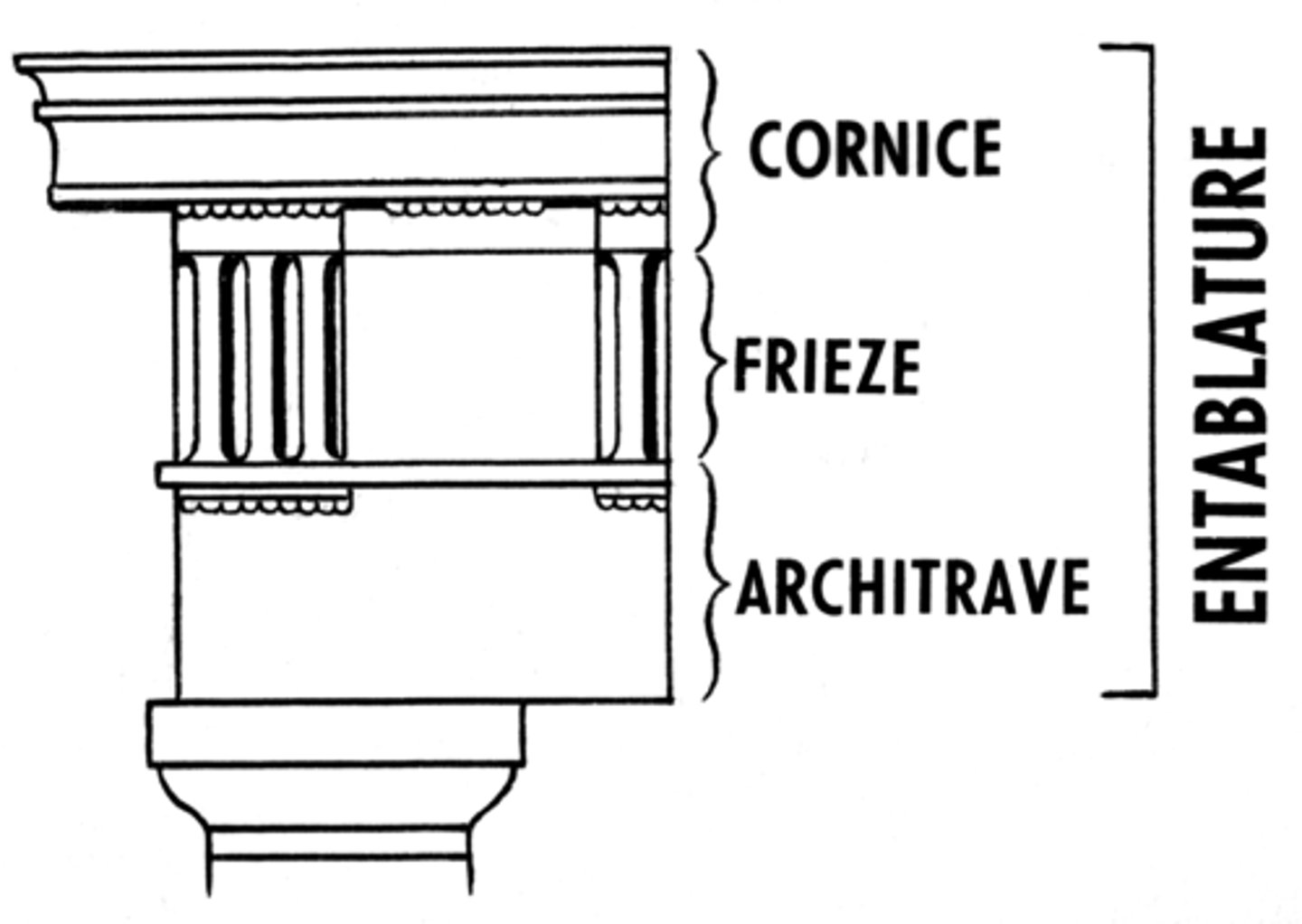
Triglyph
a triple projecting, grooved member of a Doric frieze that alternates with metopes
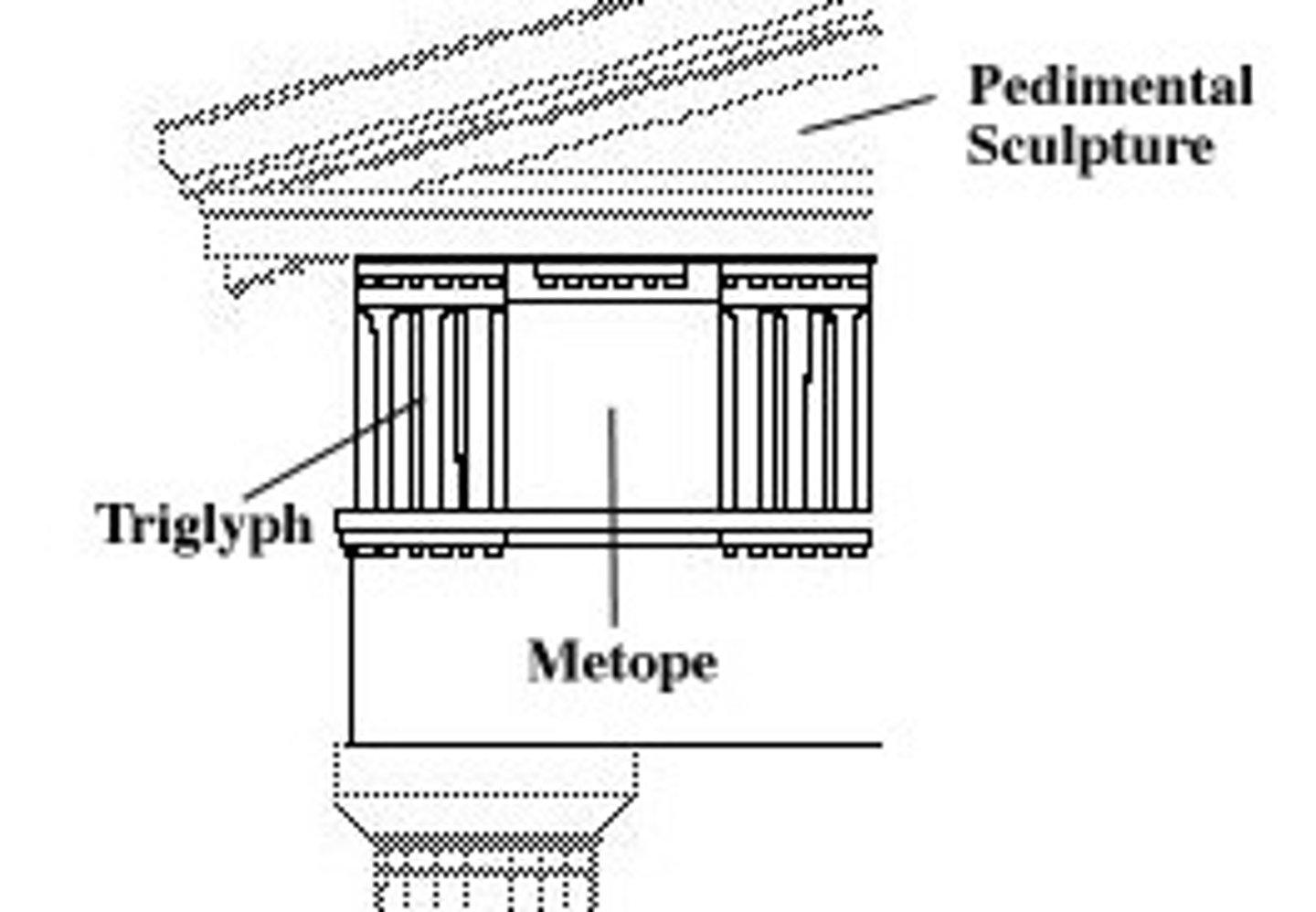
Metope
panel between the triglyphs in a Doric frieze, often sculpted in relief
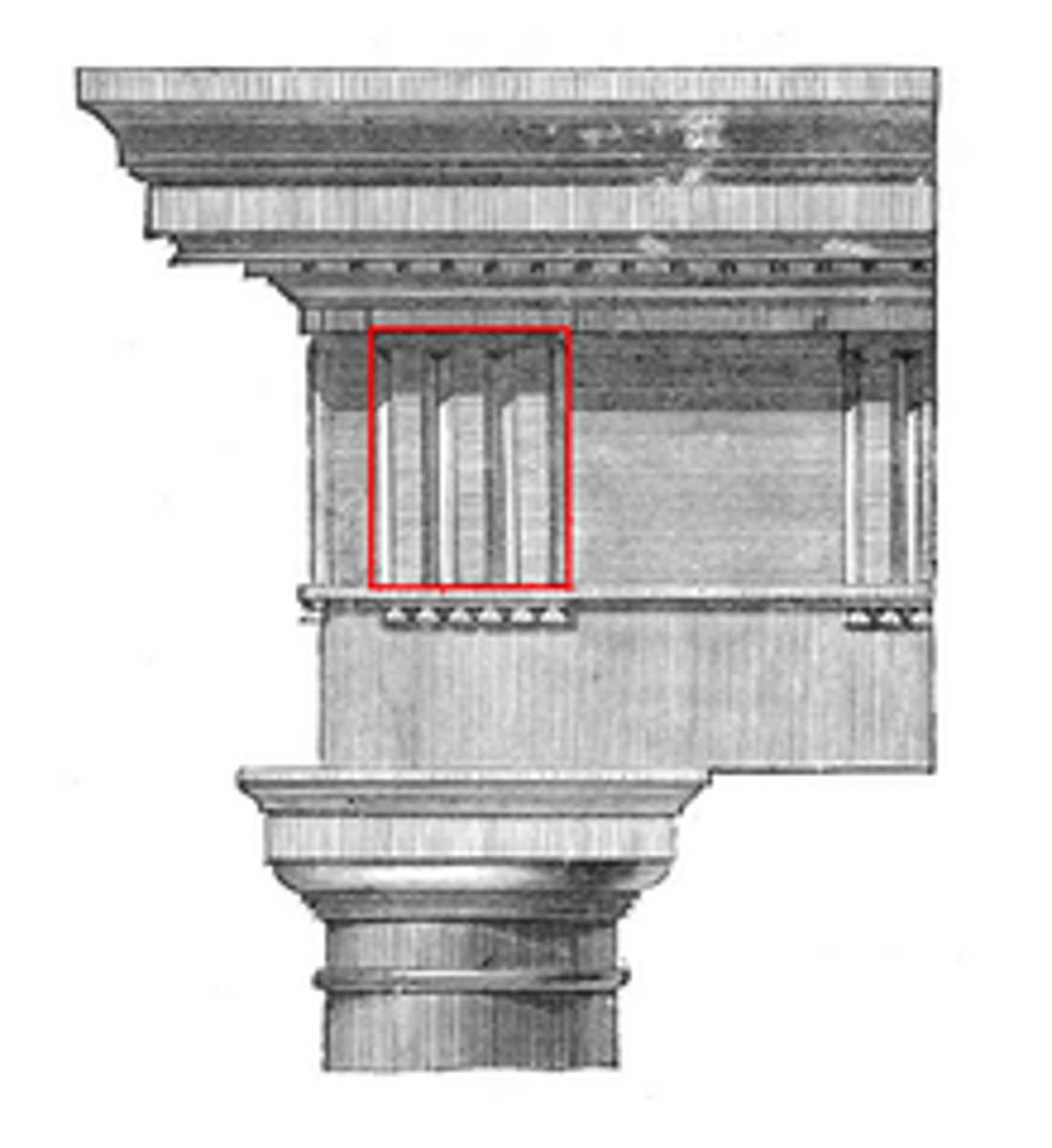
Capital
Doric capitals are simple and blocky, featuring a flared, circular cushion (echinus) and a square slab (abacus). Conversely, Ionic capitals are elegant, characterized by spiraled, scroll-like ornaments known as volutes
Volute
A spiral, scroll-like form characteristic of the ancient Greek Ionic and the Roman Composite capital.
column
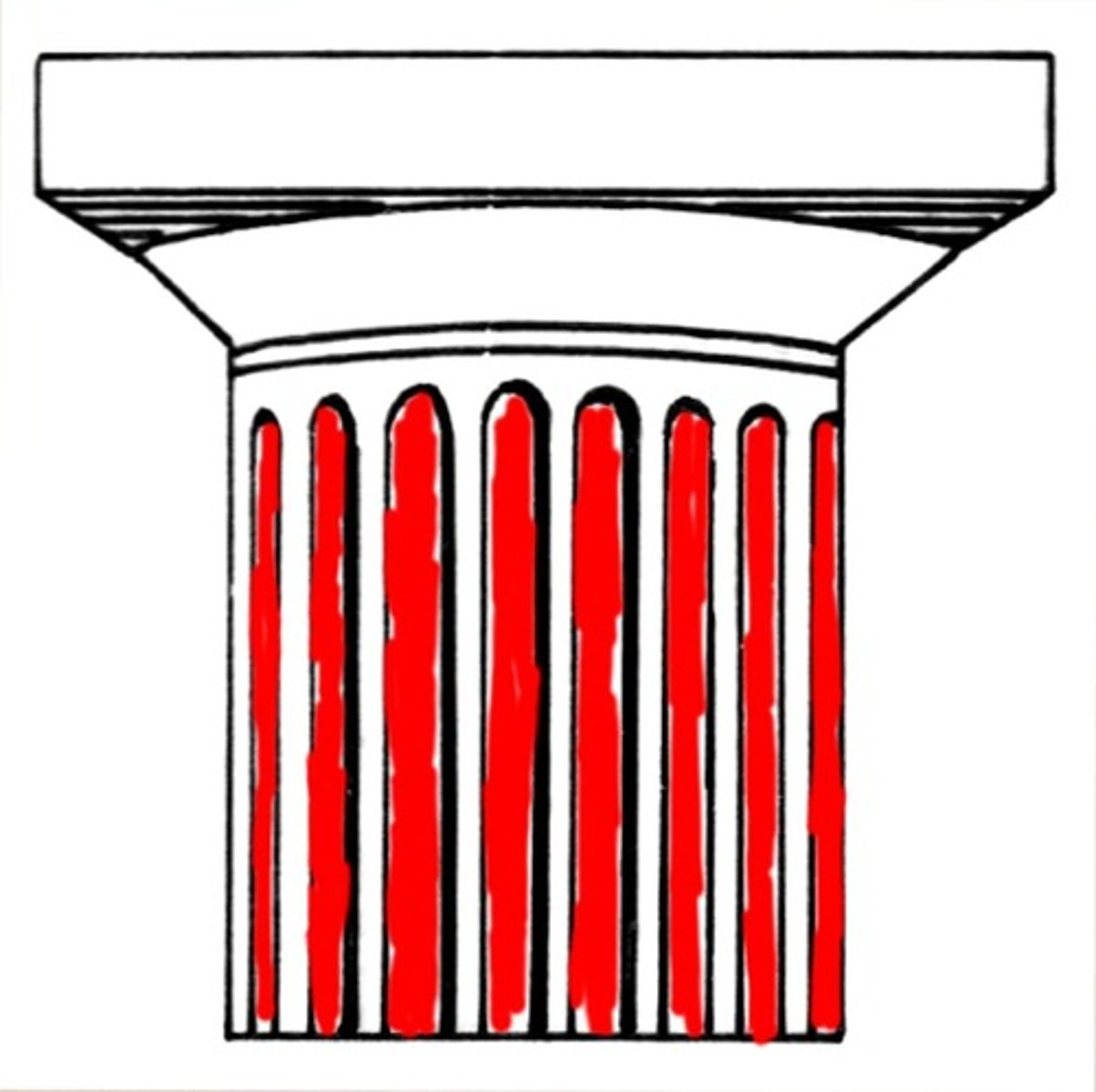
Main column on both orders
Fluting
a series of shallow concave grooves, vertical on the shaft of a column.
Base
Not the steps, but the bottom portion of the columns
Intercolumniation
spacing between columns