DNA & RNA Structure and Function (chpt 13)
 Call Kai
 Learn
 Practice Test
 Spaced Repetition
 Match
 Flashcards
 Knowt Play
1/18

There's no tags or description
Looks like no tags are added yet.
19 Terms
Heredity
Passing on of characteristics from one generation to the next by genes
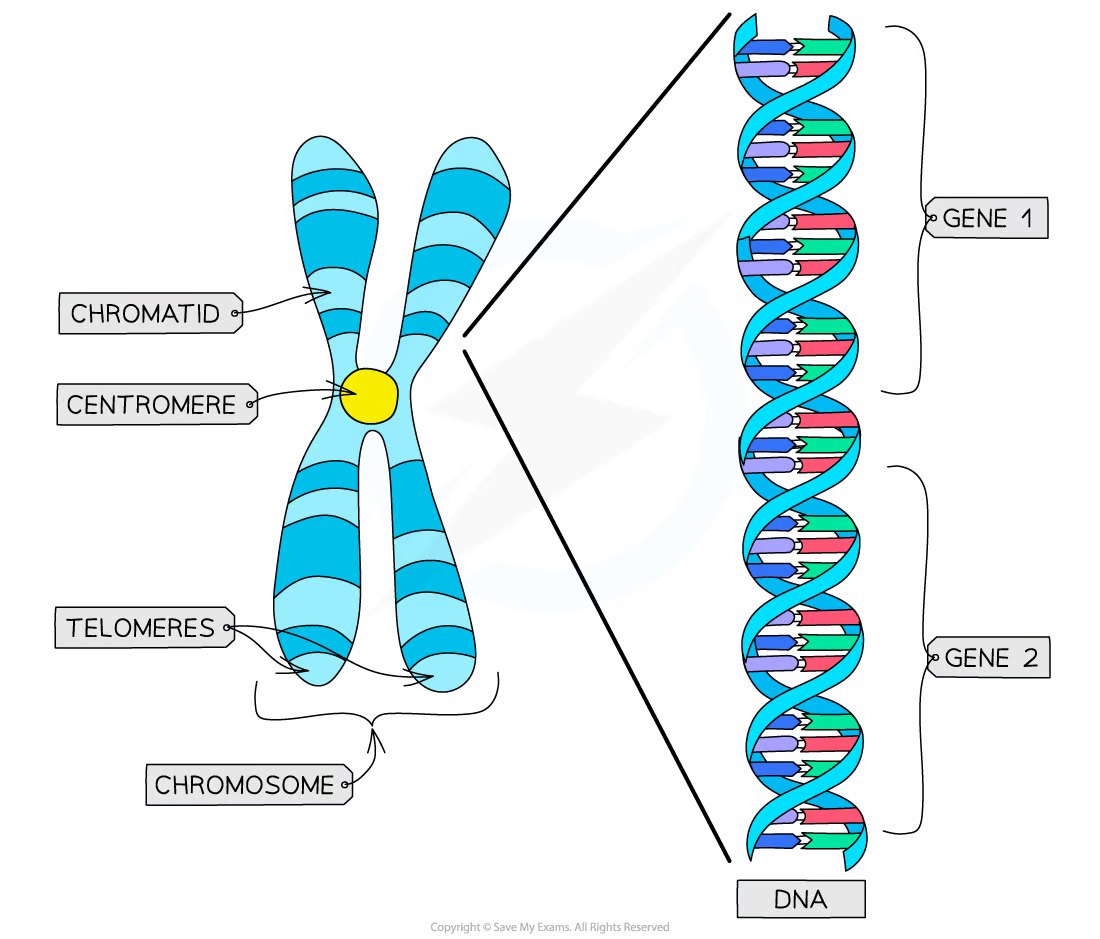
Gene
Length of DNA on a chromosome that codes for a protein or controls the development of a characteristic
Gene expression
Process by which the information from a gene is used to produce a feature or a protein
Species
Group of organisms that can interbreed and produce fertile offspring
Variation
Differences between individuals of a particular species
Locus
Position of a gene on a particular chromosme
Chromosome
Organised length of deoxyribonucleic acid (DNA) and proteins called histones
Chromosome Structure
Stored in nucleus
Genes have 2 alleles (options): dominant or recessive. Occasionally, neither gene is dominant; co-dominance or incomplete dominance
2 strands, chromatids, held together at centromere
Each chromosome is single piece of coiled DNA seperated by non-coding/junk DNA (more than 90%)
Humans have 46 chromosomes. No. and appearance of chromosomes in normal body cell is called karyotype
Structure of DNA
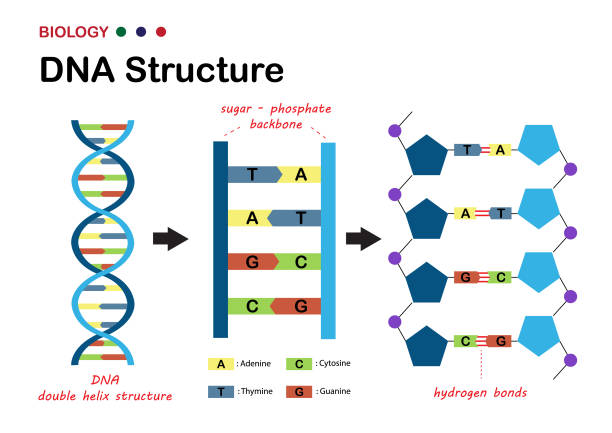
Polymer of thousands of repeating units in double helix
Ladder: alternating deoxyribose sugar molecules and phosphate groups, rungs are complementary bases held by hydrogen bonds
Bases: A + T, C + G, U + A
Adenine + Thymine, Guanine + Cytosine, Uracil + Adenine
Nucleotides
Phosphate, sugar and a base
A & G are purines, T, C, & U are pyrimidines; purines join with pyrimidines
DNA Replication
DNA helicase breaks hydrogen bonds (unzips).
Neucliotides enter nucleus from cytoplasm and bond to complementary bases on parent strand.
Controlled by DNA polymerase. Two strands = daughter strands.
Differences between DNA & RNA
RNA has sugar ribose (not deoxyribose)
Thymine in DNA is replaced by uracil in RNA
RNA is single stranded (DNA double)
Types of RNA
mRNA (messanger): Carries info from DNA to ribosmes in cytoplasm to produce proteins
rRNA (ribosomal): Produced in nucleous and assembled in cytoplasm. Part of structure of ribosomes.
tRNA (transfer): collects and brings specific amino acids in cytoplasm to ribosmes to assemble proteins
DNA Profiling
Examining DNA for a pattern to compare two or more samples or individuals.
DNA Profiling Stages
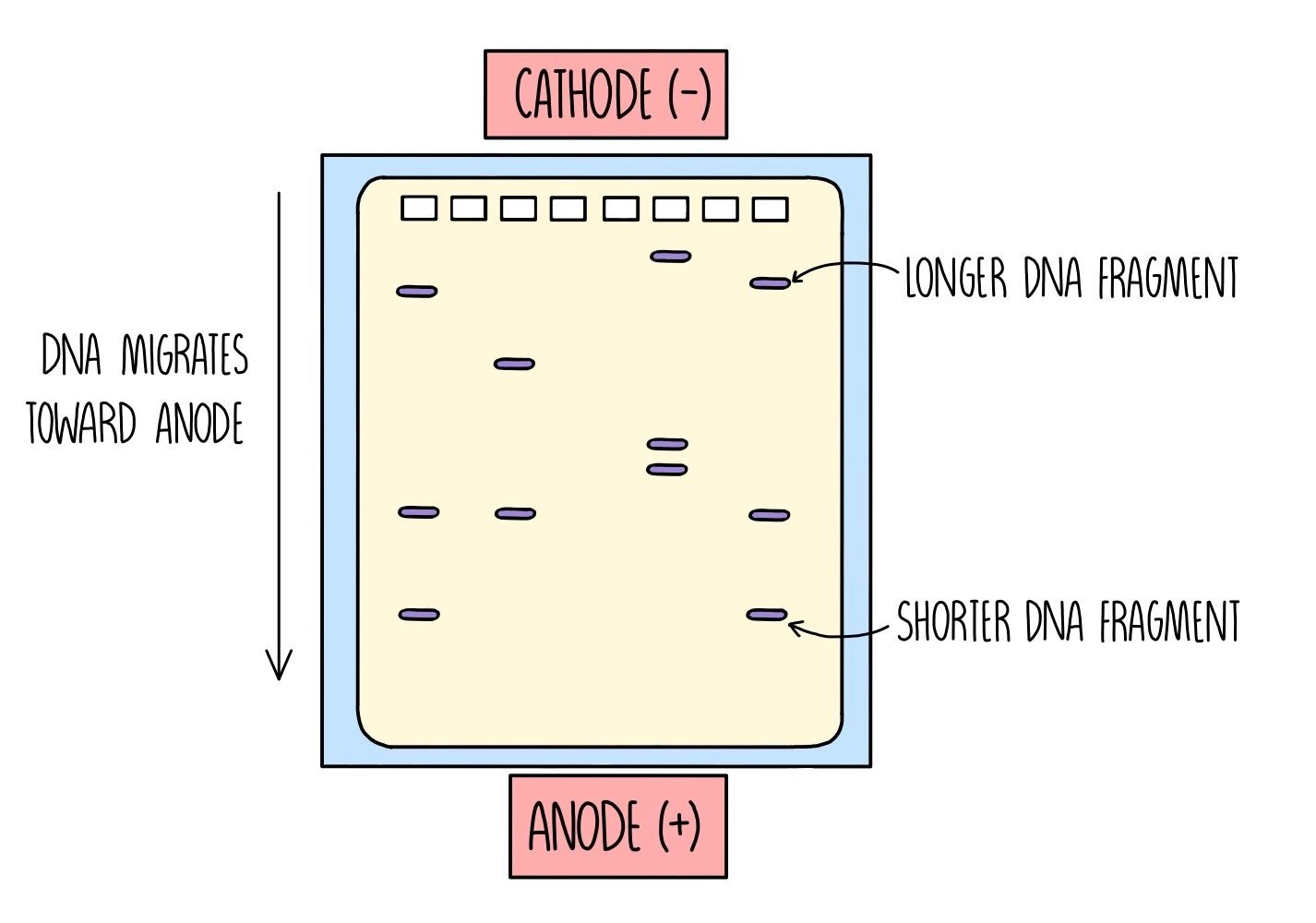
Cells broken down to release DNA
If sample too small, increased in short period of time using PCR (polymerase chain reaction)
DNA strands cut into fragments using restriction enzymes, which cut them at particular base sequences
Fragments separated on basis of size using electrophoresis
Genetic Screening
Checking for the prsence or absence of a particular allele or gene
Other locations of DNA in cell
Chloroplasts
Mitochondria
Viruses in body (viral RNA/DNA)
To isolate DNA from plant tissue
Chopped to break down cell walls
Washing up liquid to dissolve cell and nuclear membranes and salt to neutralise negative charges on DNA, enabling DNA strands to clump (also causes proteins and carbohydrates to precipitate)
Heat in 60 degree bath for 15 mins to denature enzymes such as DNase and restriction enzymes (break down DNA)
Cool in ice bath for five mins to stop any remaining enzymes breaking down DNA
Blend for max. 3 secs to break up cells without breaking up DNA
Filter with coarse paper such as coffee filter paper to remove cell debris but allow DNA strands through
Add protease enzyme such as pepsin to break down proteins associated with DNA (kiwi already has this)
Trickle ice-cold ethanol down side. DNA precipitates between two layers in white mucus layer